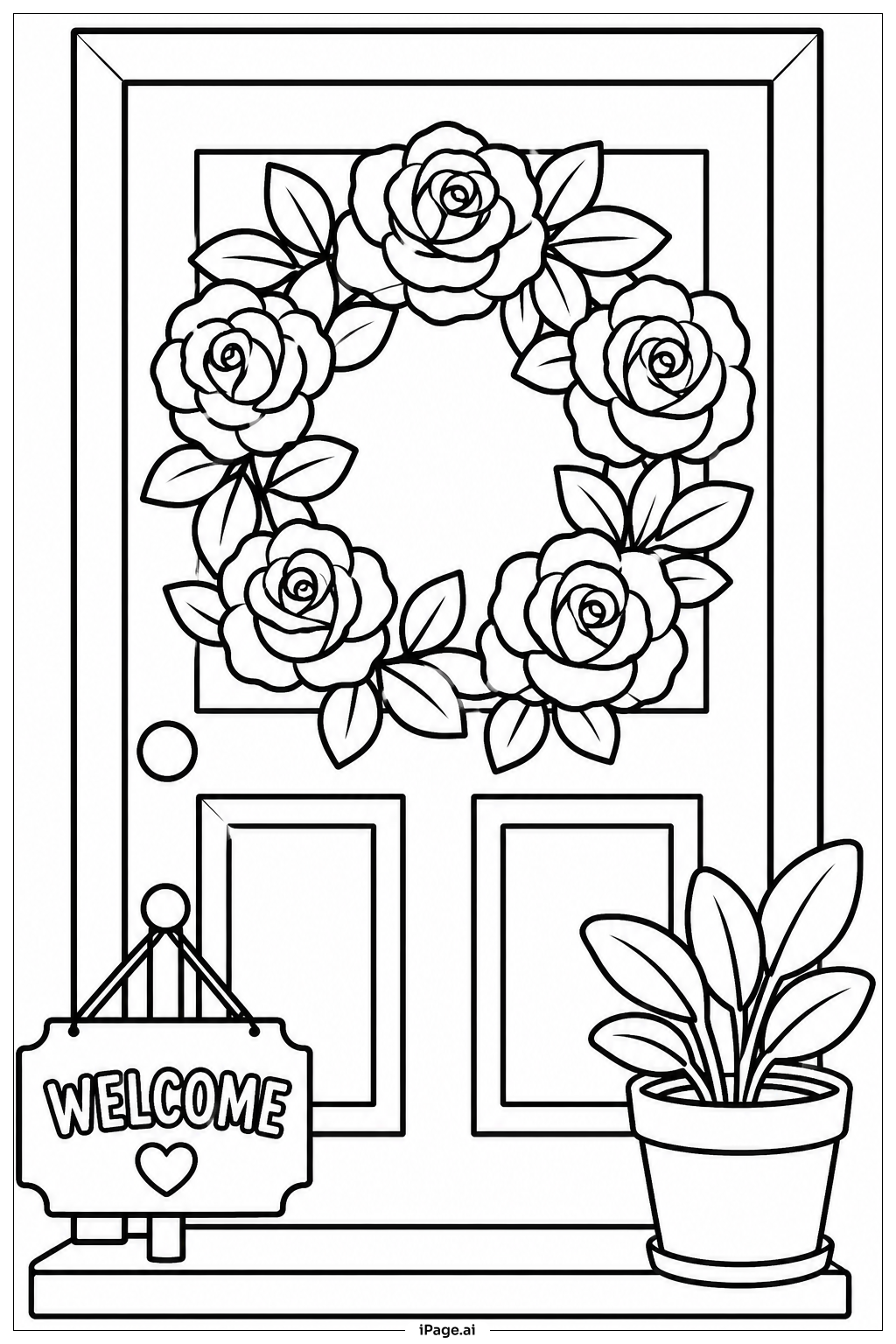
Coloring tips: How to color Rose Wreath On Door coloring page well?
Start with the roses first since they are the main focus. Use shades of red, pink, or coral for the petals. Add a lighter tone near the center of each bloom and a darker shade near the outer edges to create depth. For the buds, use a slightly greener pink to show they are not yet open. Color the leaves in different shades of green — bright green for fresh leaves and olive or dark green for shadowed ones. Use brown or gray for the wooden door, adding a slightly darker tone along the plank lines to show texture. The door knocker or hardware can be gold or bronze. For a fun twist, kids can try a fantasy color scheme — purple roses, teal leaves, or a pastel rainbow door. There are no wrong choices here. Just have fun and let your colors tell a story!
Coloring challenges: Which parts are difficult to color and need attention for Rose Wreath On Door coloring page?
• Rose Petal Layering: The roses have many overlapping petals that curve and fold in different directions. Coloring each petal individually while keeping a smooth gradient from light to dark can be tricky. It requires patience and a steady hand to avoid making the petals look flat or muddy when colors blend together at the edges.
• Leaf Variety and Shading: The wreath contains many leaves of different shapes and sizes placed at various angles. Each leaf needs its own highlight and shadow to look three-dimensional. Switching between multiple shades of green without losing consistency across the whole wreath is a real challenge, especially where leaves overlap each other.
• Small Buds and Fine Details: The small rose buds and delicate tendrils tucked between the larger blooms are tiny and close together. Coloring them neatly without accidentally going over into a neighboring section requires careful control, particularly when using markers or thick crayons.
• Door Texture and Wood Grain: The wooden door behind the wreath has plank lines and panel edges that define its structure. Capturing a realistic wood texture with colored pencils or crayons means using uneven, directional strokes, which can feel unfamiliar and difficult for younger colorists.
• Balancing the Overall Composition: The wreath is dense and detailed, so keeping a visual balance between the warm flower tones and the cooler green foliage is important. If one area is colored too boldly, it can overpower the rest of the image and make it look uneven.
Benefits of coloring books: Advantages of drawing Rose Wreath On Door coloring page
Coloring this Rose Wreath On Door image offers a wonderful range of benefits for children and adults alike. Working through the detailed petals and layered leaves helps build fine motor skills and strengthens hand-eye coordination. Choosing colors and planning how to shade each section encourages creative thinking and artistic decision-making from an early age.
For younger children, the simple shapes of the door and the round wreath form provide an easy entry point, while the roses offer a gentle challenge that builds confidence as each bloom comes to life. Older kids and teens can push further by experimenting with realistic shading, color gradients, and complementary color pairings.
Beyond the skill-building, coloring this image is simply calming. The flowing, circular shape of the wreath has a naturally soothing quality, and focusing on one petal or leaf at a time helps quiet a busy mind. It is a great way to unwind after school or on a quiet afternoon.
The floral theme also connects colorists to the natural world, sparking curiosity about roses, plants, and garden design. Completing a full, detailed piece like this one gives a real sense of accomplishment and pride — a finished artwork worth displaying on any door!