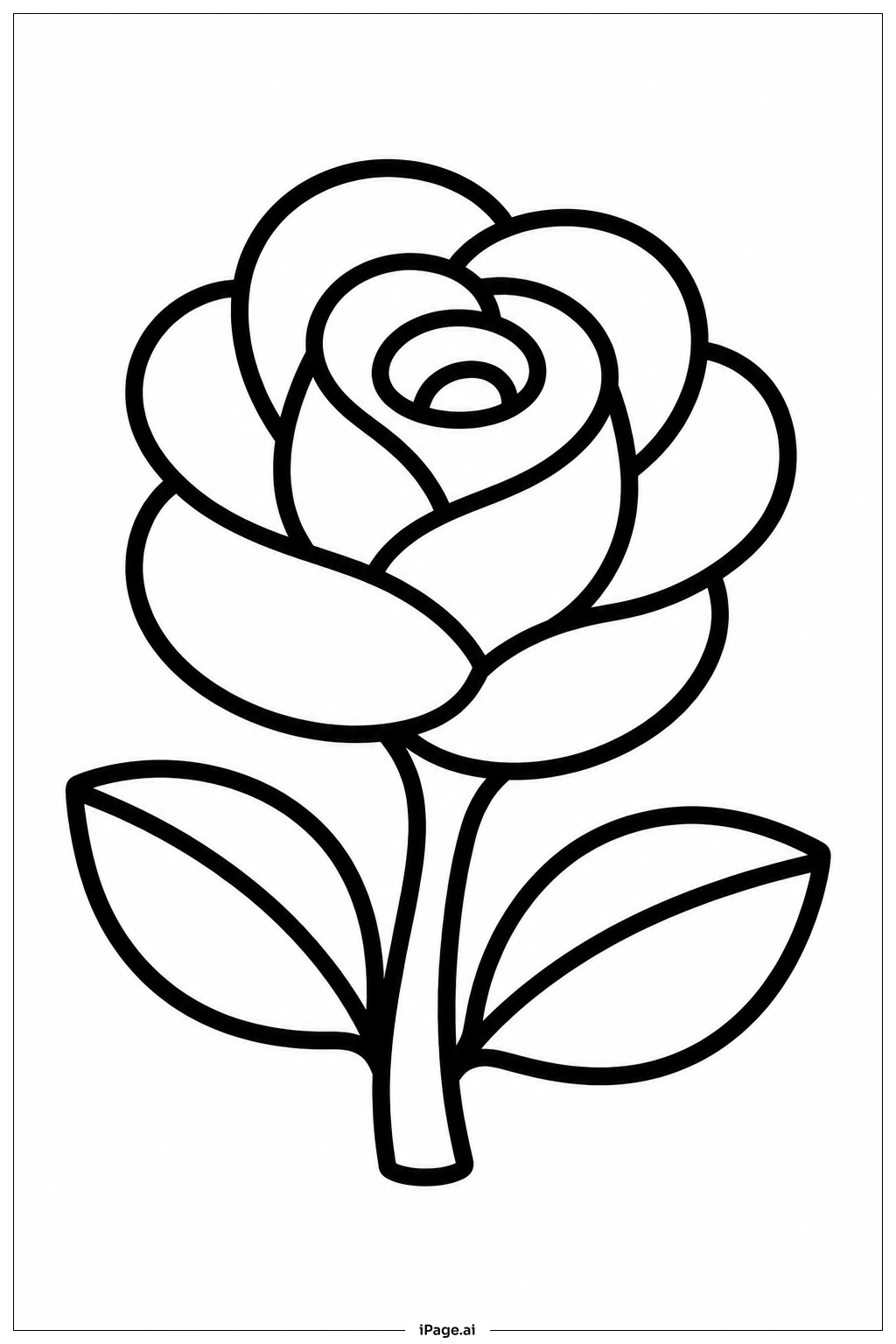
Coloring tips: How to color Rose With Two Leaves coloring page well?
Start with the rose petals using shades of red or pink. Use a deeper shade along the inner edges of the petals and a lighter shade toward the outer tips to create a natural gradient. Soft peach or coral tones also work beautifully for a gentle look. For the leaves, choose different shades of green — a bright lime green for the lighter areas and a deeper forest green along the veins and edges to add dimension. The stem looks great in medium green or olive tone. If you want a magical feel, try coloring the rose in purple or yellow. Take your time with the petals — layering colors slowly gives the best result.
Coloring challenges: Which parts are difficult to color and need attention for Rose With Two Leaves coloring page?
• Petal Layering and Depth: The rose petals overlap in a swirling pattern, which makes it tricky to keep each petal looking separate. Colorists need to carefully shift between light and dark tones on each petal so the layers do not blend together into a flat look. Younger children may find it hard to stay within each individual petal boundary.
• Smooth Color Gradients on Petals: Achieving a natural gradient from the inner rose center to the outer petal edges requires patience and a gentle hand. Using colored pencils or watercolors works best for blending, but crayons or markers can make this step more challenging, especially for beginners.
• Vein Details on Leaves: Each leaf features a clear midrib and small side veins. Coloring around these fine lines without covering them takes steady control. One approach is to leave the veins uncolored or color them a lighter shade to make them stand out naturally against the leaf surface.
• Staying Within the Stem Boundaries: The stem is narrow and elongated, making it one of the harder areas to color neatly. Using a thin marker or a sharpened colored pencil helps stay within the lines and avoid spreading color onto the leaves or background.
• Balancing the Overall Color Harmony: Since the image includes petals, leaves, and a stem, choosing colors that complement each other without clashing is its own challenge. Beginners may benefit from planning their color palette before starting to ensure the finished piece looks cohesive and visually pleasing.
Benefits of coloring books: Advantages of drawing Rose With Two Leaves coloring page
Coloring this rose image offers a wonderful range of benefits for children and beginners alike. Working on the delicate petal shapes helps improve fine motor skills and hand-eye coordination, as small, careful strokes are needed to stay within each curve and boundary. This kind of focused activity also builds concentration and patience, which are valuable skills both in and outside the classroom. Choosing colors for the petals, leaves, and stem sparks creative thinking and encourages personal expression — there is no single right answer, so every child can make their rose unique. The repetitive, gentle motion of coloring is also naturally calming and can help reduce stress or anxiety, making it a great quiet-time activity. Completing the full image gives a strong sense of accomplishment and boosts self-confidence. Learning to observe and replicate the natural shapes of a flower also nurtures an early appreciation for nature and the world around us. Overall, this simple yet beautiful rose page is a joyful, enriching experience for colorists of all skill levels.