Coloring tips: How to color Rose With Dew Drops coloring page well?
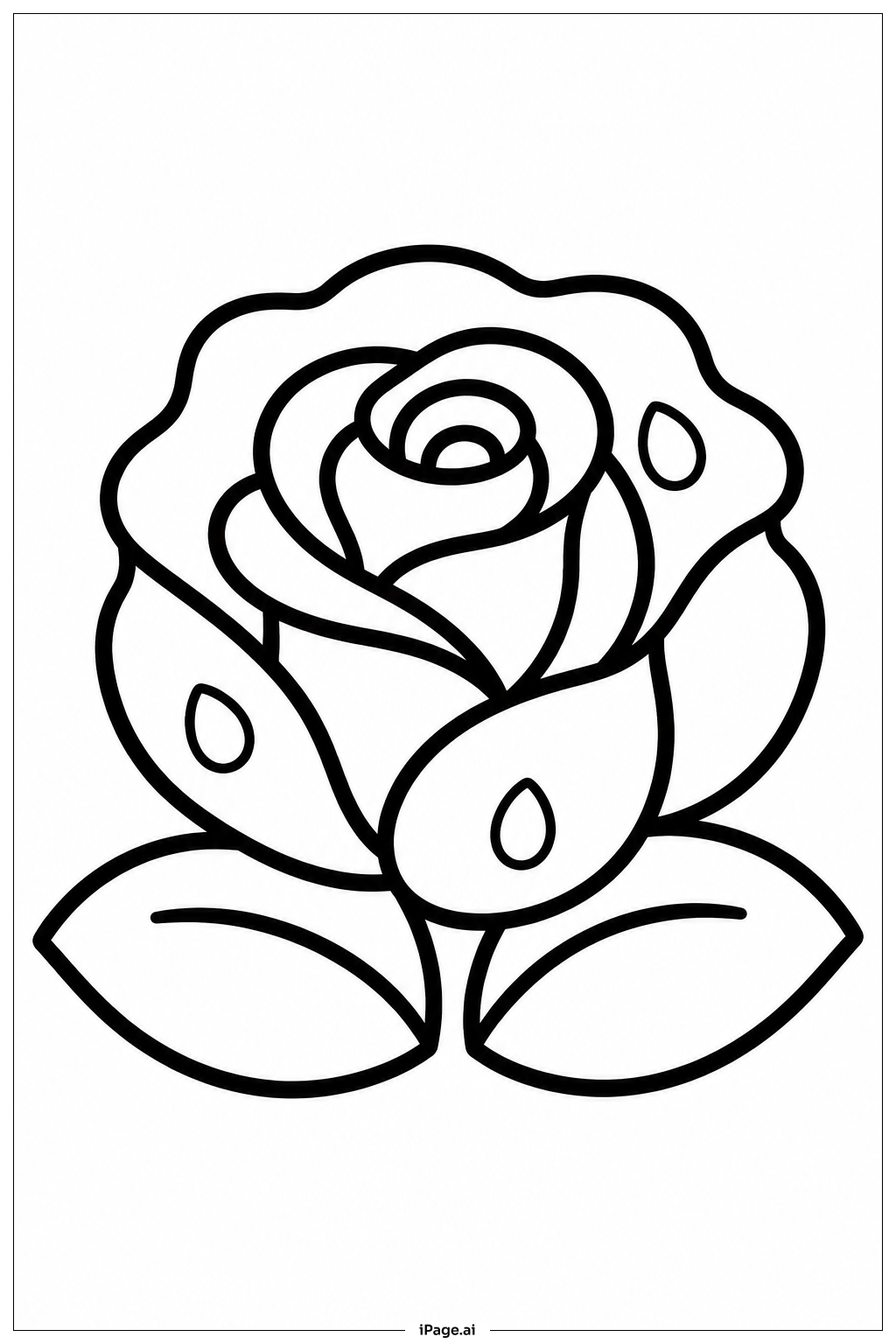
Start by coloring the rose petals. Classic red is always stunning, but you can also try pink, peach, coral, or even purple for a magical look. Use a darker shade along the edges and inner folds of each petal, and a lighter shade toward the center to create a soft, glowing effect. For the dew drops, leave them mostly uncolored or use a very light blue or silver. Add a tiny white highlight dot on each drop to make them look shiny and real. Color the leaves in different shades of green, using dark green for the outer edges and lighter green near the veins. The stem can be a medium green or olive tone. Take your time with each section and enjoy the process. There is no wrong color choice — let your imagination lead the way!
Coloring challenges: Which parts are difficult to color and need attention for Rose With Dew Drops coloring page?
• Layered Petal Shading: The rose has many overlapping petals with curved folds and edges. Blending light and dark tones smoothly across each petal without making them look flat or muddy is one of the biggest challenges. You need to be patient and build color gradually, especially in the curved and shadowed areas between petals.
• Dew Drop Highlights: The small dew drops on the petals and leaves look simple but are tricky to color well. To make them appear transparent and glistening, you must leave certain areas white and apply only the lightest touch of color. Pressing too hard or adding too much color will make the drops look like solid blobs instead of water.
• Leaf Vein Detail: The leaves have fine vein lines running through them. Coloring around these thin lines without accidentally covering them requires a steady hand and a sharp pencil or fine-tipped marker. Missing this detail can make the leaves look flat and lifeless.
• Depth and Dimension: The overall image has a three-dimensional quality because of the layered petals and foreground leaves. Keeping a consistent light source in mind while coloring helps maintain this depth. Without it, the rose may end up looking like a flat pattern rather than a real flower.
• Small Curved Areas: Some spaces between petals and near the base of the flower are very narrow and curved. Filling these tight spots neatly without going outside the lines takes careful control, especially for younger colorists using thicker tools like crayons or markers.
Benefits of coloring books: Advantages of drawing Rose With Dew Drops coloring page
Coloring this rose with dew drops image offers many wonderful benefits for kids and adults alike. First, it helps build focus and patience. The detailed petals and tiny dew drops require careful attention, which trains the mind to slow down and concentrate. Second, it supports creativity. Choosing colors for the petals, leaves, and sparkling water drops encourages personal expression and imaginative thinking. There is no single right answer, so every child gets to make it their own. Third, it develops fine motor skills. Staying inside the lines, shading smoothly, and coloring small areas like dew drops all strengthen hand control and pencil grip, which are important skills for writing and drawing. Fourth, it provides a calming experience. The natural beauty of a rose is relaxing to look at and color, making this a great activity for winding down after a busy day. Finally, completing the page gives a real sense of accomplishment and pride, which boosts confidence and encourages kids to keep creating. It is a simple, joyful activity with lasting benefits.