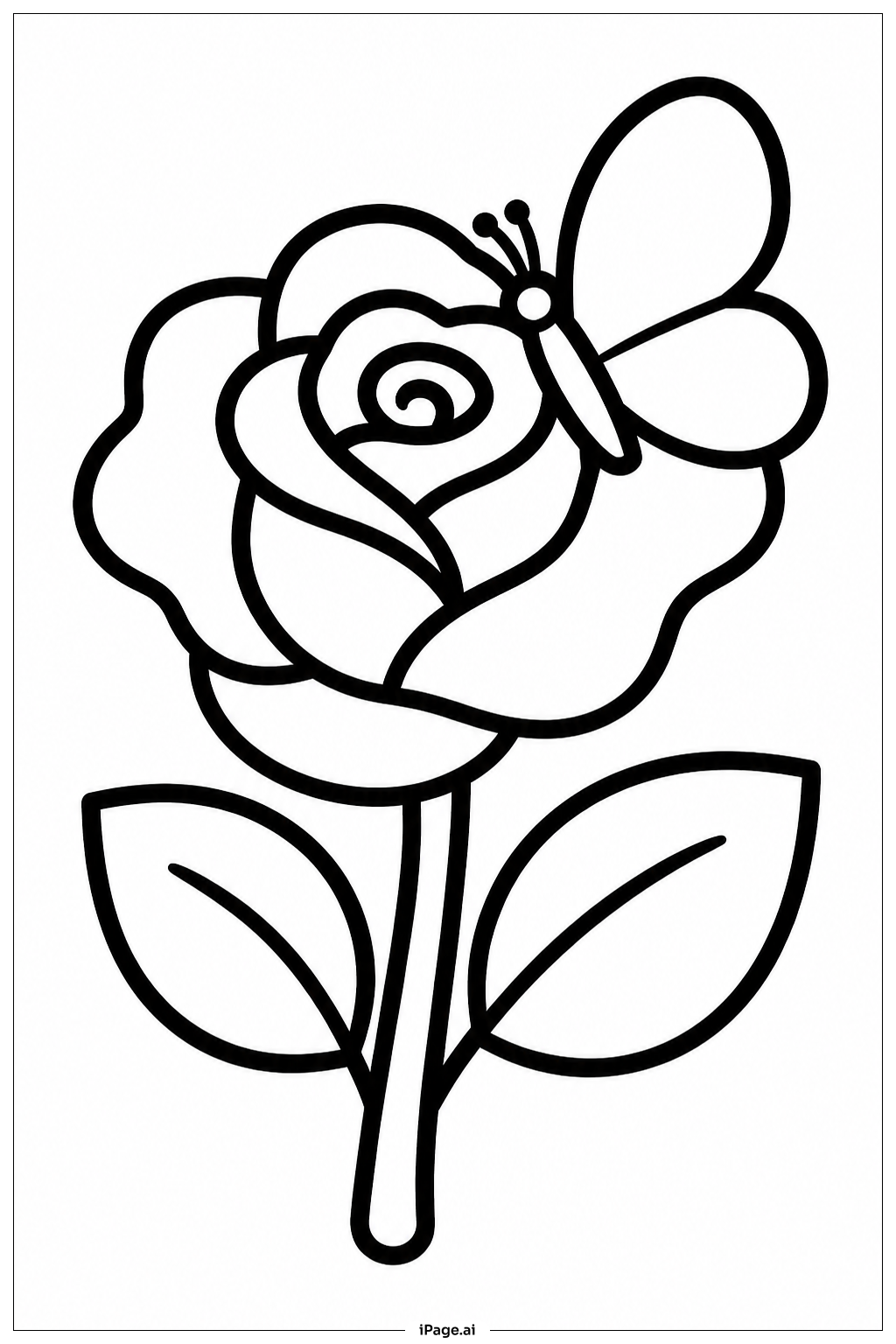
Coloring tips: How to color Rose With Butterfly coloring page well?
Start with the rose petals. Use shades of pink or red — light pink near the edges and deeper red or dark pink closer to the center. This gives the flower a natural, three-dimensional look. For the leaves and stem, use different greens. Try light green for smaller leaves and darker green for larger ones. Next, move to the butterfly. Its wings can be bright and colorful — try orange and yellow, or go creative with purple and blue. Use a darker shade to fill in the intricate patterns and swirls on the wings. Leave tiny white spots uncolored to make the wings look lively. For the background, keep it soft. A light blue or pale yellow works well so the rose and butterfly stand out. Take your time on the small details. Use thin markers or sharp colored pencils for the butterfly wing patterns and the rose petal lines. Have fun mixing colors and making this image your own!
Coloring challenges: Which parts are difficult to color and need attention for Rose With Butterfly coloring page?
Coloring this Rose With Butterfly image is a wonderful experience, but it does come with a few challenges to keep in mind:
• Rose Petal Layering: The rose has many overlapping petals, each with its own curved outline. Keeping colors consistent while showing depth between the layers can be tricky. You need to use light and dark shades carefully so each petal looks separate and rounded rather than flat.
• Butterfly Wing Patterns: The butterfly wings are filled with detailed swirls, curves, and decorative shapes. These small areas are hard to color neatly, especially near the edges where lines are very close together. A sharp pencil or fine-tip marker works best here to stay inside the lines without smudging neighboring sections.
• Color Transitions on Petals: Blending from a light tone at the petal tips to a darker tone near the base requires smooth gradients. This is difficult with crayons or basic colored pencils. Practicing gentle, overlapping strokes helps create a softer, more realistic look.
• Small Details on Leaves and Stem: The leaves have vein lines running through them, and the stem has subtle curves. Coloring around these fine lines without covering them takes patience and a steady hand, especially for younger colorists.
• Balancing the Overall Color Palette: Because both the rose and the butterfly are detailed subjects, choosing colors that complement each other without clashing is a real design challenge. Picking a consistent palette before starting helps keep the finished piece looking harmonious and visually pleasing.
Benefits of coloring books: Advantages of drawing Rose With Butterfly coloring page
Coloring this Rose With Butterfly page offers a wide range of wonderful benefits for kids and adults alike.
For children, staying inside the detailed lines of rose petals and butterfly wings helps develop fine motor skills and hand-eye coordination. It also builds patience and focus as they work through each section carefully.
Choosing colors for the petals, wings, and leaves encourages creative thinking. Kids get to make their own color choices and feel proud of a finished piece that is truly their own.
For older colorists and adults, this page is a calming, mindful activity. The repetitive motion of filling in patterns on the butterfly wings or blending tones across rose petals can reduce stress and quiet a busy mind — much like meditation.
The image also connects colorists with the beauty of nature. Learning to observe how rose petals overlap or how butterfly wings are symmetrical builds an appreciation for natural forms and artistic design.
Finally, completing a detailed coloring page like this builds confidence. Finishing something that takes time and care feels genuinely rewarding, no matter your age. Whether used in a classroom, at home, or as a relaxing hobby, this Rose With Butterfly page is a joyful and enriching creative activity for everyone.