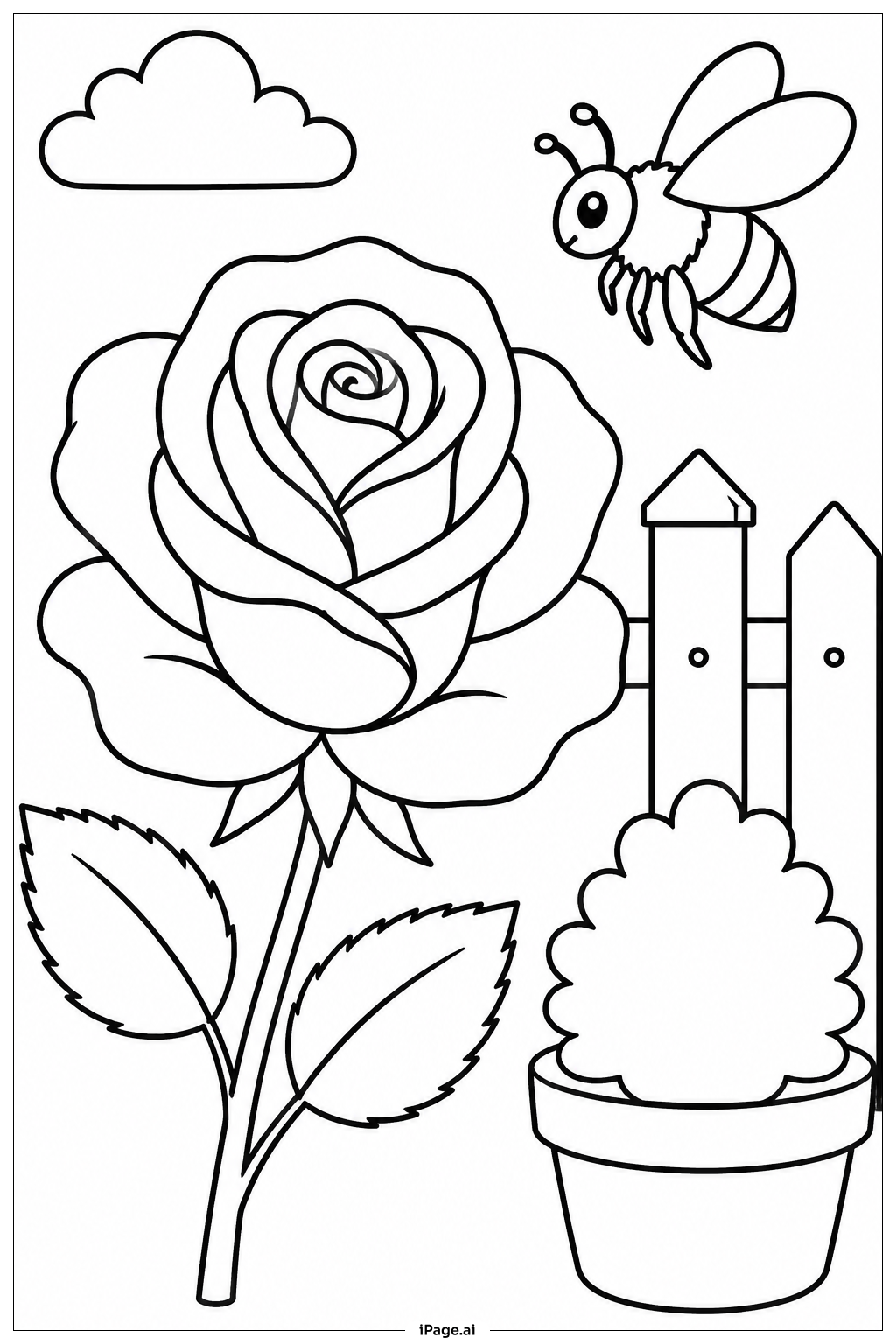
Coloring tips: How to color Rose With Bee coloring page well?
Start with the rose petals. Use shades of red, pink, or even yellow and orange to bring them to life. Begin with a lighter base color and layer a darker shade near the edges and in the folds to add depth. For the bee, use bright yellow for the body and add dark brown or black stripes across its segments. Color the wings a pale, translucent blue or light gray to give them a delicate look. The leaves and stem look great in different shades of green — try a lighter green for the top of the leaves and a deeper green underneath. Add brown for the thorns to give them a sharp, realistic feel. Take your time with the small details on the bee, like its antennae and leg joints. Don't be afraid to blend colors gently for a softer, more natural finish. This page is a wonderful chance to experiment with warm and cool tones side by side.
Coloring challenges: Which parts are difficult to color and need attention for Rose With Bee coloring page?
• Petal Layering and Shading: The rose has many overlapping petals, each with its own curve and fold. Keeping the shading consistent across all the petals without the colors looking flat or muddy can be tricky. You need to decide where the light source is coming from and stay consistent as you work through each layer of petals.
• Bee Body Stripes: The bee's body has distinct segments that need alternating colors, typically yellow and black or dark brown. Staying within the narrow lines between each stripe requires a steady hand and a well-sharpened pencil or a fine-tipped marker. Going outside the lines can make the bee look messy.
• Transparent Wing Effect: The bee's wings are thin and see-through in real life. Recreating that light, translucent quality on paper is a challenge. Using too dark a color will make the wings look heavy and solid, so choosing the right light shade and applying it gently is important.
• Leaf Vein Details: The leaves have a network of fine veins running through them. Coloring around these tiny lines without covering them up takes patience and careful control of your coloring tool. Leaving the veins slightly lighter than the rest of the leaf helps them stand out naturally.
• Color Harmony Between Flower and Bee: Balancing the warm tones of the rose with the bold yellow and black of the bee is a real creative challenge. Making sure neither element overpowers the other requires thoughtful color choices and a good sense of contrast throughout the whole composition.
Benefits of coloring books: Advantages of drawing Rose With Bee coloring page
Coloring this Rose With Bee page offers a wonderful range of benefits for children and beginners alike. Working on the rose petals helps develop fine motor skills, as guiding a crayon or colored pencil through curved shapes and small spaces strengthens hand muscles and improves coordination. The detailed bee encourages focus and patience, teaching kids to slow down and pay attention to small areas. Choosing colors for the rose, bee, and leaves is a natural introduction to color theory, helping young artists understand how warm and cool tones work together. The process of layering colors to create depth builds creative thinking and gives children a sense of accomplishment when they see the finished result. Spending quiet time on a coloring activity like this is also a great way to relax and reduce stress, making it a healthy mental break from screens and busy routines. For older kids and adults, the complexity of the shading and detail work turns it into a satisfying, meditative exercise. Overall, this page combines creativity, skill-building, and calm in one enjoyable activity that the whole family can enjoy together.