Coloring tips: How to color Rose Stem With Leaves coloring page well?
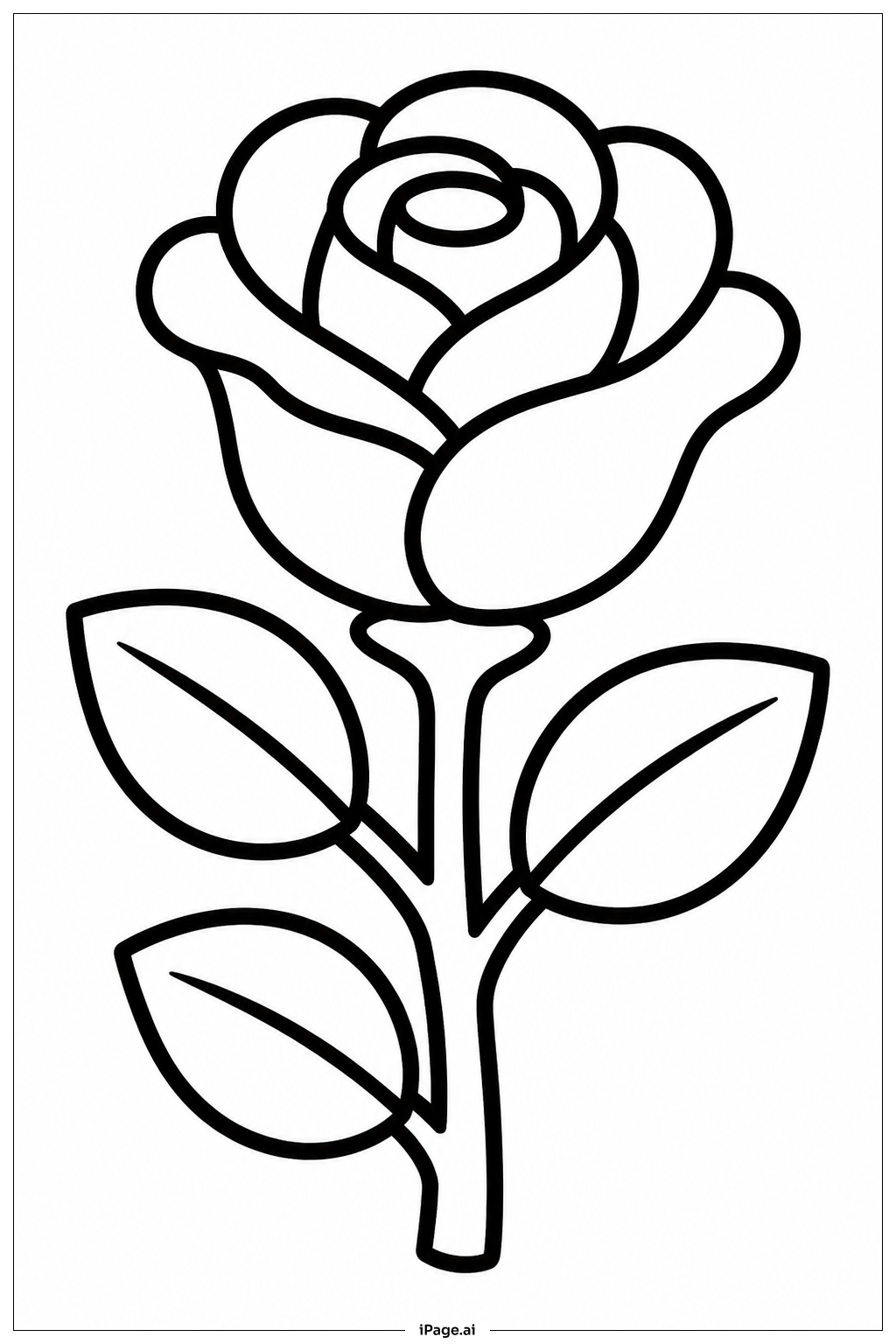
Start by coloring the stem. Use a medium green or olive brown for the main stem. Add a slightly darker shade on one side to show depth and roundness. For the leaves, use different shades of green — bright green for young leaves and deeper forest green for the larger, older ones. Use a lighter yellow-green along the central vein to make the veins stand out. Color each vein carefully from the center outward. For the thorns, use a warm tan or brown to set them apart from the stem. Try blending two greens together on each leaf for a soft, natural gradient. This helps the leaves look alive and three-dimensional. Take your time on the leaf edges, using smooth, light strokes to keep the color inside the lines. You can also add a subtle reddish tint to the stem near the thorns for a touch of realism.
Coloring challenges: Which parts are difficult to color and need attention for Rose Stem With Leaves coloring page?
• Leaf Vein Detail: Each leaf contains a network of fine veins branching from the midrib to the edges. Staying precise within these narrow lines requires a sharp pencil or thin marker. Rushing through this area can result in smudging or coloring over the vein lines, which flattens the look of the leaf. Take your time and work vein by vein from the center outward.
• Stem Shading and Roundness: The stem is a cylindrical shape, and creating the illusion of roundness through flat coloring is tricky. You need to apply a lighter tone on one side and gradually deepen the color toward the other edge. Without this gradient, the stem looks flat and lifeless. Blending smoothly is key here.
• Thorn Accuracy: The small thorns along the stem are fine, pointed shapes that sit close to the stem surface. Coloring them in a separate tone without accidentally bleeding color into the surrounding stem area is challenging, especially for younger colorists. Using a very fine-tipped tool works best for these tiny shapes.
• Leaf Size Variation: The leaves are drawn in different sizes and at different angles. Maintaining consistent color tones across all of them while still showing variation between young and mature leaves requires planning. Decide on your color palette before you begin to keep the overall image looking harmonious and balanced.
Benefits of coloring books: Advantages of drawing Rose Stem With Leaves coloring page
Coloring this rose stem with leaves page offers many wonderful benefits for kids and beginners alike. Working through the stem and leaf shapes helps develop fine motor skills and hand control, especially when staying inside the detailed vein lines. It builds patience and focus as colorists move carefully from one section to the next. Learning to shade the cylindrical stem introduces basic concepts of light and shadow in a fun, low-pressure way. This is a great early step toward understanding how to make flat drawings look three-dimensional. The botanical detail in the leaves encourages curiosity about nature and plant anatomy. Kids begin to notice how real leaves are structured, making this both an art activity and a gentle science lesson. Choosing and blending greens also sharpens color awareness and creativity. Completing the page gives a real sense of accomplishment, which boosts confidence and motivation to keep creating. It is a calming, screen-free activity that helps reduce stress and supports emotional well-being for colorists of all ages.