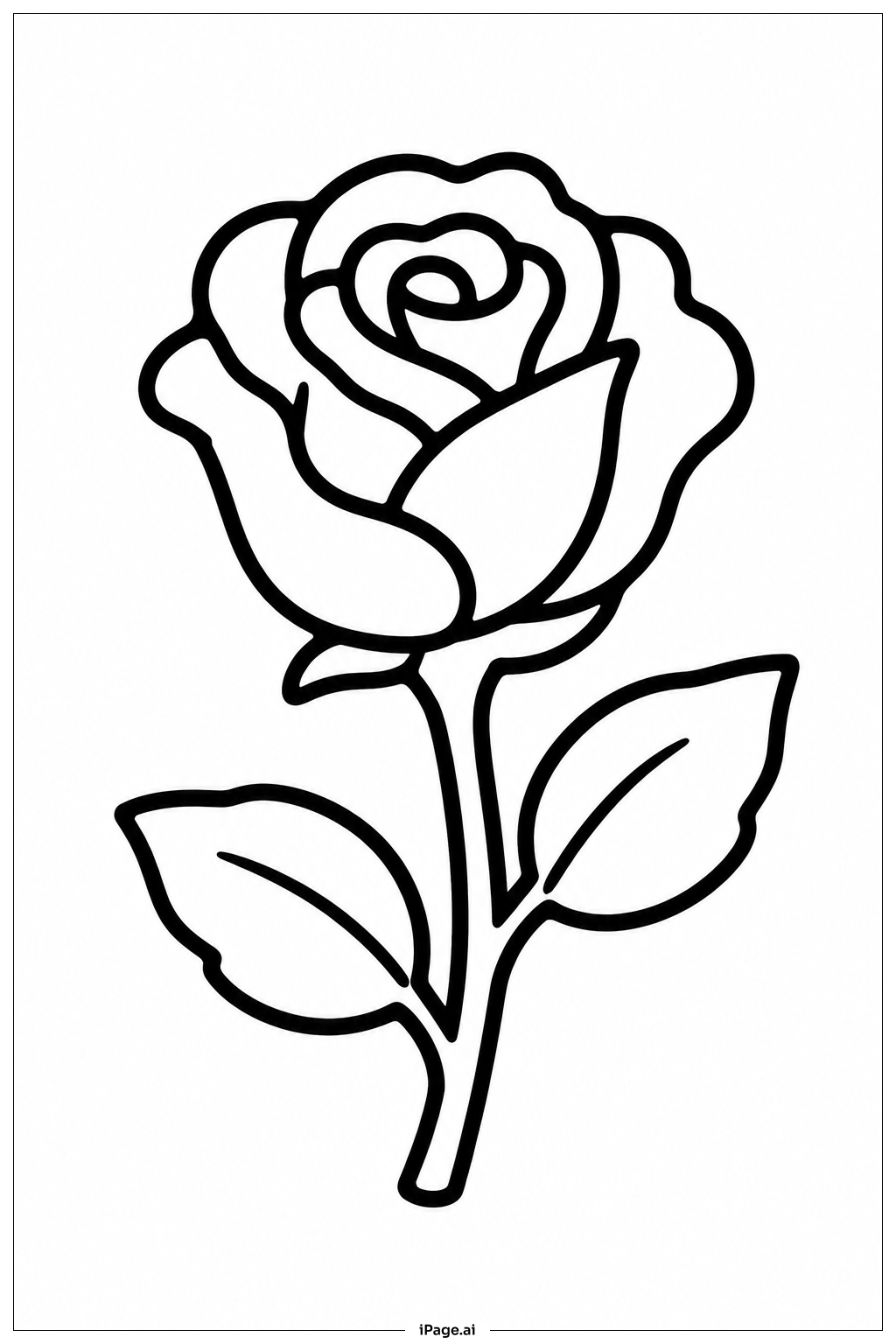
Coloring tips: How to color Rose Side Profile coloring page well?
Start with the petals and choose a color that feels warm and lively. Red is a classic choice, but pink, peach, coral, or even purple can look stunning. Use a darker shade of your chosen color along the edges and inner folds of the petals to show depth. Leave the tips slightly lighter to give each petal a soft, glowing feel. For the leaves, go with a medium green and add a darker green along the veins. The stem can be colored with a muted olive or forest green. The thorns can be a slightly darker tone than the stem. If you want the rose to look extra special, try blending two shades of the same color on each petal. This is a great image for practicing gradients and shading. Take your time with each petal and enjoy the process.
Coloring challenges: Which parts are difficult to color and need attention for Rose Side Profile coloring page?
• Layered Petal Overlaps: The rose has multiple petals that curl and overlap each other. Keeping each petal visually separate while using similar colors can be tricky. You need to vary the shade slightly on each petal so they do not blend into one flat shape. This requires careful observation of where one petal ends and another begins.
• Shading the Petal Curves: Each petal has a gentle curve and a folded edge. To make these curves look three-dimensional, you need to apply darker color in the shadowed areas and lighter color where the petal catches light. This kind of shading takes patience and a steady hand, especially in the smaller inner petals near the center.
• Coloring the Inner Spiral: The center of the rose spirals inward with tightly packed petals. This area has very small, narrow sections that are hard to color neatly. Thin markers or fine-tipped colored pencils work best here. Rushing through this section often results in colors bleeding outside the lines.
• Leaf Vein Details: The leaves have visible veins running through them. Coloring around these veins without covering them takes precision. You can leave the veins as white lines or lightly color them in a contrasting shade to keep them visible and realistic.
• Thorn and Stem Consistency: The thorns are small and pointed, sitting along the stem. Coloring them in a tone that matches the stem but still stands out requires careful color selection. Too dark and they look harsh; too light and they disappear into the stem entirely.
Benefits of coloring books: Advantages of drawing Rose Side Profile coloring page
Coloring this rose side profile is a wonderful activity for kids and beginners alike. It helps build focus and concentration as you work through each petal and leaf. Choosing colors and deciding where to shade encourages creative thinking and personal expression. There is no single right answer, which makes it a relaxing and judgment-free experience.
Working on the curved petals and delicate details helps improve fine motor skills and hand control. This is especially helpful for younger children who are still developing their drawing and coloring abilities.
The structured outline of the rose provides a clear guide, which makes the activity feel manageable and rewarding. Finishing the page gives a real sense of accomplishment.
For older kids and adults, the layered petals offer a satisfying challenge. Practicing shading and blending on this image builds skills that carry over into drawing and painting.
Spending quiet time coloring is also a great way to unwind. It calms the mind, reduces stress, and encourages you to slow down and enjoy a simple, creative activity. This rose page is a beautiful starting point for anyone looking to explore the joy of coloring.