Coloring tips: How to color Rose On Window Sill coloring page well?
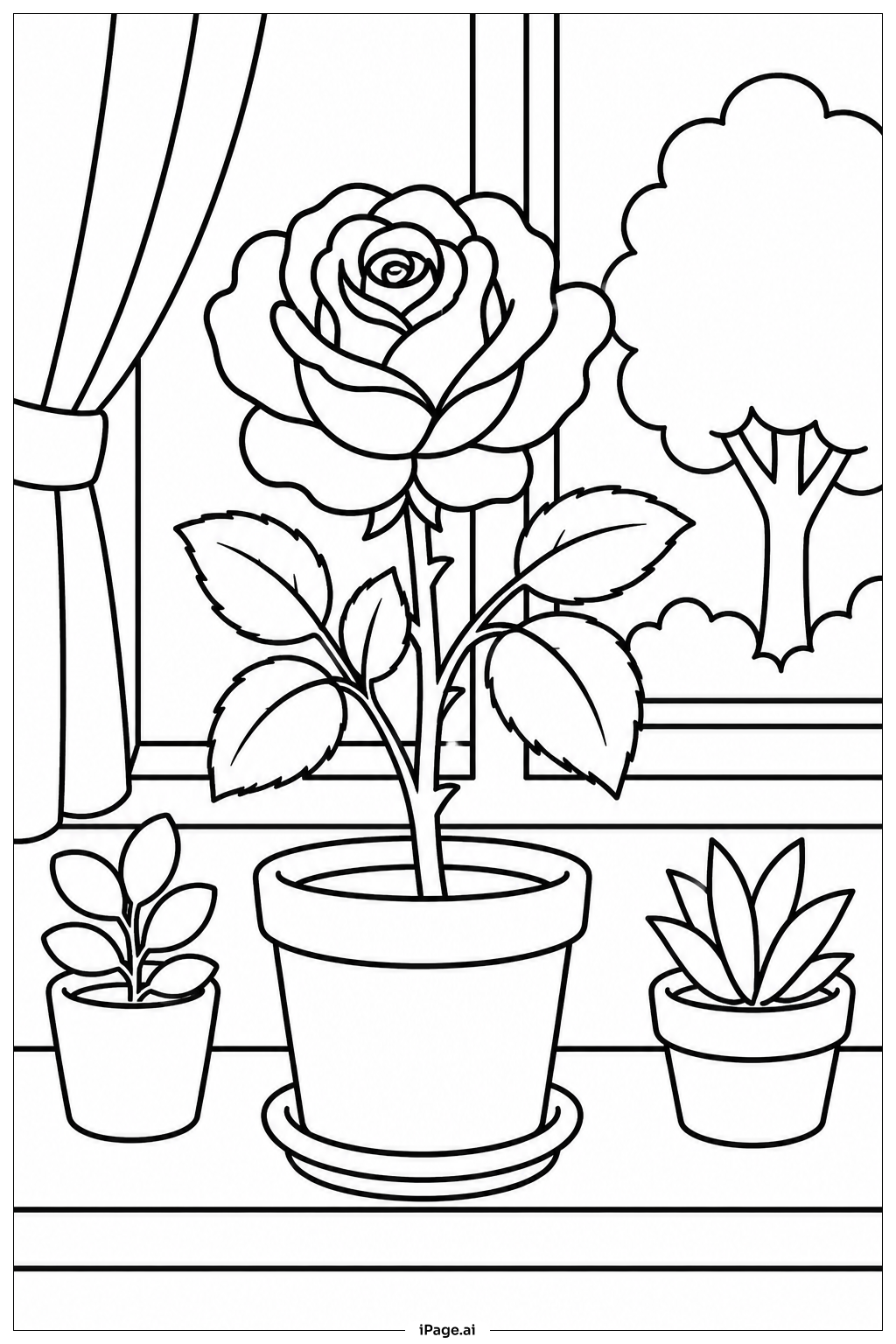
To color this image, start with the rose petals in shades of red, pink, or even yellow to bring the flower to life. Use darker shades near the base of each petal for depth and lighter tones toward the edges. For the leaves, try different greens—deep green for the leaves closest to the rose and lighter green for those further away. The window sill can be colored in a soft beige or light brown to look like wood, or gray for stone. You may want to add soft blues or light grays for the background outside the window to give a cool contrast to the warm colors of the rose. Experiment with blending colors to add softness and a natural feel to the scene.
Coloring challenges: Which parts are difficult to color and need attention for Rose On Window Sill coloring page?
• Petal Layering: The rose petals overlap each other, so it can be tricky to color the petals without mixing the colors unintentionally. Using careful shading will help separate each petal clearly.
• Leaf Texture: The leaves have visible veins and subtle shapes that can be hard to capture without careful attention. Coloring the veins slightly darker than the leaf will show this detail.
• Window Frame Lines: The straight edges of the window frame require steady coloring to keep the lines clean and not spill over onto the flower or outside area.
• Background Faintness: The faint outline of the garden behind the window is subtle, so choosing soft, light colors is important to avoid overpowering the main rose.
• Shading for Depth: To make the rose appear three-dimensional, shading light and shadow areas correctly is challenging but rewarding. This requires blending colors smoothly from dark to light.
Benefits of coloring books: Advantages of drawing Rose On Window Sill coloring page
Coloring this image helps improve focus and fine motor skills as children learn to color within detailed lines. It encourages creativity by allowing them to choose from many colors for petals, leaves, and background. The image also teaches about nature, showing how roses and window settings can look in everyday life. By practicing shading and blending, young artists gain skills that build confidence in handling more complex drawings. Most importantly, coloring this peaceful rose scene promotes calmness and mindfulness, giving a relaxing break from daily activities.