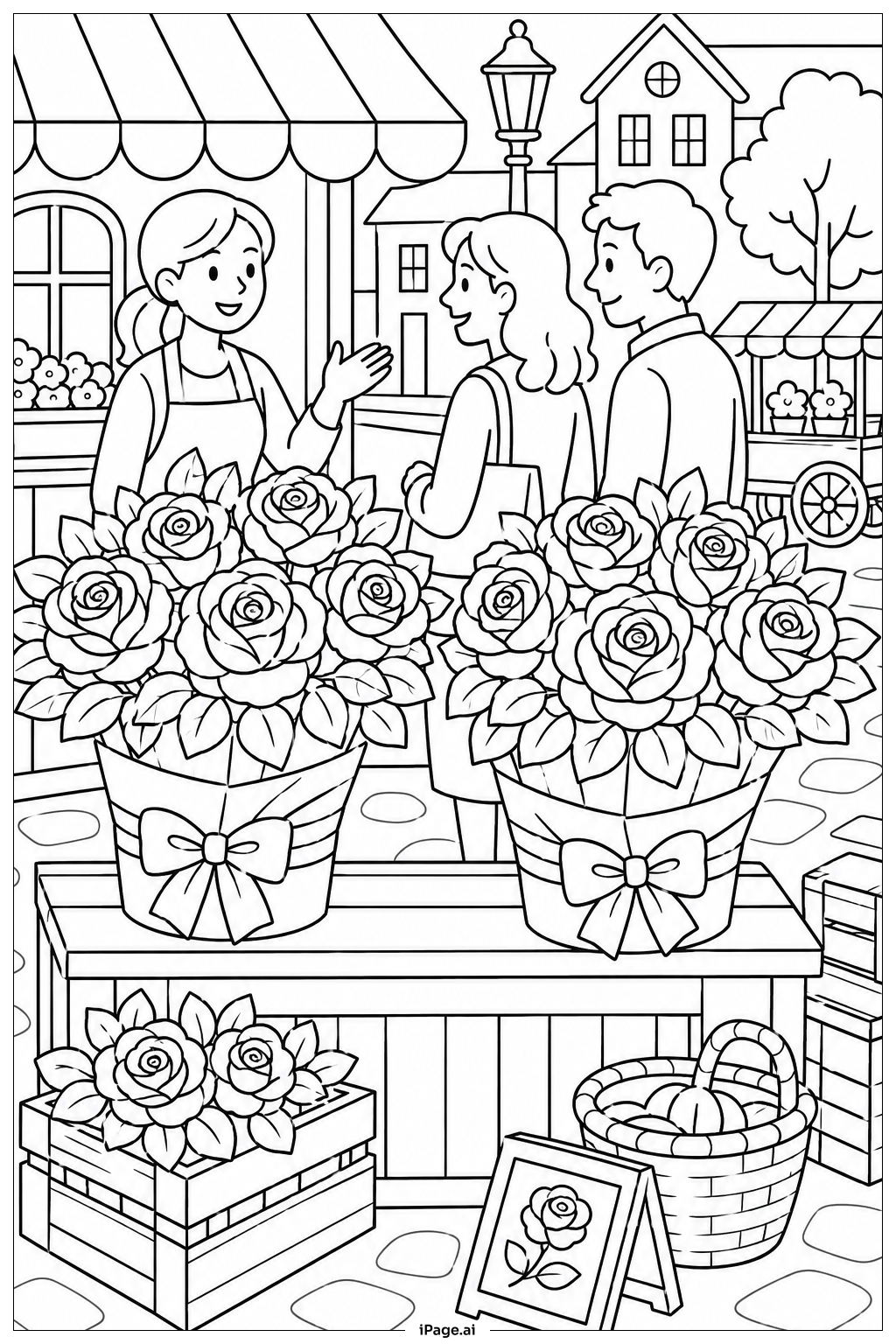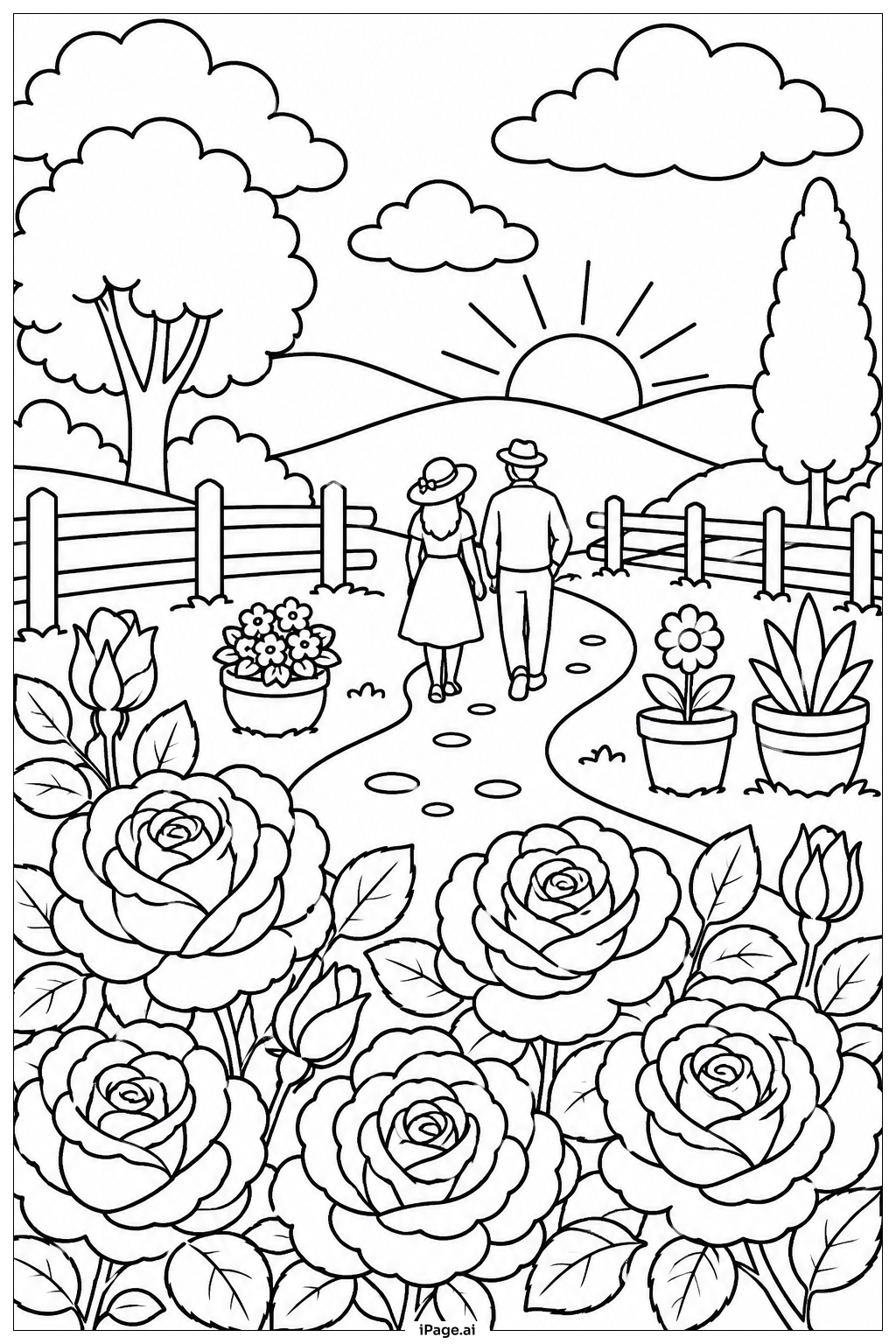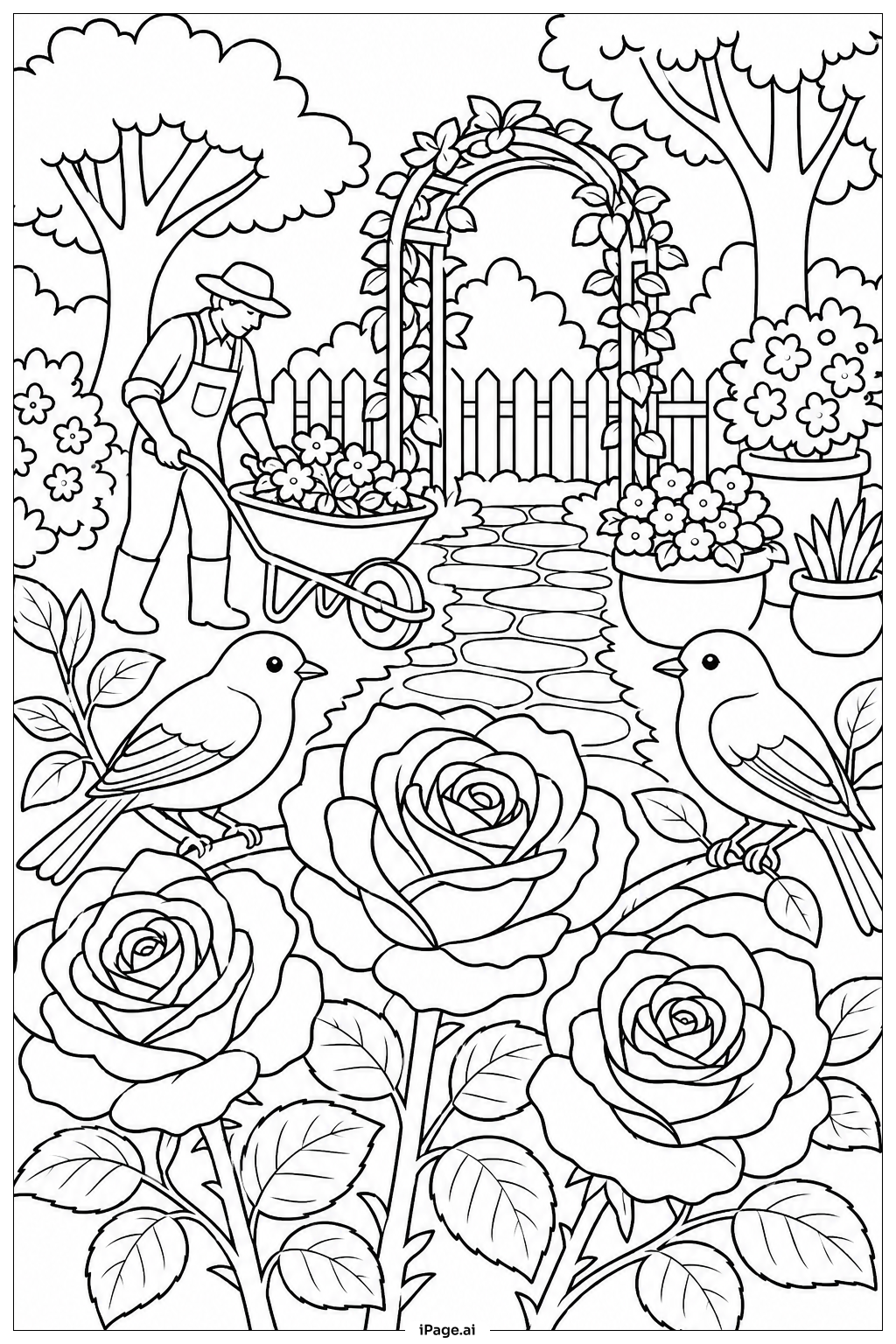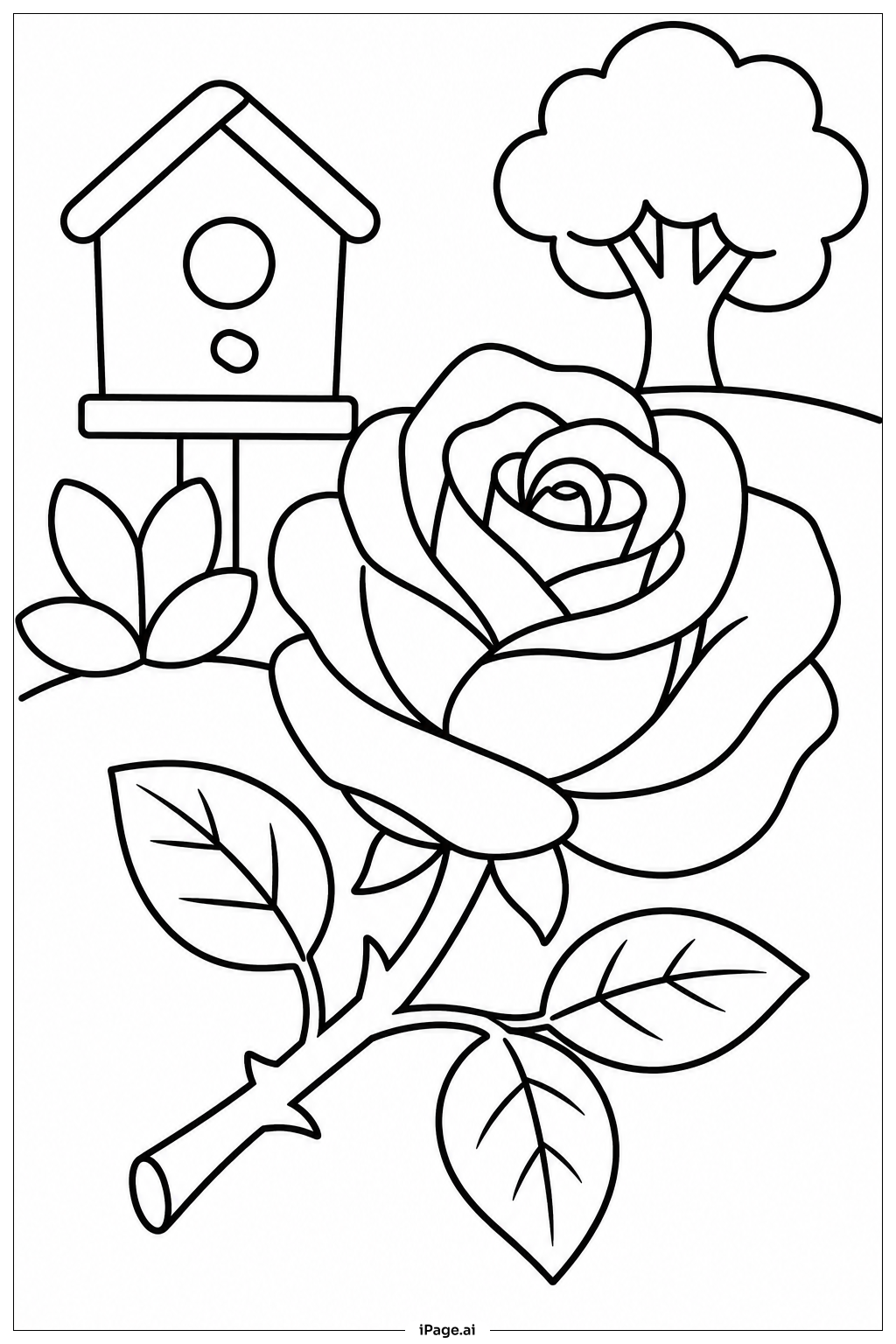
Coloring tips: How to color Rose On Branch coloring page well?
Start with the rose petals. Use shades of red, pink, coral, or even yellow for a vibrant look. Add a slightly darker tone near the base of each petal to show depth and shadow. Color the outer petals a bit lighter to make the bloom feel three-dimensional. For the leaves, use different shades of green — light green for younger leaves and deeper green for the larger ones. Add yellow-green along the veins to make them stand out. Color the branch and thorns in warm brown or tan tones. You can also try a soft peach or lavender rose for a dreamy, creative touch. Take your time with each petal and enjoy the process!
Coloring challenges: Which parts are difficult to color and need attention for Rose On Branch coloring page?
• Layered Petal Shading: The rose has many overlapping petals that curve and fold around each other. Coloring each petal individually while keeping the overall flower looking smooth and natural can be tricky. You need to blend light and dark shades carefully so the petals do not look flat or disconnected.
• Small Spaces Between Petals: Near the center of the rose, the petals are tightly packed and the gaps between them are very narrow. It can be hard to fill these tiny areas without accidentally coloring outside the lines. Using a fine-tipped coloring tool is helpful in these spots.
• Leaf Vein Details: Each leaf has a network of thin veins running across its surface. Keeping these vein lines clean while coloring the leaf body requires a steady hand and patience. Coloring around each vein without smudging or crossing over takes focus and control.
• Branch and Thorn Texture: The branch has a rough, organic shape with small thorns poking out along its length. Giving the branch a realistic wood-like texture by using multiple brown tones in a natural, streaky pattern can be challenging for younger or less experienced colorists.
• Overall Color Balance: With petals, leaves, a branch, and thorns all in the same scene, making sure all the colors work well together and do not clash is an important challenge. Choosing a color palette ahead of time can help keep the final image looking harmonious and pleasing to the eye.
Benefits of coloring books: Advantages of drawing Rose On Branch coloring page
Coloring this Rose On Branch page offers many wonderful benefits for kids and adults alike. Working through the petals and leaves helps build fine motor skills and improves hand-eye coordination, especially when filling in small or curved areas. Focusing on a detailed image like a rose also trains concentration and patience, skills that are useful in school and everyday life. Choosing colors for the petals, leaves, and branch encourages creative thinking and allows colorists to express their own sense of style and beauty. There is no single right answer — every color choice makes a unique piece of art. The calm, repetitive motion of coloring is also a great stress reliever. It helps quiet a busy mind and brings a sense of peace and relaxation. Finishing the page gives a real sense of accomplishment, which boosts confidence and self-esteem. For younger children, this page introduces basic nature concepts like flower parts and plant structure in a fun, hands-on way. Whether coloring alone or with others, this rose page is a joyful and rewarding creative activity for all ages.