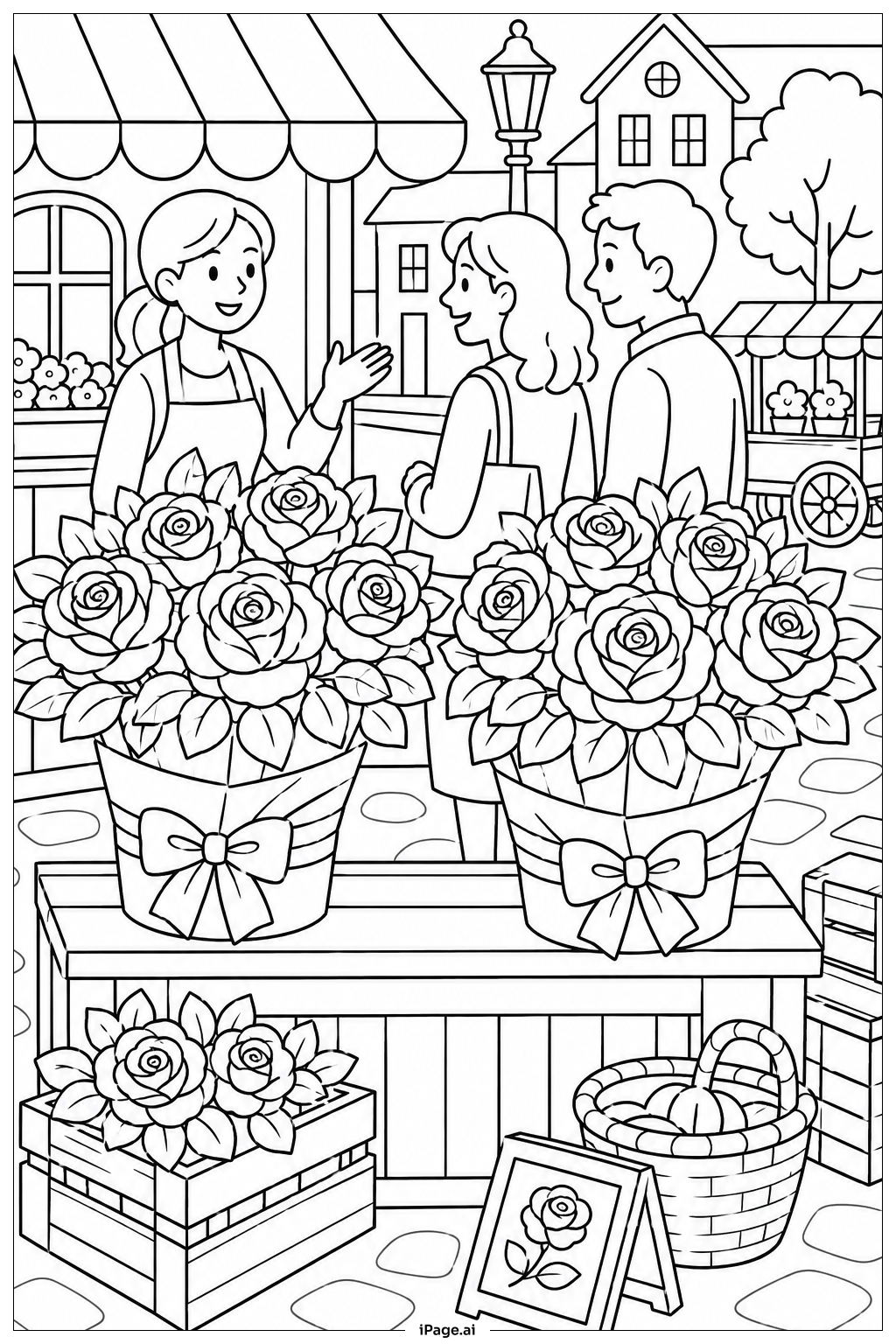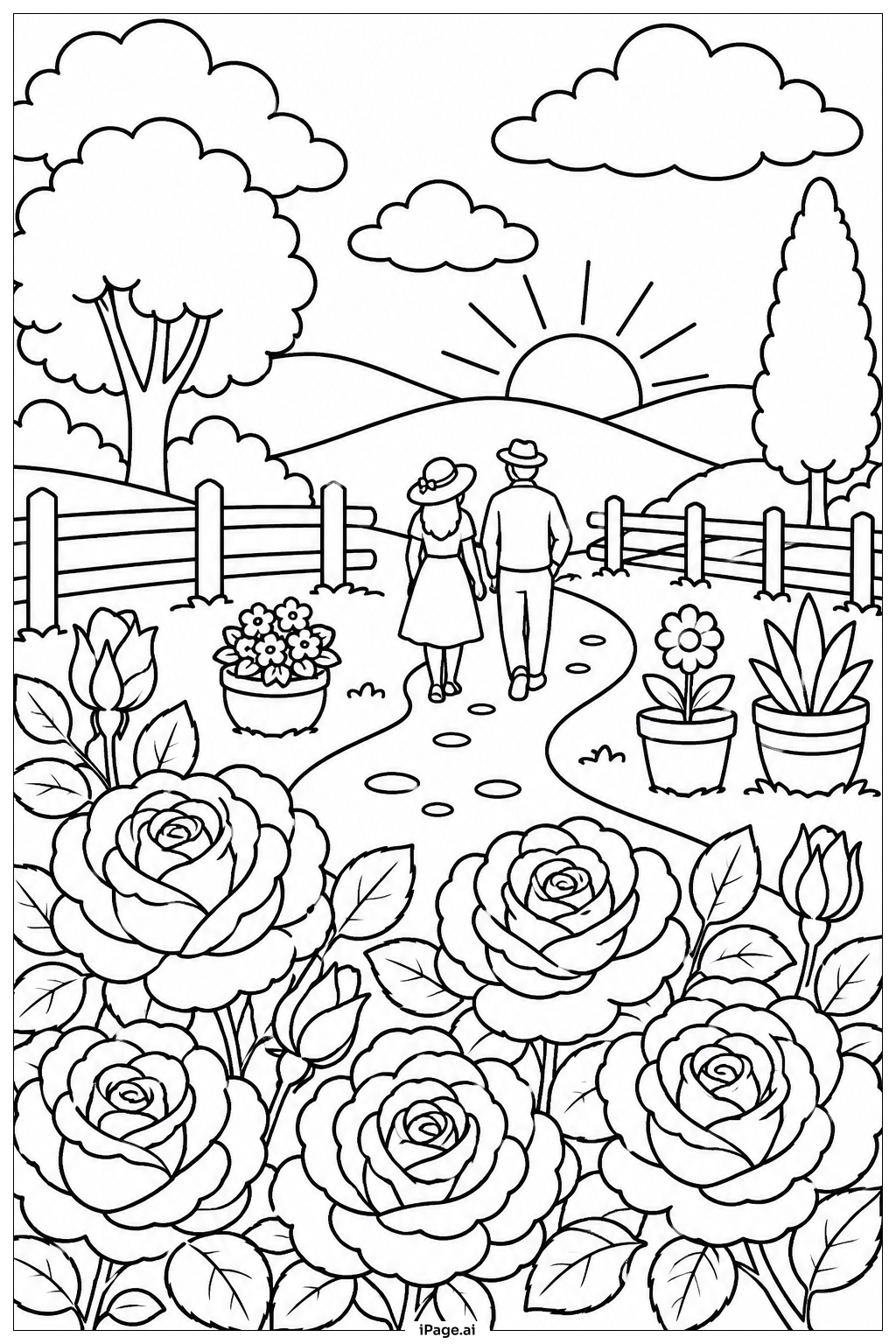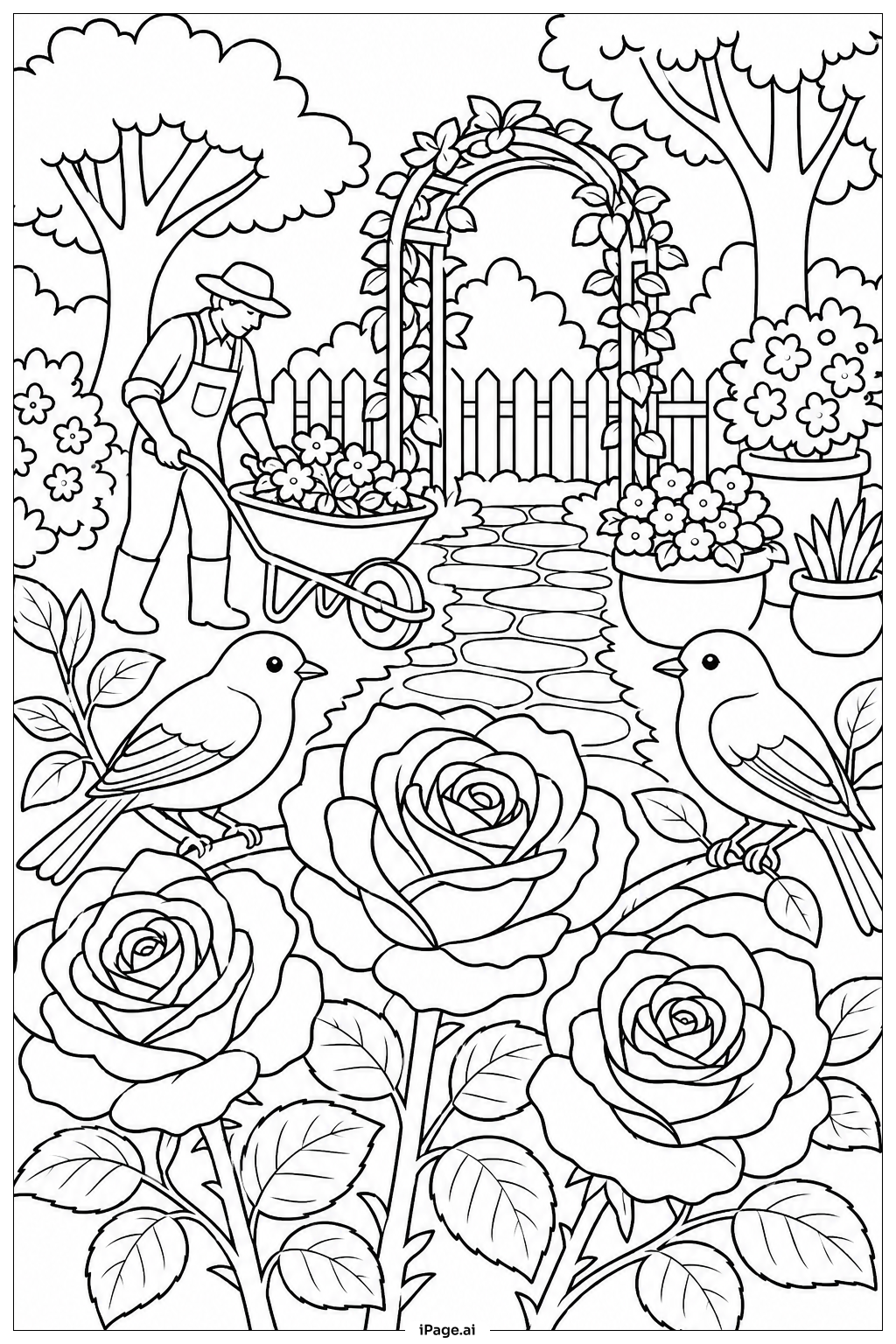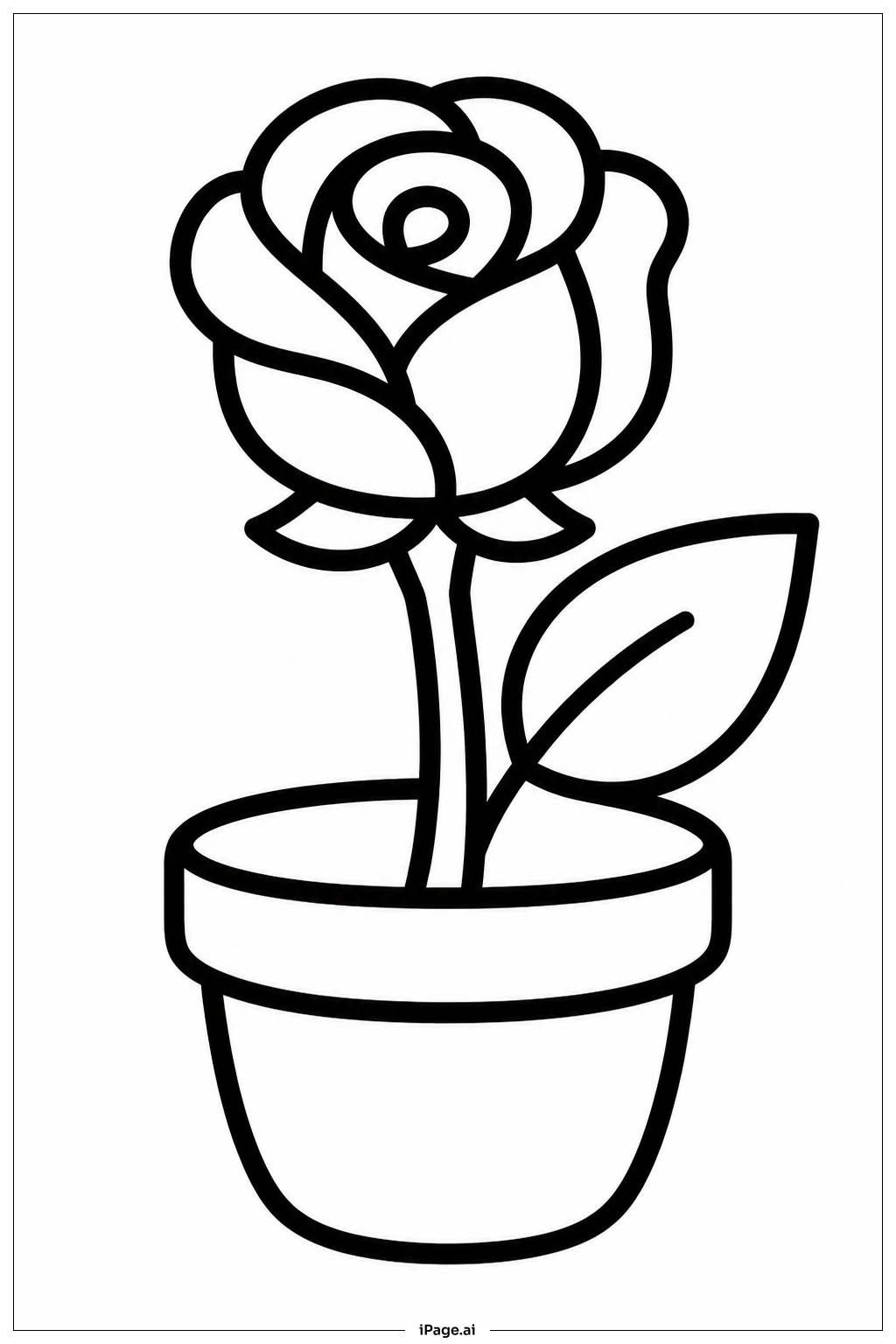
Coloring tips: How to color Rose In Pot coloring page well?
Start with the rose blooms. Use warm reds, pinks, or even soft yellows for the petals. Add a slightly darker shade to the inner petals and the petal edges to create depth. For the buds, use a lighter version of your chosen petal color. Color the leaves and stems in different shades of green — bright green for young leaves and a deeper forest green for the older ones. Add a touch of brown to the stems to make them look natural. For the pot, try terracotta orange, warm red, or even a soft blue or cream. You can add subtle shading along the side of the pot to give it a rounded, three-dimensional look. If you want to make the soil visible at the top, use a rich dark brown. Take your time layering colors gently — this makes the whole picture look more alive and beautiful.
Coloring challenges: Which parts are difficult to color and need attention for Rose In Pot coloring page?
• Layered Rose Petals: The rose bloom has many overlapping petals that spiral inward. Keeping each petal a slightly different shade while still making the whole flower look unified is tricky. You need to work carefully from the outer petals inward, gradually deepening the color toward the center without making the transitions look harsh.
• Small Buds and Tight Curves: The rose buds have tightly curled petals and narrow shapes. Coloring inside these small areas without going over the lines requires a fine-tipped tool and a steady hand. Children especially may find these sections challenging to fill neatly.
• Leaf Vein Details: The leaves include thin vein lines running through them. Coloring around these veins while maintaining two distinct tones — one for the main leaf surface and one for the veins — demands patience and careful color placement.
• Pot Shading and Curvature: The rounded pot may look flat if colored with a single solid tone. To show its curved form, you need to apply lighter color in the center and gradually shade darker toward the edges. Getting this gradient smooth and even can be difficult, particularly for younger colorists.
• Balancing the Overall Color Scheme: With petals, leaves, stems, and a pot all in the same image, choosing colors that complement each other without clashing is a real creative challenge. Making sure no single element overwhelms the rest requires thoughtful color planning before you begin.
Benefits of coloring books: Advantages of drawing Rose In Pot coloring page
Coloring this Rose In Pot image offers a wonderful range of benefits for kids and beginners alike. Working through the detailed petals and leaves helps improve fine motor skills and hand-eye coordination. Carefully staying within the lines builds focus and patience — skills that are useful both in school and everyday life.
Choosing colors for the petals, pot, and leaves encourages creative thinking and personal expression. There is no single right answer, so every child gets to make their own unique version of the image. This builds confidence and a healthy sense of artistic ownership.
The calming, repetitive motion of coloring is also a great stress reliever. Spending time with this peaceful garden scene helps children slow down, breathe, and enjoy a quiet, screen-free activity. It can be a wonderful wind-down routine before bedtime or a relaxing break during a busy day.
For older children, the challenge of shading the petals and pot adds an extra layer of satisfaction when the finished piece comes together. Completing a detailed image like this gives a real sense of accomplishment and pride. Overall, this coloring page is a simple, joyful way to nurture creativity, calm, and concentration all at once.