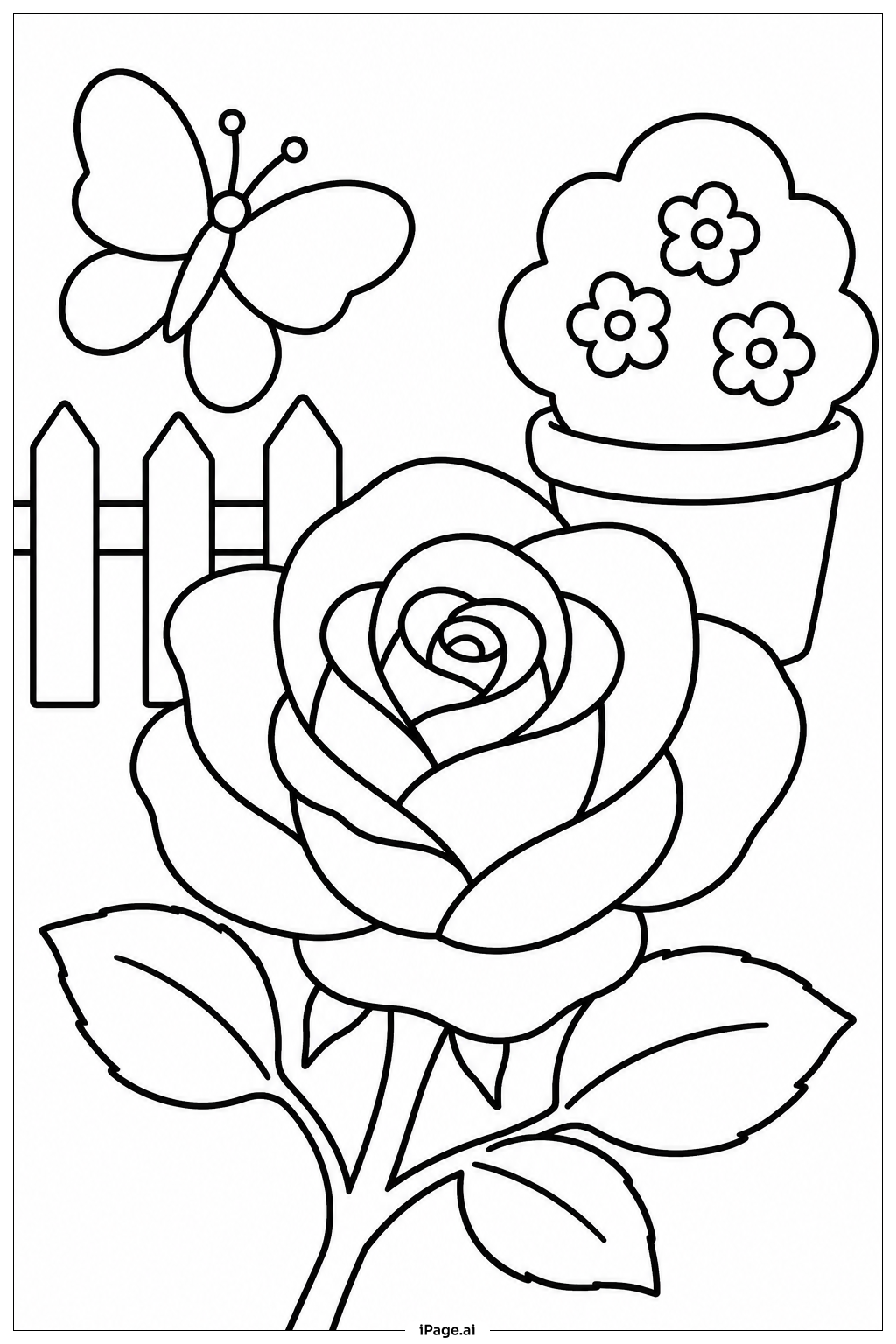
Coloring tips: How to color Rose Garden Scene coloring page well?
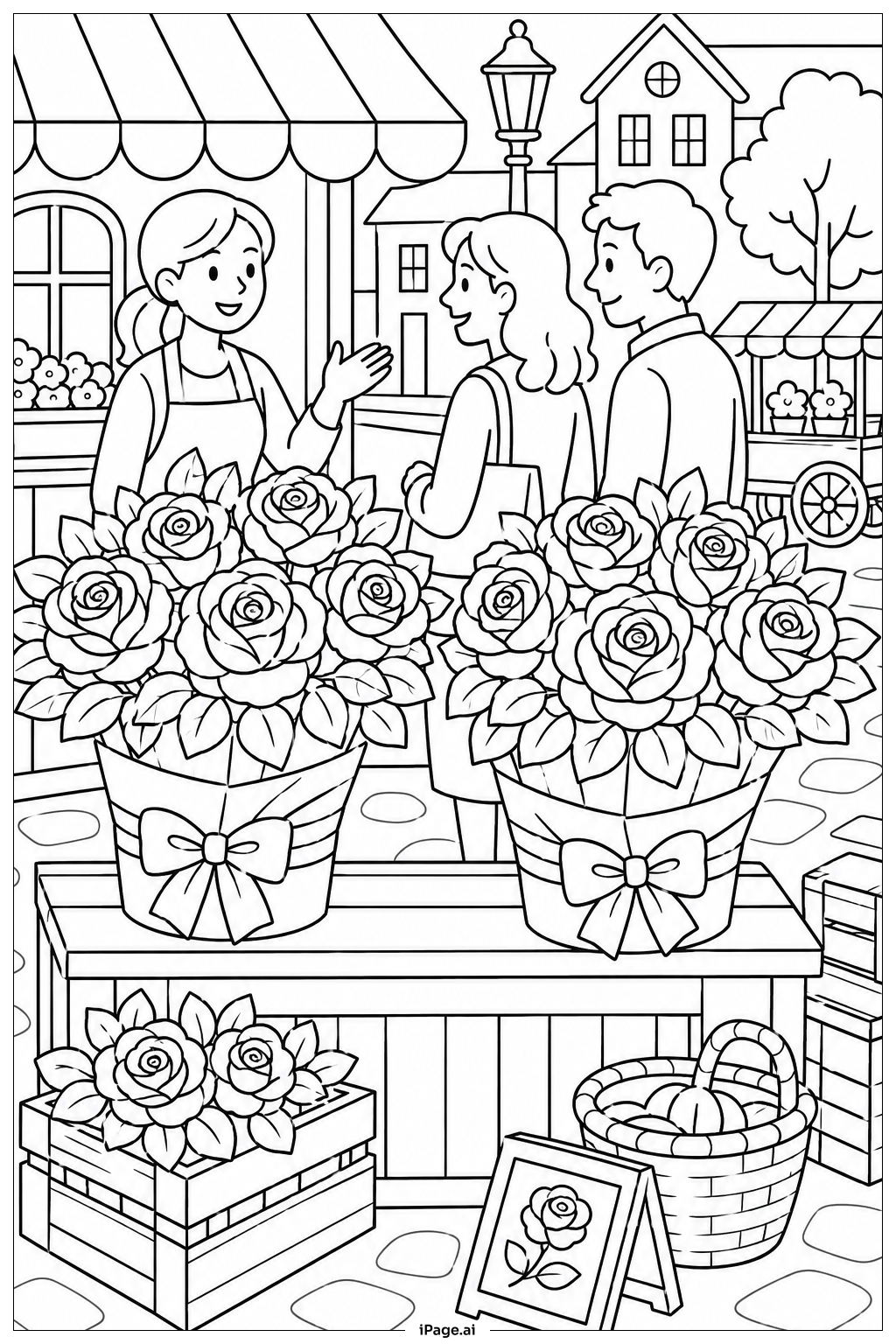
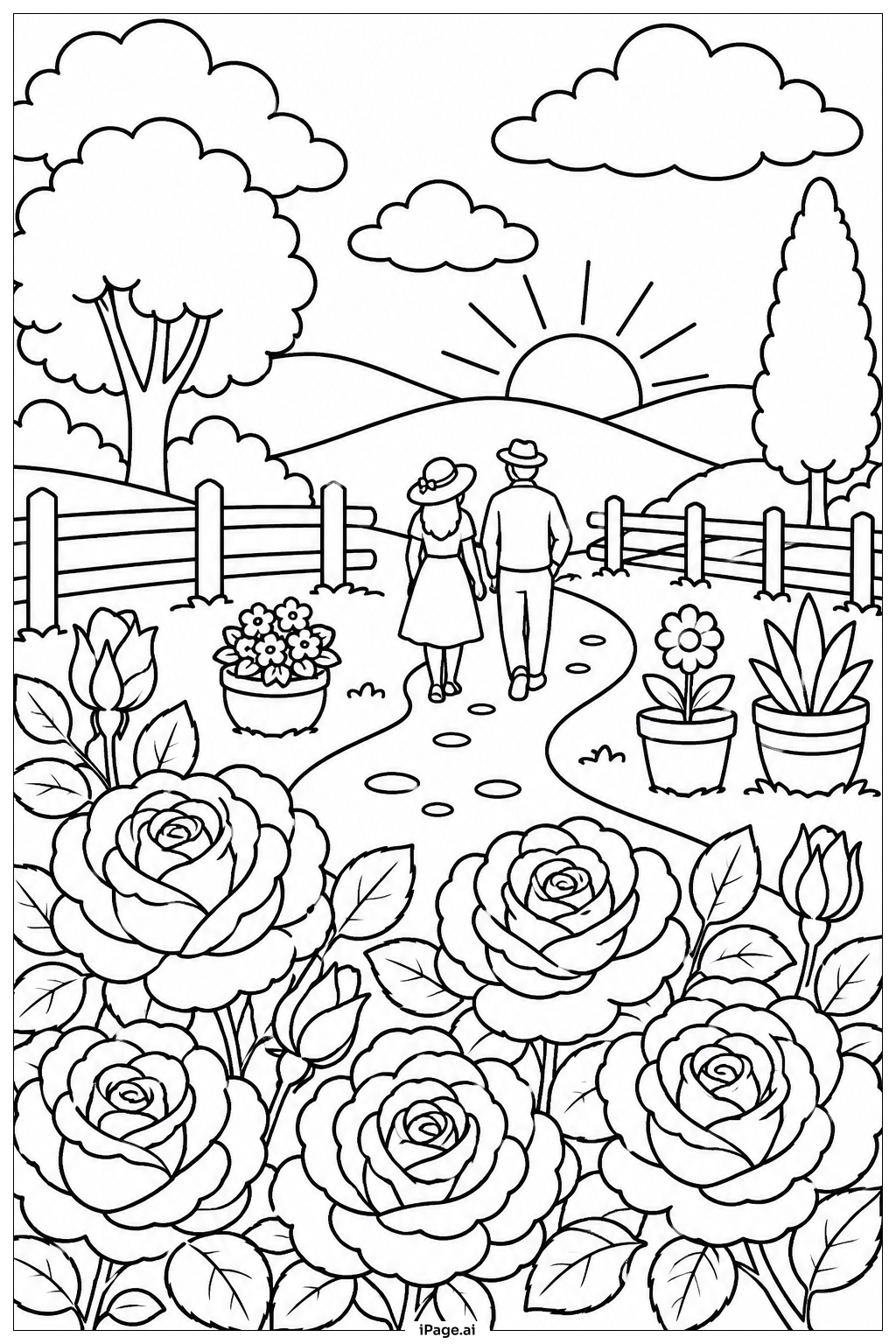
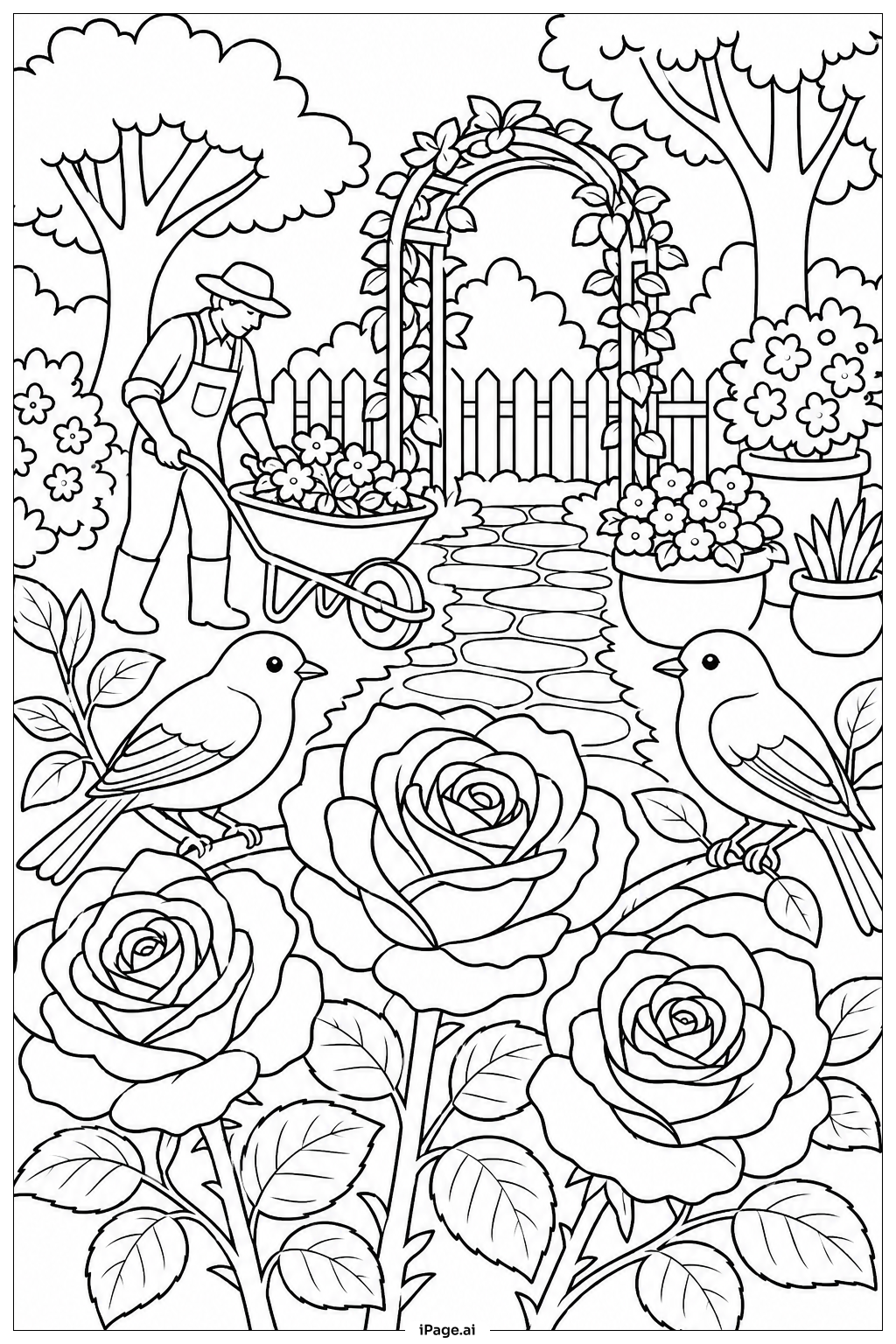
Start with the roses. Use deep red, soft pink, coral, or even lavender for the petals. Try blending two shades together — darker at the base of each petal and lighter at the tip — to give the flowers a lifelike, three-dimensional look.
Color the leaves in different shades of green. Use dark green for older leaves and a brighter, lighter green for the newer, smaller ones. Add a touch of yellow-green along the veins for extra detail.
For the stems, use a medium brown or olive green. Color the thorns slightly darker to make them stand out.
If there is a trellis or arch in the background, try a warm gray, tan, or soft wood-brown color. Keep the background lighter so the roses remain the focal point.
For butterflies or bees, use bright, cheerful colors like yellow, orange, or sky blue. This adds a fun, lively touch to the scene.
Do not worry about staying perfectly inside the lines. Enjoy the process and make the garden your own!
Coloring challenges: Which parts are difficult to color and need attention for Rose Garden Scene coloring page?
• Layered Rose Petals: Roses are made up of many overlapping petals that curve and fold in different directions. Coloring each petal individually while keeping smooth transitions between light and shadow areas takes patience. Beginners may find it tricky to avoid making the blooms look flat or muddy when too many colors blend together in a small space.
• Intricate Leaf Vein Details: The leaves in this scene feature fine vein lines running across their surfaces. Coloring around these tiny details without covering them requires a sharp pencil or a fine-tipped marker. Maintaining contrast between the leaf body and the veins helps the leaves look realistic, but it demands steady hand control.
• Depth and Layering in the Garden: A garden scene has multiple layers — foreground bushes, mid-level climbing roses, and background structures like a trellis or arch. Creating a sense of depth means using darker, richer tones in the foreground and softer, lighter tones further back. Understanding this concept can be challenging for younger colorists who are still learning about spatial composition.
• Small Details on Butterflies and Bees: The butterflies and bees scattered throughout the scene have delicate wing patterns and tiny body segments. These small elements require precision, especially when using markers or crayons that are not fine-tipped. Rushing through these details can result in colors bleeding outside the lines.
• Balancing the Overall Color Harmony: With so many flowers, leaves, insects, and structural elements all in one scene, keeping the full image visually balanced is a real challenge. Choosing a consistent color palette and deciding which elements should stand out versus recede in the background takes thoughtful planning before the first color is applied.
Benefits of coloring books: Advantages of drawing Rose Garden Scene coloring page
Coloring this Rose Garden Scene offers a wide range of wonderful benefits for children and young artists.
First, it builds fine motor skills. Carefully filling in the petals, leaves, and small details helps strengthen hand muscles and improve pencil control — skills that are also useful for handwriting.
Second, it encourages creativity. Choosing which colors to use for the roses, leaves, and butterflies gives colorists the freedom to create their own unique version of the garden. There are no wrong choices, which builds confidence and self-expression.
Third, it teaches patience and focus. A detailed garden scene takes time to complete. Working through the image step by step helps children practice staying on task and seeing a project through from start to finish.
Fourth, it introduces basic art concepts. Blending colors, creating shading, and thinking about depth and contrast are all natural parts of coloring this scene. These are foundational ideas in visual art.
Finally, coloring is calming. The gentle, repetitive motion of coloring helps reduce stress and creates a quiet, peaceful activity that children of all ages can enjoy. It is a healthy screen-free way to relax, explore, and grow creatively.