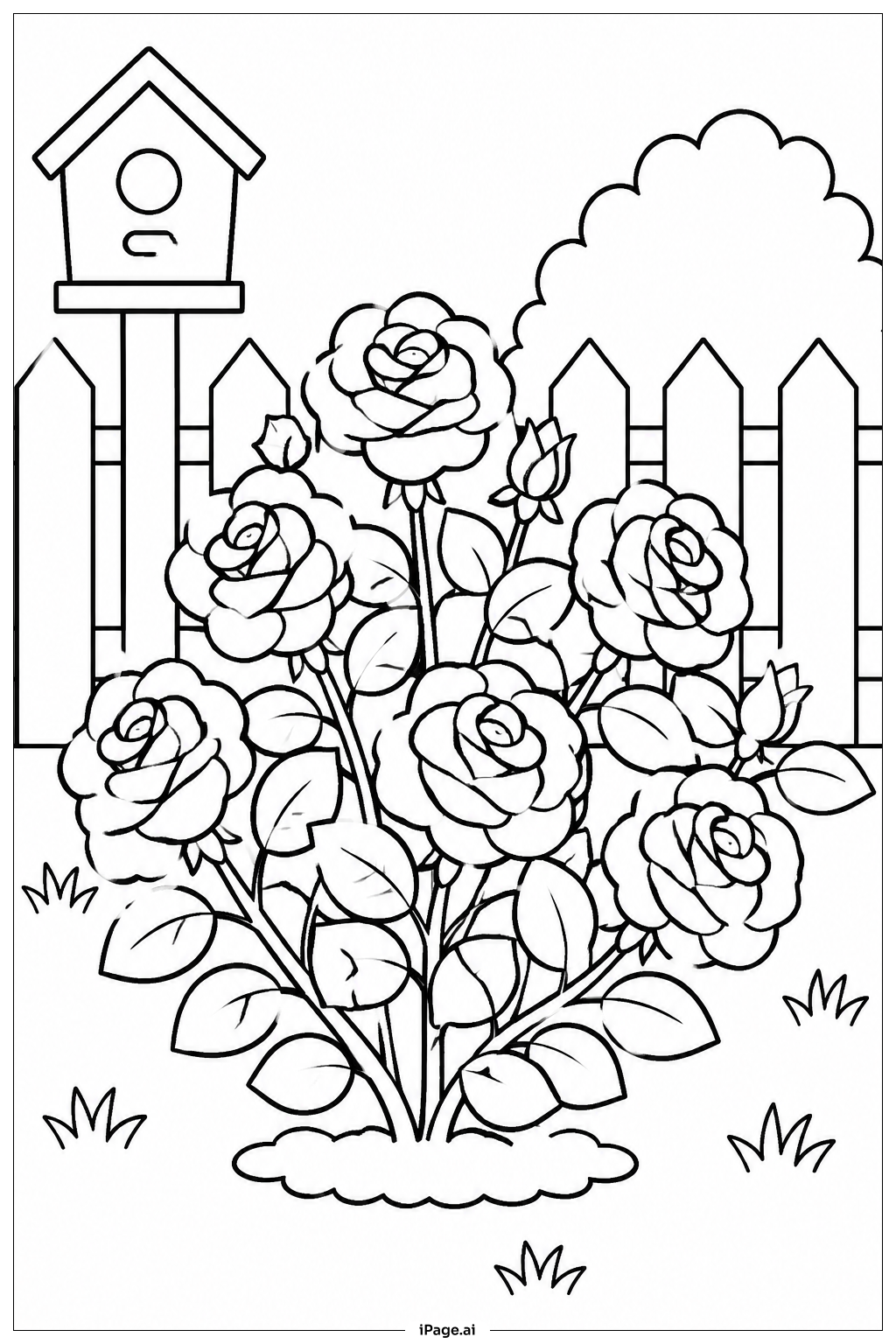
Coloring tips: How to color Rose By Fence coloring page well?
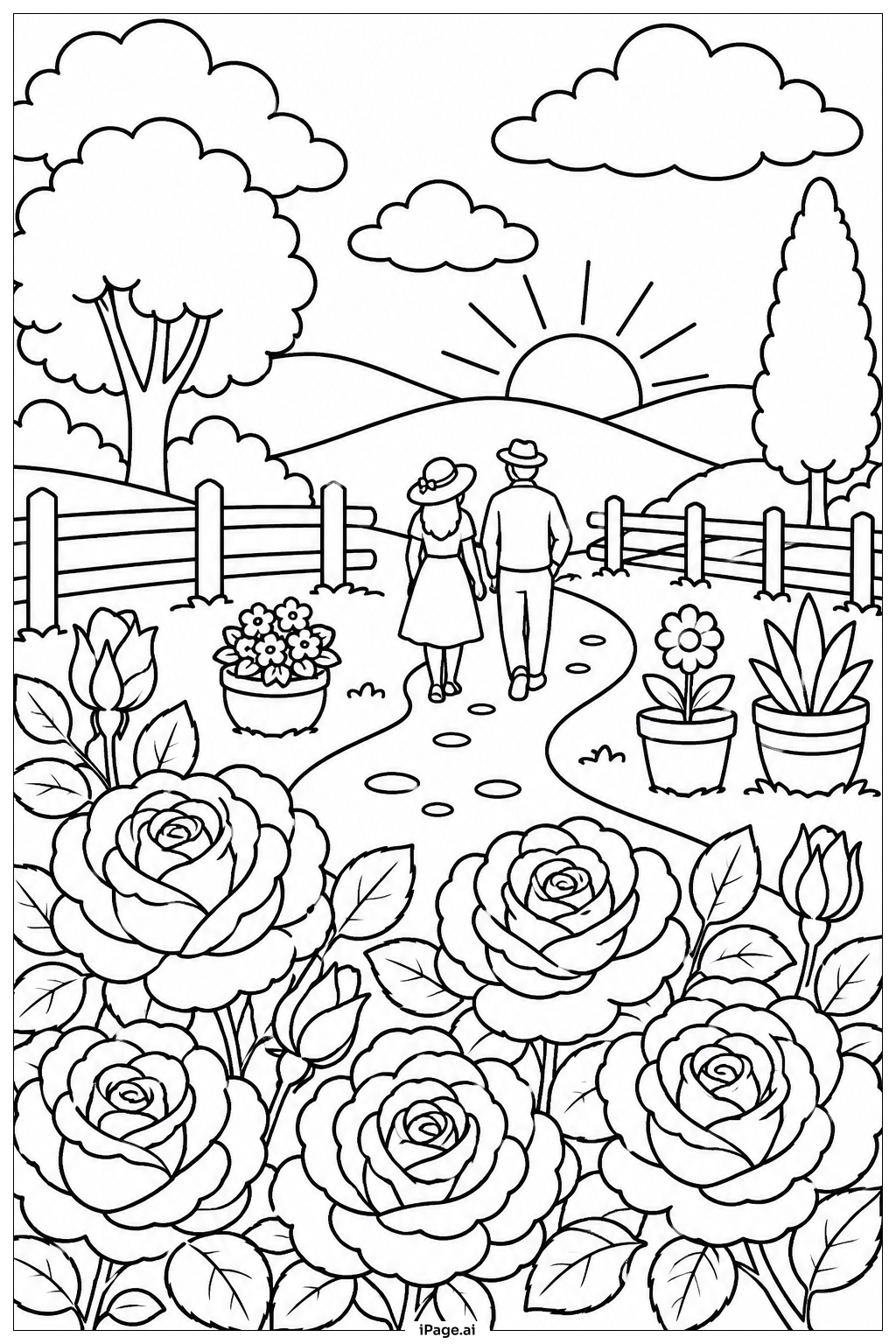
Start with the rose blooms using classic red or pink shades. You can also try soft peach, coral, or even purple for a creative twist. Color the petals in layers, using a slightly darker shade near the center and lighter tones toward the edges to create depth. Use different greens for the leaves — dark green for full leaves and lighter green for smaller or newer ones. Add yellow-green to the leaf veins for a natural touch. Color the fence in warm brown or tan tones. You can add a light gray shadow along the fence boards to make them look more realistic. For a fun effect, try a bright blue or soft purple sky peeking through the fence gaps. Take your time and enjoy the process!
Coloring challenges: Which parts are difficult to color and need attention for Rose By Fence coloring page?
• Layered Rose Petals: The rose blooms have many overlapping petals with curved lines close together. Staying inside each petal shape without smudging into the next one takes patience and a steady hand. Using a fine-tip marker or a sharpened colored pencil will help a lot here.
• Leaf Vein Details: The leaves include small vein lines running through them. These thin lines are tricky to color around. If you want to highlight the veins, leave them uncolored or use a very light green, then fill the rest of the leaf with a deeper shade. Be careful not to press too hard and accidentally cross over the vein lines.
• Stem and Thorn Areas: The stems are narrow and have small thorns along them. Coloring around the thorns without going outside the lines can be challenging, especially where the stems cross each other or weave through the fence. Work slowly in these areas and use the tip of your coloring tool.
• Fence Wood Texture: The fence boards look best with a natural wood grain effect, but recreating that texture with color requires blending light and dark browns in thin strokes. Flat coloring can make the fence look plain, so try layering colors for a more realistic result.
• Background Balance: Deciding what color to use for the background — the spaces between the fence boards and around the rose — can be tricky. Too dark and it overwhelms the flowers; too light and the image loses contrast. Soft blues, greens, or warm yellows work best to complement the rose without overpowering it.
Benefits of coloring books: Advantages of drawing Rose By Fence coloring page
Coloring this Rose By Fence image offers many wonderful benefits for kids and beginners alike. Working through the detailed petals and leaves helps build fine motor skills and hand-eye coordination. Carefully staying within the lines trains focus and patience, two skills that carry over into school and everyday life. Choosing colors for the roses, leaves, and fence encourages creative thinking and personal expression. There is no single right answer — every child can make their own unique version. The garden setting also connects kids to nature, sparking curiosity about plants and how flowers grow. Completing a full page gives a strong sense of achievement and boosts confidence. The calming, repetitive motion of coloring can reduce stress and help children relax after a busy day. For older kids and teens, the layering challenges in the petals and fence texture offer a satisfying way to practice shading and blending techniques. Overall, this image is a joyful and rewarding coloring experience for all ages.