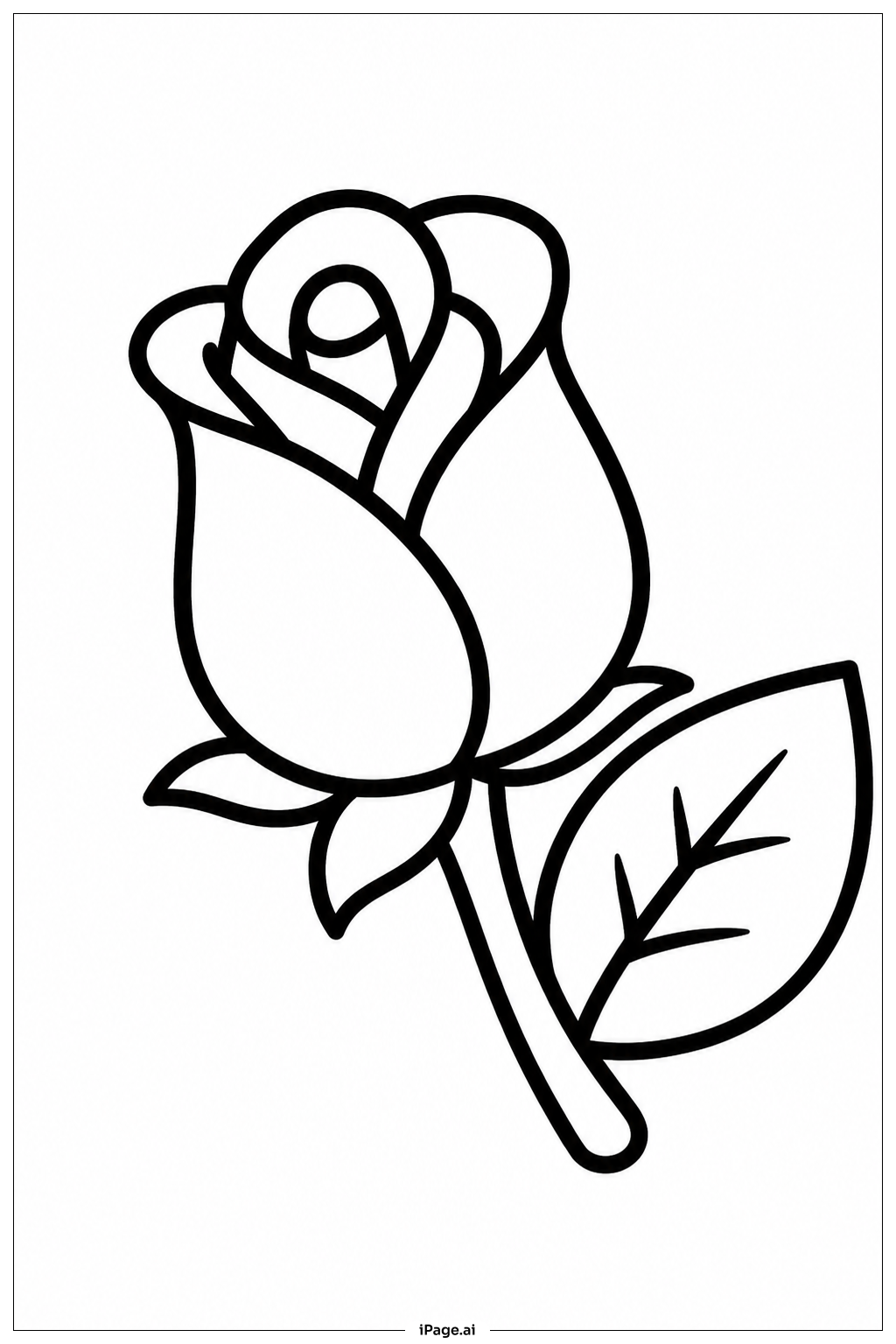
Coloring tips: How to color Rose Bud With Leaf coloring page well?
Start with the rose bud. Use soft pinks or light reds for the inner petals, then add a slightly darker shade on the outer petals to create depth. You can try coral, peach, or even lavender if you want a creative twist. Leave a few small highlights near the petal edges to make the bud look fresh and alive. For the leaf, use a medium green as your base. Add a darker green along the edges and near the veins to give it a natural, layered look. A touch of yellow-green near the center vein can make the leaf feel bright and healthy. Color the stem in a earthy green or olive tone. If you like, add tiny hints of brown near the base for a realistic feel. Take your time with each section. Blend colors slowly and gently for a smooth, beautiful result.
Coloring challenges: Which parts are difficult to color and need attention for Rose Bud With Leaf coloring page?
• Layering the Petal Colors: The rose bud has multiple overlapping petals that curve in different directions. Coloring each petal individually while keeping the shading consistent across all of them can be tricky. You need to decide where the light hits and where shadows fall, then apply darker and lighter tones accordingly without making the transitions look harsh or uneven.
• Staying Inside Small Curved Lines: The petals of the bud have tight, curved edges that are close together at the top. Keeping your coloring tool within these narrow spaces without smudging into neighboring petals requires a steady hand and a fine-tipped pencil or marker. This is especially challenging for younger children.
• Coloring the Leaf Veins Neatly: The leaf has a central vein and many smaller side veins spreading across its surface. These thin lines are easy to accidentally color over. To preserve them, you can either color very carefully around each vein or use a white gel pen afterward to restore their appearance.
• Creating Natural Green Gradients: A flat, single-color green can make the leaf look dull and lifeless. Blending two or three shades of green smoothly, from light near the center to darker at the edges, requires patience and layering skill. Using circular strokes and light pressure helps build up color gradually without streaks.
• Balancing the Overall Color Harmony: The rose bud and the leaf need to look good together as a whole. Choosing colors that complement each other, such as warm pinks with cool greens, helps create a pleasing and natural-looking composition. Overcoloring one section can make the other part feel out of place.
Benefits of coloring books: Advantages of drawing Rose Bud With Leaf coloring page
Coloring this rose bud image offers a wide range of benefits for children and beginners alike. Working with the curved petal shapes helps build fine motor skills and hand control, which are important for writing and everyday tasks. Choosing colors for the petals and leaf encourages creative thinking and gives children the freedom to express themselves in a safe, open-ended way. The detailed veins on the leaf and the layered petals gently challenge focus and concentration, helping children practice sitting still and working carefully toward a goal. This kind of quiet, focused activity can also reduce stress and anxiety, creating a calm and enjoyable moment away from screens. Completing the image gives a sense of pride and accomplishment, which builds confidence over time. Nature-themed Coloring Pages like this one also spark curiosity about the natural world, encouraging children to observe real plants and flowers more closely. It is a simple yet meaningful activity that combines creativity, learning, and relaxation all in one page.