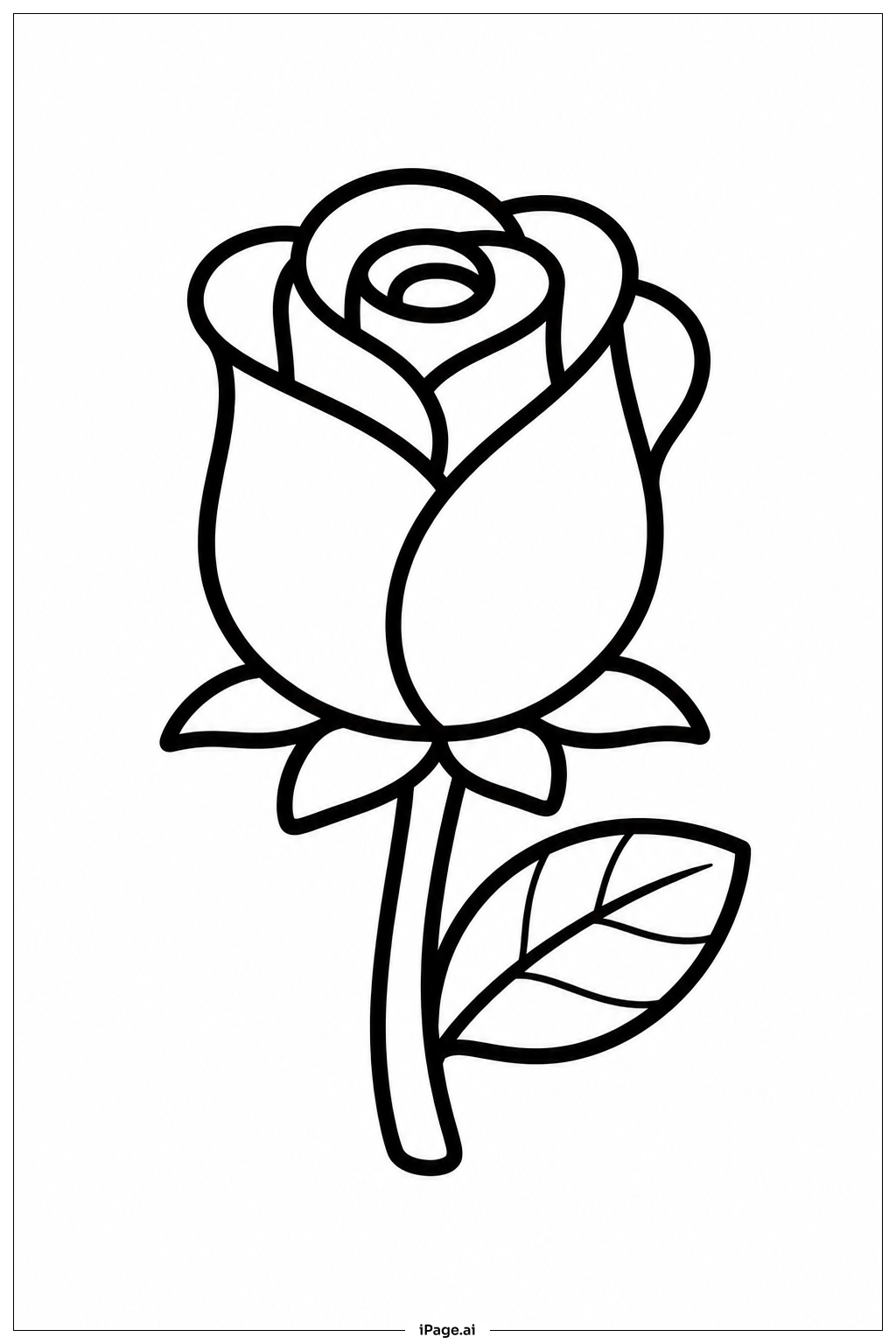
Coloring tips: How to color Rose Bud coloring page well?
Start by coloring the bud itself. Classic red or pink shades work beautifully, but feel free to try peach, coral, lavender, or even yellow for a creative twist. Use a lighter shade on the inner petals and a slightly darker tone on the outer edges to create a natural, rounded look. For the leaves, choose a bright green for a fresh feel or a deeper olive green for a more realistic result. Add a touch of yellow-green along the leaf veins to make them stand out. Color the stem with a medium green, and use a slightly darker shade on one side to suggest shadow and give the stem a three-dimensional feel. The thorns can be colored in a warm brown or kept the same color as the stem. Take your time with each petal. Smooth, gentle strokes will help blend the colors naturally. Younger colorists can keep it simple with flat colors, while older or more experienced colorists can experiment with shading and color gradients to bring the rose bud to life.
Coloring challenges: Which parts are difficult to color and need attention for Rose Bud coloring page?
• Petal Layering and Depth: The rose bud has multiple petals that overlap and wrap around each other tightly. Capturing the sense of depth without making the bud look flat requires careful use of light and shadow. Colorists need to identify which petals sit on top and which are tucked beneath, then shade accordingly. This can be tricky, especially for younger or less experienced colorists.
• Smooth Color Blending on Curved Surfaces: The rounded shape of the bud means colors naturally transition from light to dark across a curved surface. Achieving a smooth gradient without harsh lines or streaks takes patience and controlled strokes. Colored pencils require a light hand and layering technique, while markers need quick blending before the ink dries.
• Leaf Vein Details: The leaves feature fine vein lines that run from the center outward. Coloring around these thin lines without accidentally covering them demands precision. If the veins are to appear lighter than the leaf body, colorists must carefully avoid those areas or use a very light touch near them.
• Stem and Thorn Texture: The stem is narrow, and the small thorns sit along its edges. Staying within such a thin shape while also suggesting the rounded, cylindrical form of the stem is a common challenge. Using two slightly different shades on either side of the stem can help, but requires a steady hand and a fine-tipped coloring tool.
• Consistent Color Harmony: Choosing colors that feel unified across the petals, leaves, and stem can be difficult. A color that looks good on its own may clash with others once placed side by side. Planning the overall color palette before starting helps avoid mismatched results.
Benefits of coloring books: Advantages of drawing Rose Bud coloring page
Coloring this rose bud page offers a wide range of benefits for children and adults alike. For younger colorists, it helps develop fine motor skills as they practice staying within the delicate lines of the petals, leaves, and stem. Choosing and mixing colors also encourages creativity and builds confidence in artistic decision-making.
For older children and teens, the detailed structure of the rose bud introduces basic concepts of botanical illustration, such as how petals layer and how light falls on a curved surface. This naturally builds an understanding of shading, color theory, and spatial awareness in a fun and stress-free way.
For adults, coloring intricate floral designs like this one is a well-known way to reduce stress and promote mindfulness. Focusing on each small section of the image encourages a calm, meditative state that helps quiet a busy mind.
Across all age groups, completing a coloring page builds a sense of accomplishment and pride. The rose bud, as a symbol of potential and new beginnings, also carries an uplifting emotional quality. Spending time with this image can inspire appreciation for the natural world and the quiet beauty found in everyday things. It is a simple, accessible, and genuinely rewarding creative activity.