Coloring tips: How to color Rose Arbor Pathway coloring page well?
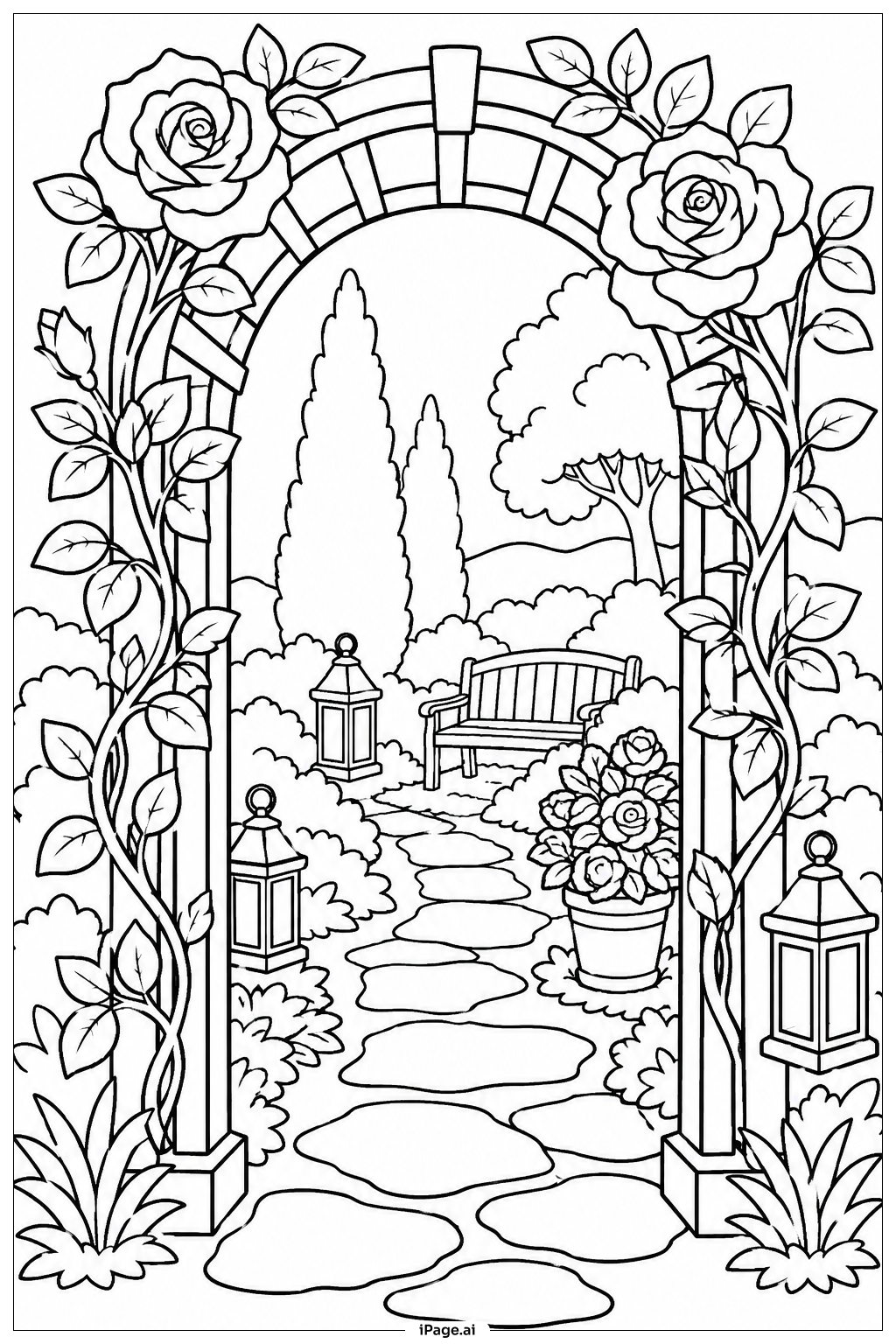
Start with the roses. Use shades of red, pink, coral, or yellow for the petals. Add a lighter tone in the center and a deeper shade near the edges to make the flowers look full and real. Color the leaves in different greens — light green for new growth and darker green for the older leaves. For the arbor arches, try brown or dark gray to suggest wood or iron. Use tan, beige, or gray tones for the stone pathway. Add some moss-green patches between the stones to bring the path to life. The background sky, if visible, can be a soft blue or warm golden tone to set a peaceful mood. Do not rush — work section by section to keep the colors neat and avoid mixing up the many overlapping details.
Coloring challenges: Which parts are difficult to color and need attention for Rose Arbor Pathway coloring page?
• Overlapping Rose Petals: The roses in this image have many layered petals that overlap each other. Keeping each petal a slightly different shade while still making the flower look unified is tricky. You need to blend light and dark tones carefully so the petals look round and soft rather than flat.\n\n• Dense Foliage and Vines: The climbing vines and leaves cover a large portion of the arbor. Because so many leaves sit close together or on top of each other, it can be hard to tell them apart. Using two or three different shades of green for different leaf clusters helps separate them visually.\n\n• Arbor Structure Details: The arches of the arbor have thin, repeating lines and structural details. Staying inside these narrow sections without smudging the surrounding areas requires a fine-tipped tool and a steady hand. This is one of the most patience-testing parts of the image.\n\n• Stone Pathway Texture: The stepping stones along the path each have their own shape and subtle texture. Giving each stone a slightly different tone — some warmer, some cooler — while keeping them all looking like stone is a careful balancing act. Shading the edges darker than the center adds a natural three-dimensional feel.\n\n• Depth and Perspective: The pathway curves into the distance, meaning objects farther away should appear lighter and less detailed. Maintaining this sense of depth through color — keeping the foreground richer and the background softer — adds realism but takes planning and consistent color control throughout the whole scene.
Benefits of coloring books: Advantages of drawing Rose Arbor Pathway coloring page
Coloring this Rose Arbor Pathway image brings many wonderful benefits for both kids and adults. The detailed garden scene encourages focus and patience, especially when working through the many petals, leaves, and stones. Spending time on each section helps build concentration skills that are useful in school and daily life. For younger children, choosing colors for the roses and pathway is a fun way to practice color recognition and fine motor control. Holding and guiding a coloring tool through the narrow spaces also strengthens hand muscles and improves handwriting skills over time. For older kids and adults, the peaceful garden theme makes coloring a relaxing activity that can reduce stress and quiet a busy mind. The repetitive motion of filling in sections has a calming, almost meditative effect. Creative thinking also gets a boost as colorists decide which rose colors to use, how to shade the stones, or whether to add a sunset sky. Finishing the full image builds a real sense of accomplishment and pride. Sharing the completed artwork with family or friends adds a joyful social element too. Overall, this image is a beautiful blend of creativity, calm, and skill-building.