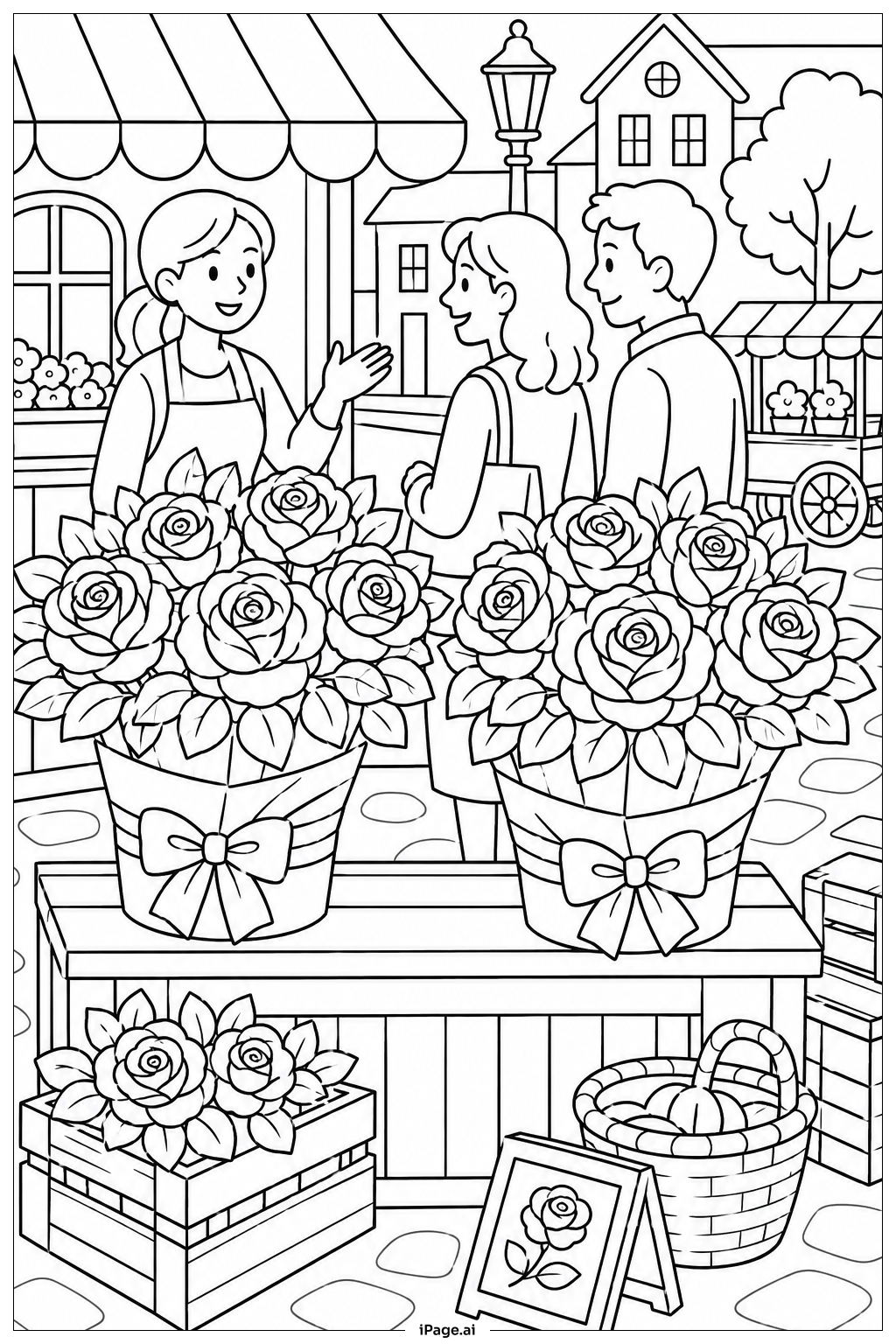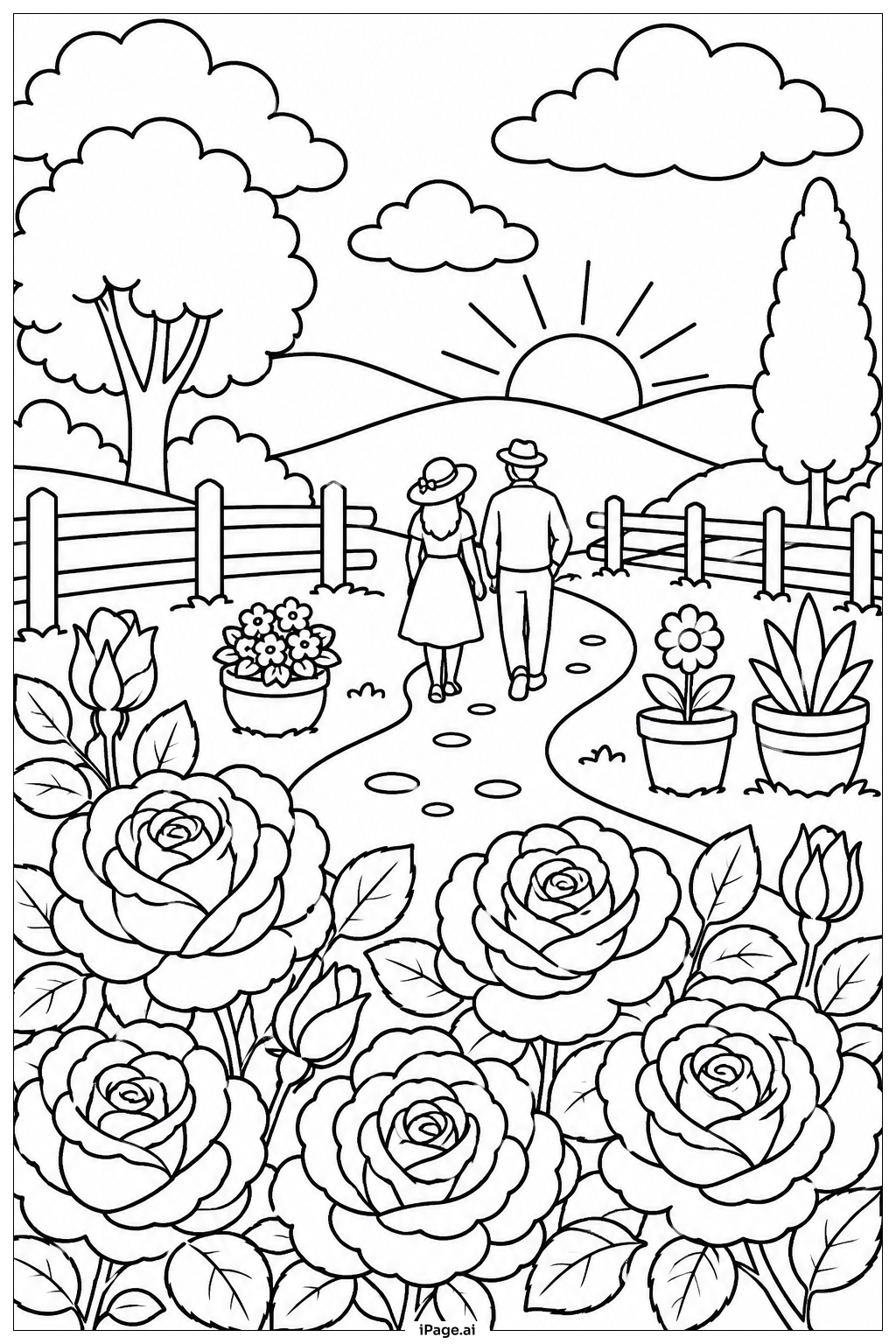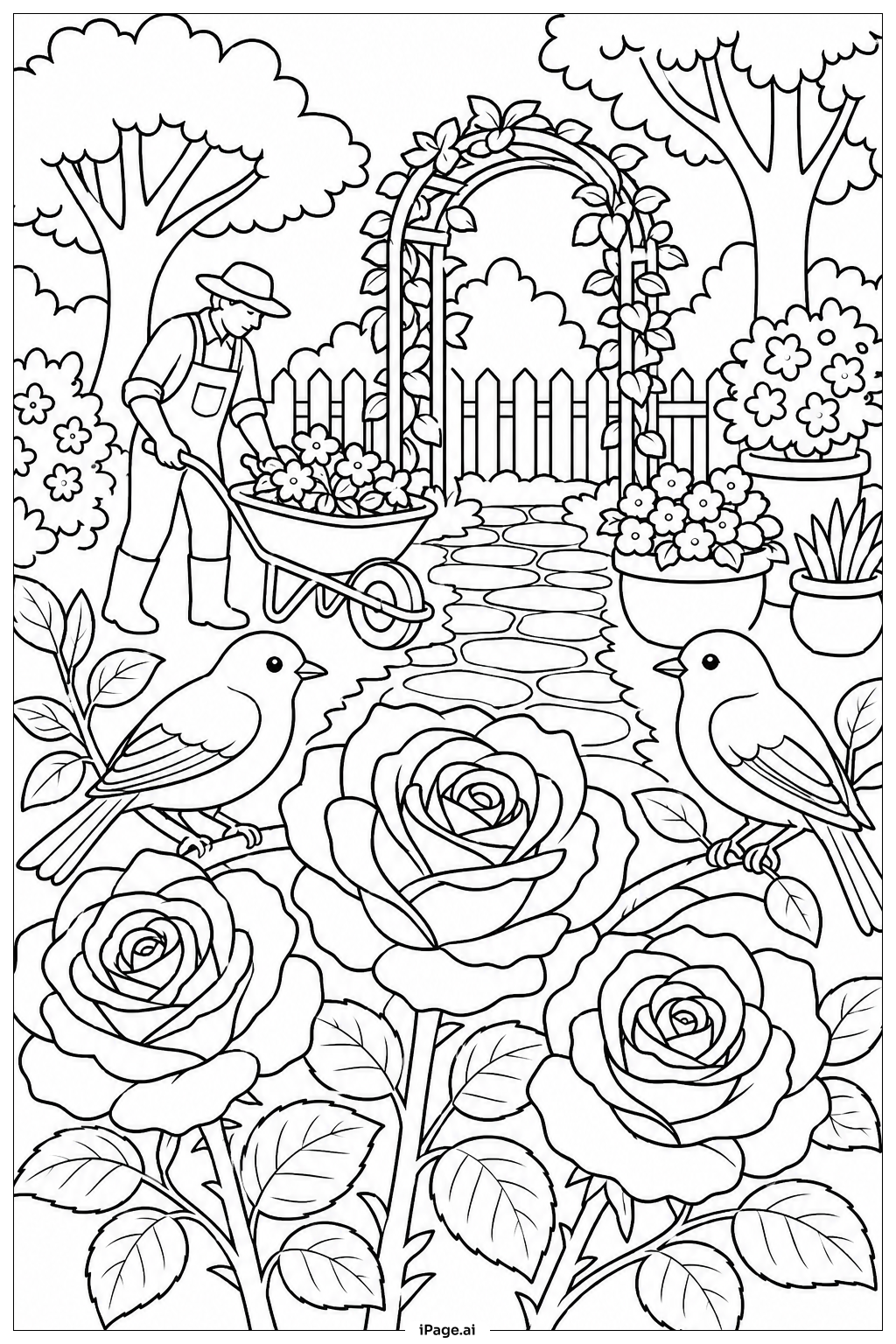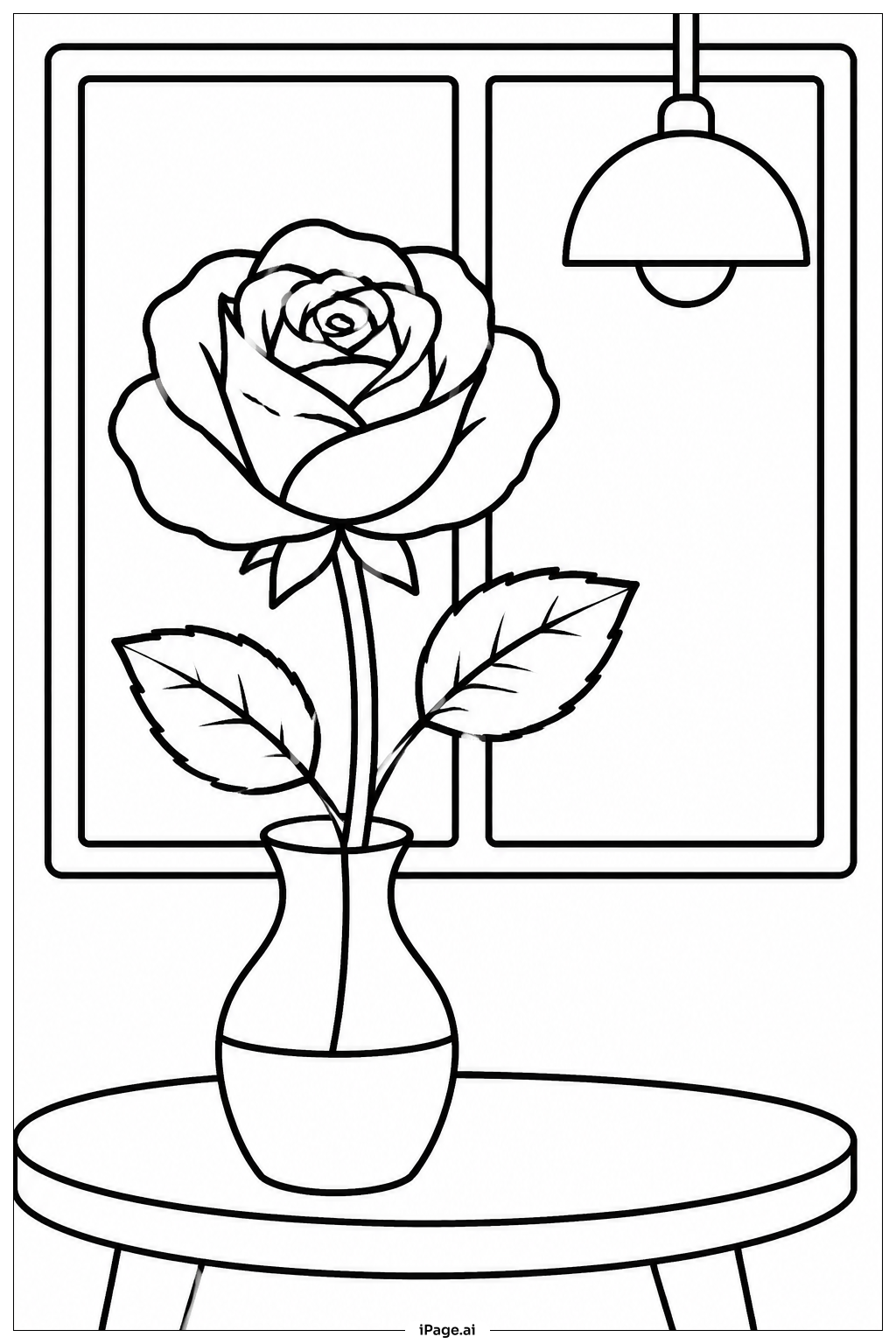
Coloring tips: How to color Rose And Vase coloring page well?
Start with the rose petals using shades of red or pink. Use a lighter tone at the outer edges of each petal and a deeper, richer tone near the center to create depth and a natural look. For the leaves, choose different shades of green. Use a bright green for the upper surface and a slightly darker green for the undersides and veins. The stem can be colored in medium green or olive. For the vase, try warm colors like cream, ivory, or soft yellow to give it a classic feel. You can use a light tan for the base and add gentle shading along the sides to show its curved shape. Adding a soft shadow at the bottom of the vase helps ground the image. Feel free to use your favorite colors. There are no wrong choices — this is your own creation!
Coloring challenges: Which parts are difficult to color and need attention for Rose And Vase coloring page?
• Layered Rose Petals: The rose has many overlapping petals with curved edges and delicate folds. Coloring each petal individually while keeping smooth gradients from light to dark can be tricky. Take your time and work petal by petal to avoid muddy or uneven coloring.\n\n• Petal Shading and Depth: Creating a sense of three-dimensional depth within the rose requires careful blending. The inner petals near the center should be darker, while the outer petals should be lighter. Getting this gradient to look natural takes patience and a steady hand.\n\n• Leaf Veins and Details: Each leaf contains fine veins that divide the surface into small sections. Coloring around these thin lines without going over them is a real challenge. Using a sharp colored pencil or a fine-tipped marker helps preserve these details.\n\n• Vase Surface Patterns: The decorative lines and patterns on the vase surface require careful attention. These fine details need a steady hand and a thin tool to fill accurately without smearing or overlapping adjacent areas. The curved shape of the vase also means colors should follow the contour to look realistic.\n\n• Color Transitions Between Elements: Keeping the rose, leaves, stem, and vase visually distinct while maintaining a harmonious overall color palette is a subtle challenge. Choosing colors that contrast well without clashing takes a bit of planning before you begin coloring.
Benefits of coloring books: Advantages of drawing Rose And Vase coloring page
Coloring this Rose And Vase image offers many wonderful benefits for kids and adults alike. The detailed rose petals and vase patterns help children practice fine motor skills and hand-eye coordination as they carefully stay within the lines. Choosing colors for the petals, leaves, and vase encourages creative thinking and helps develop a natural sense of color harmony. Working through each section of the image builds focus and patience, which are valuable skills both in and out of the classroom. For older kids and adults, blending and shading techniques can be explored to create a more realistic and polished result, offering a gentle introduction to artistic concepts. The calming, repetitive nature of coloring also helps reduce stress and anxiety, making this a great activity after a busy day. Finishing the image gives a real sense of accomplishment and pride. Whether you color it quickly for fun or slowly with great care, this rose and vase scene is a rewarding and enjoyable experience for colorists of all ages and skill levels.