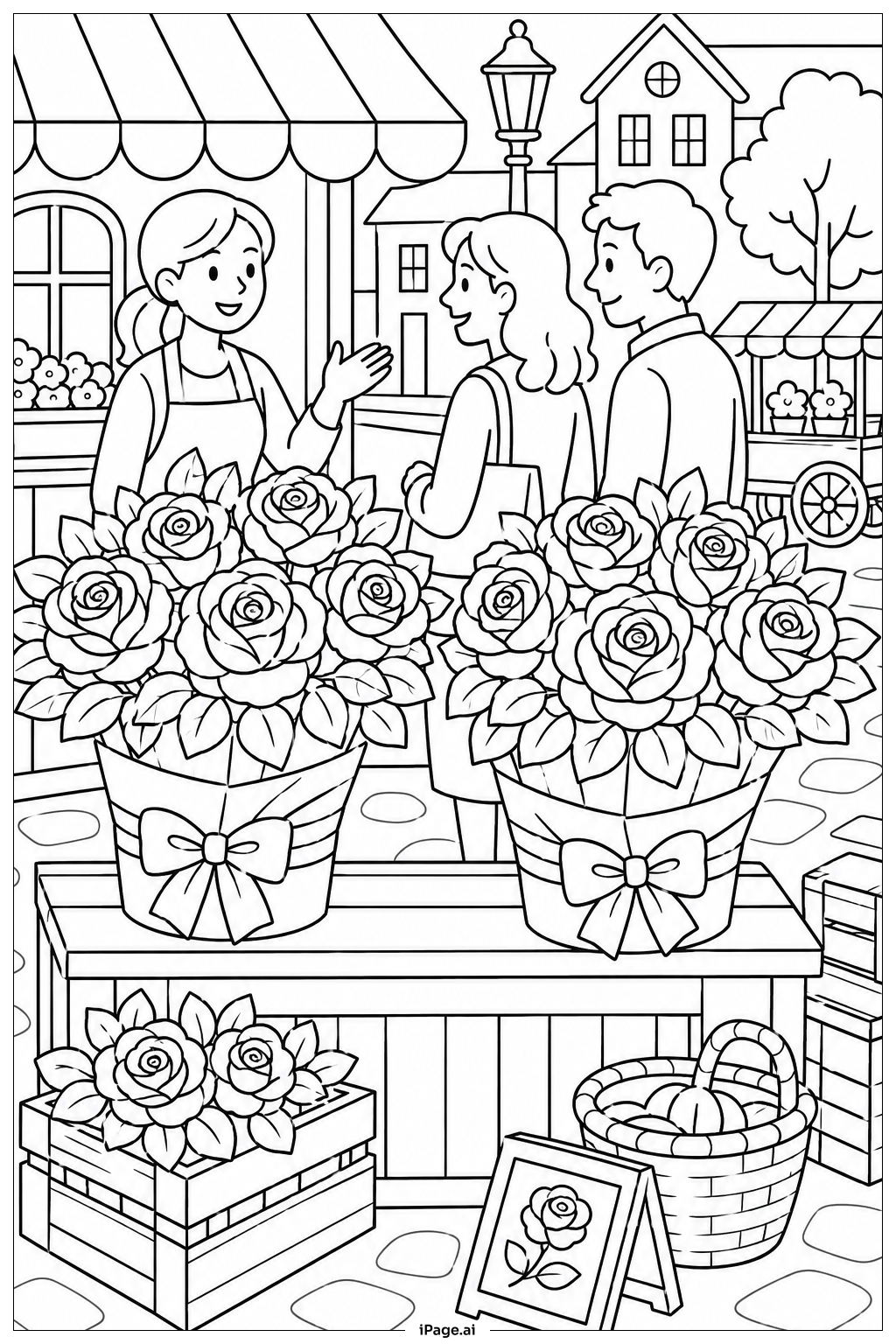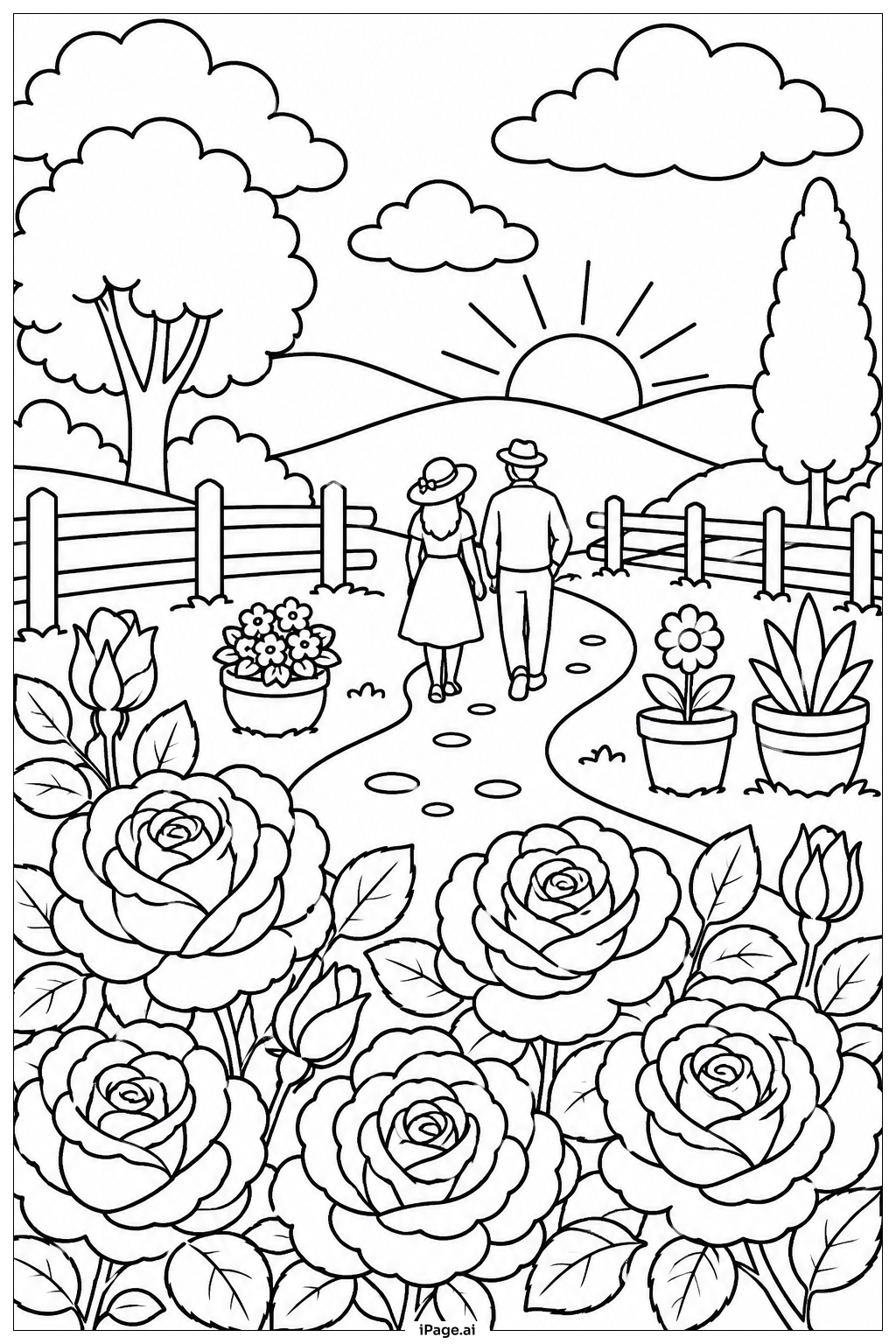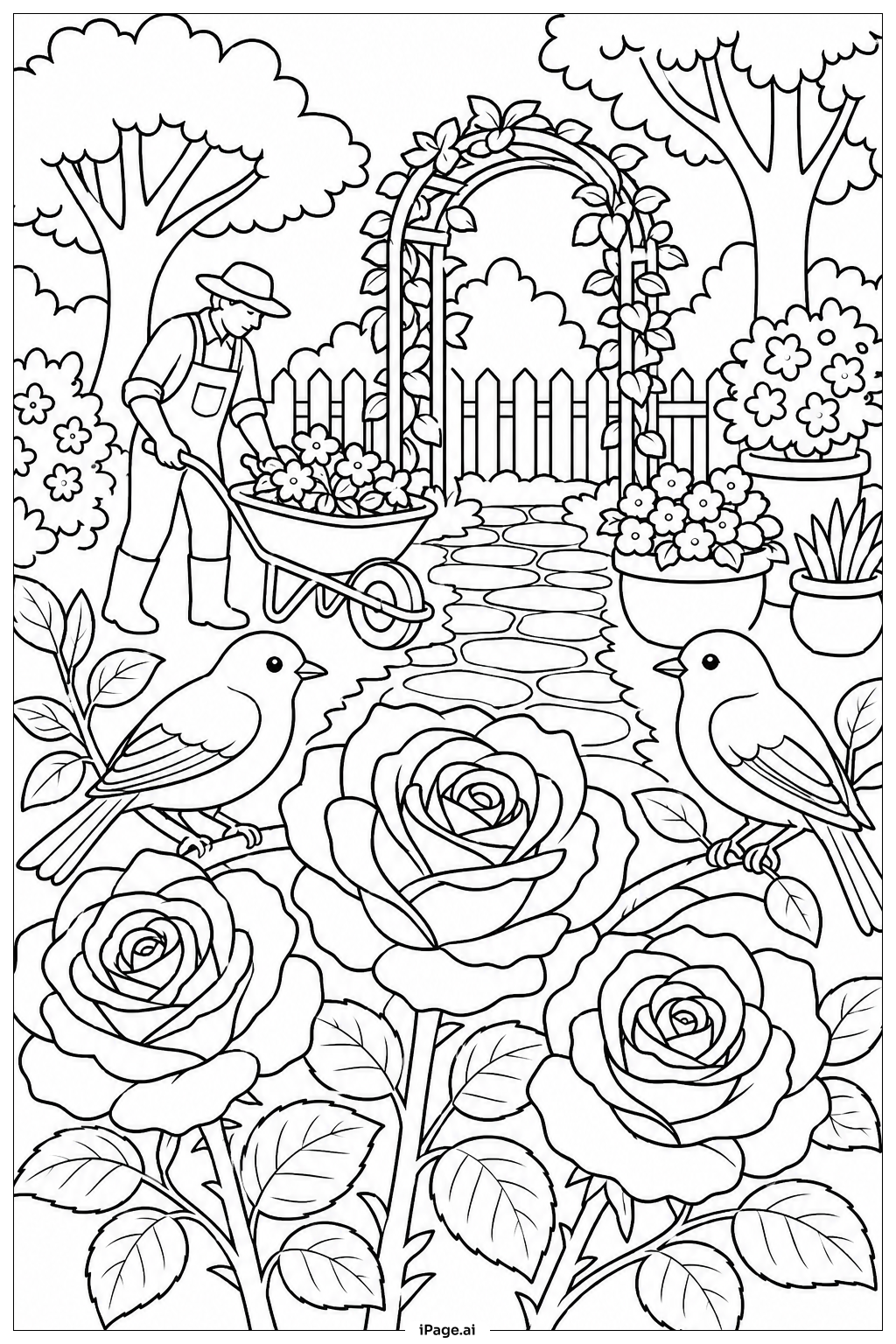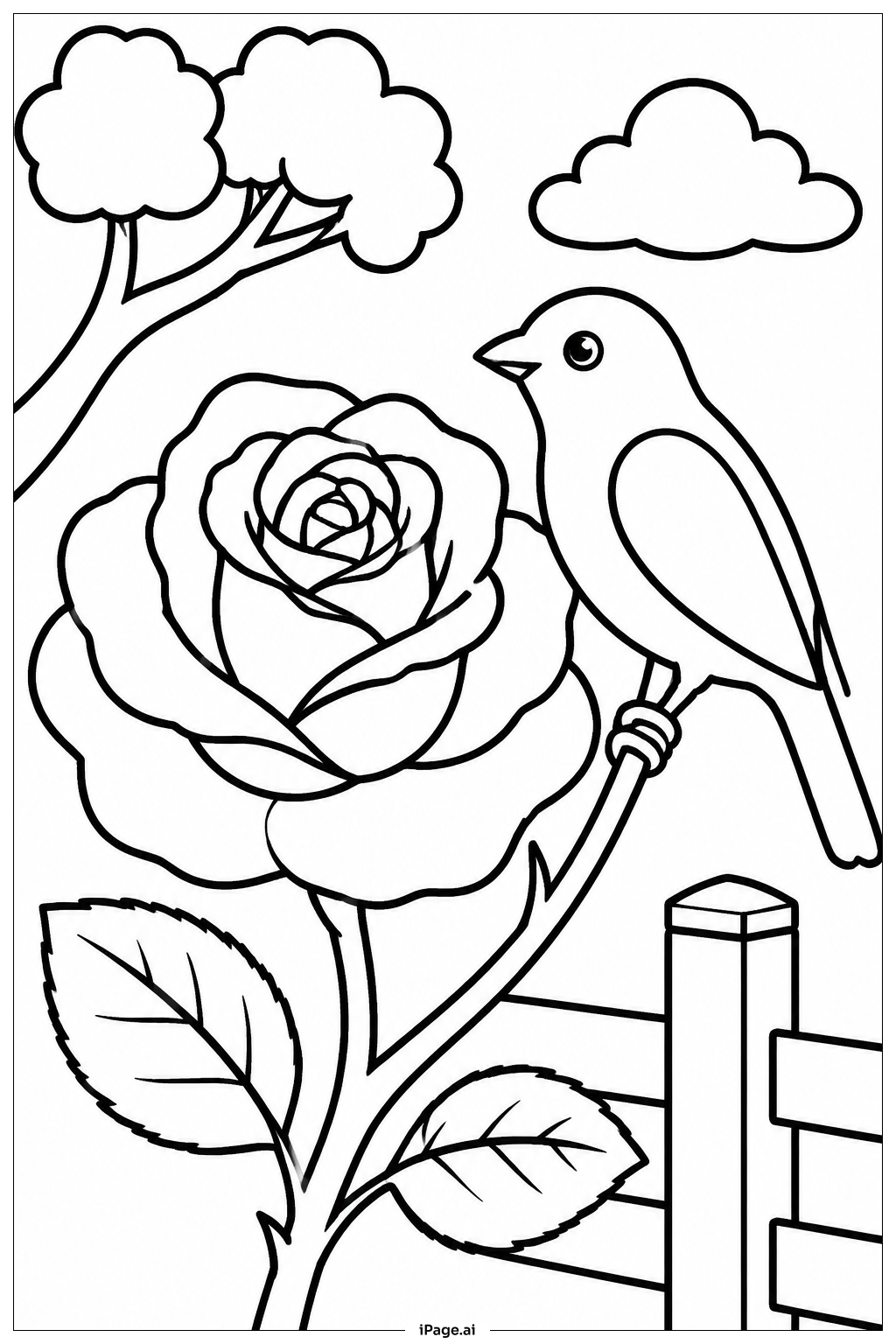
Coloring tips: How to color Rose And Bird coloring page well?
Start with the rose petals using shades of red, pink, or yellow. Add a slightly darker tone to the inner petals to create depth and shadow. Use bright green for the leaves and stems, and add a darker green along the edges to show the leaf veins. For the bird, try warm colors like orange, yellow, or sky blue to make it stand out against the rose. You can use brown or gray for the beak and feet. Color the background lightly with pale blue or soft lavender to give the scene a calm, garden feel. Take your time with small areas, and remember — there is no wrong color choice. Let your imagination lead the way and have fun making this scene uniquely yours.
Coloring challenges: Which parts are difficult to color and need attention for Rose And Bird coloring page?
• Layered Rose Petals: The rose has many overlapping petals, each curling in different directions. Keeping the colors consistent while adding shading between each layer can be tricky. You need a steady hand to stay within the curved petal outlines and blend light and shadow smoothly without muddying the colors.
• Leaf Vein Details: The leaves have fine, branching veins drawn throughout. Coloring around these thin lines without covering them takes patience and a sharp colored pencil or a fine-tipped marker. If the veins get covered, the leaves can look flat and lose their natural texture.
• Bird Feather Texture: The bird's feathers are made up of many small, overlapping shapes. Coloring each feather individually with slightly different shades adds realism, but this requires careful attention to direction and pressure. Using too much color in one spot can make the feathers look blurry or unnatural.
• Intricate Stems and Thorns: The stems have small thorns and twist through the design. These narrow areas are difficult to fill in neatly, especially where they cross behind leaves or petals. Using a fine-tip tool works best here to avoid coloring outside the lines.
• Balancing the Overall Composition: Because the rose and bird share the same space, choosing colors that complement each other without one overpowering the other is a real challenge. A bold red rose next to a bright bird can look busy, so finding the right color balance takes some planning before you begin.
Benefits of coloring books: Advantages of drawing Rose And Bird coloring page
Coloring this Rose And Bird page offers a wonderful mix of creative and developmental benefits for kids and beginners alike. Working through the detailed petals and feathers helps build fine motor skills and improves hand-eye coordination. Staying within the curved lines of the rose petals and small feather shapes trains steady, controlled movement — a skill that carries over into writing and drawing.
Choosing colors for the rose, bird, and leaves encourages creative thinking and color awareness. Kids learn how colors interact and how shading can make a flat drawing look full and three-dimensional. This builds early art skills in a low-pressure, playful way.
The calming nature of coloring also helps reduce stress and anxiety. Focusing on one small area at a time gives the mind a chance to slow down and be present. It is a simple but effective way to practice mindfulness and improve concentration.
For younger children, recognizing the rose and bird and talking about nature while coloring adds a light educational layer. It can spark curiosity about plants, animals, and the natural world around them. Overall, this page is a fun, rewarding activity that blends creativity, focus, and learning all at once.