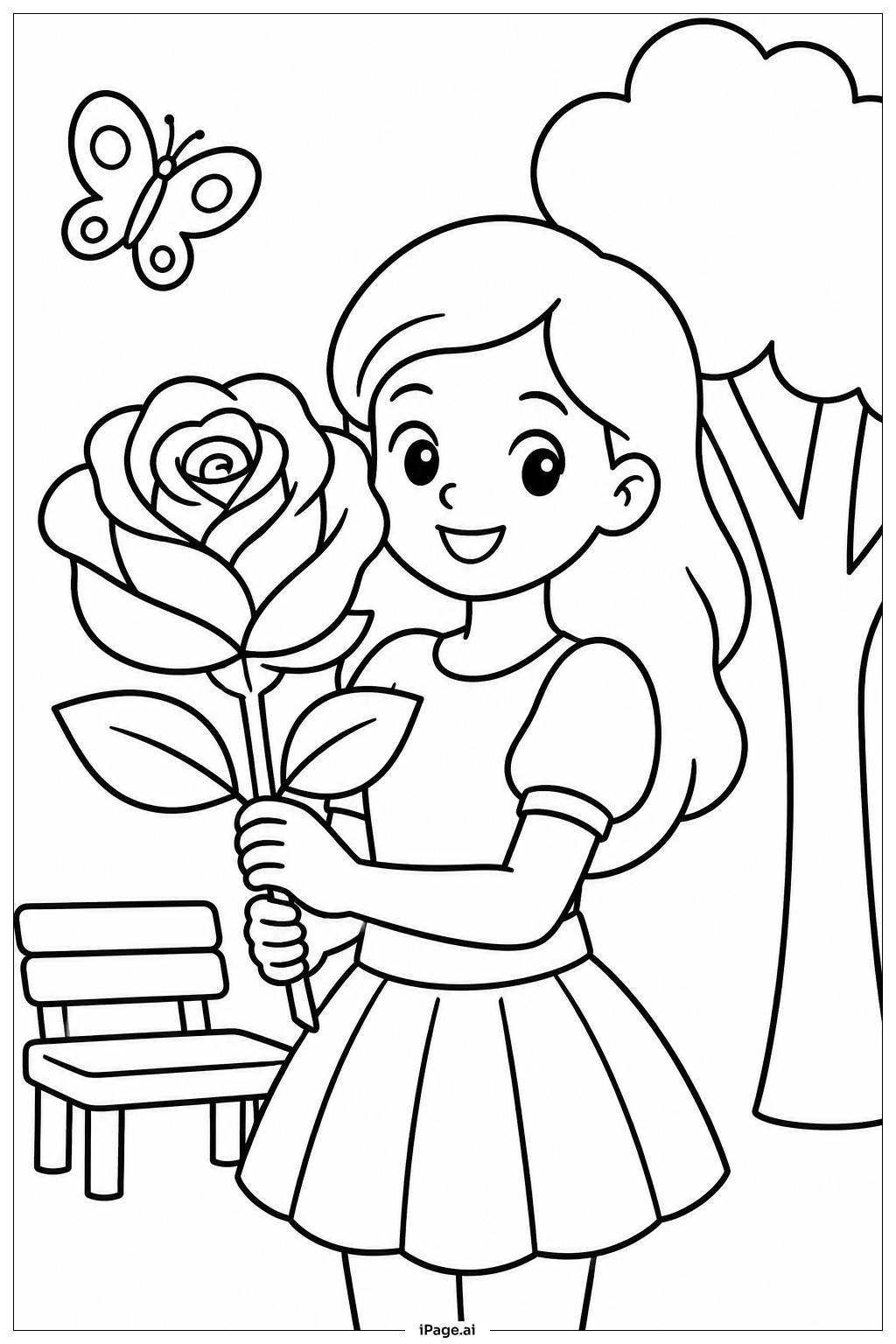
Coloring tips: How to color Child Holding Rose coloring page well?
Start with the rose and make it the focal point. Classic red is always beautiful, but feel free to try pink, peach, yellow, or even purple for a creative twist. Use a darker shade along the inner petals and a lighter shade near the outer edges to create depth and dimension. For the leaves and stem, use different shades of green — a bright green for the leaves and a slightly darker tone for the stem. Color the child's skin with soft, warm tones. Keep the clothing simple and use colors that complement the rose, such as light blue, white, or soft yellow. For the background, a pastel shade like light lavender or sky blue can make the whole image feel fresh and cheerful. Take your time on the rose petals — they are the most eye-catching part of the image.
Coloring challenges: Which parts are difficult to color and need attention for Child Holding Rose coloring page?
Coloring this image comes with several fun but tricky challenges. Here is what to look out for:
• Rose Petal Layers: The rose has multiple overlapping petals, each with its own curves and folds. Staying within the lines of each individual petal while also blending shades to show depth takes patience and a steady hand. Using a lighter touch at the edges and building up color toward the center helps capture the flower's natural beauty.
• Hand and Finger Details: The child's hands holding the stem include small, delicate lines representing fingers, knuckles, and creases. These narrow spaces are difficult to color without going outside the lines. A thin-tipped colored pencil or fine marker works best in these tight areas.
• Skin Tone Blending: Achieving a natural, even skin tone on the child's face and hands requires careful layering. Using two or three complementary skin tones and blending them gently helps avoid a flat, unnatural look. Pay special attention to shading around the eyes, nose, and cheeks.
• Leaf and Stem Variation: The leaves and stem may look simple, but using the same single green throughout can make the image look flat. Varying the green tones — lighter on top, darker underneath — adds a realistic, three-dimensional effect.
• Clothing Patterns or Folds: If the child's outfit includes fabric folds or small pattern details, these require careful attention. Choosing a base color and then adding a slightly darker version of that color along the fold lines creates a natural shadow effect that brings the clothing to life.
Benefits of coloring books: Advantages of drawing Child Holding Rose coloring page
Coloring this image of a child holding a rose offers a wide range of wonderful benefits for young artists. Working on the rose petals helps build fine motor skills and hand-eye coordination as children practice staying within small, curved lines. Choosing colors for the flower, clothing, and background encourages creative thinking and personal expression — there is no single right answer, which builds confidence. The calming, repetitive motion of coloring helps children relax and focus, making it a great activity after a busy day. Blending different shades to create depth on the petals and skin introduces early concepts of light and shadow in a fun and approachable way. This scene also sparks an appreciation for nature and the beauty of flowers, opening up conversations about plants, seasons, and caring for living things. Completing the page gives children a sense of pride and accomplishment. Sharing the finished artwork with family or friends builds communication skills and self-expression. Overall, this image is a lovely, enriching activity for children of all ages.