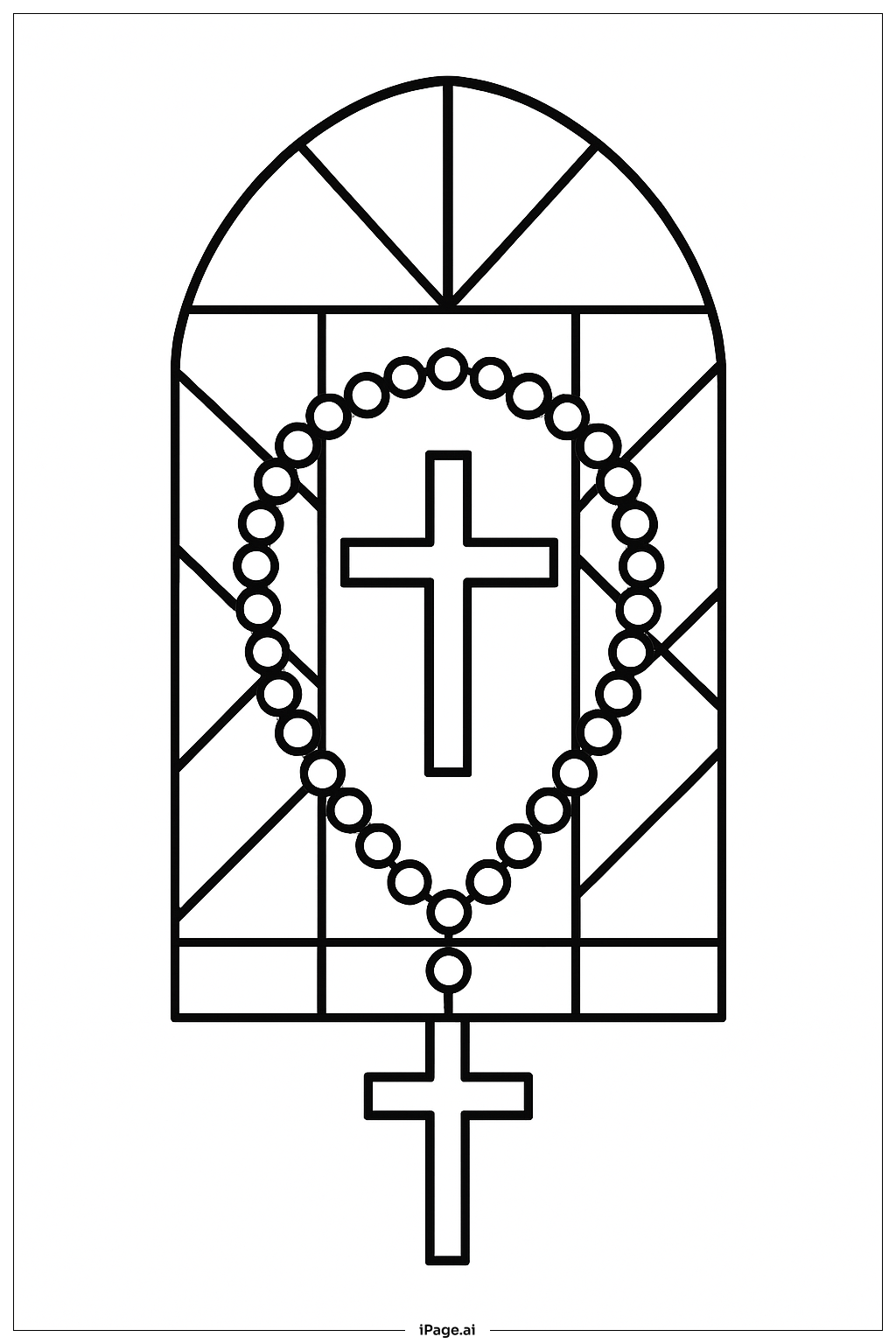
Coloring tips: How to color Rosary With Simple Stained Glass coloring page well?
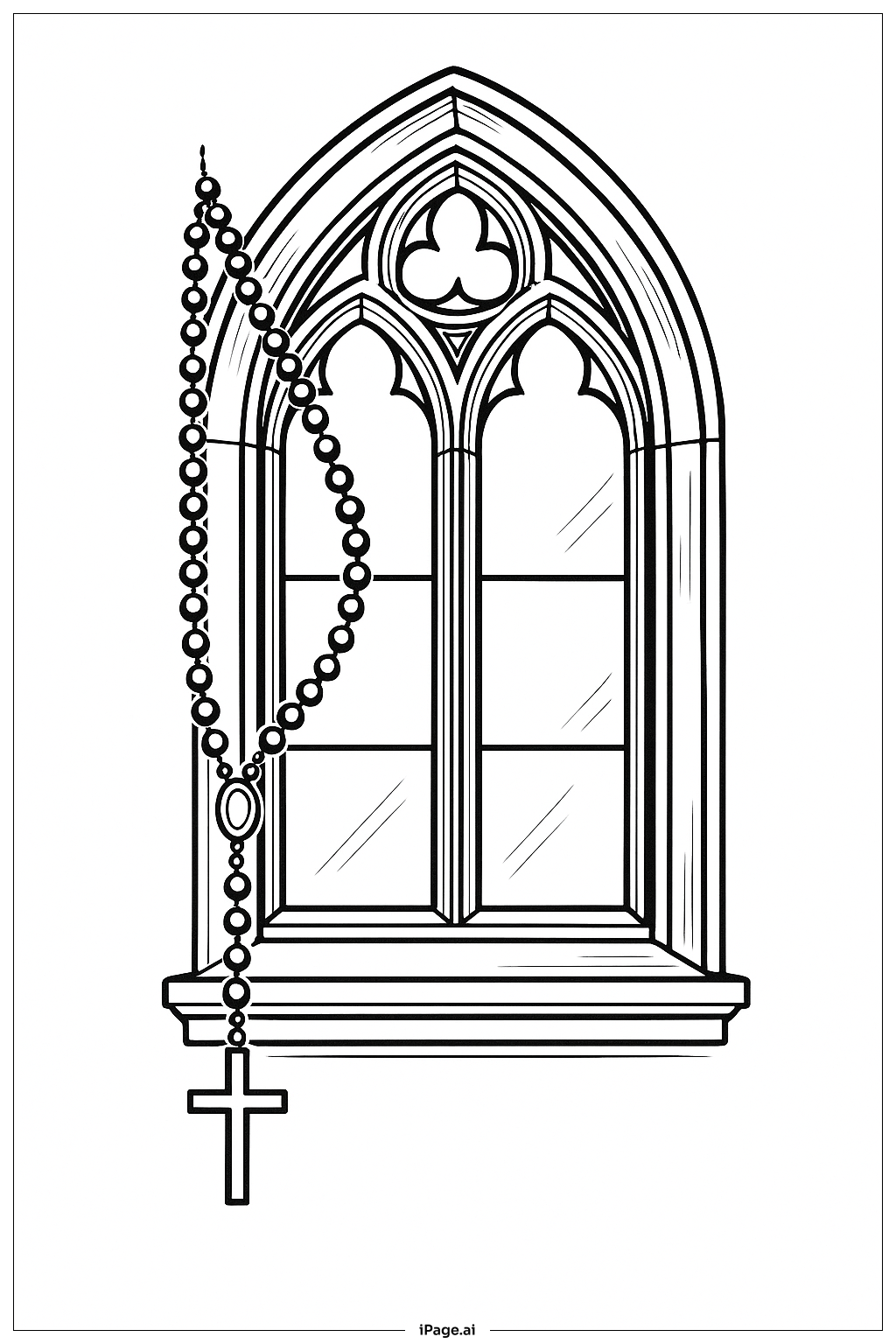
Use bright jewel tones for the stained glass panes—ruby red, emerald green, sapphire blue, and amber yellow. Color the beads with glossy shades to resemble real rosary pearls; try gradient shading from light at the top to darker at the bottom for a round bead look. For the cross and the hanging pendant, choose metallic colors like silver, gold, or bronze, and color-shading to show light. Keep the background panes lighter to let the central cross pop. You can add a soft pencil shading to create the look of glass. If you want, use a gel pen to draw tiny white highlights on the beads.
Coloring challenges: Which parts are difficult to color and need attention for Rosary With Simple Stained Glass coloring page?
1) Small bead circles. The rosary beads form many tiny circles along a curved path. It is easy to color outside the beads or accidentally color two beads together. Use a sharpened colored pencil and a light touch. Work slowly, segment by segment. A stencil or tracing helps keep the bead circles round. If you want, color alternate beads for a patterned look. 2) Glass panes. The window panes are bold and connected by thick borders. To mimic stained glass, color neighboring panes with related hues and blend softly at the borders. Leave small white highlights to simulate reflection. You can use gradient shading from top to bottom to give depth. 3) Central cross and heart. The cross and rosary heart should stand out. Choose a high-contrast color for the central cross (like dark blue or black) while the beads get lighter tones. Consistent shading across the cross can give a solid, sturdy look. 4) Overall light and balance. Decide a color theme before coloring. Too many dark colors in the background can overwhelm the center; try a brighter palette for the center and softer tones for the outer panes. Finally, keep the black outlines intact; they guide the eye and keep the design tidy. Optional: add gold or silver touches to the pendant. 5) Practice and corrections. If you are unsure of colors, try ideas on scrap paper first. Test many color combos for the panes, beads, and cross. When you color the page, go slowly and keep a steady hand. If you slip, wait for the color to dry, then fix with a white eraser or a fine black liner to keep the outlines sharp.
Benefits of coloring books: Advantages of drawing Rosary With Simple Stained Glass coloring page
Coloring this page has many benefits for children and caregivers. It builds focus and patience as kids stay inside the lines and carefully choose colors. The patterns in the stained glass encourage color recognition, including primary colors and warm versus cool tones. The circular rosary beads help practice fine motor control and steady hand use when tracing small shapes. The design also invites mindfulness and calm, as children slow down to reflect on faith themes of hope, love, and prayer. By selecting a color story for the window and the hanging cross, kids learn to plan ahead, mix shades, and compare tones. Completing the page gives a sense of achievement and pride. Sharing the artwork with family can boost confidence and communication. The project can be used as a quiet classroom activity or a home craft to celebrate holidays or moments of reflection. Finally, the simple shapes are welcoming for new colorers, while the central cross and heart shape offer a focal point that encourages storytelling through color choices.