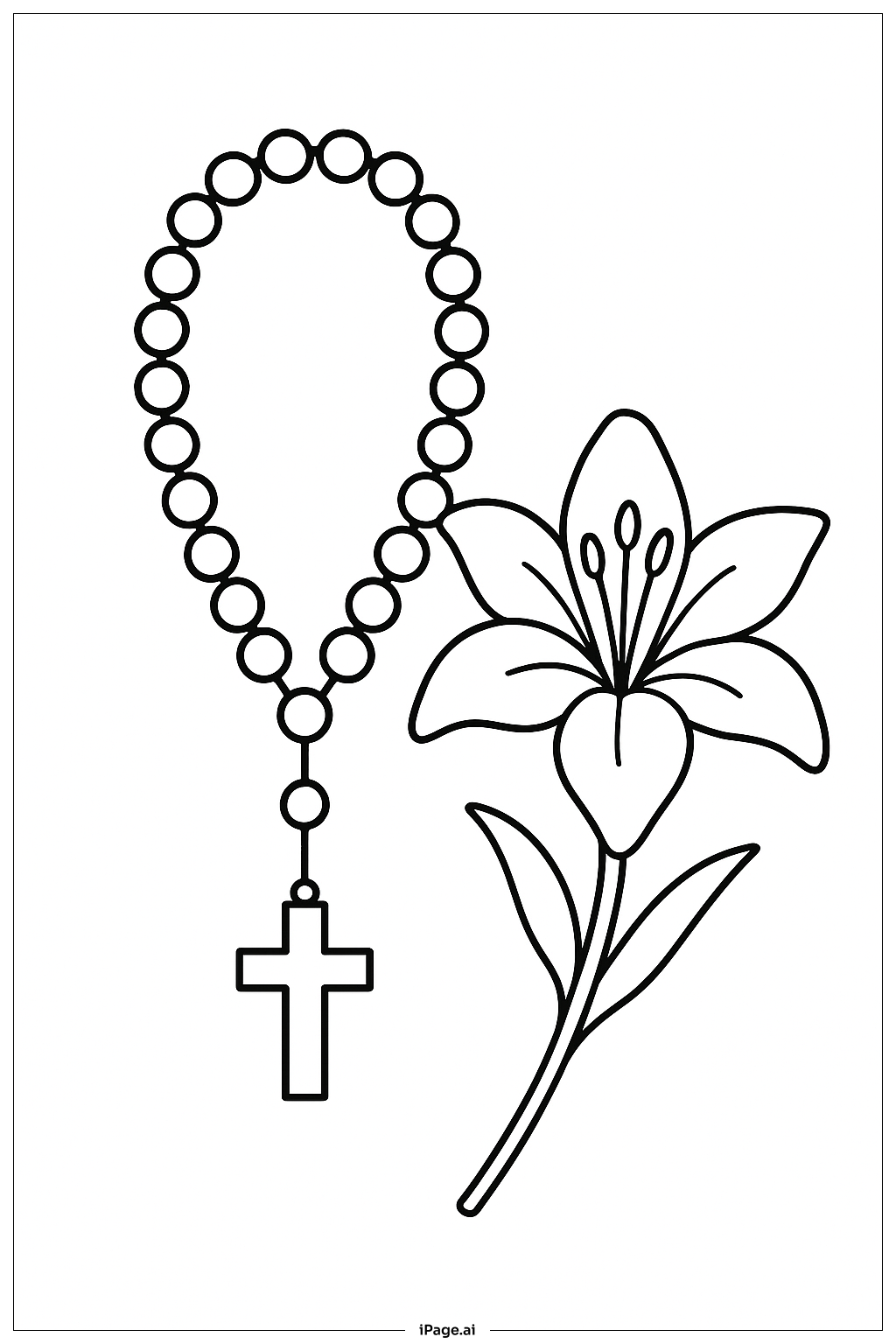
Coloring tips: How to color Rosary With Lily Flower coloring page well?
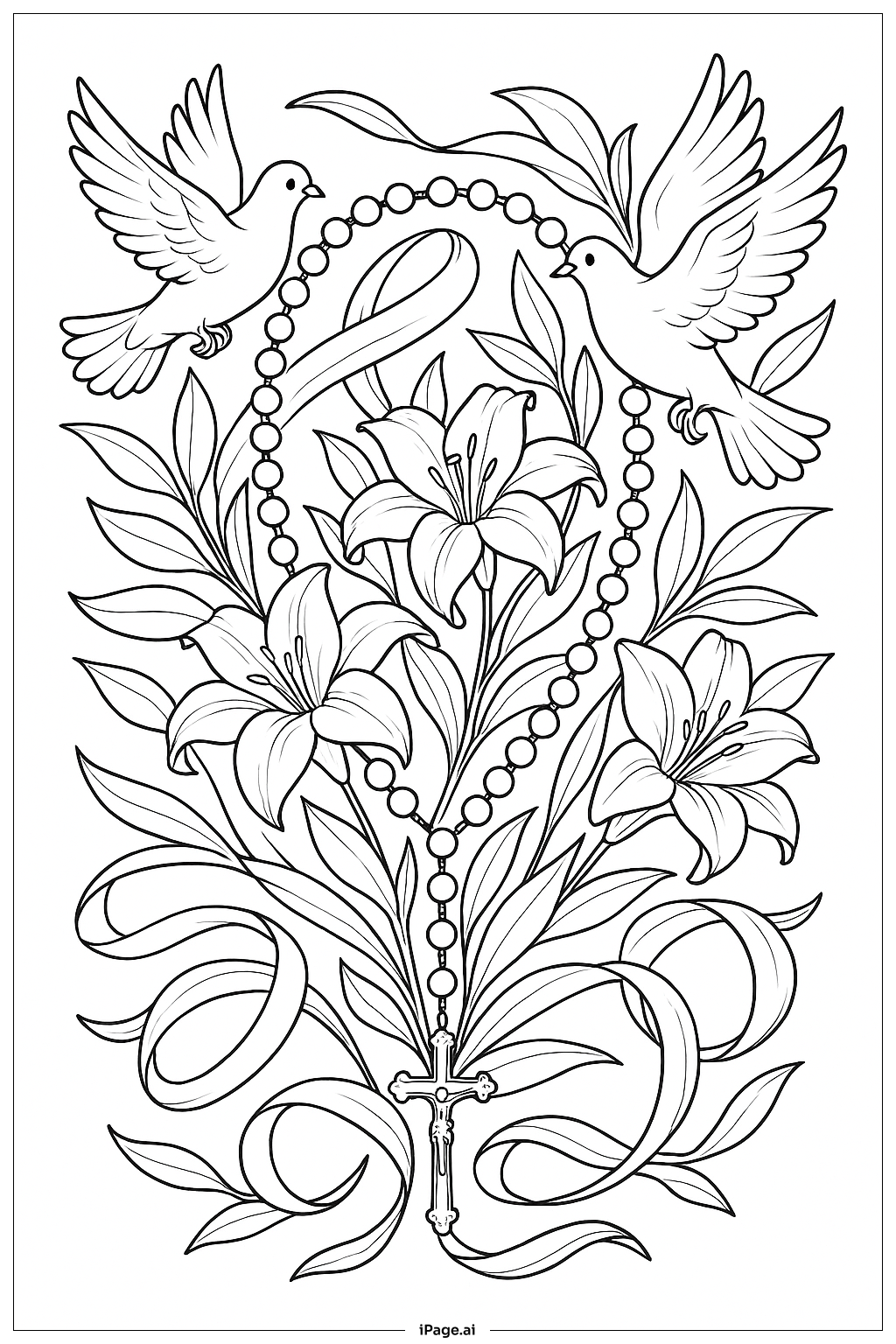
For the rosary beads, consider using rich, traditional colors like deep brown or warm wooden tones to represent classic wood beads, or choose pearl white, soft silver, or crystal blue for a more delicate appearance. The connecting chain or cord can be colored in metallic shades like silver, gold, or bronze. For the crucifix, metallic colors work beautifully, or you might prefer a simple brown or gray. The lily flower offers wonderful coloring opportunities: pure white or cream for traditional Easter lilies, soft pink for a gentle look, or sunny yellow for a cheerful feel. Add subtle green or yellow tones to the stamens and use various shades of green for the leaves, from light lime to deep forest green. Consider adding slight shading to the petals to create depth and dimension, making the flower appear more realistic and three-dimensional.
Coloring challenges: Which parts are difficult to color and need attention for Rosary With Lily Flower coloring page?
• Small Rosary Beads: The individual beads on the rosary are small and numerous, requiring careful attention to color each one consistently. Young children may find it challenging to stay within the tiny circular boundaries, especially when the beads are closely spaced. Using fine-tipped coloring tools like colored pencils or thin markers will help achieve better precision and control.
• Intricate Crucifix Details: The crucifix contains fine religious details and small decorative elements that demand steady hand control and patience. The figure and ornamental designs require careful coloring to avoid going outside the lines. This area is best approached slowly, perhaps using a magnifying glass for very small details, and is excellent practice for developing fine motor skills.
• Lily Petal Curves and Overlaps: The lily's large petals curve and overlap each other, creating complex shapes that require understanding of depth and dimension. Deciding where one petal ends and another begins can be tricky. Adding shading to show which petals are in front and which are behind adds realism but requires planning your color intensity and blending techniques.
• Thin Connecting Chains: The delicate chains or cords connecting the rosary beads are very thin lines that need steady coloring without breaking the continuous flow. These narrow elements test precision and control, especially for younger colorists. Taking your time and using sharp coloring tools will produce the best results.
• Balancing Two Main Elements: This design features two distinct subjects that need color coordination. Choosing colors that complement both the religious rosary and the natural lily while keeping them visually distinct requires thoughtful planning before beginning to color.
Benefits of coloring books: Advantages of drawing Rosary With Lily Flower coloring page
Coloring this rosary and lily design offers numerous developmental and emotional benefits. It helps children and adults practice fine motor skills through the precise coloring of small beads and delicate flower details. The repetitive nature of coloring individual rosary beads promotes patience, focus, and meditative calm, similar to the peaceful practice of prayer itself. This image introduces religious symbols in an accessible, creative way, opening opportunities for families to discuss faith, spirituality, and traditions. The combination of geometric beads and organic flower shapes exercises different cognitive skills, from following patterns to understanding natural forms. The detailed work required promotes concentration and mindfulness, helping to reduce stress and anxiety. Completing this meaningful design builds confidence and provides a sense of accomplishment, while the spiritual subject matter can inspire reflection, gratitude, and inner peace.