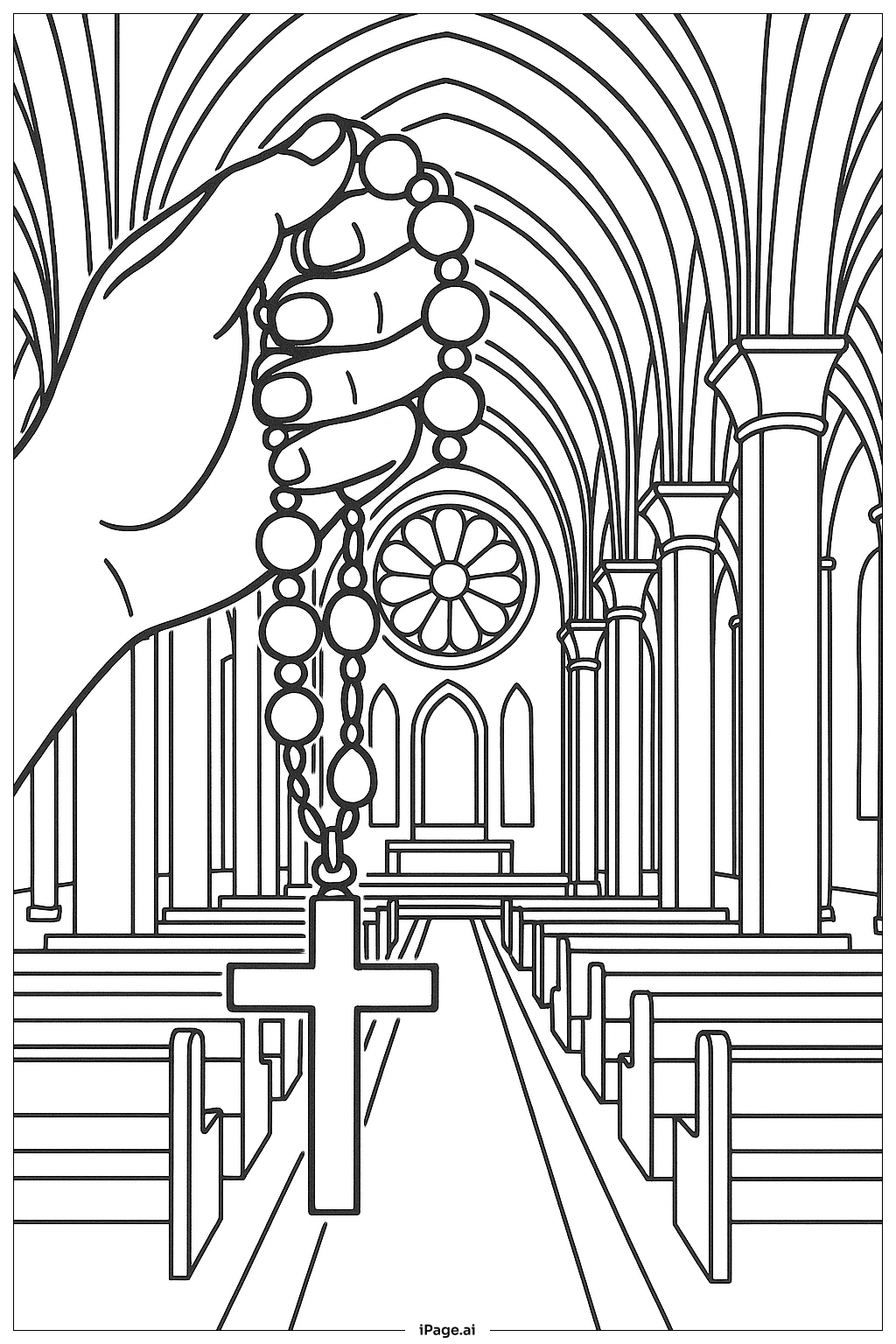
Coloring tips: How to color Rosary In Cathedral Nave coloring page well?
Start with the rosary beads using soft, warm tones like ivory, pearl white, or gentle wood browns to create a traditional look. The crucifix can be colored in metallic silver, gold, or bronze to give it a sacred, reflective quality. For the cathedral interior, use cool stone grays, soft beiges, or warm tans for the columns and walls to create depth. The arches and vaulting can be shaded with lighter grays to show dimension and height. Consider using soft blues or purples for shadowed areas to add atmosphere. The windows might feature subtle hints of stained glass colors like deep blues, reds, and golds. Use darker tones in the background and lighter shades in the foreground to create perspective. Add gentle shading along the edges of architectural features to emphasize the three-dimensional quality of the cathedral space.
Coloring challenges: Which parts are difficult to color and need attention for Rosary In Cathedral Nave coloring page?
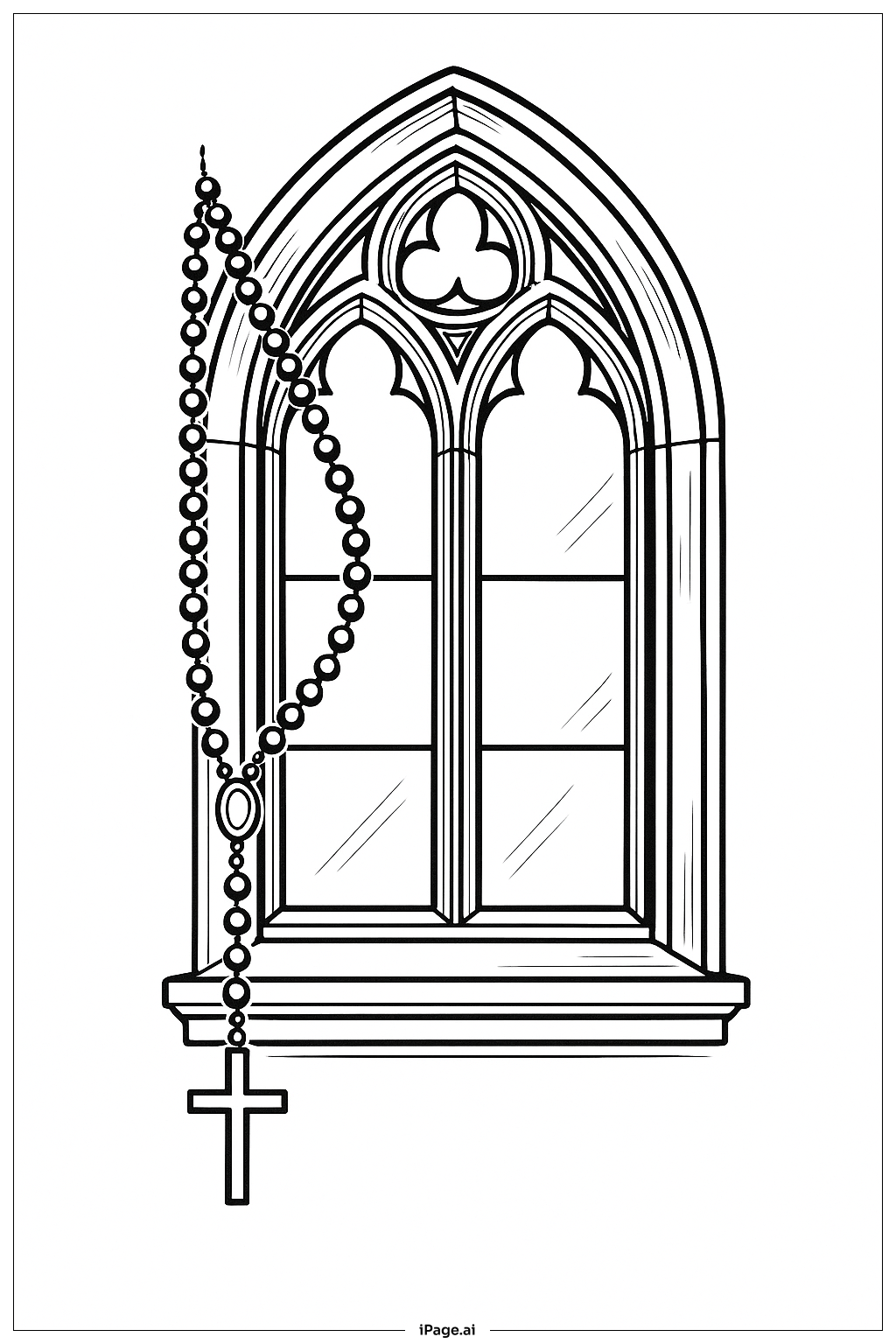
• Intricate Architectural Details: The Gothic cathedral features complex elements including ribbed vaulting, pointed arches, and decorative tracery that require careful attention to detail. Each arch has multiple layers and moldings that need consistent coloring to maintain the architectural integrity. The repeating patterns along the columns and ceiling demand precision and patience to color uniformly without crossing lines.
• Creating Depth and Perspective: The cathedral nave extends into the distance, requiring skillful shading techniques to show spatial depth. Colorists must gradually lighten or darken tones as the architecture recedes to create a realistic three-dimensional effect. Balancing light and shadow across multiple columns and arches while maintaining proper perspective can be challenging, especially for younger artists.
• Small Rosary Bead Details: The individual beads on the rosary chain are small and require steady hand control to color within the lines. The connecting chains between beads are delicate and thin, making them difficult to color precisely. The crucifix contains fine details including the figure and decorative elements that need careful coloring to preserve clarity.
• Balancing Multiple Focal Points: This image requires managing attention between the detailed rosary in the foreground and the elaborate cathedral background. Colorists must decide how to distribute visual emphasis through color choices, ensuring the rosary stands out while the cathedral setting remains impressive but not overwhelming to the overall composition.
Benefits of coloring books: Advantages of drawing Rosary In Cathedral Nave coloring page
Coloring this rosary and cathedral scene offers wonderful benefits for young artists. It helps develop fine motor skills and hand-eye coordination through the detailed work required for tiny beads and intricate architectural elements. Children learn about patience and focus as they carefully color within the complex lines and patterns. This image introduces architectural concepts like arches, columns, and perspective in an engaging way, building spatial awareness and understanding of three-dimensional structures. The religious theme provides an opportunity to learn about faith traditions and sacred spaces while expressing creativity. Working with shading and color gradients to create depth enhances artistic skills and color theory knowledge. The combination of a small object in a large space teaches about scale and proportion. Completing this detailed coloring page builds confidence and provides a strong sense of accomplishment, while the peaceful cathedral setting can create a calming, meditative coloring experience that reduces stress and promotes mindfulness.