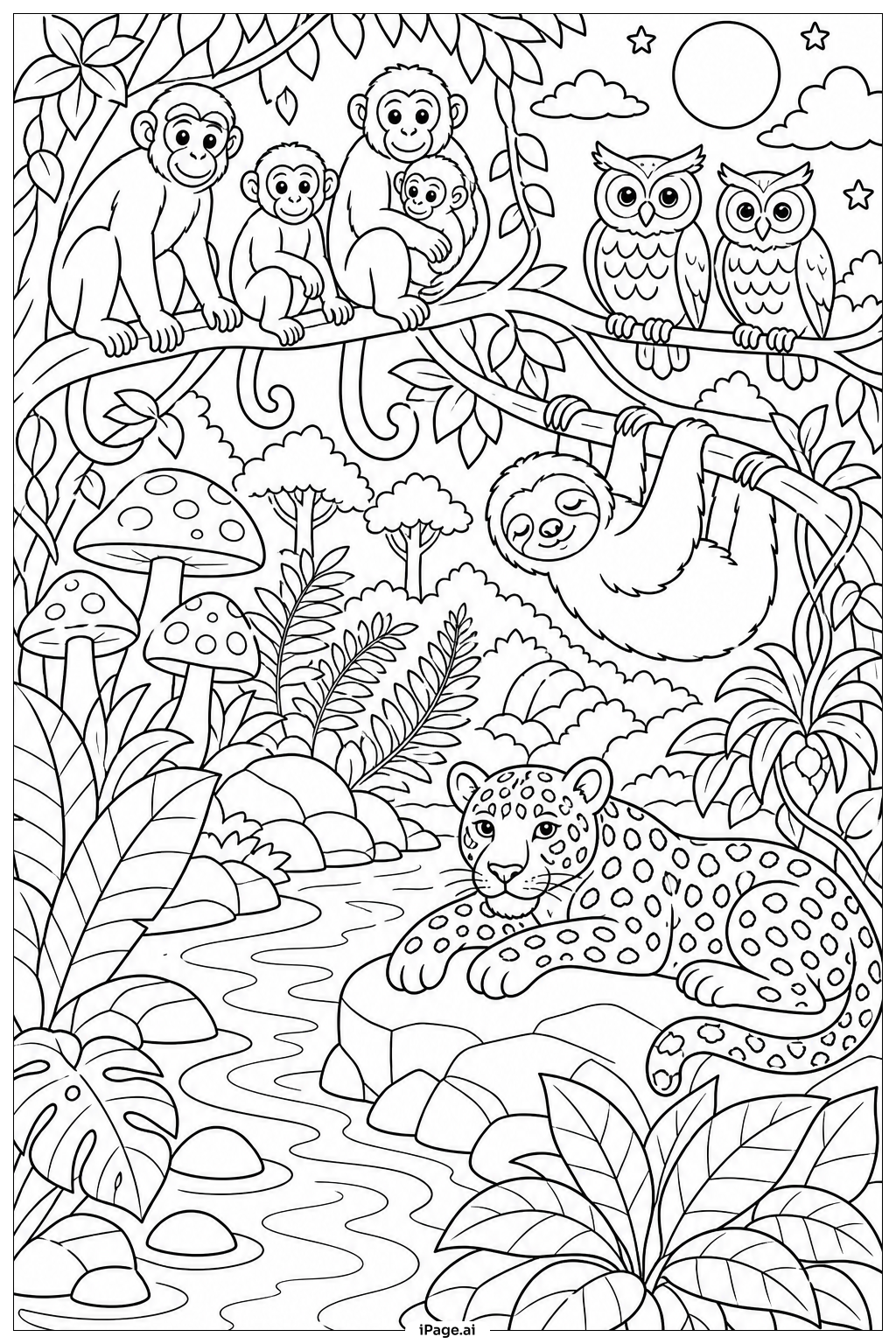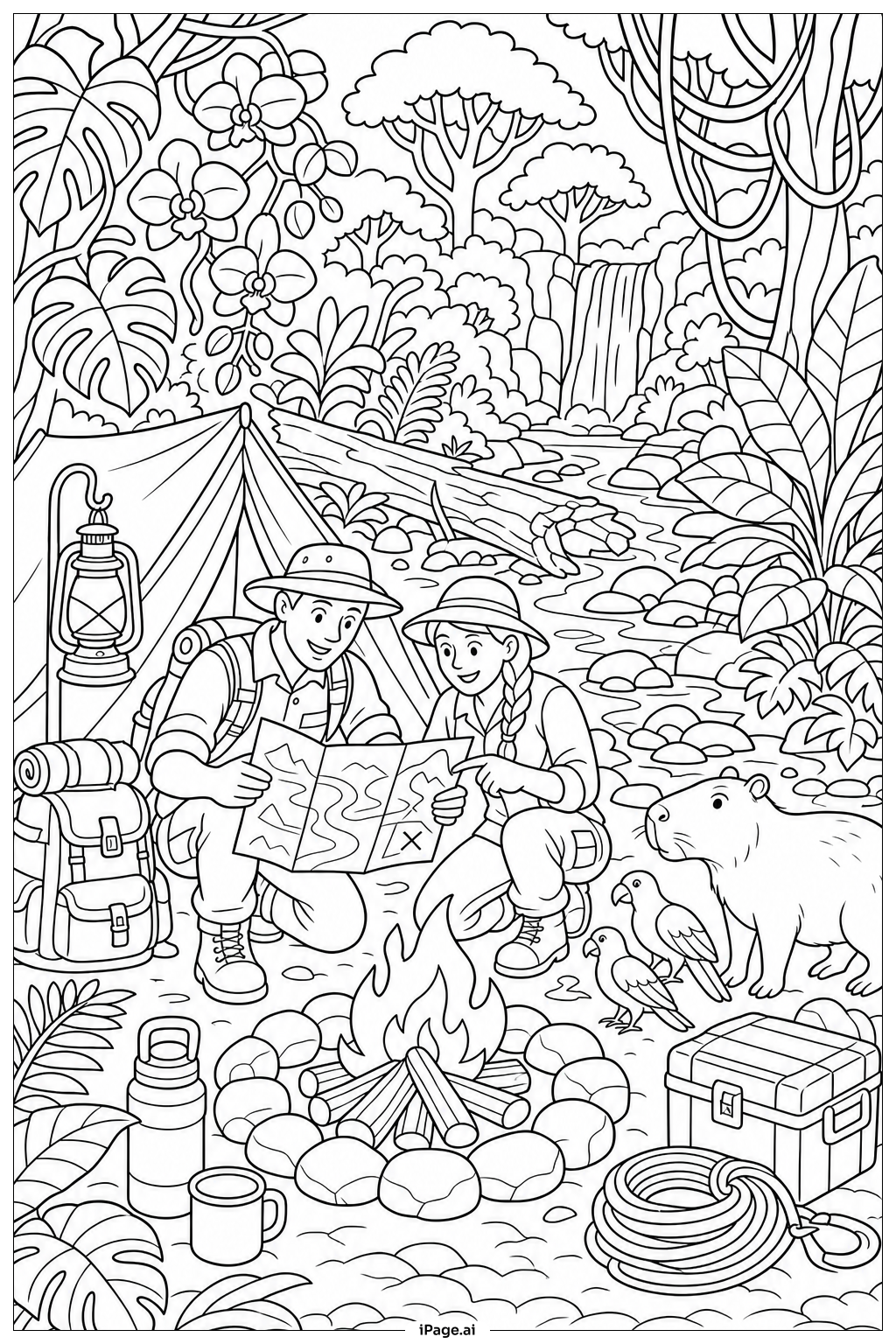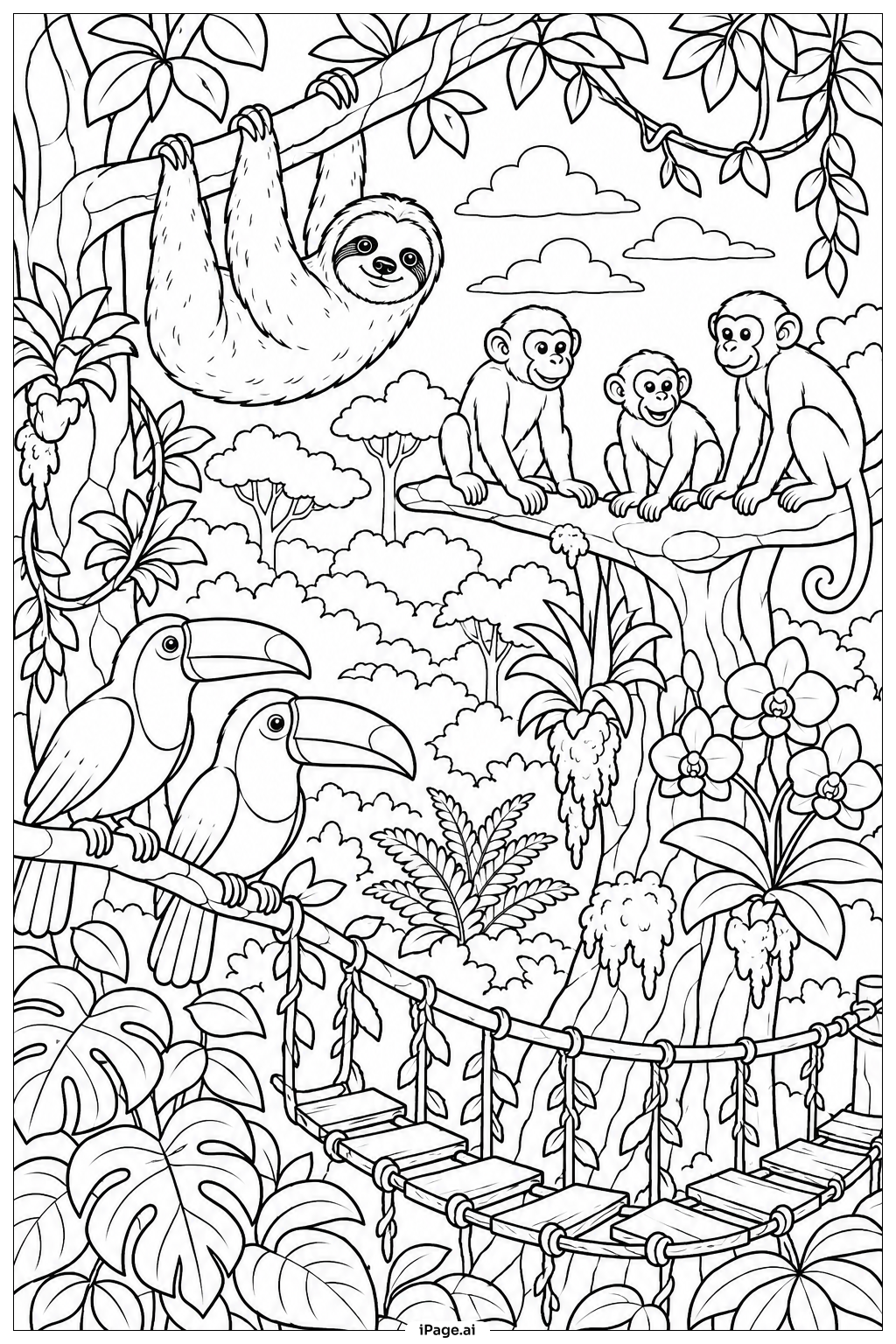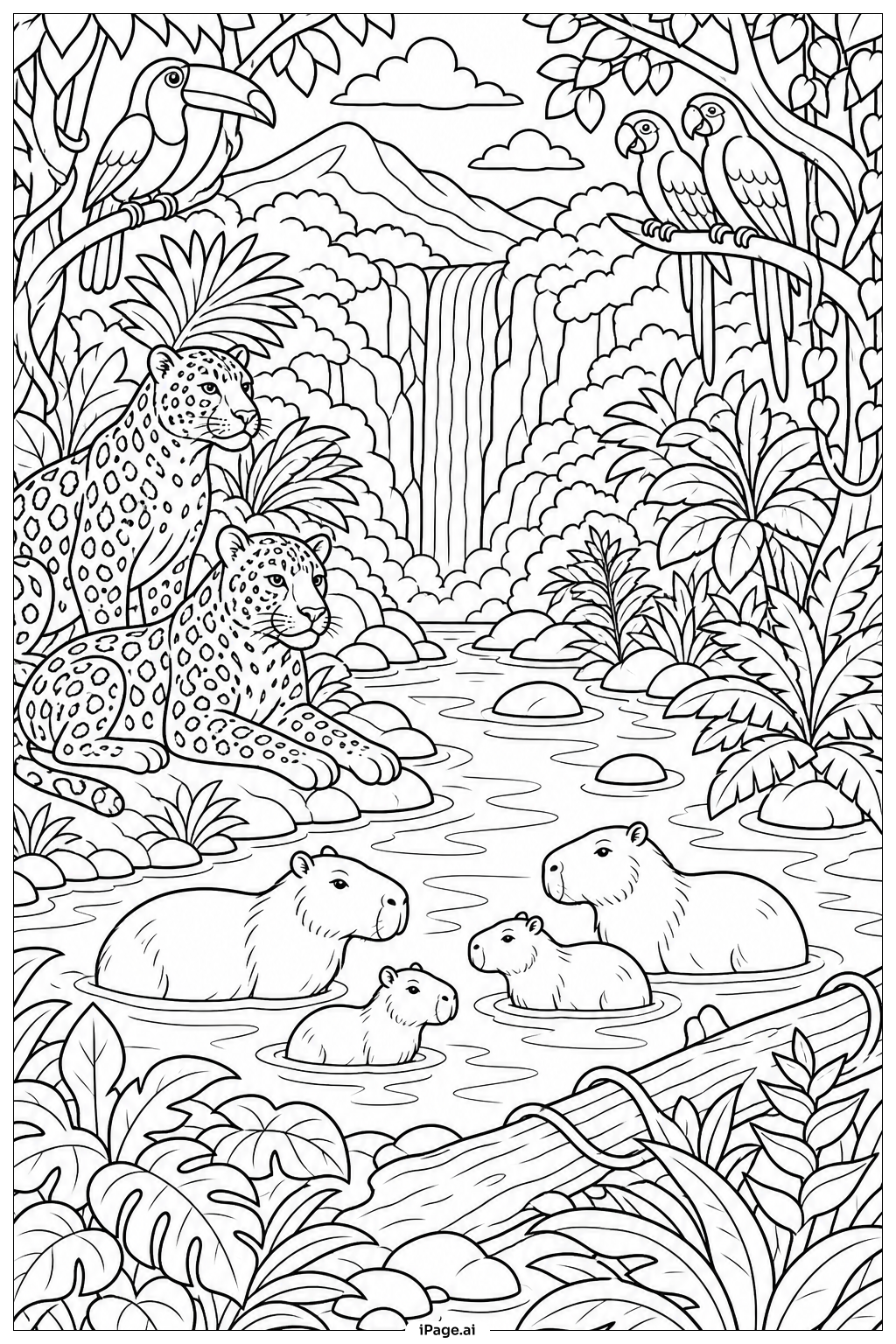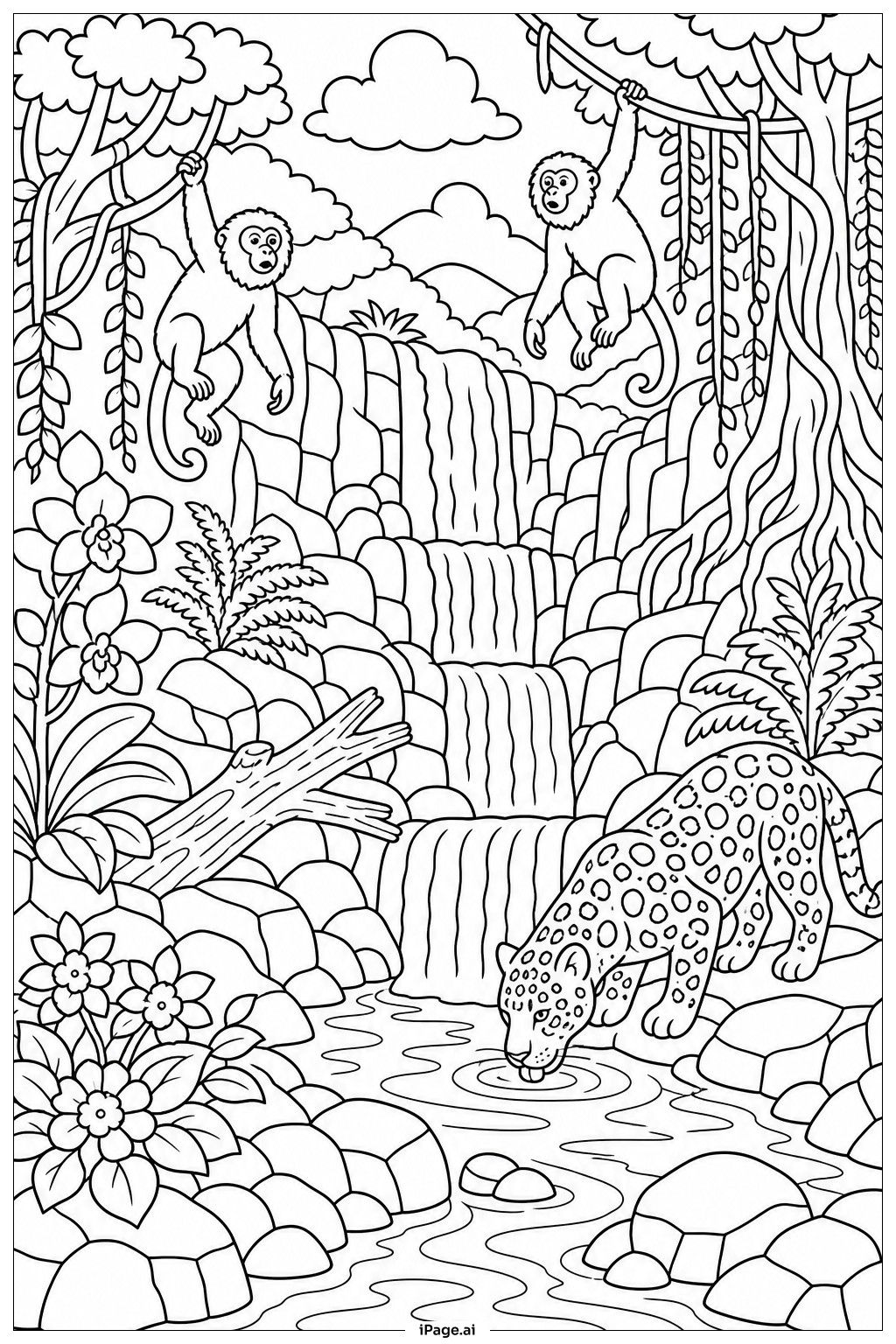
Coloring tips: How to color Rainforest Waterfall Valley Scene coloring page well?
Start with the sky, using soft blues and whites for clouds. Move to the waterfall and pool, blending light blues and aquas with white highlights to show movement and sparkle. For the rocks and boulders, use grays, browns, and mossy greens to give them a natural, textured feel. Color the trees and ferns in a wide range of greens, from deep forest green to bright lime, to add depth and variety. Use warm yellows and oranges for sunlight filtering through the canopy. Add pops of color with tropical flowers in red, pink, purple, and yellow. Paint the birds with vivid colors like turquoise, scarlet, or gold. Use earth tones for the forest floor and roots. Blend colors gently where areas meet to create smooth, natural transitions throughout the scene.
Coloring challenges: Which parts are difficult to color and need attention for Rainforest Waterfall Valley Scene coloring page?
• Waterfall and Water Textures: Capturing the look of flowing water is one of the biggest challenges. The waterfall needs white highlights and layered blues to show movement, while the pool below requires soft reflections and gentle ripples. Blending these tones smoothly without losing the sense of motion takes patience and a light touch.
• Layered Foliage Depth: The rainforest scene is packed with overlapping trees, ferns, vines, and leaves at different distances. Coloring each layer with a slightly different shade of green helps create a realistic sense of depth. Without careful shading, all the greenery can blend together and look flat.
• Rocky Surface Details: The cliffs and boulders have uneven surfaces covered in moss and shadow. Using multiple shades of gray, brown, and green, along with careful shading on edges and crevices, is needed to make the rocks look solid and three-dimensional rather than flat.
• Small Intricate Details: Tiny elements like butterflies, birds, flowers, and hanging vines require steady hands and fine-tipped tools. These small details add life to the scene but can be tricky to color neatly without going outside the lines or muddying nearby colors.
• Light and Shadow Balance: Rainforest scenes have dramatic contrasts between sunlit patches and deep shade under the canopy. Deciding where light hits and where shadows fall, then coloring accordingly, adds realism but requires planning ahead before applying color to avoid mistakes.
Benefits of coloring books: Advantages of drawing Rainforest Waterfall Valley Scene coloring page
Coloring this Rainforest Waterfall Valley Scene offers a wide range of wonderful benefits for kids and young artists. The rich variety of shapes, textures, and details in the scene helps develop fine motor skills as children carefully fill in leaves, water, rocks, and wildlife. Choosing colors for the trees, waterfall, flowers, and sky encourages creative thinking and builds color awareness in a fun, pressure-free way. The natural subject matter also sparks curiosity about rainforests, ecosystems, and wildlife, turning a coloring session into a gentle learning experience. Focusing on the intricate details of the scene promotes concentration and patience, skills that carry over into school and everyday life. The calming flow of the waterfall and the lush forest setting make this image especially relaxing to color, helping children unwind and reduce stress. Completing a detailed scene like this gives a real sense of accomplishment and boosts self-confidence. Whether done alone or with friends and family, coloring this rainforest landscape is a joyful, engaging activity that nurtures both creativity and a love of the natural world.