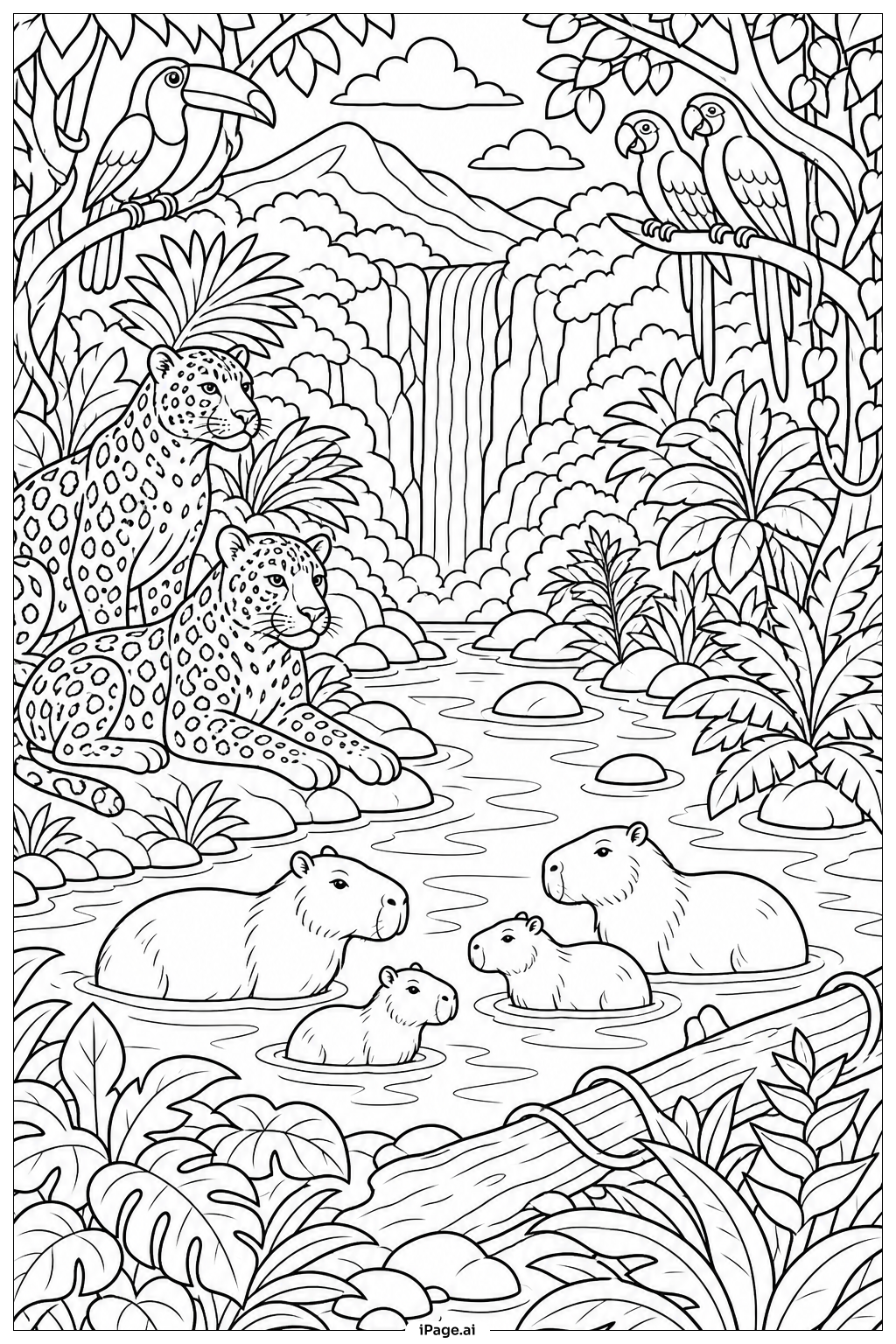
Coloring tips: How to color Rainforest River Wildlife Panorama coloring page well?
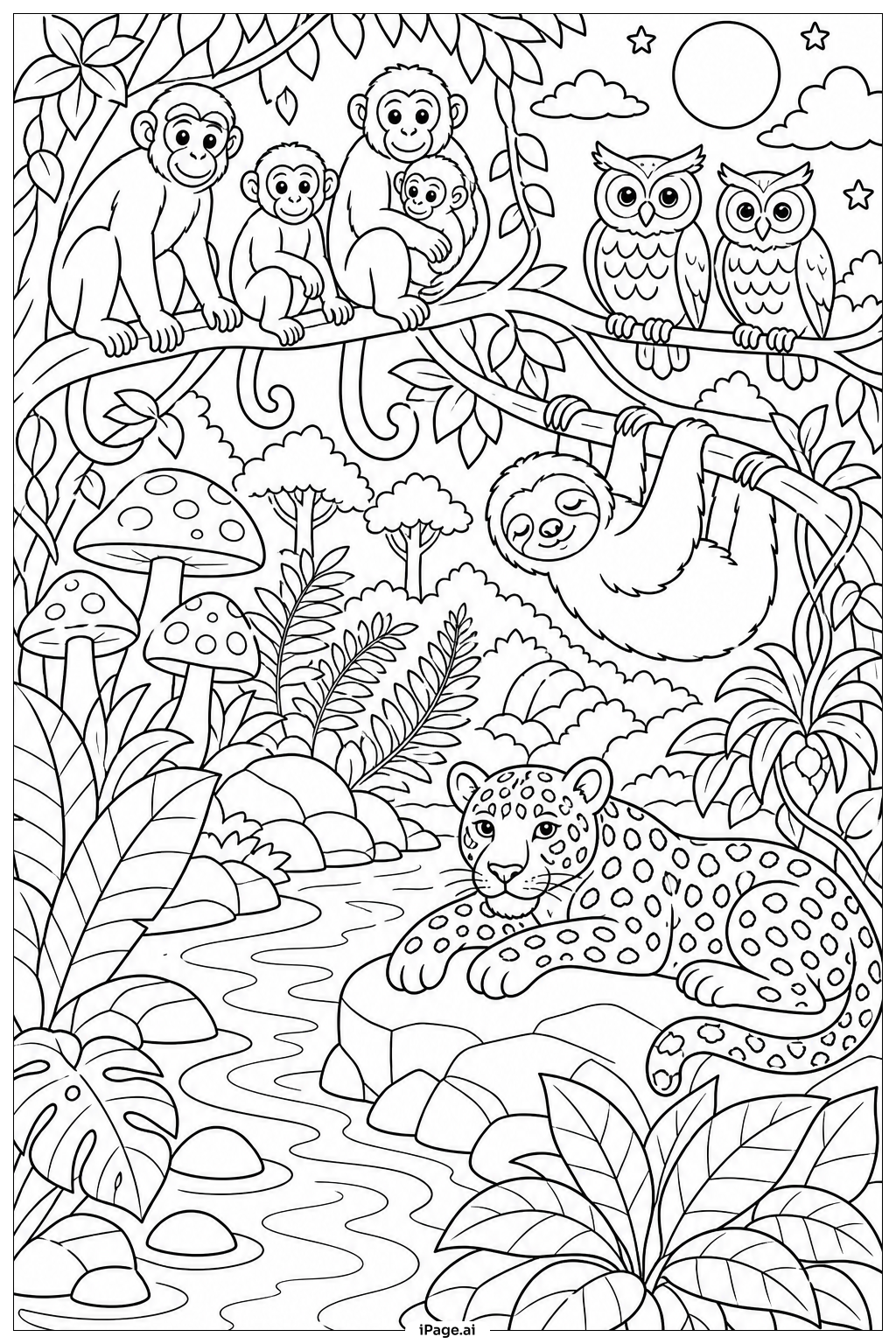
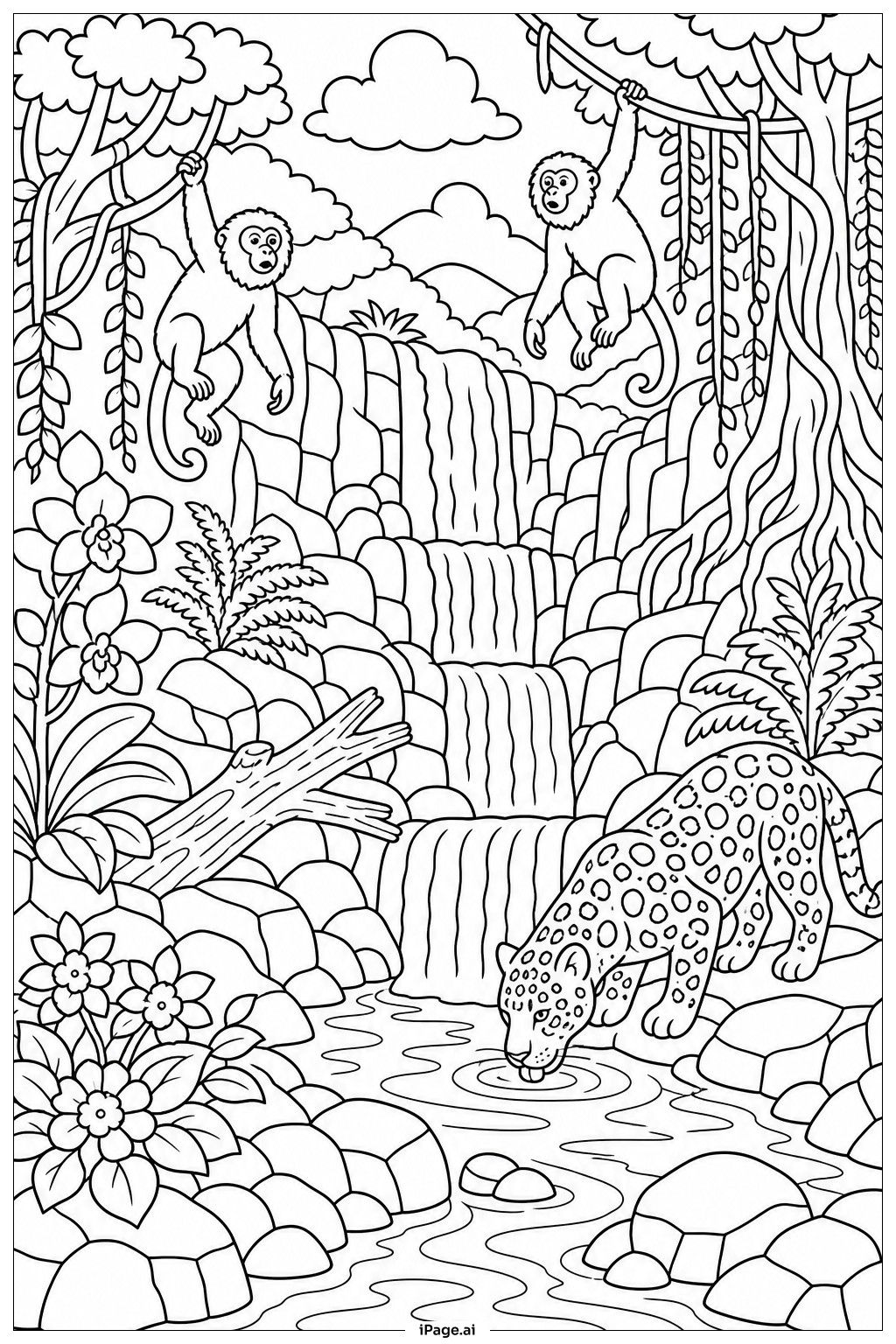
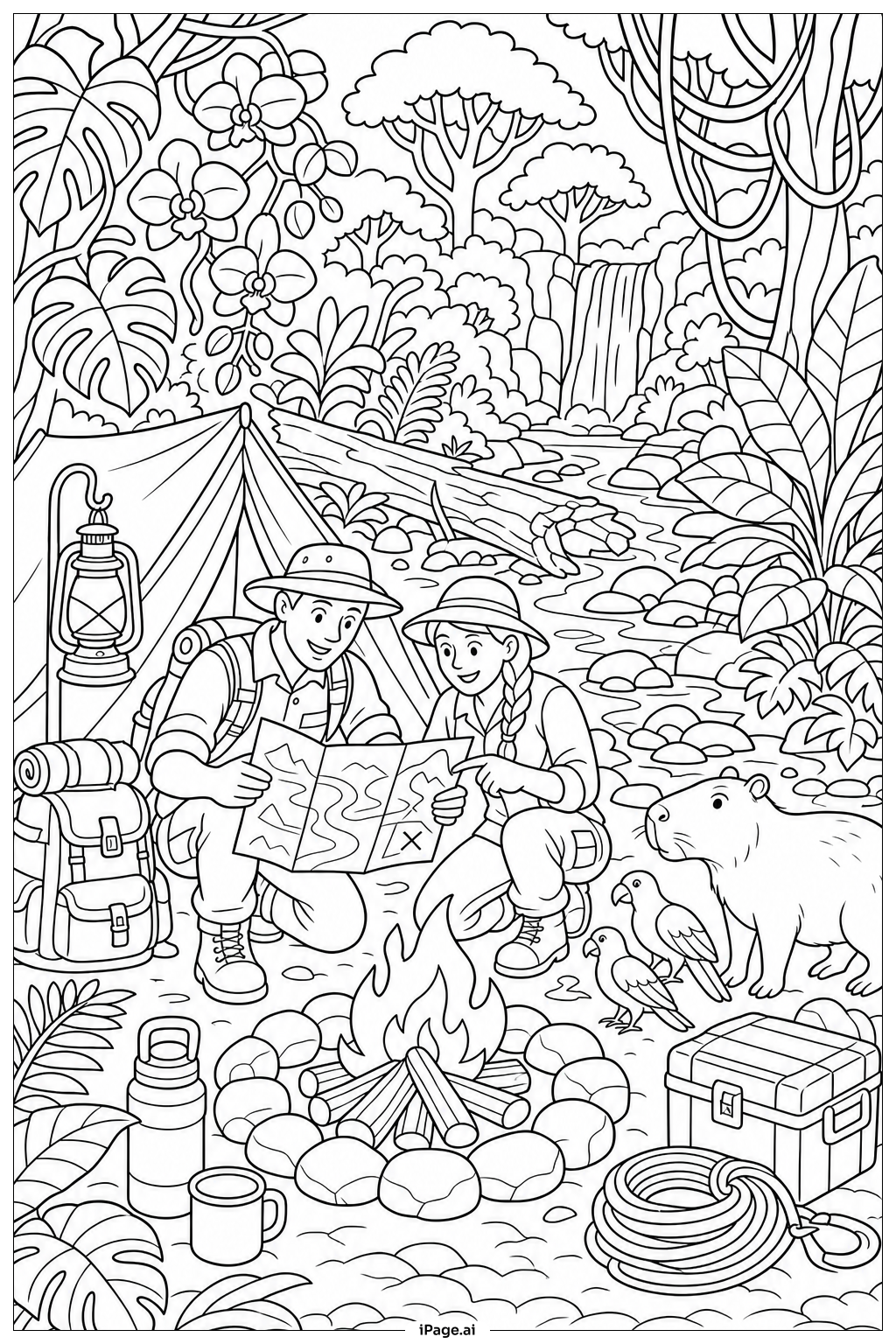
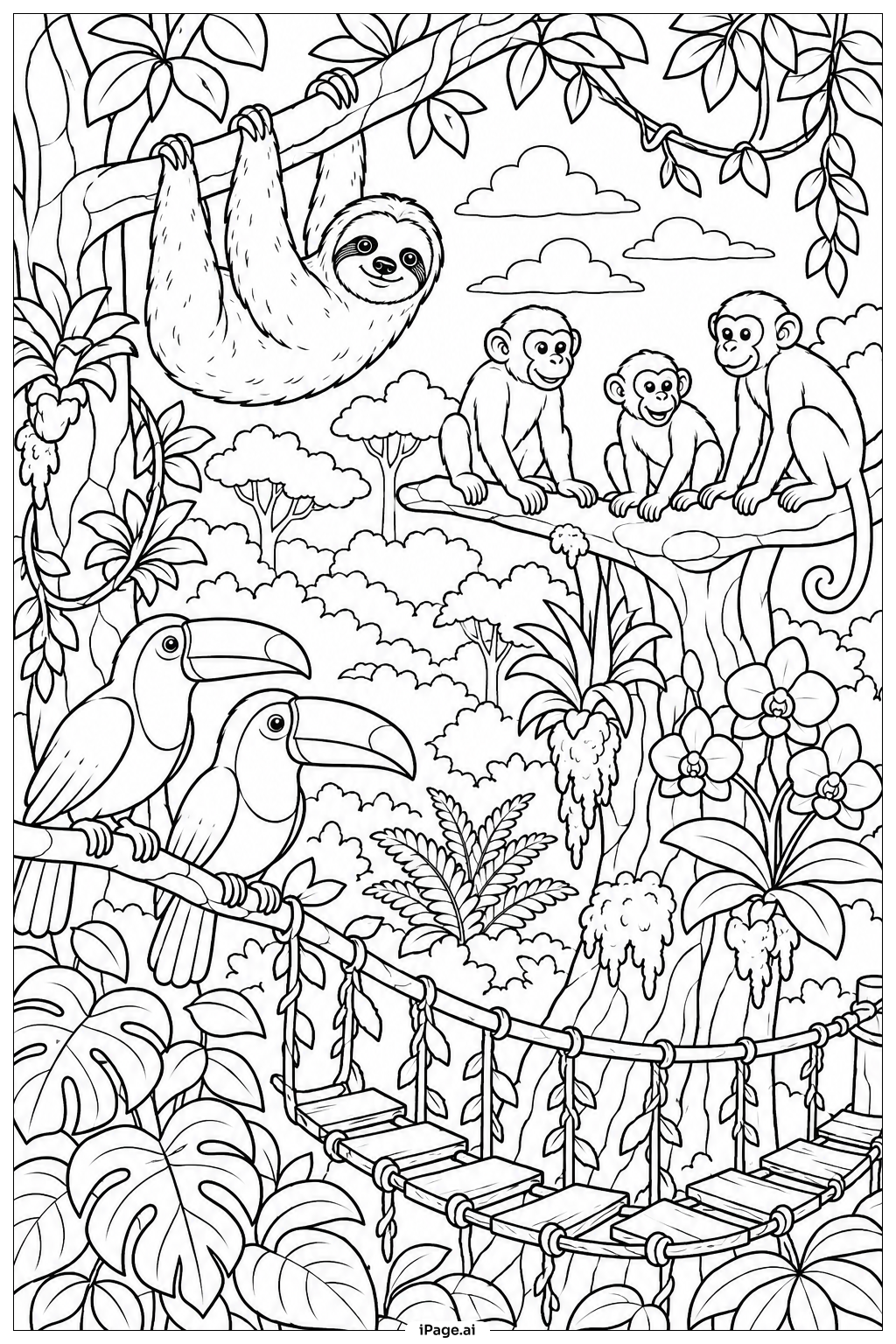
When coloring this Rainforest River Wildlife Panorama, try using bright hues to bring the animals and plants to life. For the trees and leaves, choose different shades of green to create a natural and lively forest. Use vibrant colors like red, yellow, and blue for the parrots and birds to make them stand out. The river water can be colored with shades of blue, soft greens, or even light grey to suggest reflections. Don't forget to add details like brown or grey tones to the tree trunks and branches. For the animals like monkeys or crocodiles, use realistic colors but feel free to be creative with patterns. Layering light and dark colors helps create depth and texture throughout the picture.
Coloring challenges: Which parts are difficult to color and need attention for Rainforest River Wildlife Panorama coloring page?
• Detailed Wildlife: The many animals, like birds and monkeys, have small features that require careful attention to avoid coloring outside the lines. • Overlapping Elements: Trees, animals, and river plants overlap, making it hard to decide how to bring out each part clearly with color. • Texture Challenges: Representing different textures such as rough bark, smooth water, and soft fur can be tricky with just crayons or markers. • Color Choices: Balancing realistic colors with creative freedom can be difficult for younger artists who want to make vibrant scenes without the colors clashing. • Fine Details: The intricate leaves and feathers might require the use of fine-tipped coloring tools to keep the whole picture neat and lively.
Benefits of coloring books: Advantages of drawing Rainforest River Wildlife Panorama coloring page
Coloring this image helps improve attention to detail as children focus on the many different animals and plants. It encourages creativity by allowing choices in colors and shading to make the rainforest scene vibrant and unique. Working on the small details can enhance fine motor skills and hand-eye coordination. Exploring the natural colors of the rainforest can also teach about wildlife and environment, inspiring curiosity about nature. Overall, coloring this Rainforest River Wildlife Panorama is fun and educational, helping build patience, concentration, and artistic confidence.