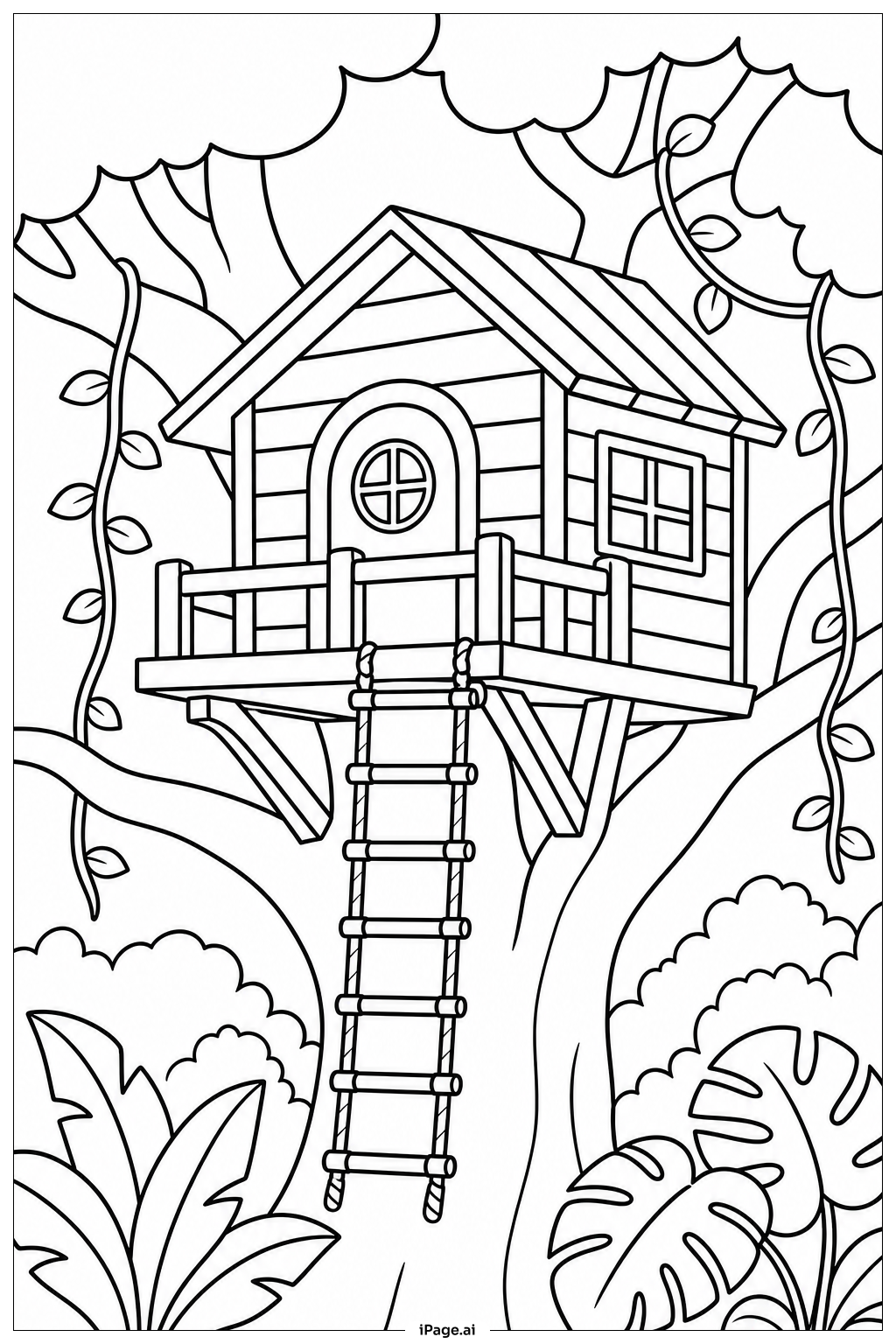
Coloring tips: How to color Rainforest Treehouse View coloring page well?
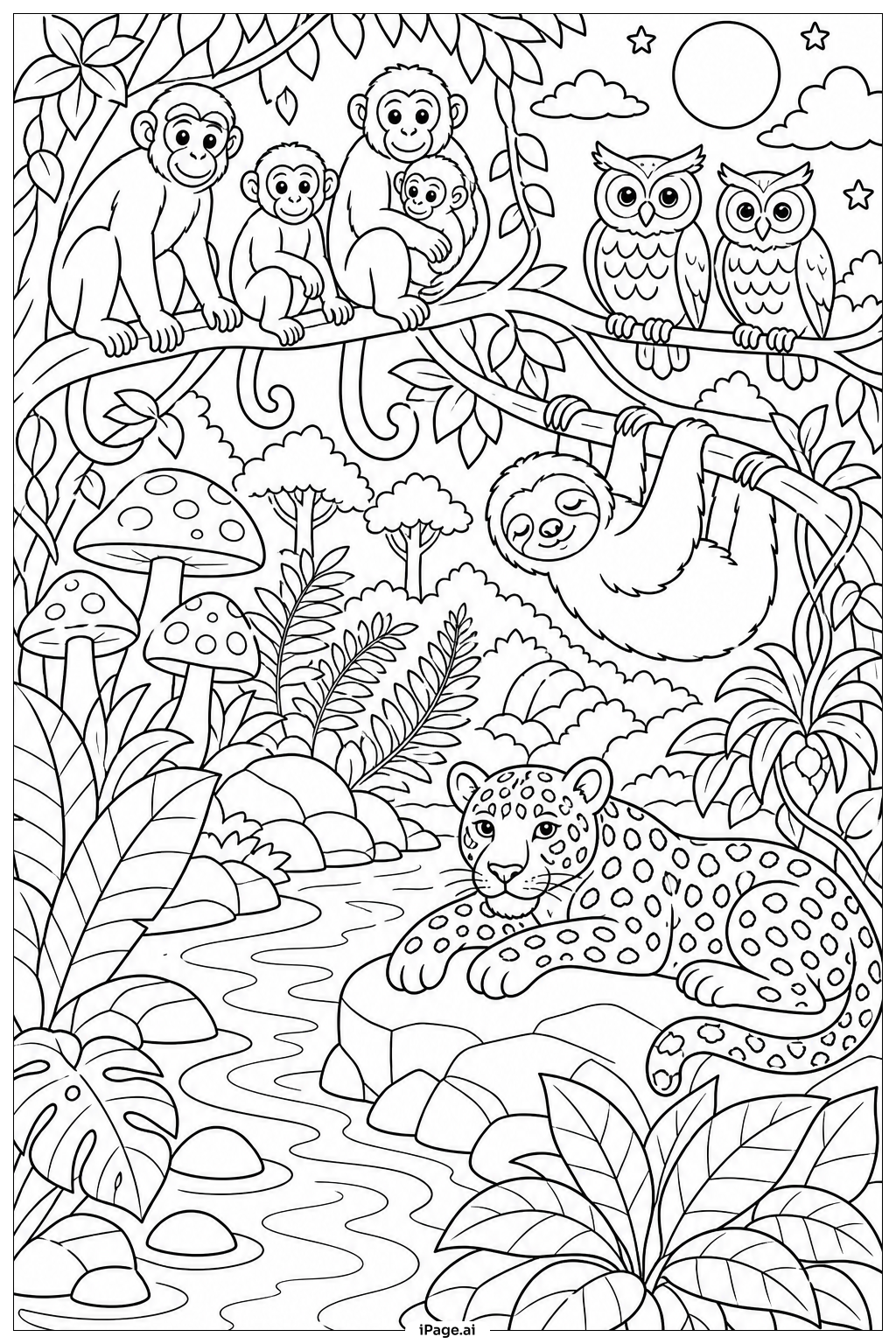
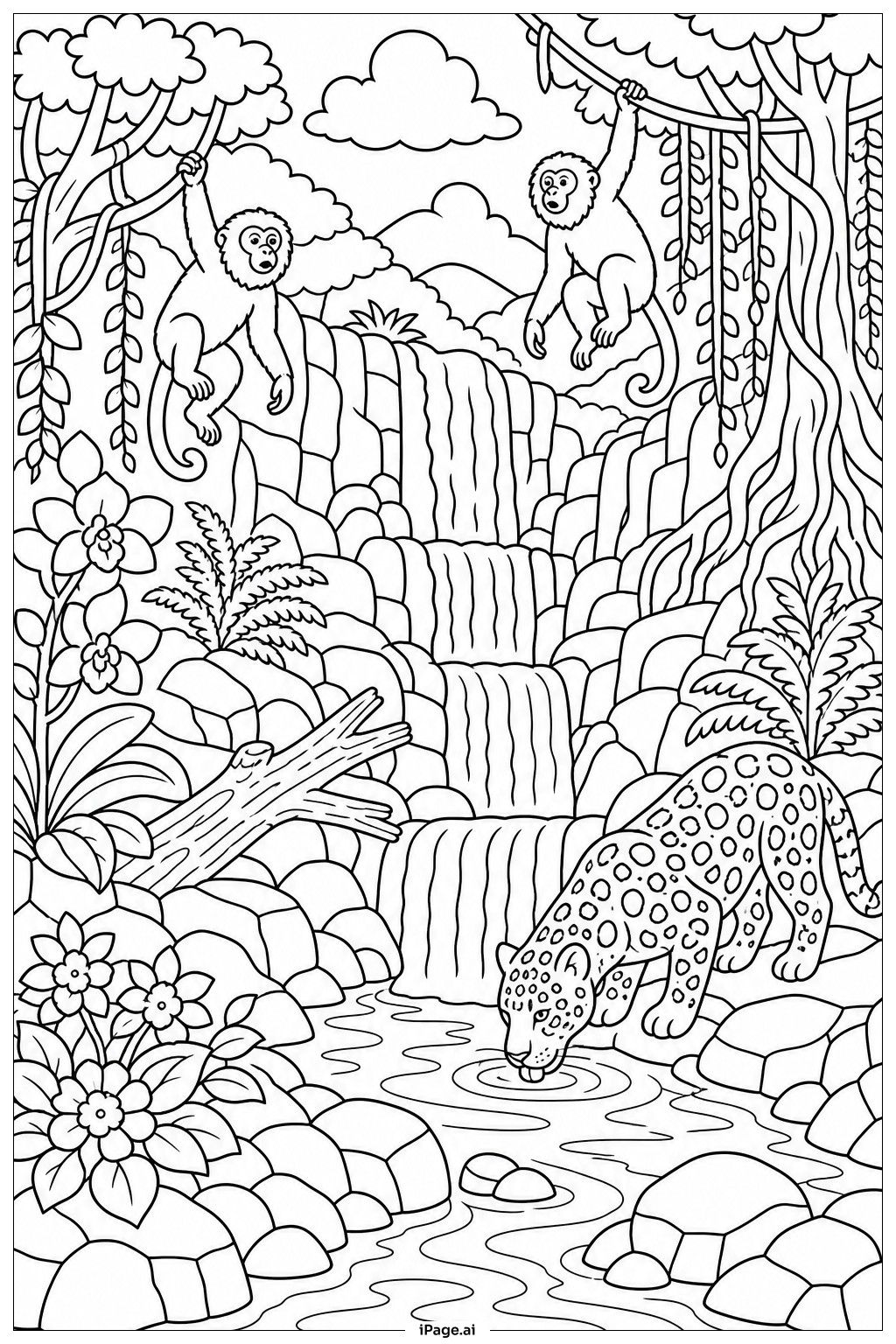
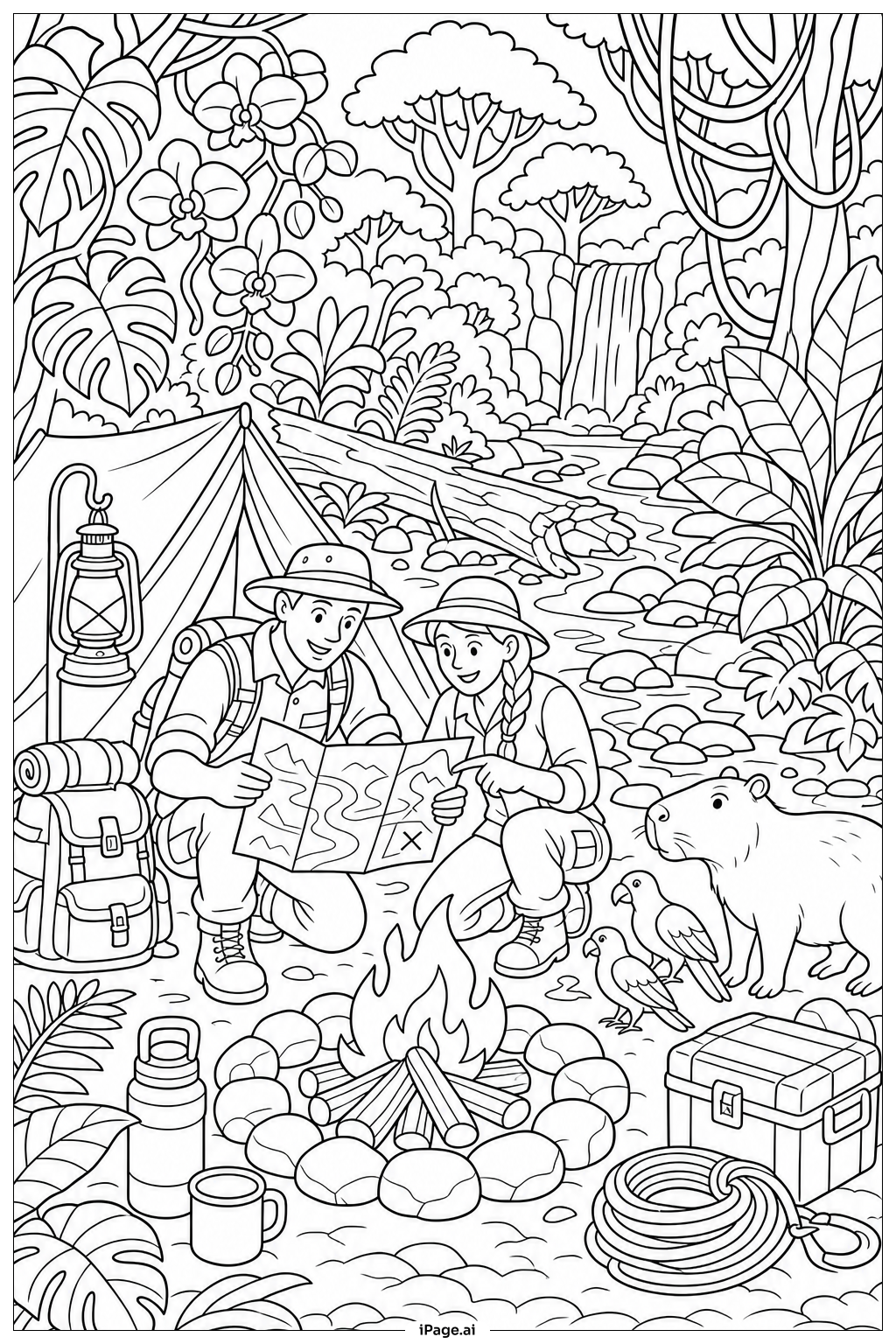
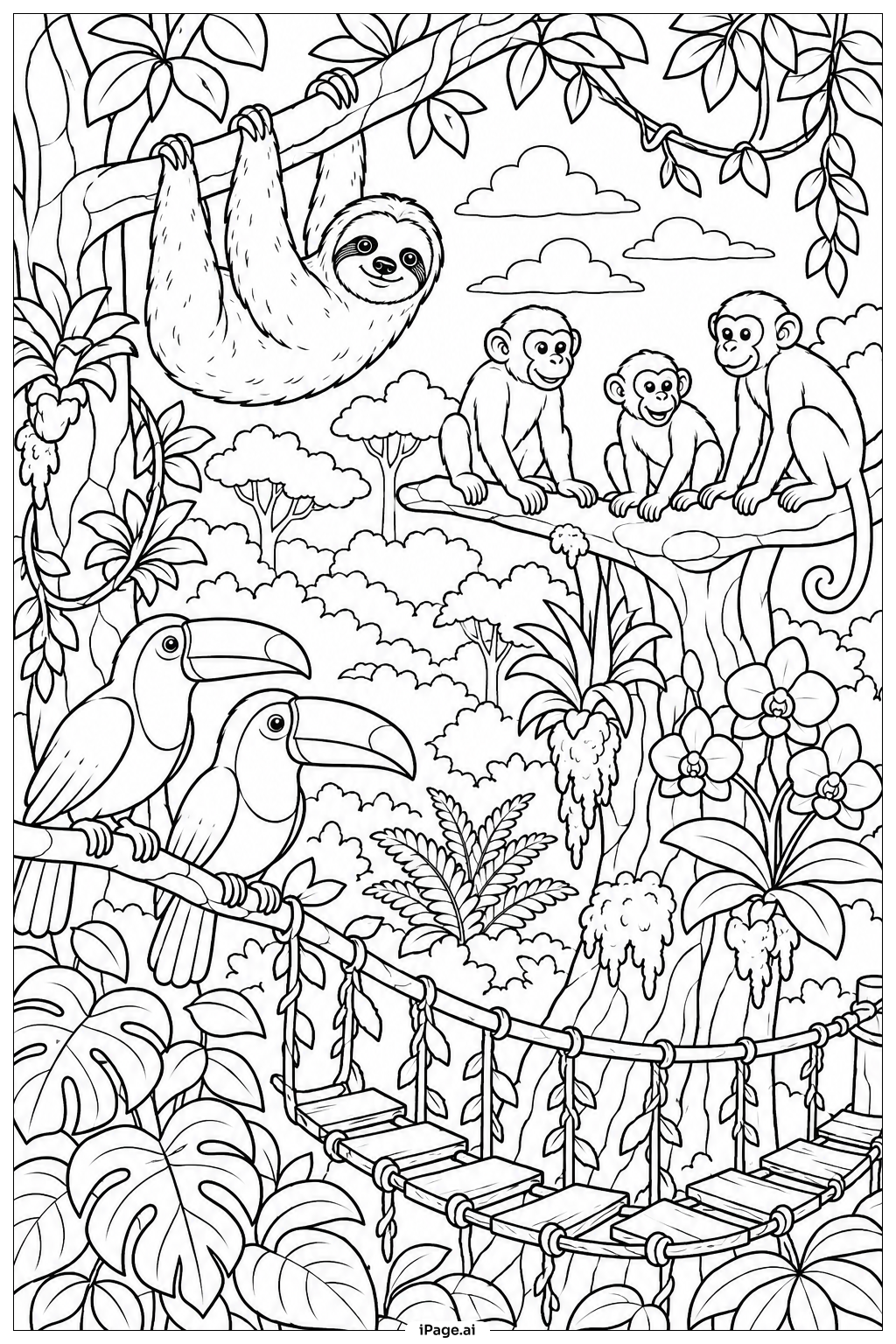
Start with the sky and background. Use light blue or soft yellow where sunlight breaks through the canopy. Move to the trees and leaves next. Use many shades of green — dark green for deep shadows, bright green for leaves in the light. Add yellow-green for leaves catching the sun. Color the treehouse with warm browns and tans. Use darker brown for shadows on the wood. The rope bridge and vines can be golden brown or earthy tan. For the birds, use bold colors like red, orange, or blue to make them stand out. Color the butterflies with bright yellows and purples. Use deep greens and brown for the forest floor. Add soft touches of pink or white for any flowers. Take your time with each section. Layer colors slowly to build depth and richness.
Coloring challenges: Which parts are difficult to color and need attention for Rainforest Treehouse View coloring page?
• Dense Leaf Canopy: The rainforest canopy has dozens of overlapping leaves of different shapes and sizes. Coloring each leaf individually without smudging nearby ones takes patience and a steady hand. Switching between multiple shades of green while keeping the layers looking natural is a real challenge for colorists of any age.
• Intricate Treehouse Structure: The treehouse is built from many wooden planks, beams, and rails that overlap in complex ways. Following each line carefully to avoid coloring over edges requires focus. Getting consistent wood grain shading across all the planks helps the structure feel solid and realistic.
• Rope Bridge and Vines: The rope bridge and hanging vines are made up of many thin, curved lines. These small details are hard to color neatly with thick markers or crayons. Using thin colored pencils works best here. Keeping the rope a slightly different tone from the surrounding tree bark helps it stand out clearly.
• Light and Shadow Depth: Sunlight filtering through the canopy creates patches of bright light and deep shadow throughout the scene. Recreating this natural lighting effect means using lighter and darker versions of the same color side by side. Blending smoothly between light and shadow areas gives the image a lively, three-dimensional feel.
• Small Wildlife Details: The birds and butterflies scattered throughout the scene are small but important. Their tiny wings and feathers have fine details that need careful coloring. Choosing colors that contrast well with the green background ensures these creatures remain visible and bring the rainforest scene to life.
Benefits of coloring books: Advantages of drawing Rainforest Treehouse View coloring page
Coloring this Rainforest Treehouse View page offers a wide range of benefits for children and adults alike. The rich details of the rainforest scene encourage focus and concentration, helping colorists practice patience as they work through each leaf, plank, and vine. This kind of careful, mindful activity is a great way to relax and reduce everyday stress. Choosing colors for the trees, birds, and flowers sparks creativity and helps develop a personal sense of color and style. For younger children, coloring within the detailed lines builds fine motor skills and improves hand-eye coordination. The natural rainforest setting also opens the door to learning. Kids can explore what colors real rainforest animals and plants are, making the activity educational as well as fun. Working through a complex scene like this builds confidence — finishing such a detailed page gives a real sense of accomplishment. For older children and adults, the layering of light and shadow across the canopy provides a satisfying artistic challenge. Whether coloring alone or together with family, this page creates a calming, screen-free experience that encourages imagination and a love of the natural world.