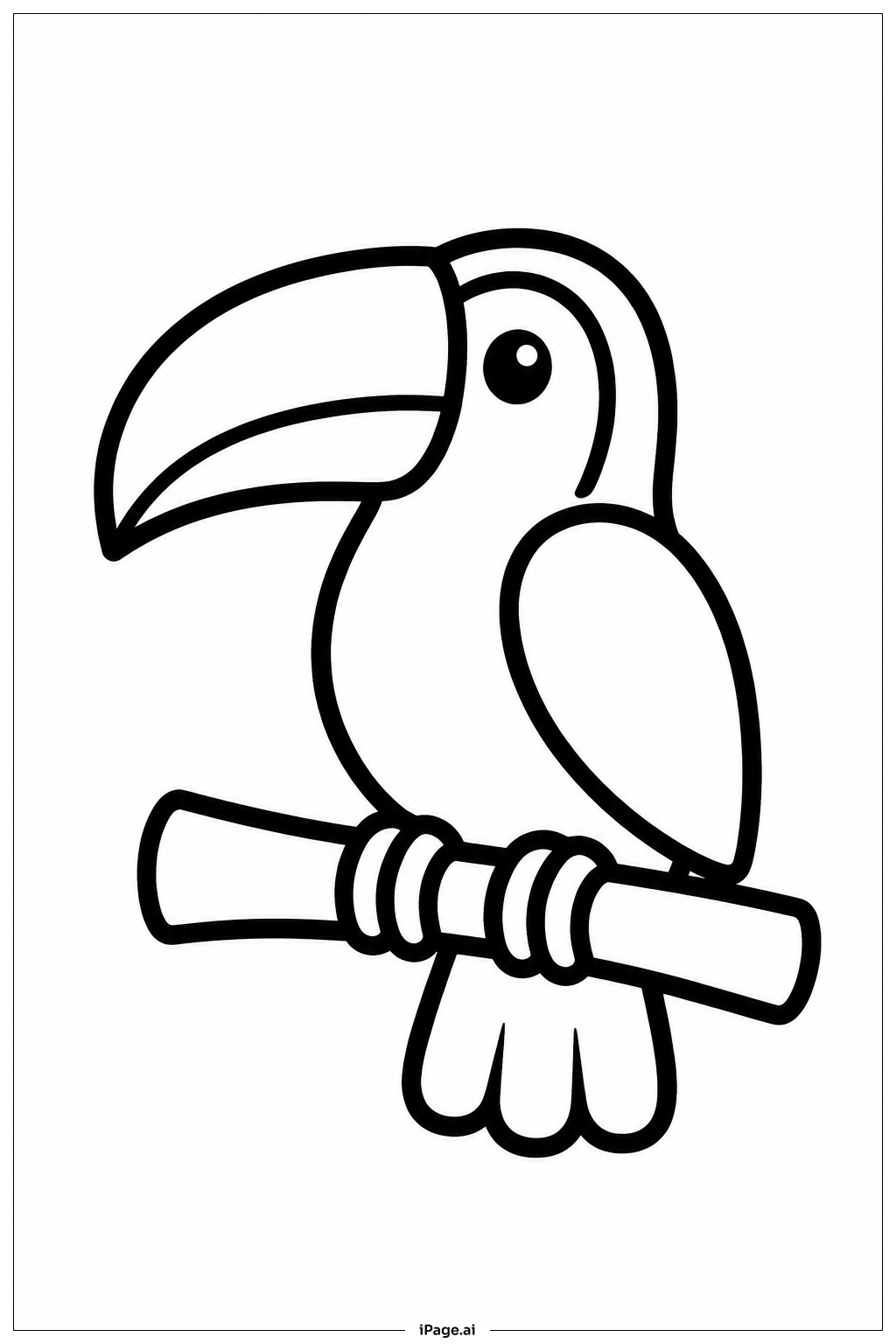
Coloring tips: How to color Rainforest Toucan coloring page well?
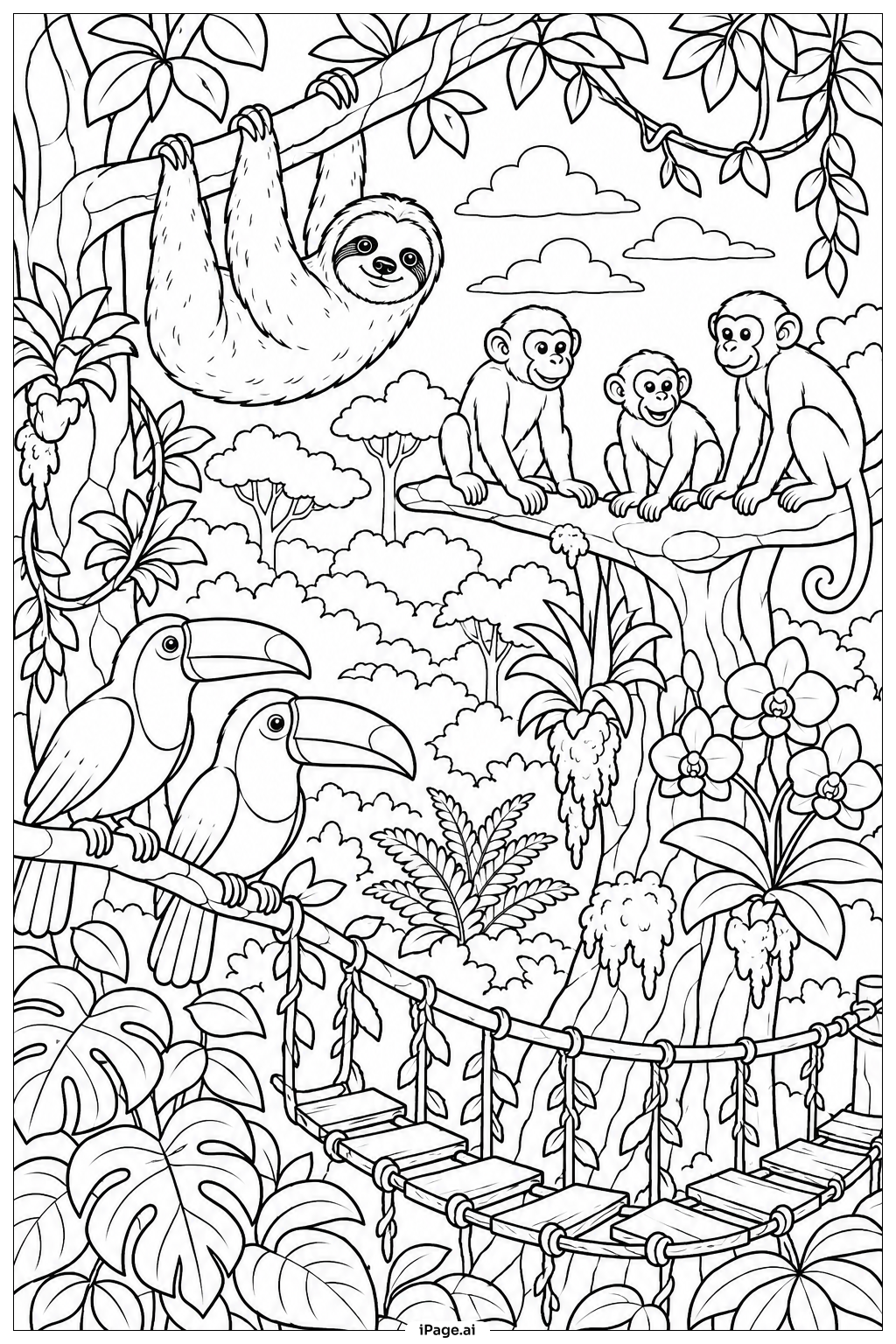
Start with the toucan's large beak. Toucans have colorful beaks with shades of yellow, orange, red, and green — try blending these together for a rainbow effect. Use black or very dark blue for most of the body feathers. Leave the chest area white or pale yellow. Color the eye area with a bright blue or teal ring around a dark pupil. For the tropical leaves and background, use many shades of green — lime, forest green, and olive all work well. Add yellow or brown to the branches and vines to make them look like real wood. Do not be afraid to use bold, bright colors. Rainforest animals and plants are some of the most colorful in the world. You can even use unusual colors like purple or pink for some leaves to make your artwork unique and creative. Take your time on the beak — it is the star of the picture.
Coloring challenges: Which parts are difficult to color and need attention for Rainforest Toucan coloring page?
• The Toucan's Beak Gradient: The beak is the most complex part of the image. It is large and covers a wide area, and real toucans have beaks with multiple color zones blending into each other. Recreating this gradient smoothly without harsh lines takes practice. You will need to layer colors carefully and blend edges gently to avoid a flat or patchy look.
• Small Feather Details: The wing and body feathers have individual texture lines drawn within them. Staying inside these tiny spaces while still showing color variation is tricky. Using a fine-tipped coloring tool helps here. Trying to rush through these details often leads to colors bleeding outside the lines.
• Background Leaf Layers: The tropical foliage behind the toucan has many overlapping leaves at different depths. It can be hard to decide which leaves should be darker and which lighter to create a sense of depth. Using at least three different shades of green and reserving the darkest tones for the background will help separate the layers convincingly.
• Eye and Facial Ring: The eye is small but very important for bringing the toucan to life. There is a defined ring around the eye that needs a bright contrasting color. Working in such a small, precise area requires a steady hand and a sharp pencil or thin marker.
• Balancing Contrast: The toucan's dark body needs to stand out against a dark green background. If both are too similar in value, the bird will get lost in the scene. Planning your color choices in advance — keeping the bird slightly brighter or adding a light outline — will make the final result look more polished.
Benefits of coloring books: Advantages of drawing Rainforest Toucan coloring page
Coloring this Rainforest Toucan image offers a wonderful mix of fun and learning. Children get to explore the vibrant world of tropical wildlife while developing important skills along the way.
Working on the toucan's detailed beak and layered feathers builds fine motor skills and hand-eye coordination. Choosing colors and planning how to fill each section encourages creative thinking and decision-making.
Because toucans are real animals with distinct, recognizable colors, this image also sparks curiosity about nature. Kids may want to look up real toucan photos to guide their coloring choices, turning the activity into a mini nature lesson about rainforest animals and their habitats.
Focusing on the careful details of this image — the small eye ring, the textured feathers, the overlapping leaves — trains attention and patience. These are skills that help children in school and everyday life.
For older kids and Adults, the complexity of blending colors on the beak and creating depth in the foliage provides a satisfying artistic challenge. Completing a detailed piece like this builds confidence and a sense of accomplishment.
Overall, this coloring page connects art, science, and mindfulness in one enjoyable activity that works for a wide range of ages.