Coloring tips: How to color Rainforest Sloth coloring page well?
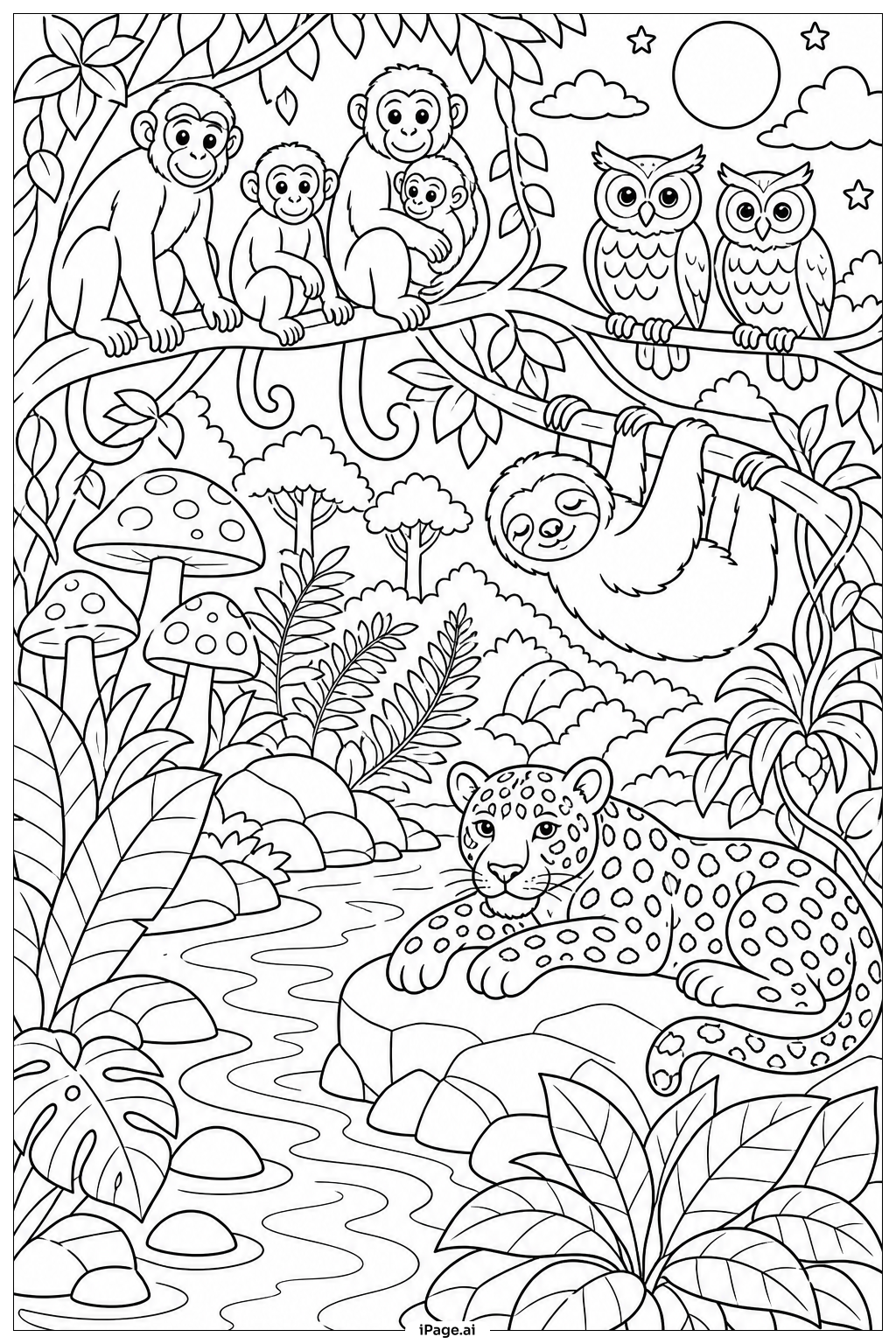
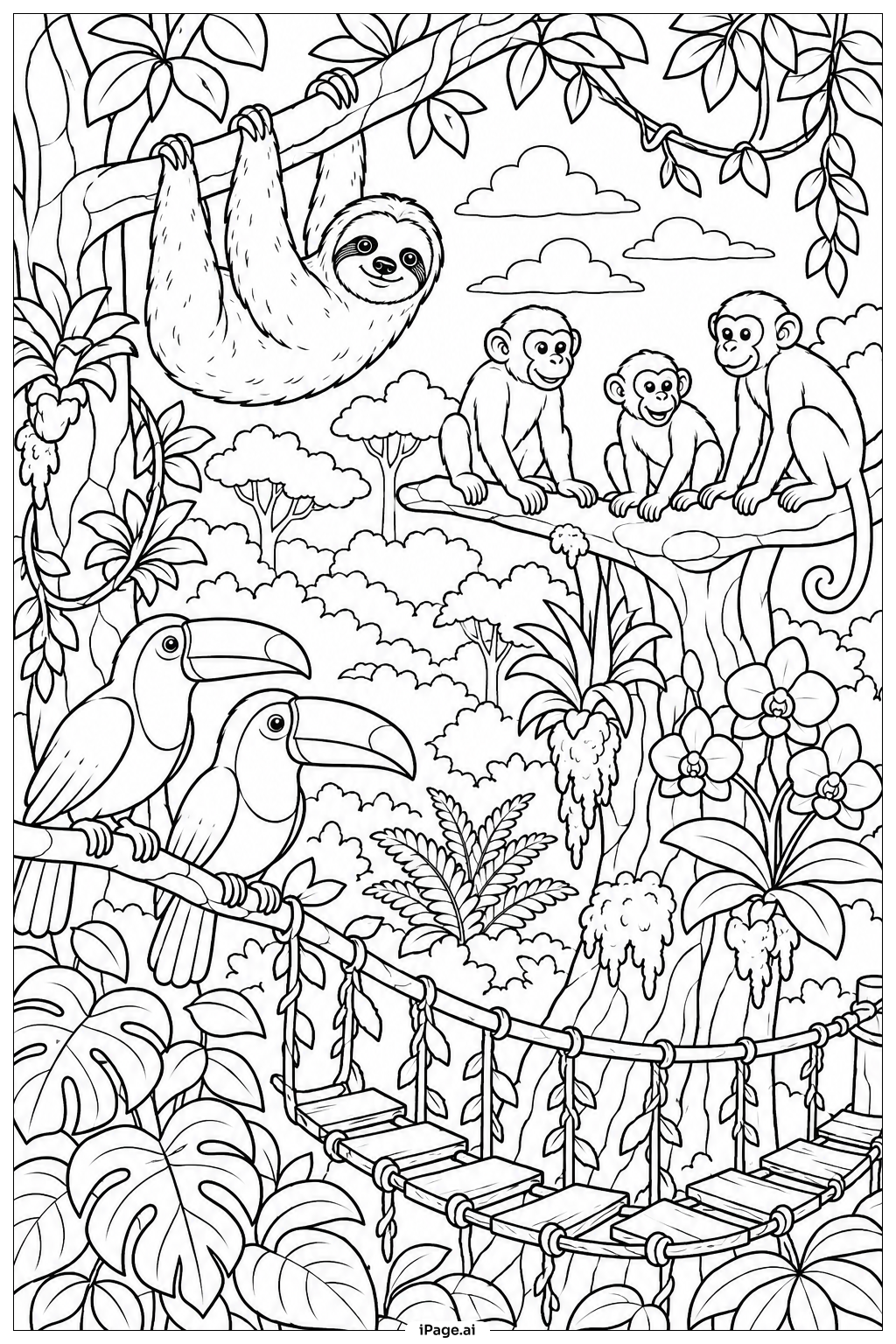
Start with the sloth's fur. Use warm browns and tans as the base color. Add streaks of gray or darker brown to show the shaggy texture. The face can be a lighter cream or beige tone. Use dark brown or black for the eyes and claws to make them stand out. For the tree branch, try medium brown with darker patches to show the bark texture. The leaves around the sloth look great in different shades of green. Mix light green, dark green, and yellow-green to make the rainforest feel alive. You can add a little blue or purple in the shadows between the leaves to give depth. Vines can be olive green or brownish green. Try to keep the sloth the brightest part of the picture so it stays the center of attention. Have fun layering colors to make the fur look soft and fluffy.
Coloring challenges: Which parts are difficult to color and need attention for Rainforest Sloth coloring page?
• Fur Texture: The sloth's shaggy fur has many small lines and overlapping strands. Coloring each section neatly without making it look flat is tricky. Try using short, light strokes that follow the direction of the fur to build up a realistic, layered look. Blending two or three shades of brown will help a lot.
• Claws and Branch Details: The long curved claws wrap tightly around the branch, creating a small and detailed area. It can be hard to stay inside the lines here. Use a sharp pencil or a fine-tip marker to carefully fill in the claws with a dark color without accidentally coloring the branch underneath.
• Background Leaves and Vines: The rainforest background is filled with many overlapping leaves and winding vines. Choosing which leaf gets which shade of green takes patience. Coloring each leaf slightly differently from its neighbor helps the scene look natural and prevents the background from looking like one big green blob.
• Face Expression: The sloth's face is small and gently detailed. The eyes, nose, and smile are close together. Coloring the face carefully without smudging or going over the lines requires a steady hand and small coloring tools. A light skin tone around the face area before adding darker details works well.
• Depth and Shadow: Making the image look three-dimensional is a real challenge. Adding darker tones in shadowed areas under the branch, beneath the fur, and between the leaves will give the whole picture a sense of depth and make it pop off the page.
Benefits of coloring books: Advantages of drawing Rainforest Sloth coloring page
Coloring this rainforest sloth image brings many great benefits for kids and beginners alike. First, it helps build fine motor skills. Carefully coloring inside the lines of the fur, claws, and leaves trains the small muscles in the hands and fingers. This is great practice for writing and other detailed tasks. Second, it encourages creativity. Choosing colors for the fur, leaves, and background lets kids make their own artistic choices and express themselves freely. There is no single right answer, which builds confidence. Third, it teaches patience and focus. The detailed fur texture and busy background require slow, careful work. Sitting with a task and seeing it through to the end is a valuable skill for children of all ages. Fourth, it sparks curiosity about nature. Sloths are fascinating animals that live in real rainforests. Coloring this scene may inspire kids to learn more about rainforest wildlife and ecosystems. Finally, it is simply relaxing and fun. The calm, peaceful mood of the sloth hanging in the trees makes this a soothing coloring experience that reduces stress and brings joy.