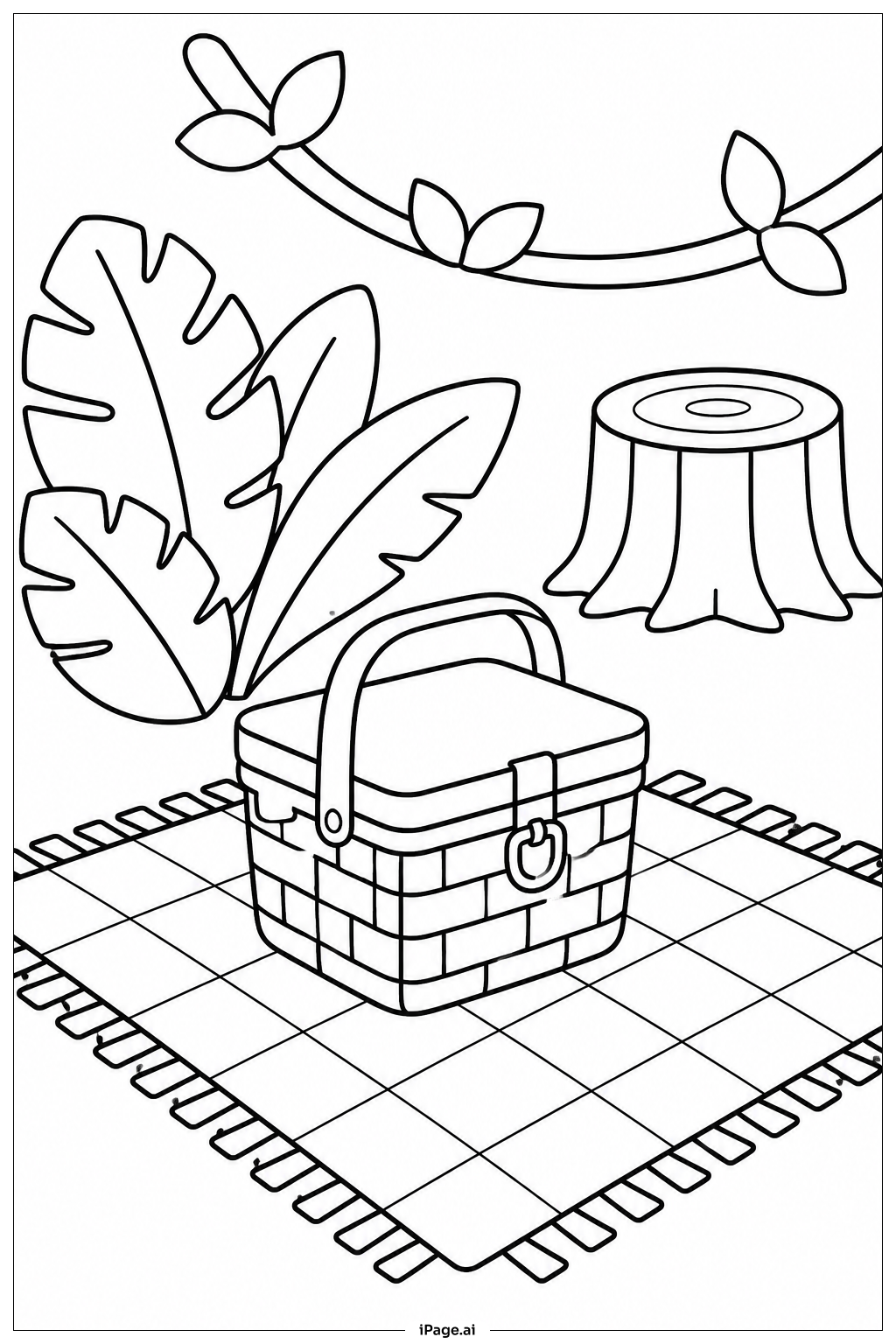
Coloring tips: How to color Rainforest Picnic Spot coloring page well?
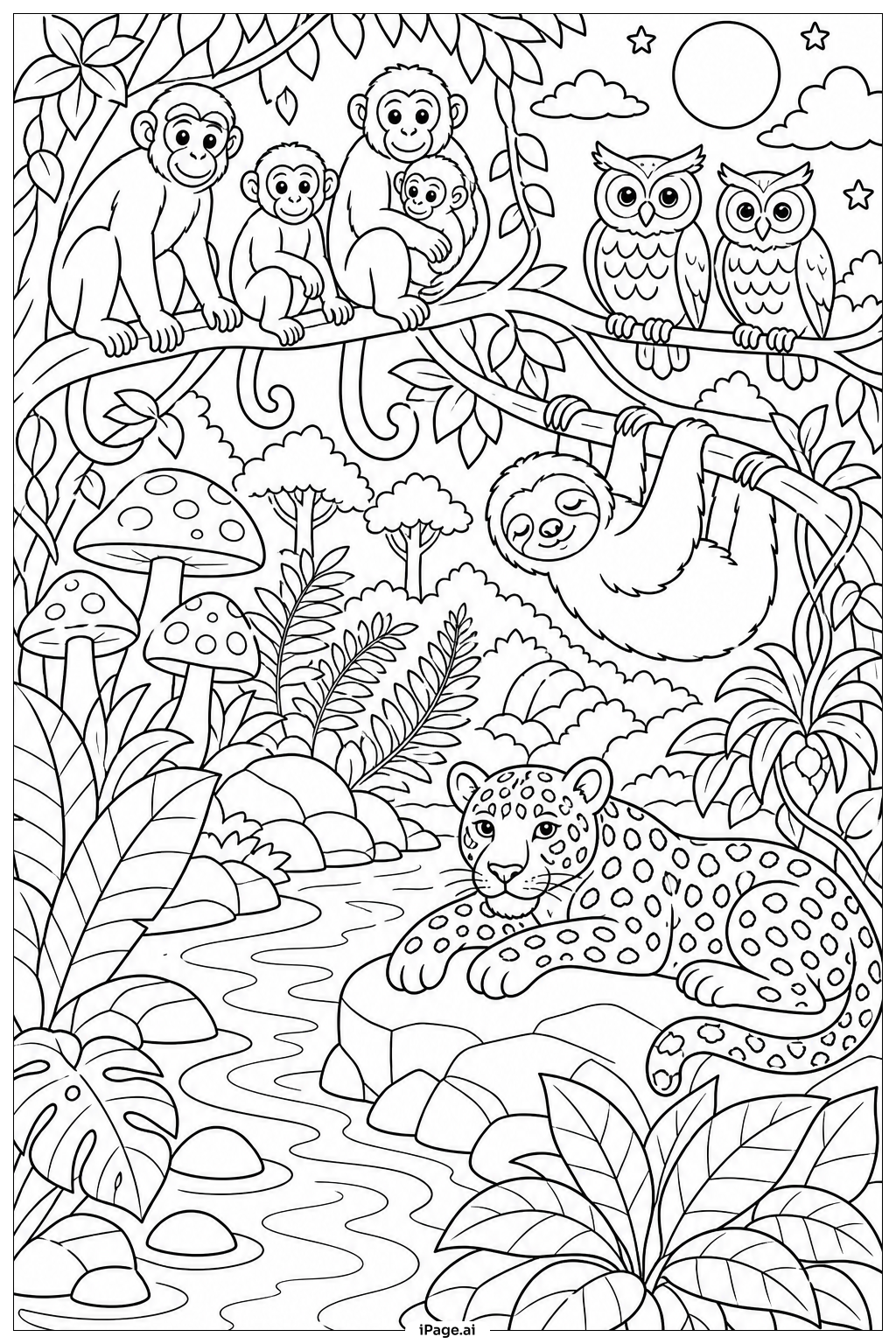
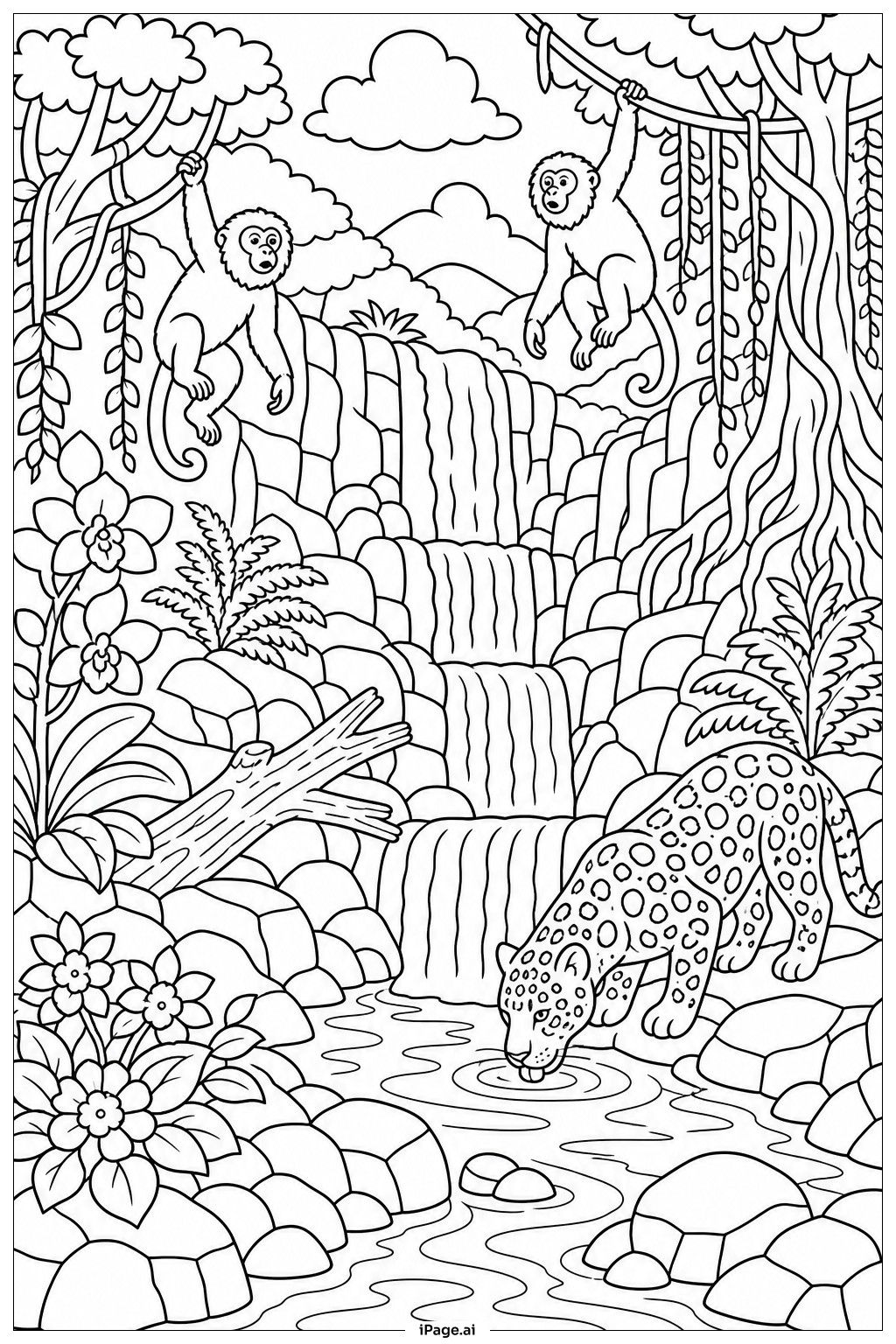
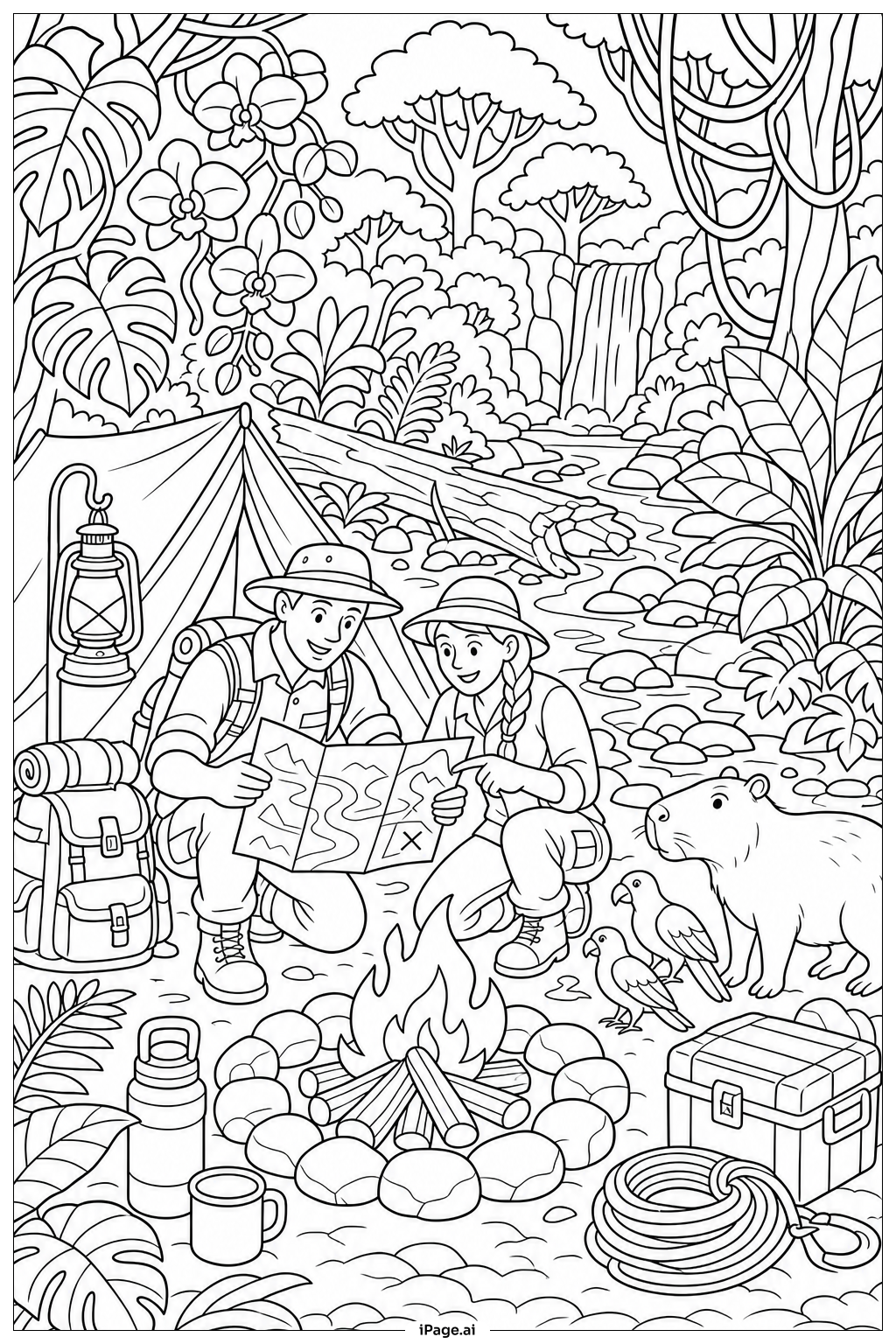
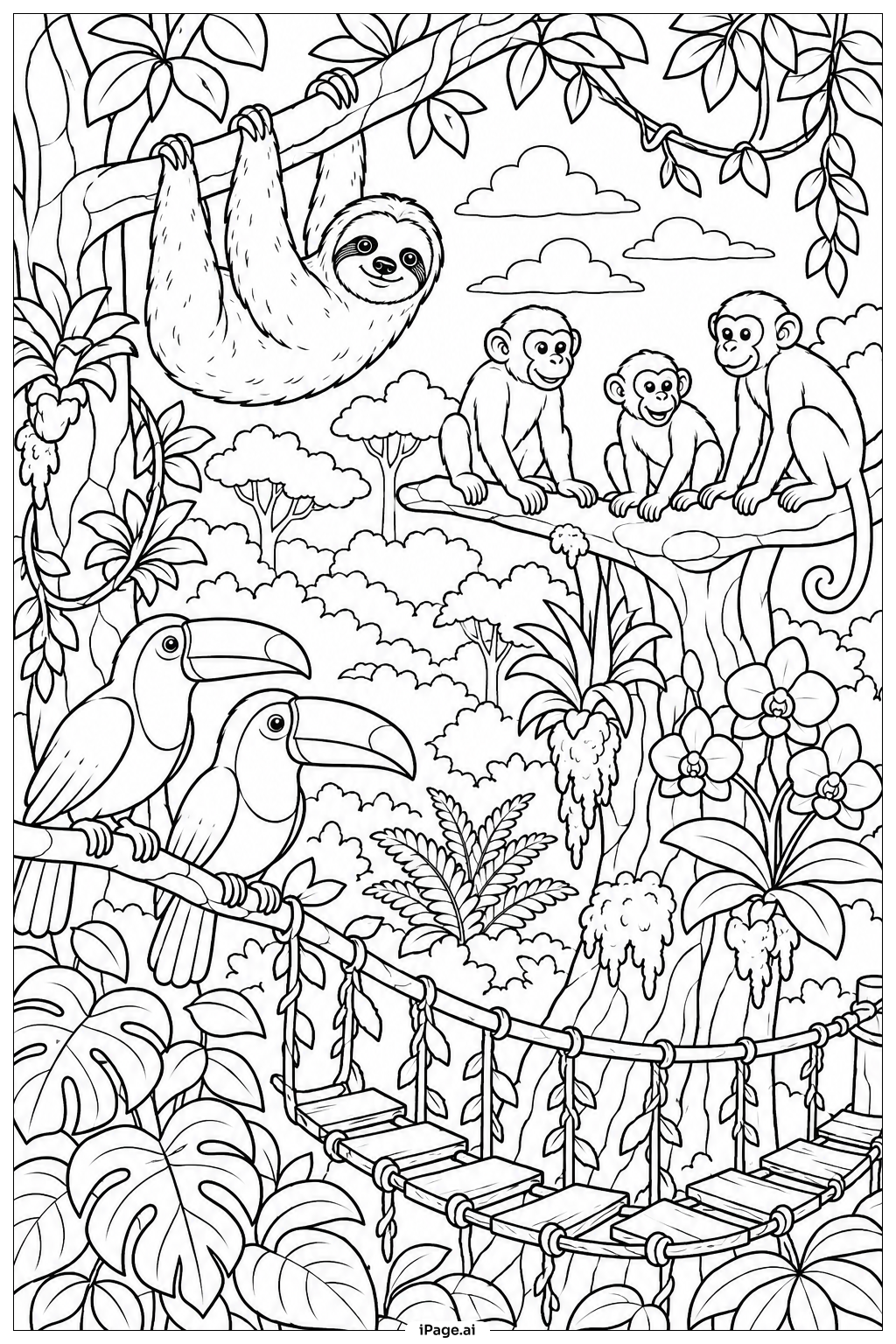
Start with the large background trees and canopy using deep greens and rich emerald shades. Use lighter greens for the ferns and smaller leaves to add variety. The flowers can be bright and bold — try reds, oranges, yellows, and purples to make them pop. Color the picnic blanket with fun stripes or checkered patterns in warm colors like red and white. Use natural browns and tans for the picnic basket and tree bark. The toucan's beak looks great in vivid orange and yellow. Give the butterfly wings bright, patterned colors. The stream in the background can be colored with soft blues and teals. Use golden yellows for the light rays breaking through the canopy. The mushrooms look fun in red with white spots. Don't be afraid to mix shades and experiment — the rainforest is a colorful place full of surprises!
Coloring challenges: Which parts are difficult to color and need attention for Rainforest Picnic Spot coloring page?
• Dense Foliage Overlap: The rainforest background is packed with overlapping leaves, vines, and branches. Keeping each layer visually distinct requires careful color selection. Using different shades of green — from pale lime to deep forest green — helps separate the layers without losing the lush feel of the scene.
• Small Intricate Details: Elements like the butterfly wing patterns, flower petals, and the toucan's colorful beak contain fine lines and tiny sections. These small areas can be tricky to fill neatly, especially for younger colorists. Thin markers or sharp colored pencils work best for staying inside the lines in these tight spots.
• Light Ray Effects: The sunlight filtering through the tree canopy creates soft, diagonal streaks of light. Recreating this glow effect with colored pencils or crayons takes practice. Lightly blending yellow and white in the light areas while keeping surrounding regions darker can help achieve a natural, glowing look.
• Picnic Items and Textures: The picnic blanket, basket, and food items each have their own textures and patterns. The woven basket weave, the checkered blanket, and the glossy fruit surfaces all call for different coloring techniques. Switching between flat color fills and gentle shading helps bring each item to life realistically.
• Balancing Warm and Cool Tones: The scene mixes warm tones — sunlight, food, flowers — with cool tones like the stream and deep shade. Balancing these color temperatures so the image looks harmonious rather than chaotic is one of the bigger challenges, especially for beginners learning about color theory.
Benefits of coloring books: Advantages of drawing Rainforest Picnic Spot coloring page
Coloring this Rainforest Picnic Spot page offers a wonderful range of benefits for kids and adults alike. The rich variety of plants, animals, and objects in the scene gives colorists a chance to practice using many different colors and techniques all in one page.
For younger children, filling in the large leafy shapes and fun animal characters helps develop fine motor skills and hand-eye coordination. Choosing colors for butterflies, flowers, and food also sparks creativity and imaginative thinking.
For older kids and adults, the detailed textures and layered background offer a satisfying challenge. Working through the complex foliage and light effects builds patience and focus, making it a great mindfulness activity.
The tropical nature theme also has an educational side. Colorists can learn about rainforest animals and plants while they work, making it a fun way to explore the natural world. It can even inspire curiosity about ecosystems and wildlife conservation.
Most importantly, spending time on a calming, creative activity like this reduces stress and brings a sense of joy and accomplishment. Whether coloring alone or with family, this page turns a quiet afternoon into a mini adventure in the rainforest.