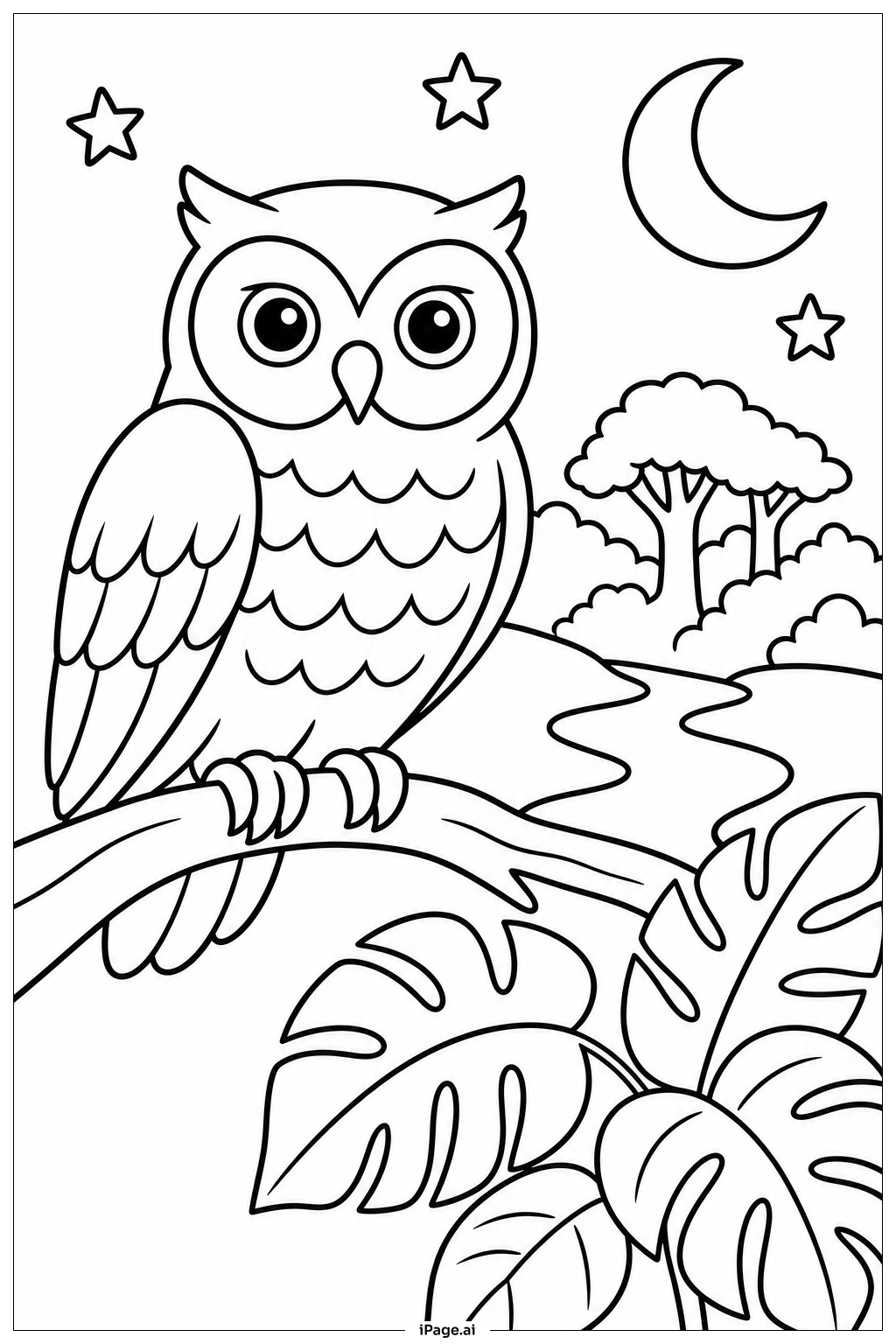
Coloring tips: How to color Rainforest Night Scene coloring page well?
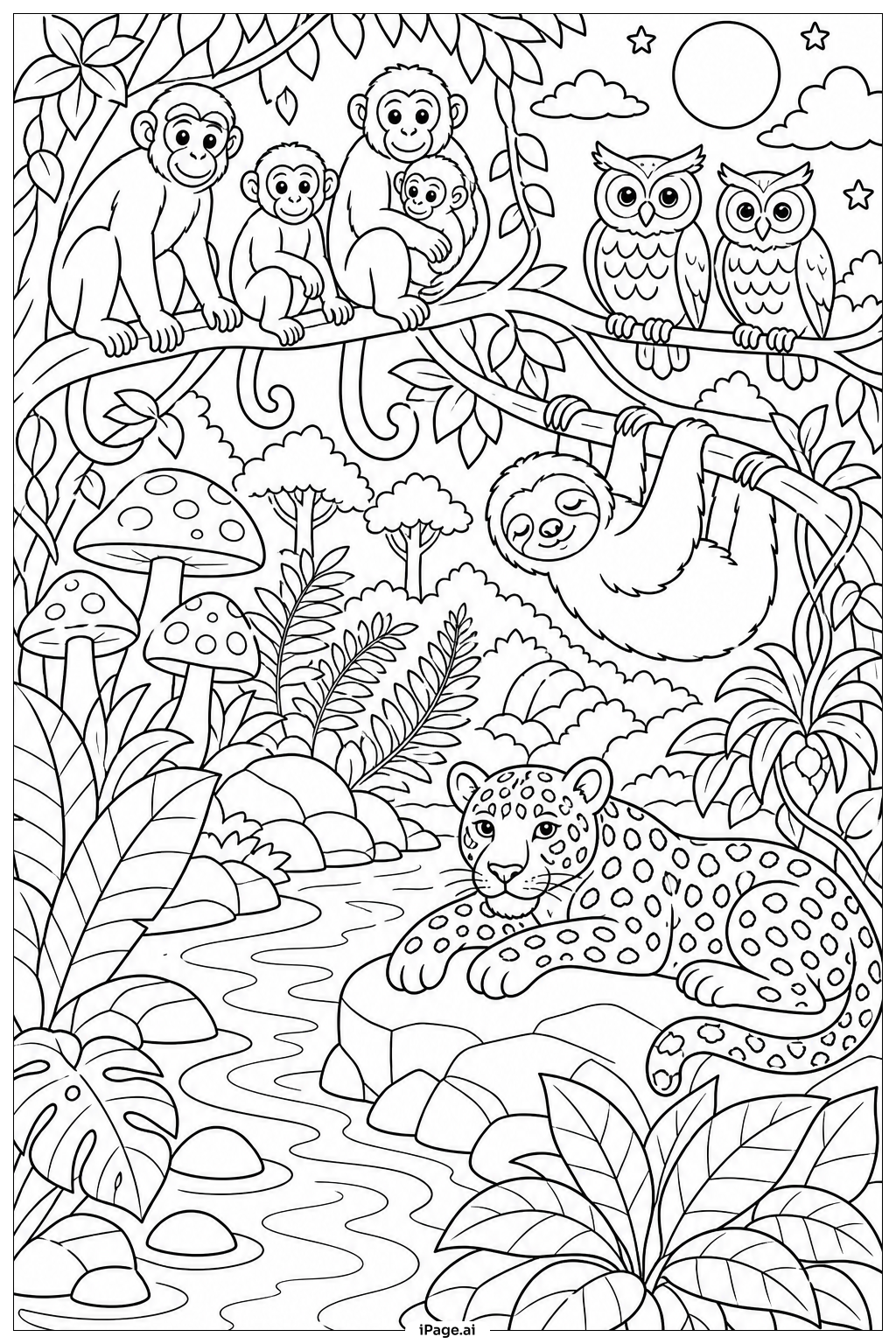
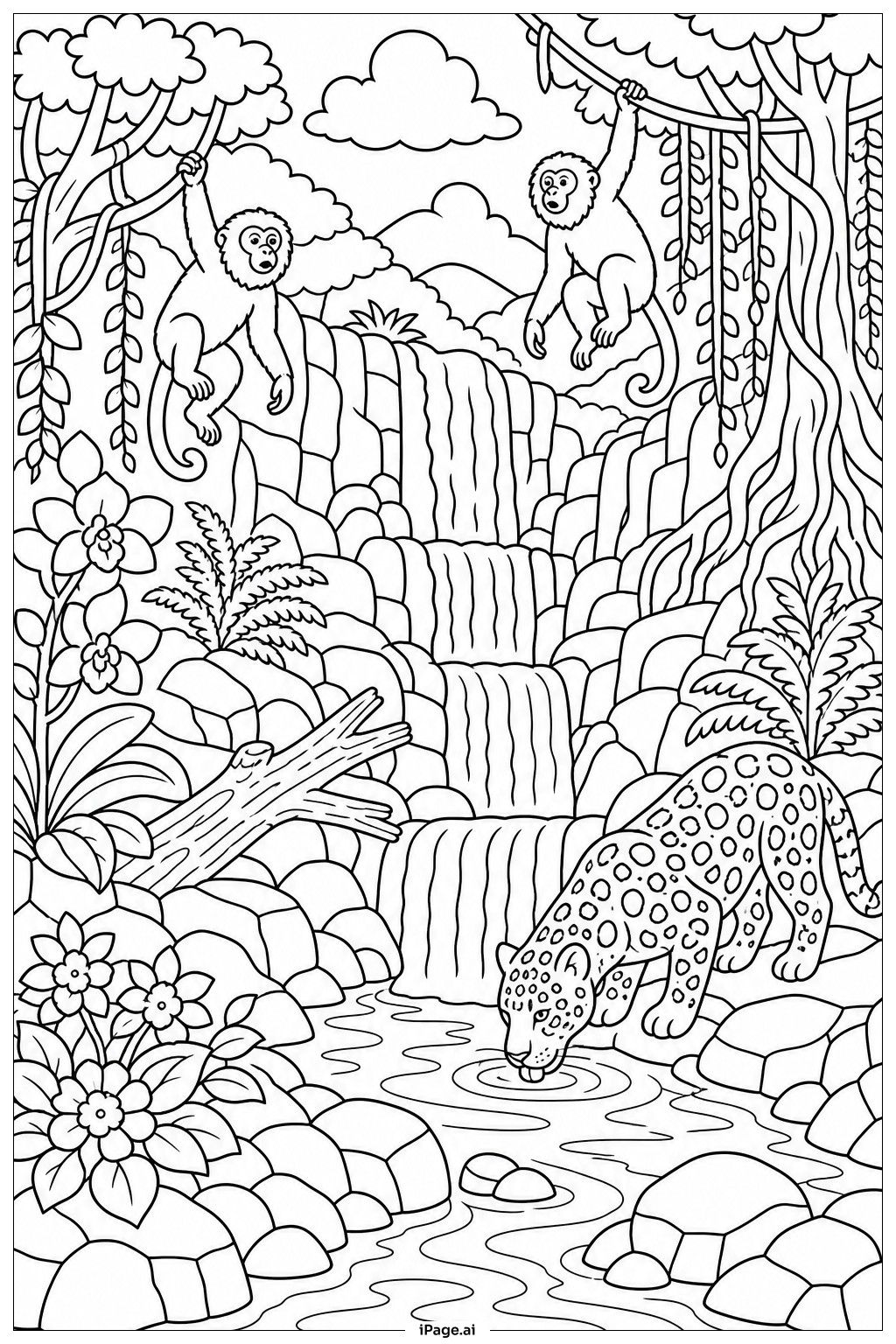
Start with the darkest areas first. Use deep navy blue, indigo, or dark purple for the night sky peeking through the canopy. Color the tree trunks in dark brown or charcoal gray. For leaves, use many shades of green — dark forest green for background leaves and lighter lime green for leaves closer to the moonlight. Make the moon pale yellow or soft white. Use bright yellow and soft gold for firefly glows. The frog can be vivid green or bright orange. Give mushrooms fun colors like red with white spots. Use cool blue-gray for the waterfall. Add warm amber tones to the owl. Bright tropical flowers in pink, red, and orange will make the scene pop. Do not be afraid to mix colors to create depth and a glowing nighttime atmosphere.
Coloring challenges: Which parts are difficult to color and need attention for Rainforest Night Scene coloring page?
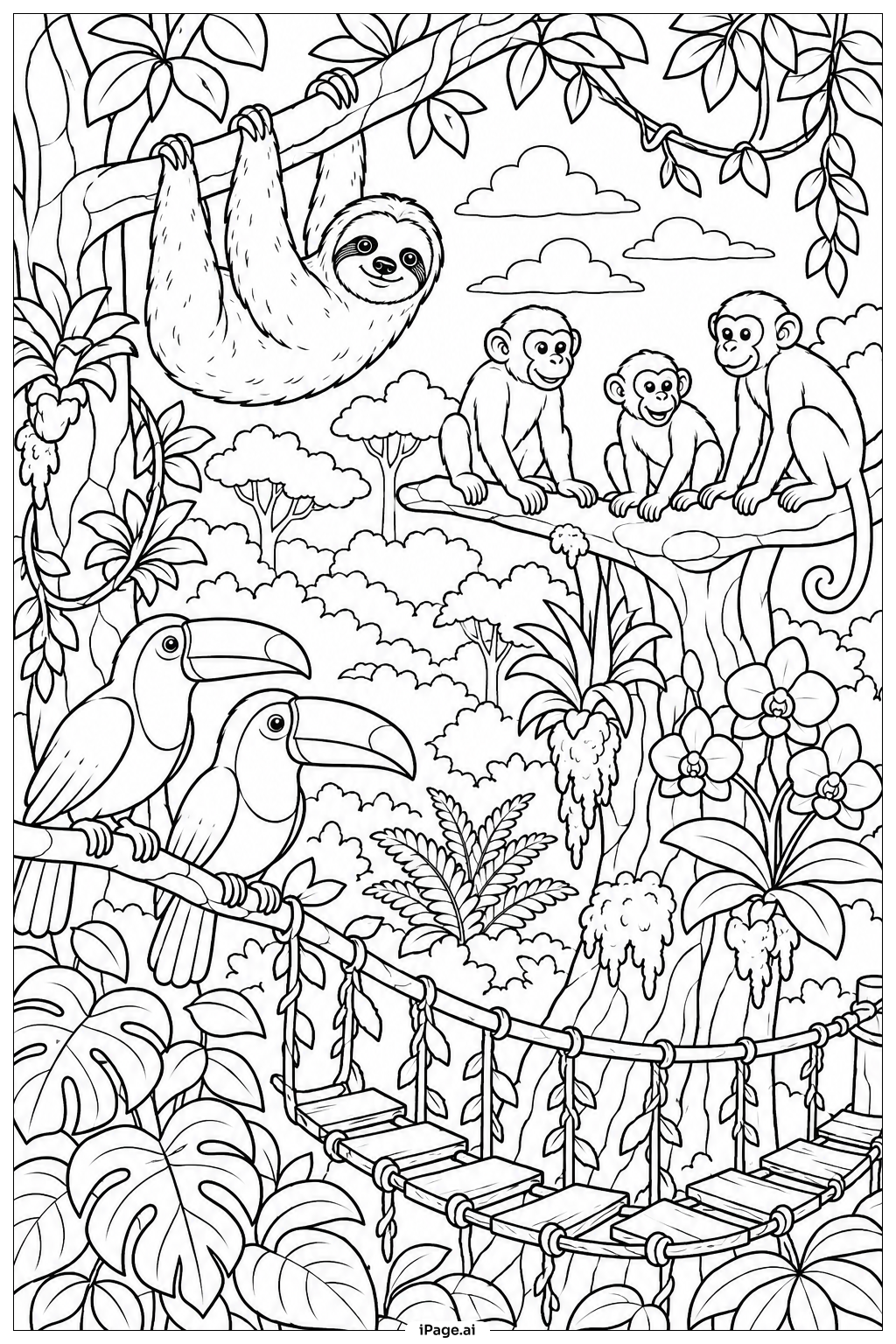
• Dense Canopy Layers: The overlapping leaves and branches create many small, tightly packed spaces. Coloring each layer separately without bleeding into neighboring areas requires a steady hand and fine-tipped markers or colored pencils. Keeping the background darker than the foreground helps create a sense of depth, but this takes careful planning before you begin.
• Moonlight and Glow Effects: Capturing the soft glow of the moon and the tiny lights of fireflies is tricky. You need to blend light colors outward from the light source and avoid making the glow look flat. Leaving small areas uncolored or lightly tinted can help suggest a natural luminous effect, which is a technique that takes practice to master.
• Small Intricate Details: Elements like mushroom spots, frog skin textures, owl feathers, and vine patterns are very small and detailed. Filling these in neatly without smudging or going outside the lines demands patience and precision tools, making this section particularly challenging for younger colorists.
• Water and Reflection: The waterfall and any reflective surfaces on the forest floor require smooth, flowing color transitions. Using light blue blending into white suggests movement and shine. Getting this to look natural rather than harsh or blocky can be difficult without blending tools or layered light strokes.
• Dark Background Balance: Keeping the deep night background rich and even without making the whole image feel too heavy is a real challenge. Pressing too hard with dark colors can overpower the details. Building up darkness gradually with multiple light layers gives a better result.
Benefits of coloring books: Advantages of drawing Rainforest Night Scene coloring page
Coloring this Rainforest Night Scene offers wonderful benefits for children and young learners. Working through all the rich details of the forest helps build focus and concentration skills. Sitting quietly and filling in each section trains the mind to stay on a single task, which supports attention development in everyday life.
Choosing colors for trees, animals, flowers, and moonlight sparks creative thinking and imagination. Kids learn that there is no single right answer — a frog can be green, red, or even blue — and that creativity is always welcome.
The fine details like feathers, mushroom spots, and tiny vines give fingers and hands a great workout. This careful, precise coloring strengthens fine motor skills and hand-eye coordination, which are important for writing and other school tasks.
Learning about rainforest plants and animals while coloring also supports early nature education. Children naturally become curious about owls, frogs, tropical flowers, and fireflies as they bring them to life with color.
Finally, the calm and peaceful nature of this nighttime scene makes it a great activity for winding down. Coloring reduces stress and anxiety, helping kids relax while still engaging their minds in a fun and rewarding way. Every finished page builds confidence and a sense of accomplishment.