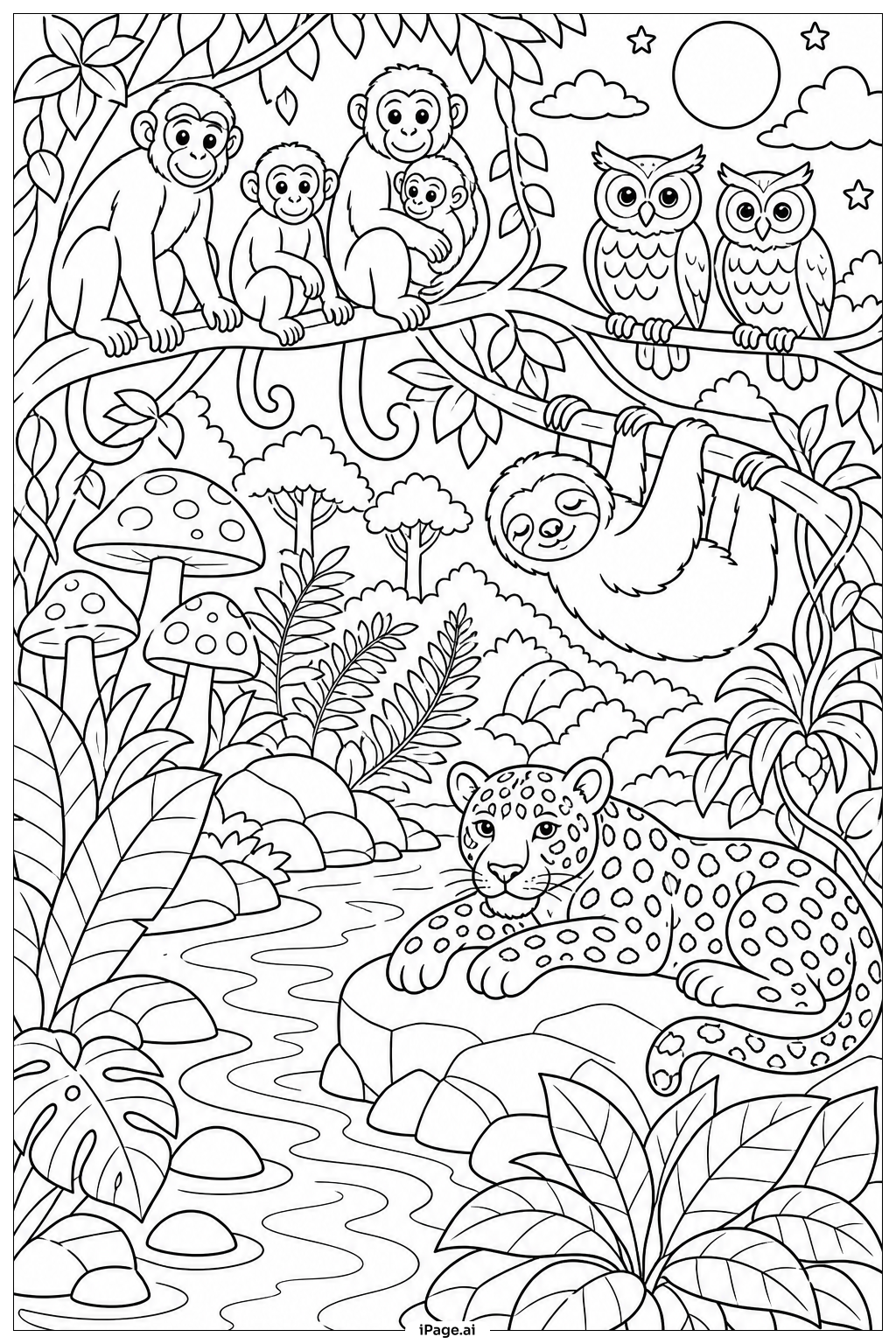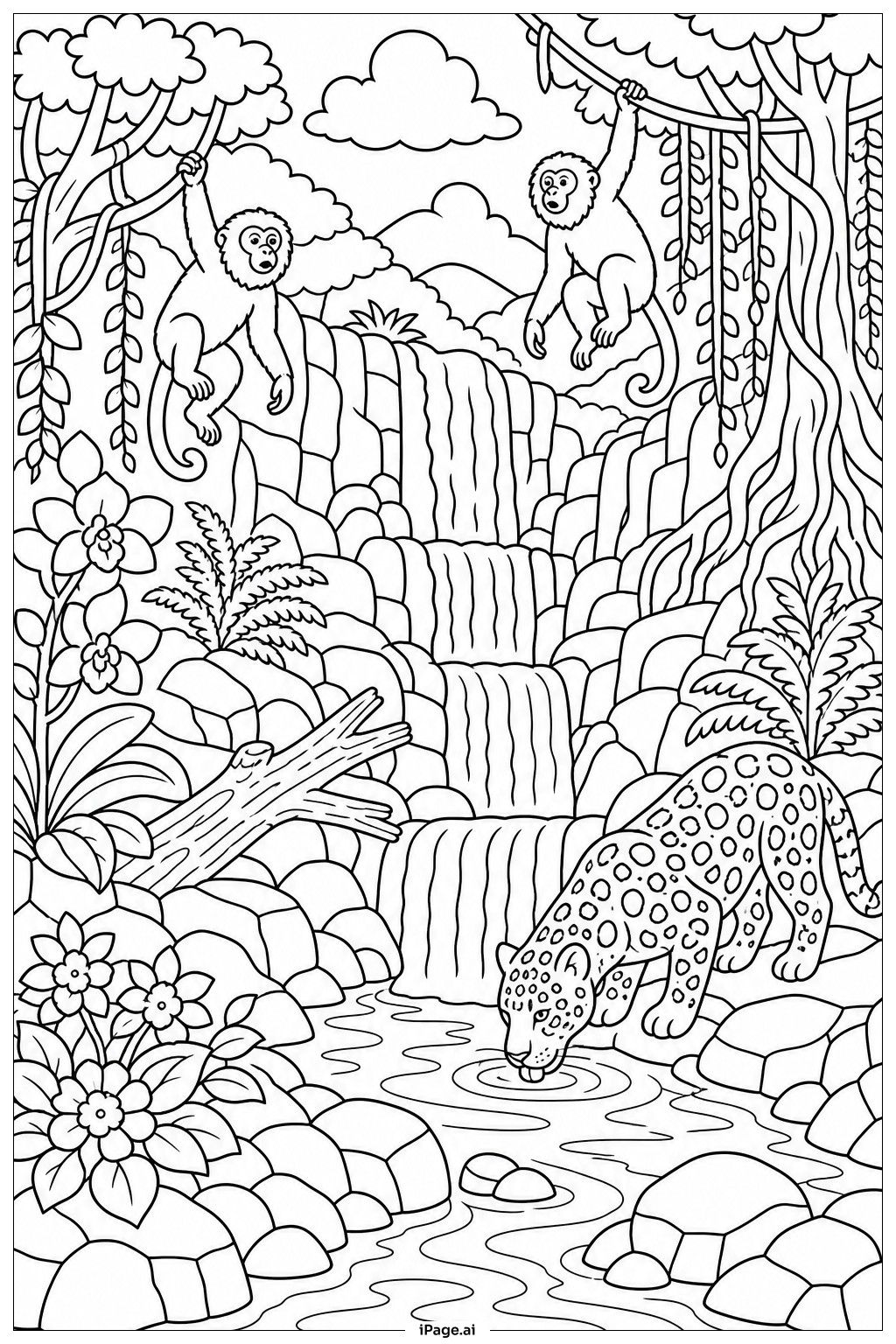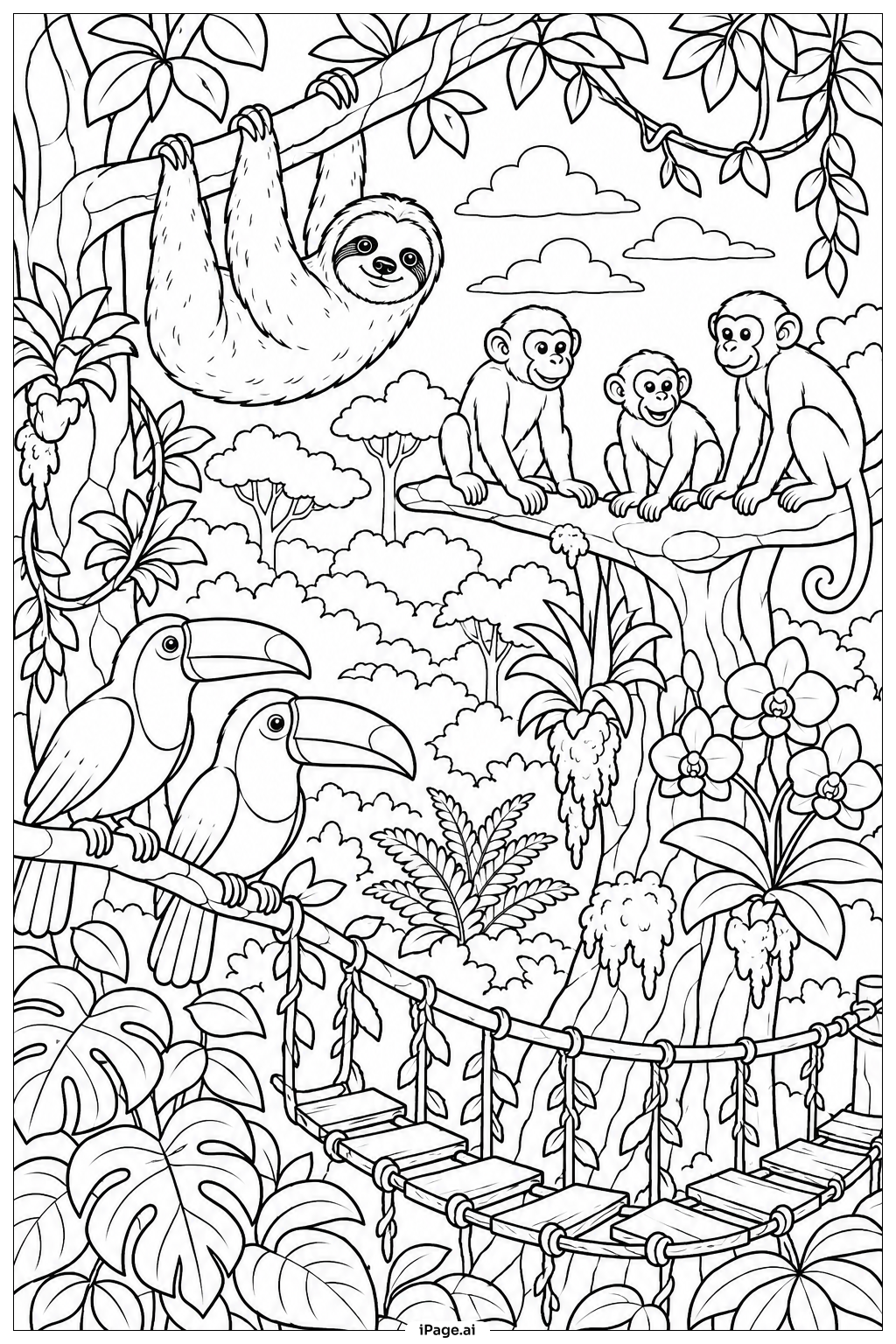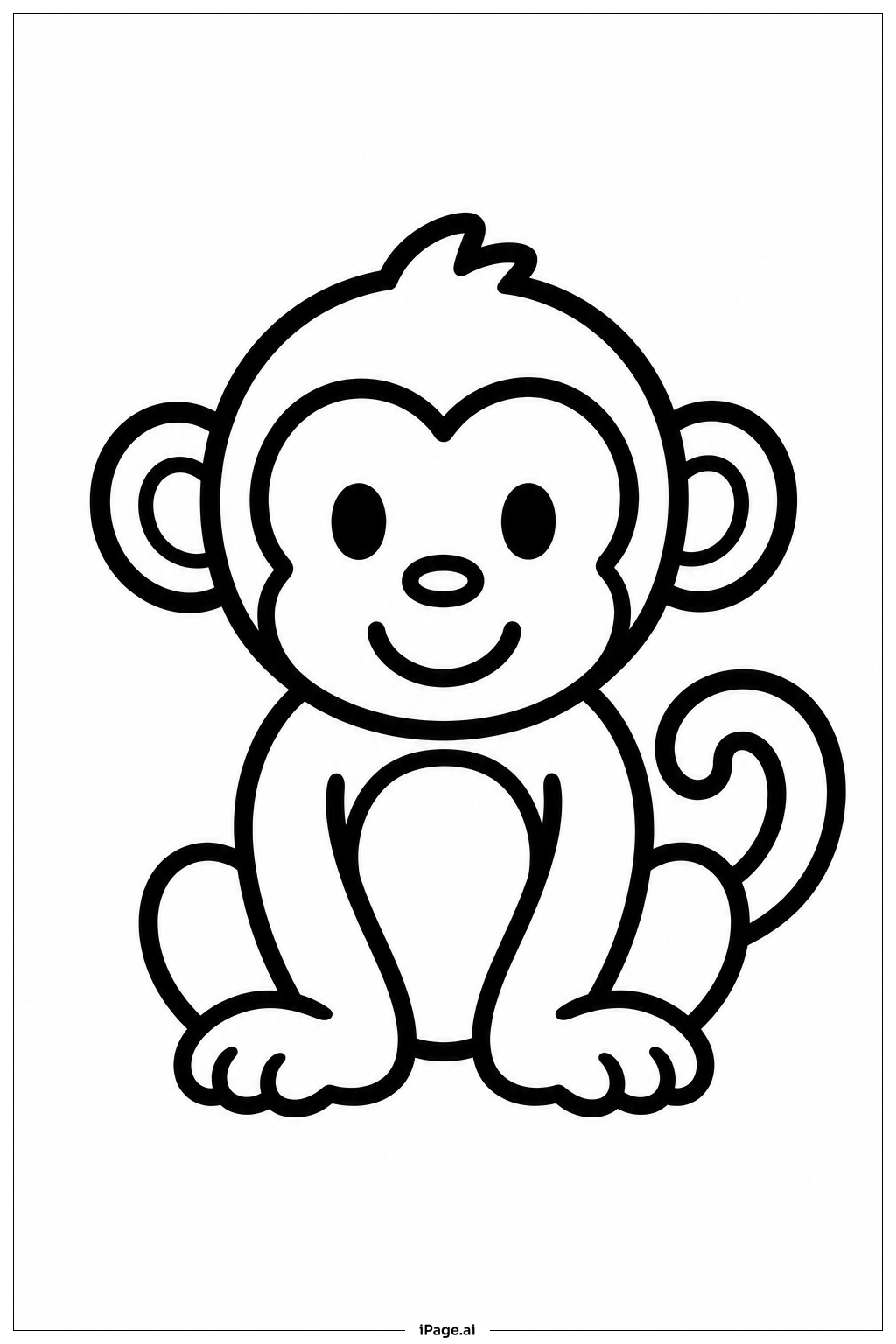
Coloring tips: How to color Rainforest Monkey coloring page well?
Start with the monkey's body and use warm brown or golden tan shades for its fur. Add a lighter cream or pale yellow for the belly and face. Use dark brown or black to shade around the eyes, nose, and fingers for depth. Color the vines in earthy greens and browns, making them feel rough and natural. Fill the large leaves with different shades of green — mix bright lime green with deep forest green to create variety. Add splashes of color to the flowers using red, orange, yellow, or purple. For the background trees, use muted greens and browns so the monkey stands out in the foreground. Use soft yellows or warm whites to suggest light streaming through the canopy. Encourage kids to be creative and mix unexpected colors to make their rainforest feel magical and unique.
Coloring challenges: Which parts are difficult to color and need attention for Rainforest Monkey coloring page?
• Monkey Fur Texture: The monkey's fur has many fine lines and layered details that require careful, light strokes to look natural. Blending two or three shades of brown is key to showing depth, but it takes patience to avoid flat or muddy results. Young colorists may find it tricky to stay within the small curved areas around the face and hands.
• Overlapping Leaves and Vines: The rainforest background is packed with large leaves, twisting vines, and overlapping plant shapes. Keeping each leaf and vine a distinct color without bleeding into neighboring sections can be challenging. Using a fine-tip coloring tool for the edges before filling in larger areas can help.
• Facial Expression Details: The monkey's face includes small features like expressive eyes, tiny nostrils, and a curved mouth. These are small areas with tight lines that require a sharp pencil or thin marker. Getting the eyes to look lively rather than flat takes careful shading and light highlighting.
• Light and Shadow Effects: Sunlight filtering through the canopy creates natural highlights and shadows throughout the scene. Capturing this effect means leaving some areas lighter while gradually deepening color in shaded zones. This level of shading is more suited to older or more experienced colorists.
• Balancing Foreground and Background: The busy background of trees, leaves, and light rays competes visually with the monkey. Choosing softer, cooler tones for the background while keeping the monkey's colors bold and warm helps create contrast, but this balance takes planning and color awareness to execute well.
Benefits of coloring books: Advantages of drawing Rainforest Monkey coloring page
Coloring this Rainforest Monkey page offers a wonderful mix of fun and learning for children of all ages. As kids choose colors for the monkey's fur, tropical leaves, and exotic flowers, they practice color recognition and build confidence in making their own creative decisions.
The detailed jungle scene encourages focus and patience. Carefully coloring small areas like the monkey's face or fine vine textures helps develop fine motor skills and hand-eye coordination, which are important for writing and other hands-on activities.
This image also sparks curiosity about nature. As children color the rainforest setting, they naturally wonder about real animals and plants that live in tropical environments. It becomes a quiet gateway to learning about biodiversity and wildlife.
For older kids, the layered background and shading opportunities offer a satisfying creative challenge. Experimenting with light and shadow, or blending multiple greens for the foliage, builds early artistic skills in a low-pressure and enjoyable way.
Most importantly, coloring is a calming activity. It helps children slow down, concentrate, and find a sense of peace in a focused creative task. Finishing a page also builds a sense of accomplishment and pride. Whether done alone or with family, this Rainforest Monkey page brings joy and imagination to life one color at a time.