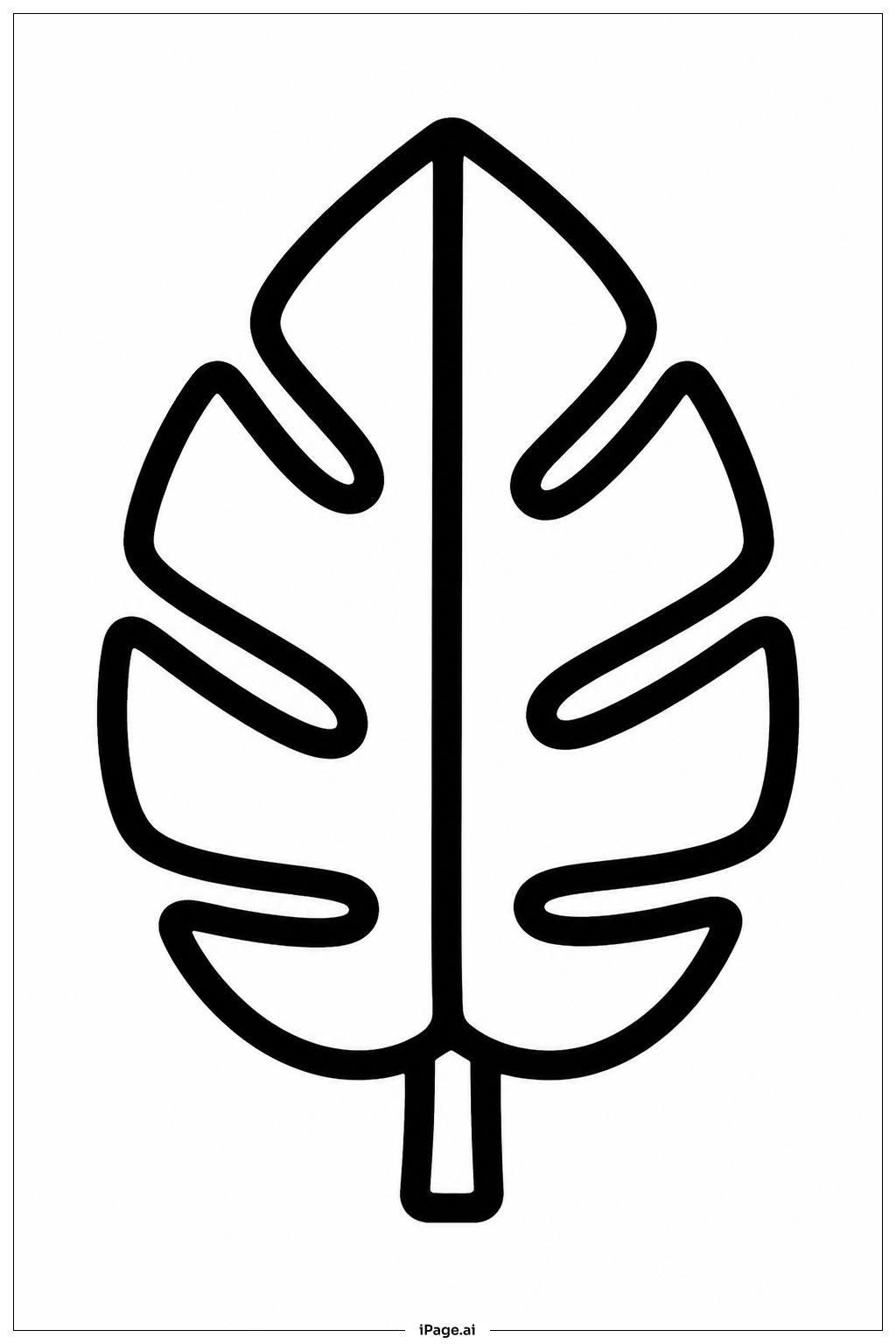
Coloring tips: How to color Rainforest Leaf coloring page well?
Start with the main leaf body using shades of green. Try bright lime green for the areas near the center veins where sunlight would hit the hardest. Use a deeper forest green or olive green toward the edges and shadowed areas to give the leaf a natural, three-dimensional look. The central vein and side veins can be colored in a slightly lighter or yellowish green to make them stand out. You can also add small touches of yellow or gold near the stem to show where the leaf connects to the plant. For a fun creative twist, try using tropical colors like teal, aqua, or even purple to make your leaf unique and imaginative. Blend colors softly between sections for a smooth, realistic feel, or keep the colors bold and flat for a bright, eye-catching result. Either style looks great and makes this leaf come alive.
Coloring challenges: Which parts are difficult to color and need attention for Rainforest Leaf coloring page?
• Vein Network Complexity: The leaf is filled with a detailed network of veins branching from the central midrib outward to the edges. Carefully coloring each small section between the veins without going over the lines takes patience and a steady hand. Using a fine-tipped coloring tool helps a lot here.
• Color Blending for Depth: Creating a realistic sense of light and shadow on a flat leaf surface can be tricky. You need to gradually shift from lighter greens in the center to darker greens near the edges. Blending smoothly without leaving harsh streaks or marks requires practice, especially with colored pencils or crayons.
• Staying Inside Small Sections: The vein pattern divides the leaf into many tiny areas, especially near the edges where the veins spread apart. Filling these small sections neatly without accidentally coloring over the vein lines is one of the biggest challenges, particularly for younger colorists.
• Maintaining Consistent Color Tone: Keeping the green tones consistent across the entire leaf is harder than it looks. If you press too hard in some areas and too soft in others, the color can look uneven. Taking your time and applying light, even layers works best.
• Stem and Edge Details: The thick stem at the base and the smooth leaf edges need clean, confident strokes to look polished. These areas frame the whole image, so any smudges or uneven coloring there can stand out noticeably against the detailed interior of the leaf.
Benefits of coloring books: Advantages of drawing Rainforest Leaf coloring page
Coloring this rainforest leaf page offers a wonderful range of benefits for kids and beginners alike. The detailed vein patterns help improve fine motor skills as young colorists practice staying within small, precise lines. This kind of careful work also strengthens hand-eye coordination over time.
Focusing on a single, complex image like this leaf encourages patience and concentration. Children learn to slow down, pay attention to detail, and work through a task step by step, which are valuable skills both in school and everyday life.
Exploring color choices for the leaf sparks creativity and imagination. Kids get to experiment with different shades of green, try blending techniques, or even invent their own wild color combinations. There are no wrong answers, which builds confidence and a love for creative expression.
Learning about the natural shapes and structures found in a rainforest leaf can also spark curiosity about nature, plants, and ecosystems. It turns a fun art activity into a small lesson about the world around us.
Finally, the calming, repetitive motion of coloring helps reduce stress and anxiety. Whether it is a child winding down after school or a teenager looking for a quiet creative outlet, filling in this beautiful leaf page offers a peaceful, satisfying experience from start to finish.