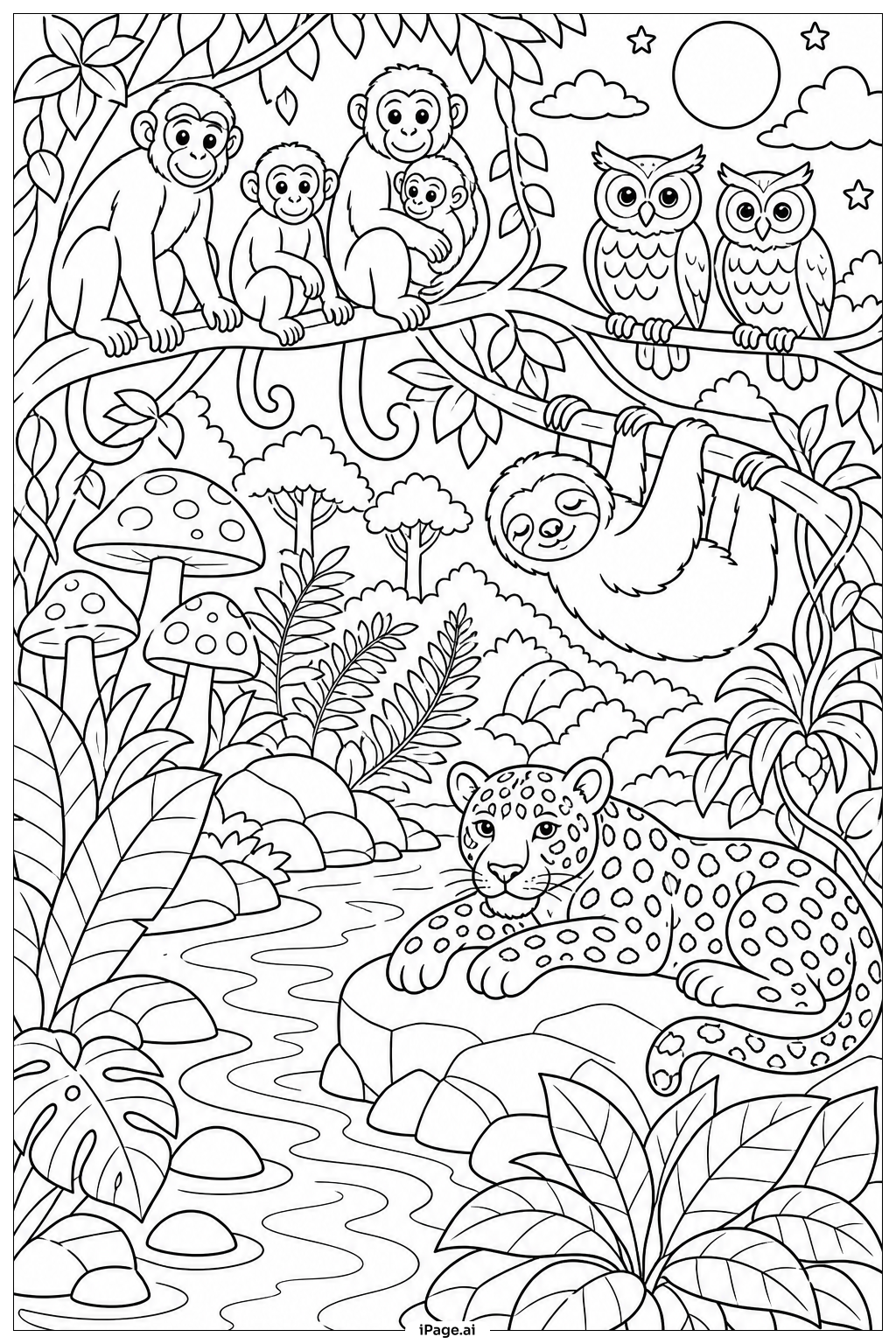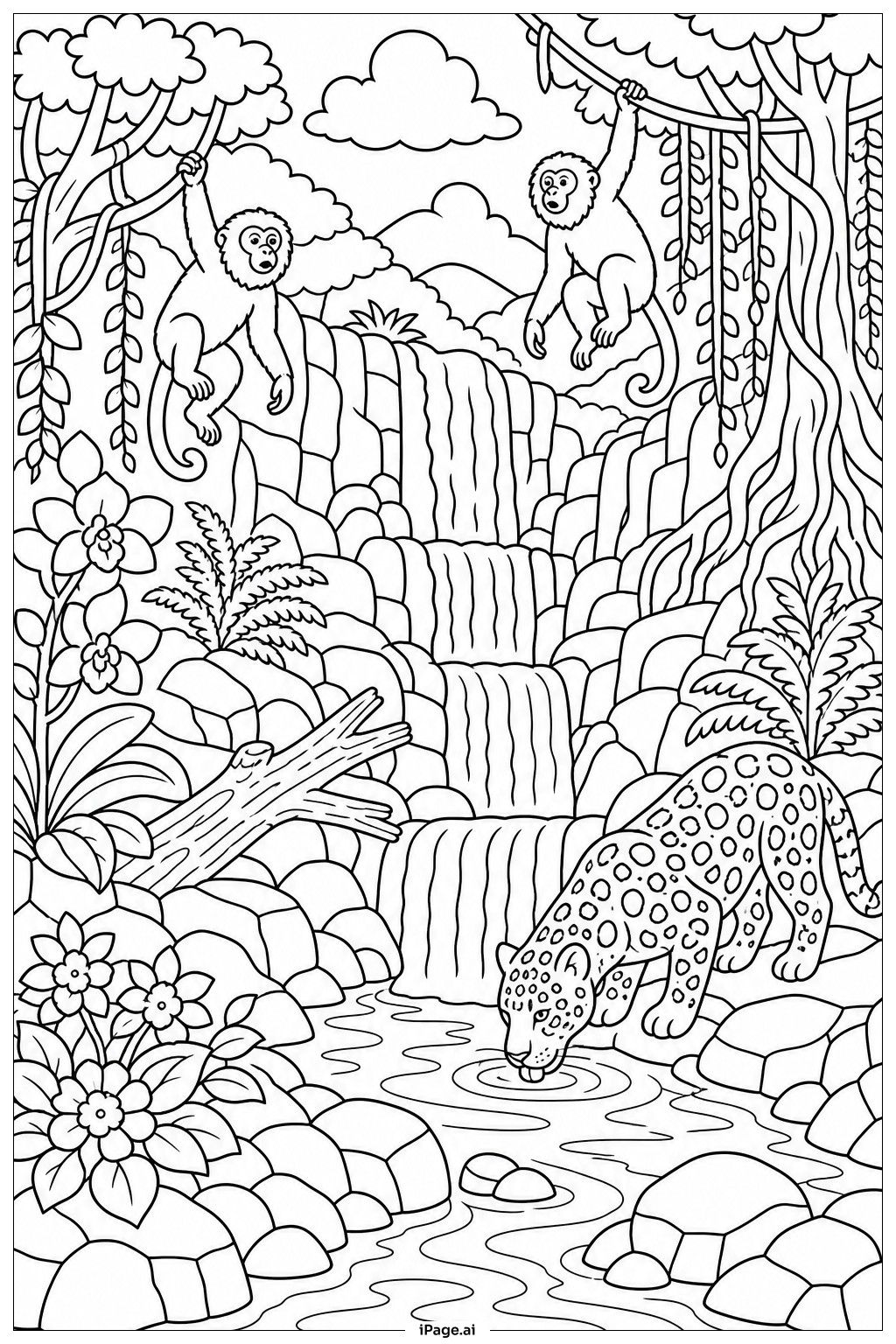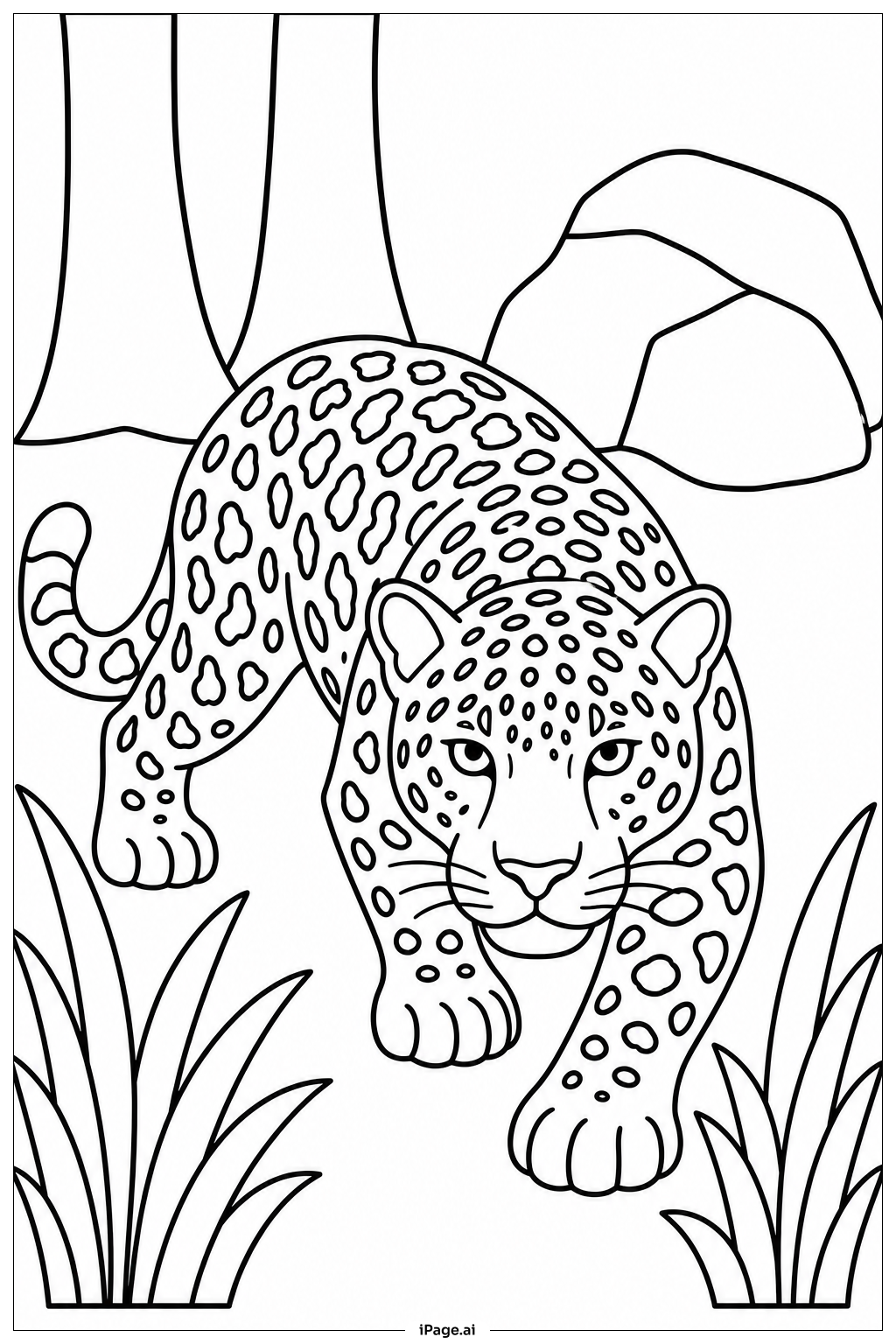
Coloring tips: How to color Rainforest Jaguar Stalking coloring page well?
Start with the jaguar's base coat using a warm golden yellow or tawny orange. Then carefully fill in the rosette spots with dark brown or black, leaving the centers slightly lighter for a realistic look. Use a pale cream or off-white for the belly and inner legs. For the eyes, try a bright amber or golden green to make them look alive and intense. Color the rainforest background with many shades of green — dark green for shadows, lighter green for sunlit leaves. Add deep brown and gray tones to the tree trunks and roots. Use dark greens and blacks in the background shadows to create depth. Try blending colors gently to show the dappled light coming through the canopy. Keep the jungle floor earthy with tans, browns, and mossy greens.
Coloring challenges: Which parts are difficult to color and need attention for Rainforest Jaguar Stalking coloring page?
• Rosette Pattern Complexity: The jaguar's coat is covered in detailed rosette markings. Each rosette has a dark outer ring with a lighter center. Staying inside the small shapes without smudging takes steady hands and a sharp pencil or fine-tipped marker. Rushing through this part can make the fur pattern look uneven.
• Blending Fur Tones: The jaguar's body is not one flat color. It shifts from golden yellow on the back to pale cream on the belly. Blending these tones smoothly requires layering colors gradually. This can be tricky, especially for younger colorists who may not yet be comfortable with color transitions.
• Rainforest Background Depth: The jungle behind the jaguar includes layers of leaves, vines, roots, and shadows. Showing depth means using darker greens and blacks in the far background and brighter greens in the foreground. Keeping all these layers distinct without muddying the colors together takes planning and patience.
• Eye Detail and Expression: The jaguar's eyes are small but very important to the overall feel of the image. Getting the color right — a glowing amber or piercing green — and adding a dark pupil without losing the light reflection inside the eye is a careful and delicate task.
• Light and Shadow on the Body: The filtered light of the rainforest creates patches of light and shadow across the jaguar's back and legs. Showing this light effect means adding slightly darker shading on one side of the body. This level of shading can be challenging but makes the final result look dramatic and lifelike.
Benefits of coloring books: Advantages of drawing Rainforest Jaguar Stalking coloring page
Coloring this jaguar scene offers many great benefits for kids and older colorists alike. Working through the jaguar's detailed rosette spots builds fine motor skills and hand control. Each small shape requires focus and a steady hand, which helps improve concentration over time. Choosing colors for the fur, eyes, and jungle background encourages creative thinking and artistic confidence. Kids learn how colors work together — like how dark spots on a golden coat create a striking pattern. Coloring the lush rainforest setting also sparks curiosity about nature and wildlife. Children may want to learn more about jaguars, tropical forests, and the animals that live there. This kind of natural curiosity is a wonderful starting point for science and environmental awareness. The repetitive, calming action of filling in leaves and fur is also a great stress reliever. It helps kids slow down, breathe, and stay present in the moment. Finishing a detailed image like this gives a real sense of pride and accomplishment, boosting self-esteem and encouraging kids to take on bigger creative challenges.