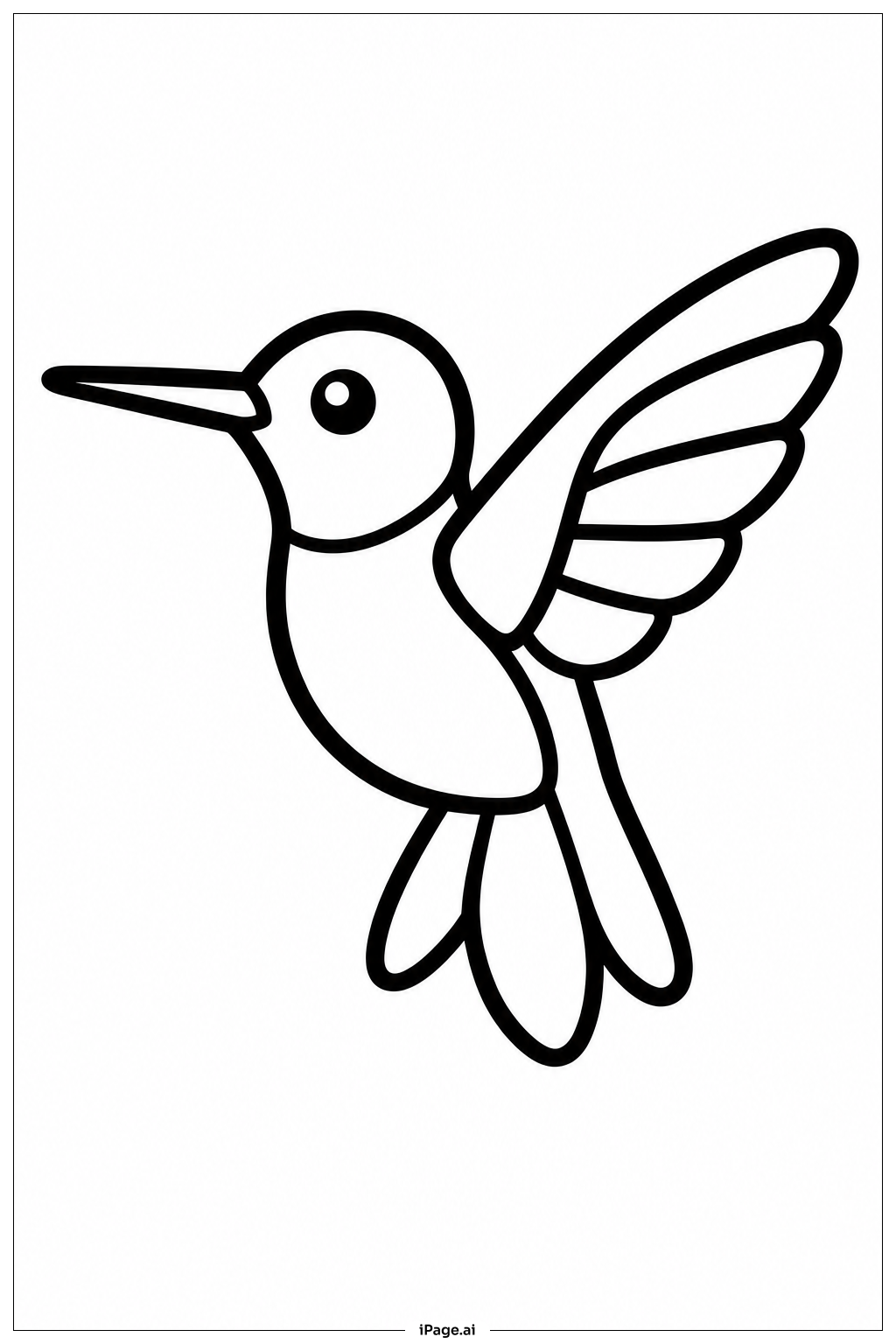
Coloring tips: How to color Rainforest Hummingbird coloring page well?
Start with the hummingbird's body. Use bright emerald green or teal for the back and head. Add a ruby red or violet patch on the throat — that iridescent gorget is what makes hummingbirds so magical. Use lighter greens or soft yellows for the belly. For the wings, try a mix of deep blue and green to show movement. Color the beak and feet in dark gray or black. For the tropical flower, go bold — vivid red, orange, or pink works great. Use several shades of green for the leaves to create depth. Lighter green for the top of leaves and darker green for the undersides adds a realistic touch. Add hints of yellow or gold along the leaf edges for extra warmth. Feel free to use your imagination and make the rainforest as colorful and vibrant as you like!
Coloring challenges: Which parts are difficult to color and need attention for Rainforest Hummingbird coloring page?
• Intricate Wing Feathers: The hummingbird's wings are spread in full flight, showing many overlapping feather layers. Coloring each feather individually while keeping smooth transitions between shades takes patience and a steady hand. Thin markers or fine-tipped colored pencils work best here.
• Iridescent Throat Patch: In real life, a hummingbird's throat shimmers and changes color in the light. Recreating that effect on paper is tricky. Try layering two or three colors — like red over orange, or purple over blue — and blend gently at the edges to mimic that glowing, jewel-like quality.
• Small Body Details: The hummingbird is a small subject surrounded by large leaves and flowers. Keeping your coloring neat inside the bird's outline without accidentally bleeding into the background requires careful control, especially around the beak, eye, and feet.
• Tropical Leaf Depth: The rainforest background has many overlapping leaves at different angles. Using only one shade of green will make the scene look flat. You need to vary your greens — light, medium, and dark — and decide which leaves are in sunlight and which are in shadow. This kind of tonal planning can be challenging for younger colorists.
• Balancing the Composition: The image is full of details competing for attention. Choosing a color scheme that lets the hummingbird stand out from the busy floral background is an important visual challenge. Making the bird brighter or more saturated than the leaves helps it pop and become the clear focal point of the page.
Benefits of coloring books: Advantages of drawing Rainforest Hummingbird coloring page
Coloring this Rainforest Hummingbird page offers a wonderful mix of fun and learning. Here are some great reasons to pick up your colors and get started.
It builds focus and patience. The detailed wings and tiny feathers encourage children to slow down, pay attention, and work carefully — skills that help in school and everyday life.
It sparks curiosity about nature. As kids color the hummingbird and its tropical habitat, they naturally become curious about rainforests, wildlife, and how animals survive in the wild. It is a gentle introduction to biology and ecology.
It develops color sense and creativity. Deciding which shades of green to use for the leaves, or how to make the throat patch shimmer, pushes young artists to think about color relationships and contrast in a hands-on way.
It supports fine motor skills. Staying inside the lines and blending colors in small areas strengthens hand-eye coordination and finger control, which supports handwriting and other precise tasks.
It is also simply relaxing. Focusing on a beautiful image of nature has a calming effect that helps reduce stress and anxiety for both children and Adults alike. Whether coloring solo or with family, this page turns a quiet moment into a creative and joyful experience.