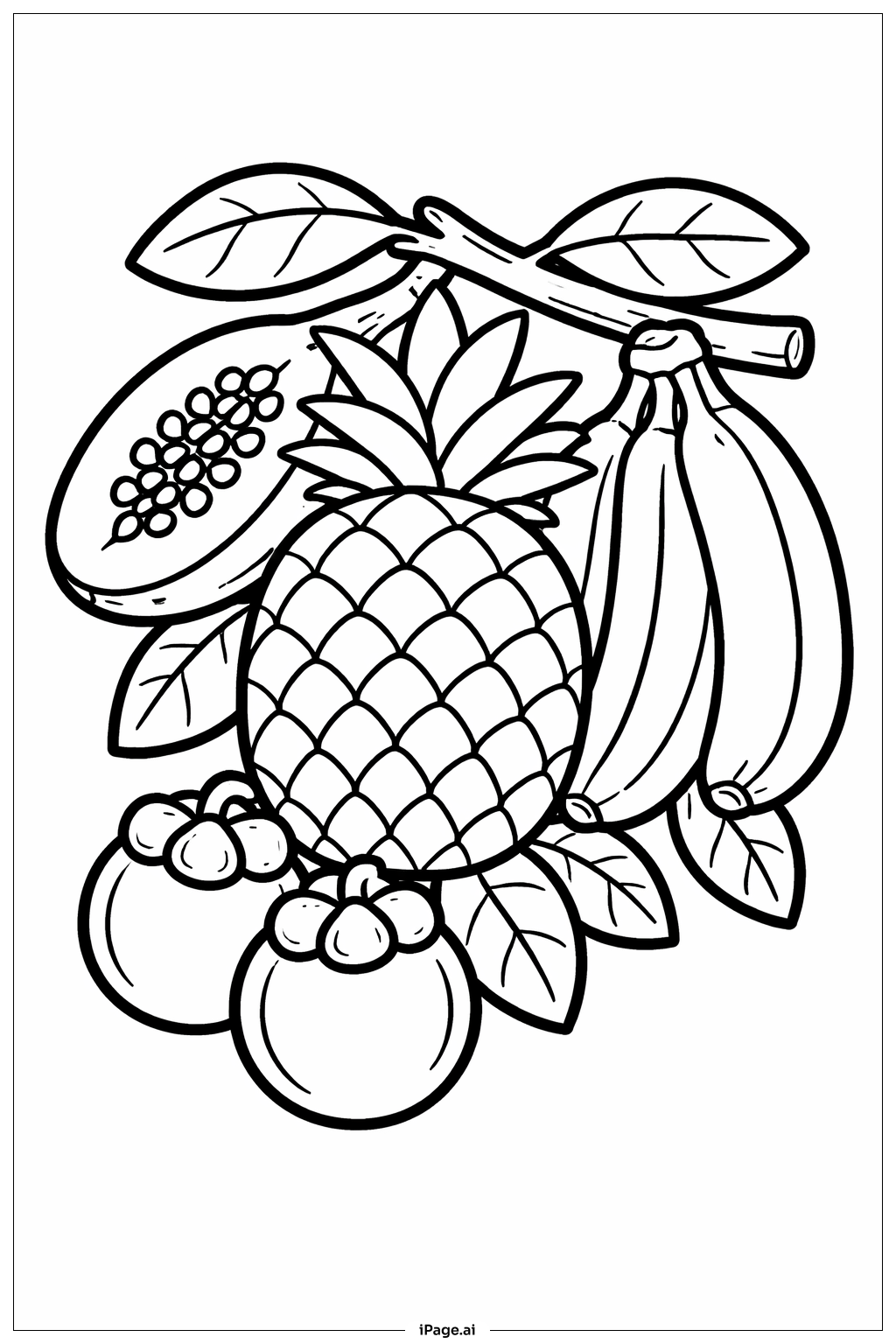
Coloring tips: How to color Rainforest Fruit Bunch coloring page well?
Start by choosing bright, warm colors for the fruits. Use yellow and orange for mangoes and papayas. Try deep red or purple for passion fruits. Color rambutans with red and pink tones, and use bright yellow or green for star fruits. For the leaves, use different shades of green — light green for smaller leaves and dark green for larger ones. This creates depth and makes the fruits pop. You can add shadows by pressing harder with your colored pencils or layering darker shades on one side of each fruit. Leave a small white spot on shiny fruits like star fruits to show a highlight. Use warm earth tones like brown or tan for any stems or woody parts. Have fun mixing colors to make each fruit look juicy and real!
Coloring challenges: Which parts are difficult to color and need attention for Rainforest Fruit Bunch coloring page?
• Variety of Fruit Textures: Each fruit in the bunch has a different surface texture. Rambutans have spiky, hairy skin, while mangoes are smooth and rounded. Capturing these differences with color requires switching between techniques — smooth blending for some fruits and short, textured strokes for others. This can be tricky, especially for younger colorists.
• Overlapping Elements: Many of the fruits and leaves overlap each other throughout the composition. Deciding which color goes where without confusing the eye takes careful attention. Colorists need to make sure neighboring shapes are different enough in shade or tone so each fruit reads clearly on its own.
• Leaf Shading and Depth: The large tropical leaves behind and around the fruits need multiple shades of green to look natural. Flat, single-tone coloring can make the leaves look dull. Blending light and dark green, and adding yellow-green highlights along the veins, takes patience and practice.
• Small Interior Details: Several fruits have fine interior details — seeds, segments, or cross-section patterns — that require a steady hand and a sharp pencil or fine-tipped marker. Filling these tiny areas neatly without going outside the lines is one of the biggest technical challenges in this image.
• Color Harmony Across the Bunch: Because so many different fruits appear together, making the overall image feel balanced and harmonious is a real challenge. Too many bright colors side by side can feel chaotic. Learning to space out bold colors and pair them with softer or neutral tones helps the whole bunch look unified and pleasing.
Benefits of coloring books: Advantages of drawing Rainforest Fruit Bunch coloring page
Coloring this Rainforest Fruit Bunch page offers a wonderful range of benefits for kids and adults alike. Working through the many different shapes and textures helps sharpen fine motor skills and hand-eye coordination. Choosing colors for each fruit encourages creative thinking and builds confidence in making artistic decisions. Because the image includes so many different fruits, it also sparks curiosity about nature and the amazing biodiversity found in tropical rainforests. Kids may want to learn the names of fruits they do not recognize, turning a coloring session into a fun learning moment. The rich variety of shapes and details keeps the mind engaged and focused, making it a great activity for building concentration and patience. For older colorists, the challenge of blending shades and creating realistic textures offers a satisfying, meditative experience that helps reduce stress. The warm, tropical theme brings a sense of joy and energy to the page, making it an uplifting and rewarding activity from start to finish. Overall, this page is a fantastic way to combine creativity, learning, and relaxation all in one.