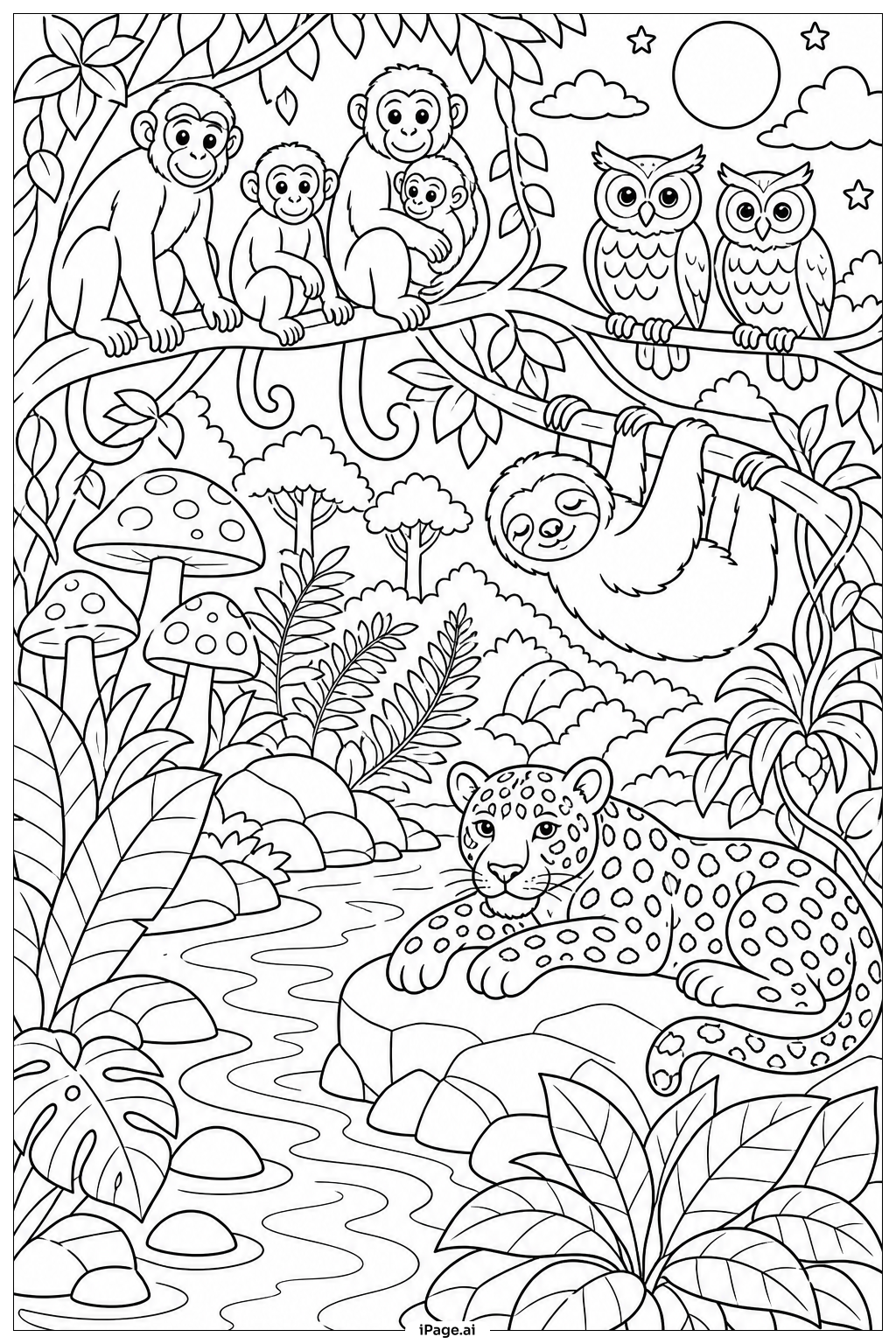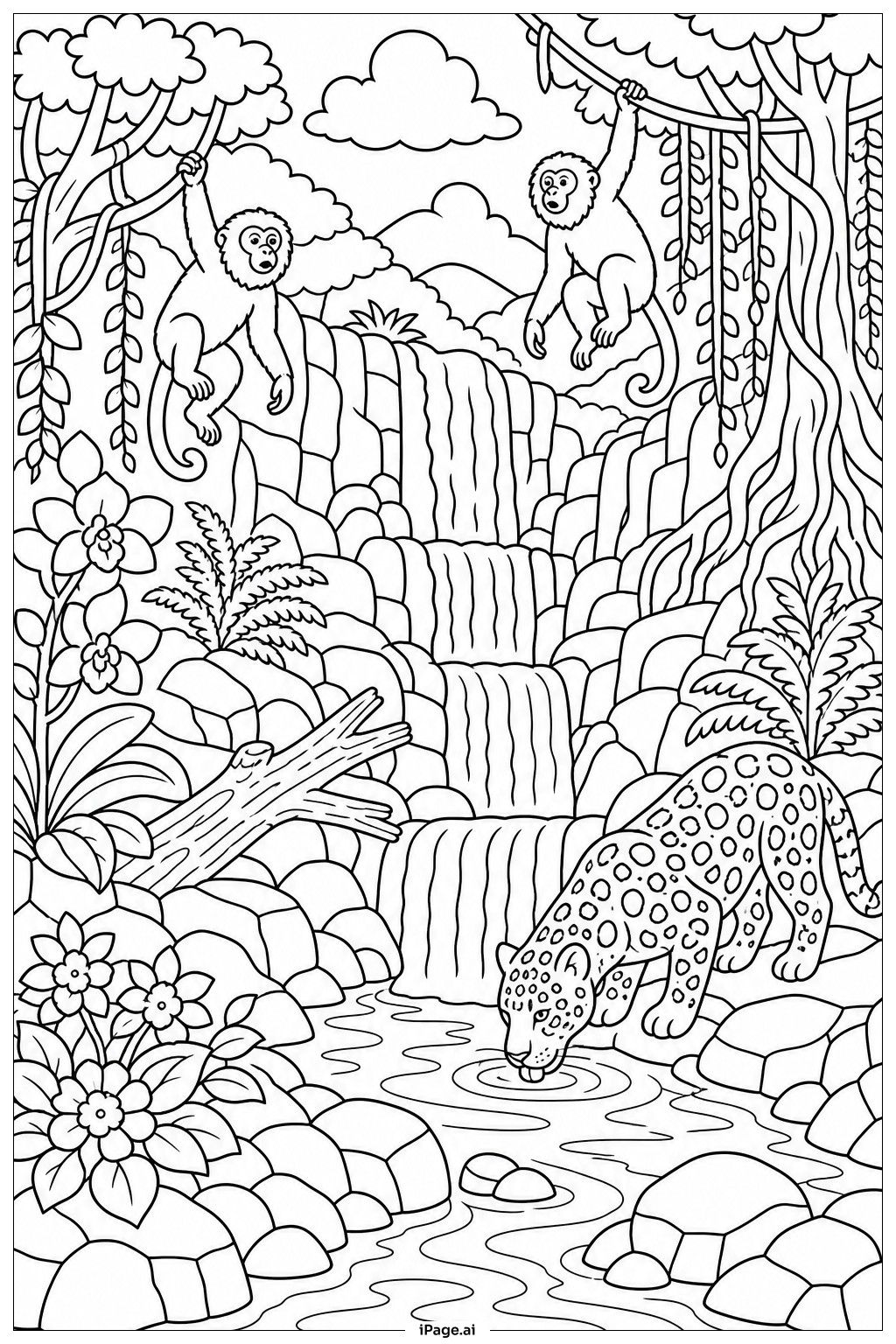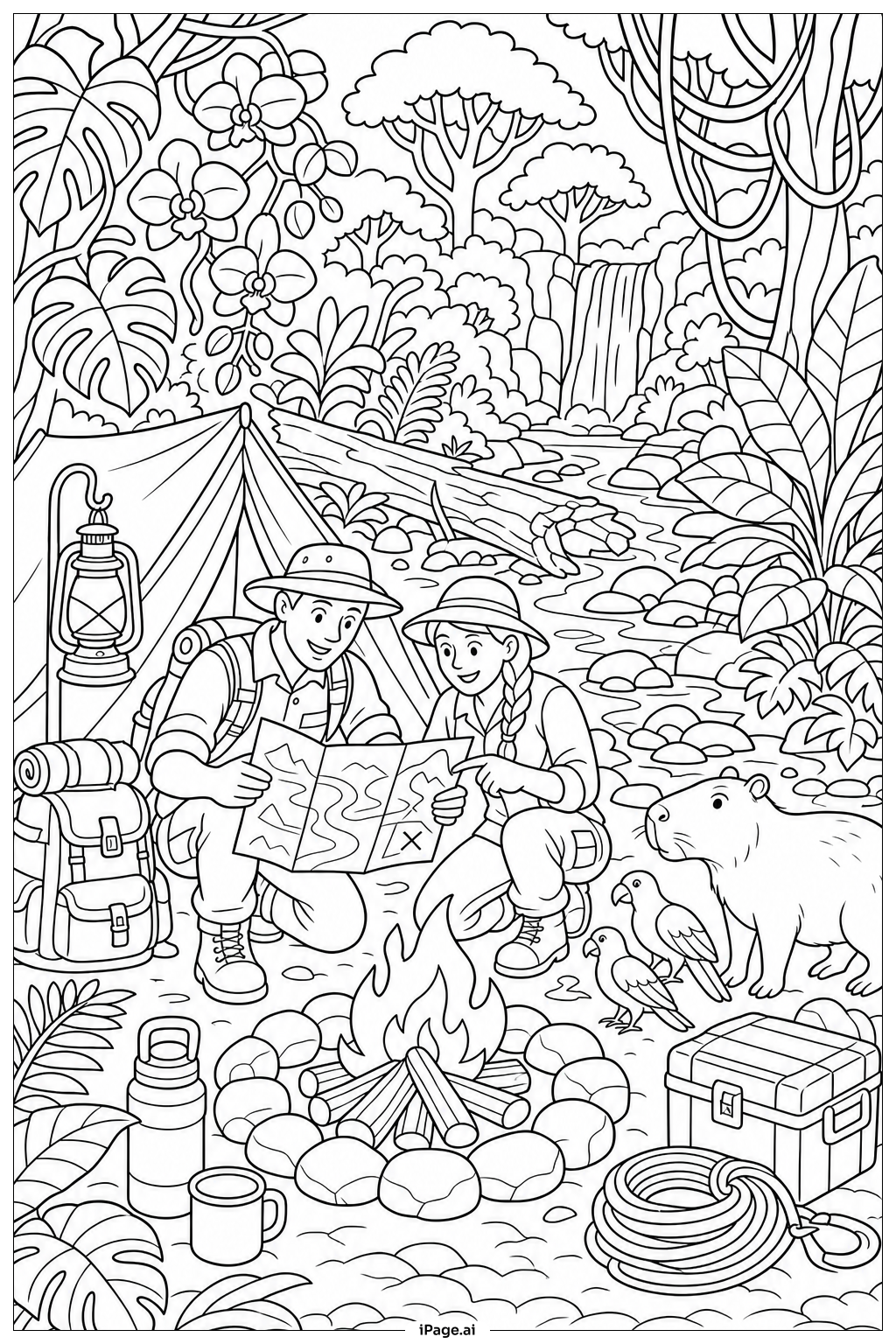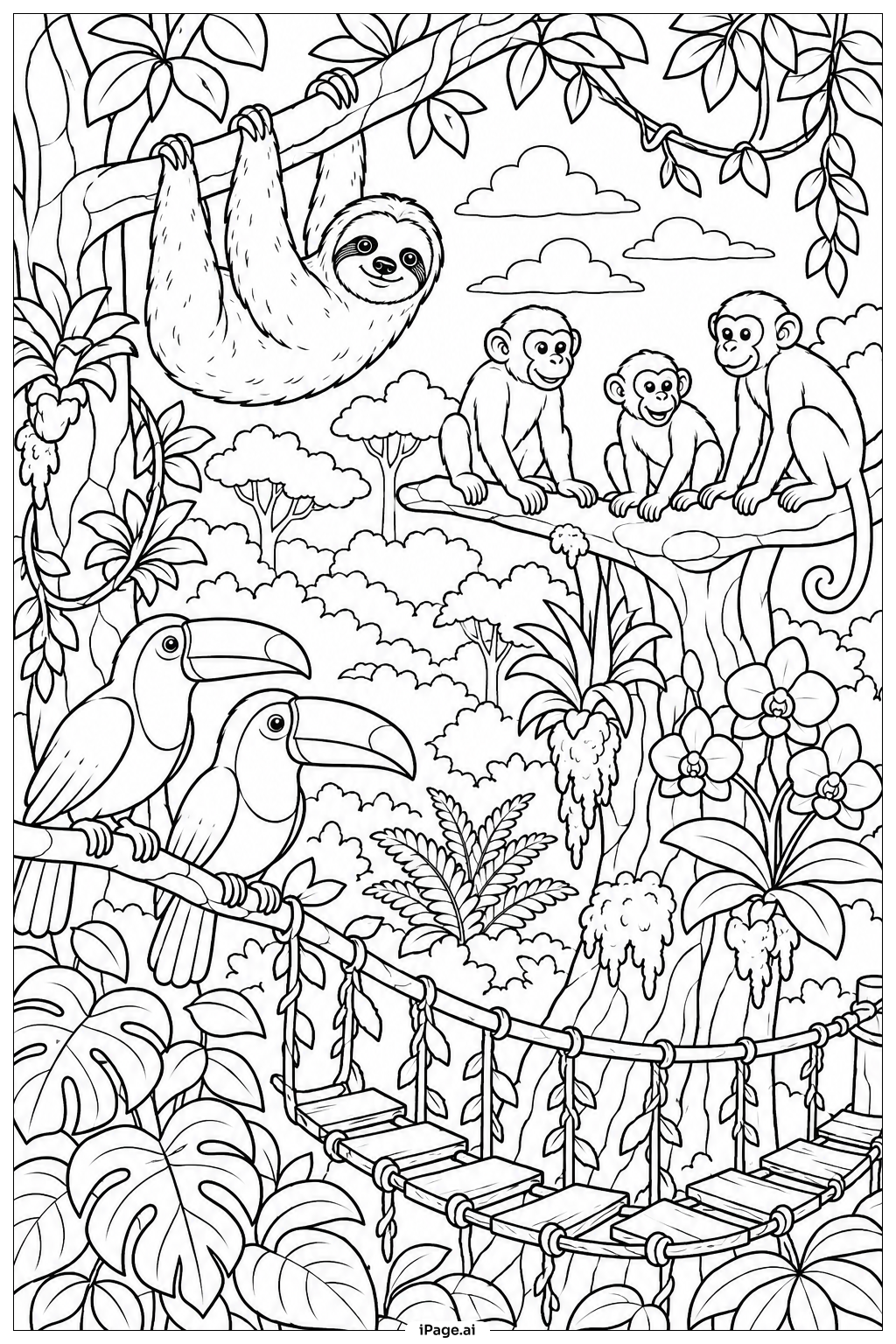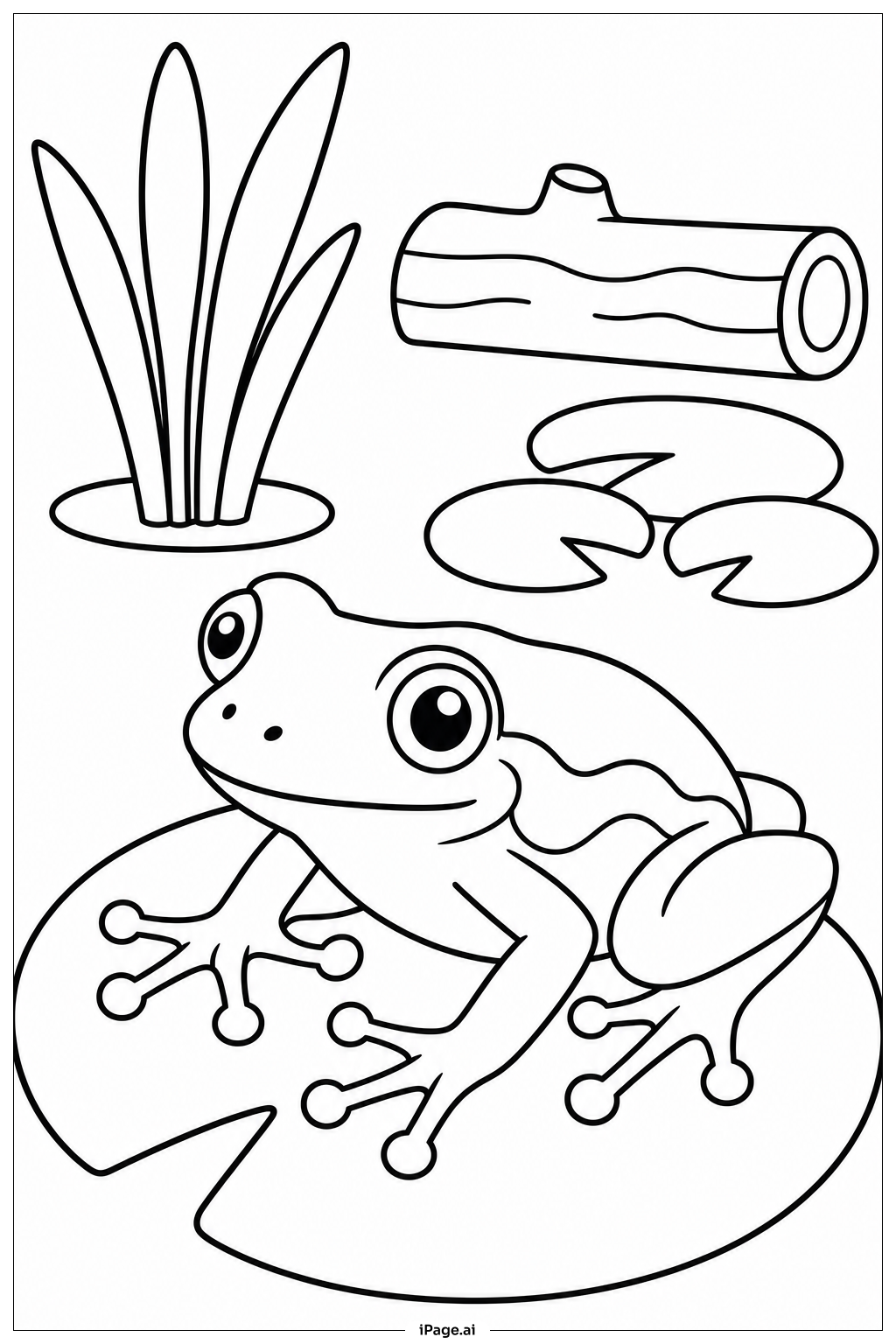
Coloring tips: How to color Rainforest Frog Pond coloring page well?
Start with the frog using bright greens for the body. Add dark green spots or stripes for detail. Use yellow or pale cream for the frog's belly. Color the lily pads in medium and dark green, with a hint of brown at the edges to show age. Paint the pond water in soft blues and teals. Add light reflections using white or pale blue. Use warm browns and tans for tree trunks and roots. Color the ferns and tropical leaves in various shades of green to add depth. Try using yellow-green for sunlit leaves and deeper green for shaded ones. Color the dragonflies with soft blues or purples and give their wings a translucent shimmer using light gray or silver. Use soft pink, white, or purple for small flowers. Add orange or red accents to mushroom caps. Let the background trees fade into muted greens and browns to keep the focus on the pond. This scene works great with crayons, colored pencils, or watercolors.
Coloring challenges: Which parts are difficult to color and need attention for Rainforest Frog Pond coloring page?
• Frog Texture and Detail: The frog's body has bumpy skin texture and fine details like spots and toe pads. Staying within these small areas requires a steady hand and a sharp pencil or fine-tipped marker. Getting the belly color separate from the back color without bleeding takes patience and care.
• Overlapping Leaves and Plants: The scene is full of layered ferns, broad leaves, and vines that overlap each other. It can be hard to tell where one plant ends and another begins. Take time to study each shape before coloring. Using slightly different shades of green for each layer helps separate them visually.
• Water Reflections: Coloring water to look natural and reflective is a real challenge. The pond surface should look smooth and glassy, with soft ripples around the lily pads. Blending blue, teal, and white tones smoothly without sharp lines takes skill and practice, especially for younger colorists.
• Small Background Details: Mushrooms, tiny flowers, and smaller frogs tucked into the background are very small. Coloring these neatly without going outside the lines calls for a fine-tipped tool and good control. Rushing through these areas can make the overall picture look messy.
• Dragonfly Wings: The dragonfly wings are thin and delicate with tiny vein patterns inside them. Trying to add detail to such small, intricate shapes without smudging or overcoloring is one of the trickiest parts of this image. Light, gentle strokes work best here.
Benefits of coloring books: Advantages of drawing Rainforest Frog Pond coloring page
Coloring this Rainforest Frog Pond scene offers a wonderful mix of fun and learning for kids and adults alike. The detailed rainforest setting introduces colorists to real plants and animals found in tropical environments, sparking curiosity about nature and wildlife.
For younger children, filling in the large lily pads and frog shapes helps build hand-eye coordination and fine motor skills. Learning to stay within the lines trains focus and concentration in a relaxed, pressure-free way.
Older kids and teens benefit from the creative challenge of color mixing and shading. Choosing how to depict water, light, and shadow encourages artistic thinking and problem-solving. It also builds confidence as they see their choices bring the scene to life.
For adults, this image works as a calming, meditative activity. The repetitive motions of coloring help reduce stress and quiet a busy mind. Focusing on a peaceful nature scene like a frog pond can feel like a short mental escape from daily life.
The variety of textures in this image, from smooth water to rough bark to soft leaves, makes it a great exercise in exploring different coloring techniques. Whether you use colored pencils, markers, or watercolors, this scene rewards patience and creativity with a truly beautiful finished result.