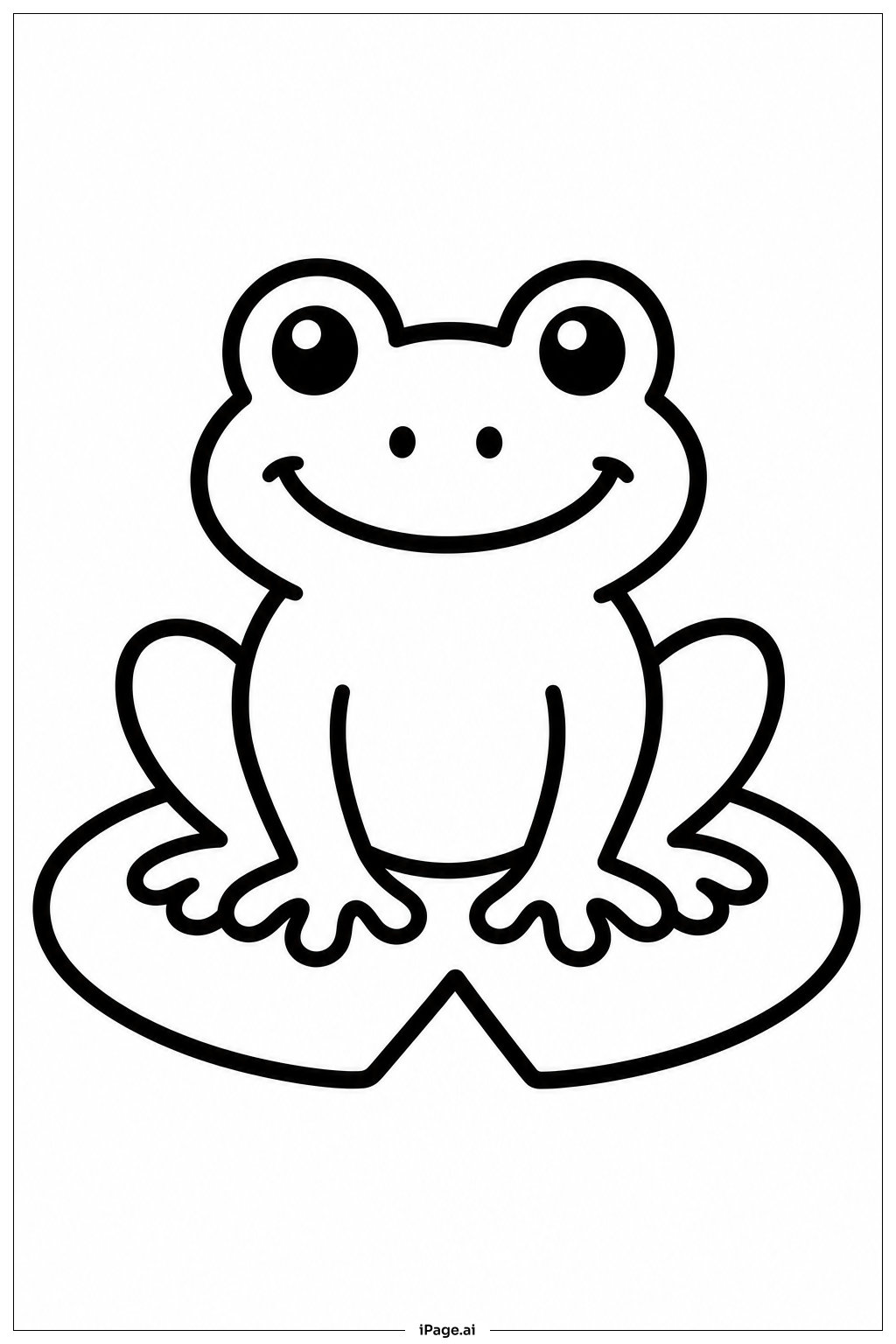
Coloring tips: How to color Rainforest Frog On Lily coloring page well?
Start with the frog's body using bright greens. You can try a lighter green for the belly and a deeper green for the back to show depth. Add spots or patterns in yellow, orange, or blue to make the frog look more lively and unique. For the lily pad, use medium to dark green and add a touch of brown or yellow along the edges to make it look natural. The water can be colored in soft blues and teals, with lighter streaks to show gentle ripples. The background leaves look great in various shades of green — mix dark forest green with lighter lime tones. Feel free to add pops of color like red or purple for any flowers or background details. There are no wrong color choices here — let your imagination run wild and make your own version of this magical rainforest scene!
Coloring challenges: Which parts are difficult to color and need attention for Rainforest Frog On Lily coloring page?
• Frog Skin Texture: The frog's smooth skin requires careful blending to avoid flat, dull coloring. Achieving a natural, rounded look means gradually transitioning from lighter tones on the belly to darker shades on the back. Using small, circular strokes or layering colors gently can help capture this soft, three-dimensional effect.\n\n• Lily Pad Veining: The lily pad has fine, detailed veins running across its surface. Coloring around these thin lines without smudging or overlapping them takes patience and a steady hand. Using a sharp colored pencil or a fine-tip marker works best for preserving those delicate details.\n\n• Water Reflections: The water surrounding the lily pad needs subtle shading to look realistic. Capturing light reflections and gentle ripples means blending multiple shades of blue and teal smoothly. This can be tricky, especially where the water meets the edge of the lily pad.\n\n• Background Foliage Depth: The layered tropical leaves in the background require using multiple shades of green to separate each layer visually. Without enough contrast between the leaves, the background can look flat and crowded. Choosing light, medium, and dark greens for different leaf layers helps create a sense of depth in the jungle scene.\n\n• Small Details on the Frog: The frog's large eyes, tiny toes, and any spots or markings are small and closely spaced. Coloring these fine features neatly without going outside the lines requires careful tool selection and a slow, focused approach, especially for younger colorists.
Benefits of coloring books: Advantages of drawing Rainforest Frog On Lily coloring page
Coloring this Rainforest Frog On Lily page offers a wonderful mix of fun and learning. For kids, it is a great way to explore the colors of nature and learn about tropical rainforest animals in a playful, hands-on way. Choosing colors for the frog and its surroundings sparks creativity and encourages children to think about how living things look in the wild. The detailed linework helps improve fine motor skills and hand-eye coordination, which are important for writing and other everyday tasks. Staying focused on filling in the smaller details like the frog's eyes and the lily pad veins also builds patience and concentration. For older kids and teens, the complex background foliage and water reflections offer a satisfying challenge that develops color mixing and shading skills. The peaceful rainforest setting makes this a calming activity that helps reduce stress and anxiety. Spending quiet time coloring can feel like a mini escape into nature, boosting mood and overall well-being. Whether you color it quickly for fun or take your time creating a detailed masterpiece, this page is a rewarding experience for all ages.