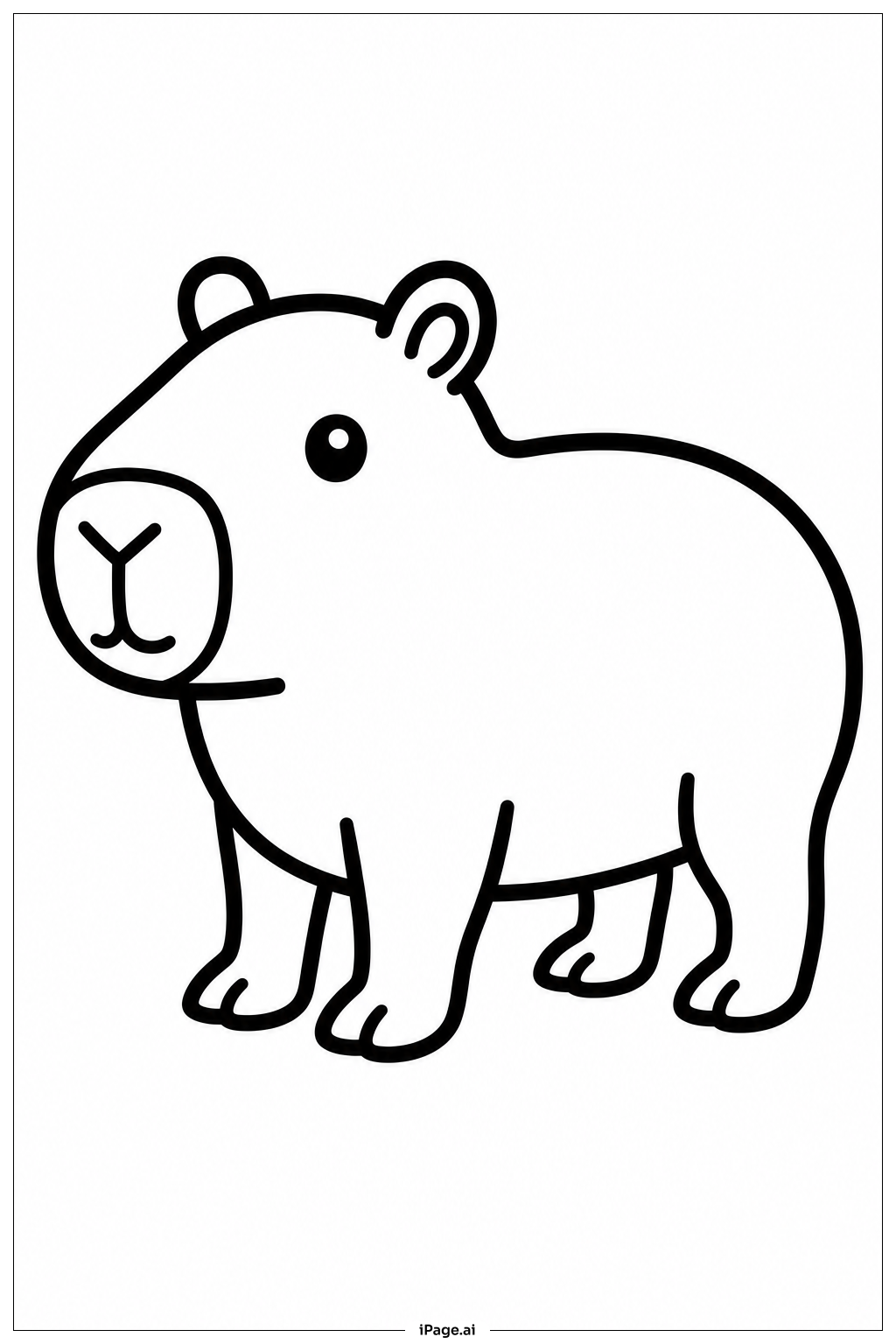
Coloring tips: How to color Rainforest Capybara coloring page well?
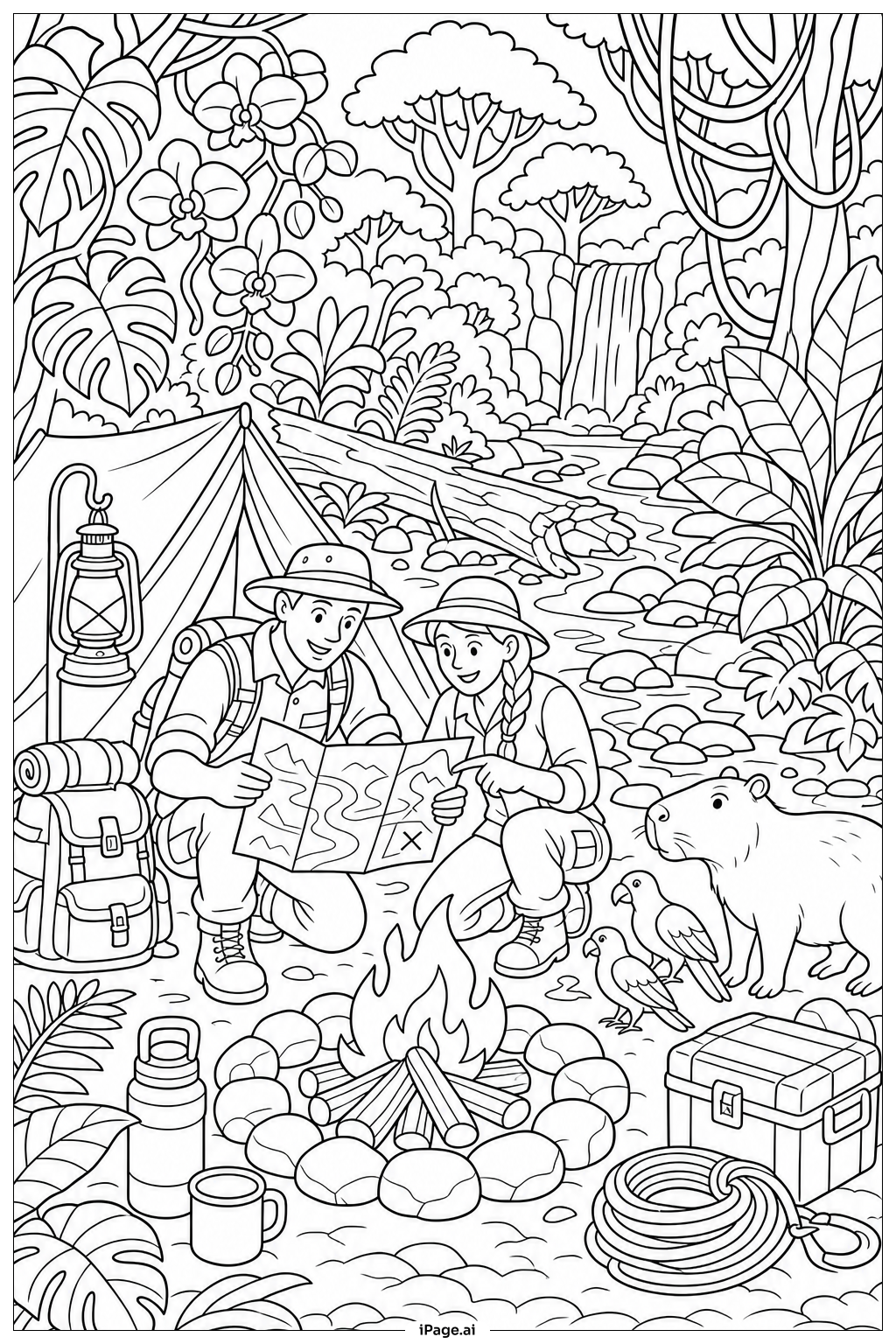
Start with the capybara's body using warm earthy tones. Browns and tans work beautifully for the fur. Try light brown for the main body and add darker brown shading along the sides and under the belly to give it depth. Use a soft golden-yellow for the lighter areas around the face and chest.
For the rainforest background, go bold with greens. Use bright lime green for sunlit leaves and deep forest green for leaves in the shade. Add yellow highlights to leaves catching the light.
Color the water or muddy ground with blue-gray or warm brown tones. Use dark green or teal for water plants and reeds.
The capybara's eyes can be dark brown with a tiny white highlight to make them look alive and friendly. Keep the nose dark gray or brown.
Feel free to use your imagination. You can make the leaves tropical and colorful, adding hints of yellow, orange, or even purple flowers peeking through the jungle.
Coloring challenges: Which parts are difficult to color and need attention for Rainforest Capybara coloring page?
• Fur Texture Details: The capybara's body is covered with many small line details that represent its coarse, short fur. Staying inside these tiny lines while still blending colors smoothly can be tricky. Take your time and use a sharp colored pencil or a fine-tip marker to work through each section carefully without going over the outlines.
• Shading the Round Body: The capybara has a large, chunky, barrel-shaped body. Creating a sense of roundness and volume requires careful shading. You need to apply lighter colors at the top where light hits and gradually darken toward the belly and sides. This gradual transition can be difficult for younger colorists who are still learning blending techniques.
• Layered Rainforest Background: The background is filled with overlapping leaves, vines, and plants at different depths. Deciding which leaves to color lighter and which to color darker, to show distance and shadow, takes planning. Coloring overlapping shapes without muddying the colors together is a real challenge.
• Fine Facial Features: The capybara's face has small, closely spaced features including its eyes, nose, and mouth. These areas require a great deal of precision. Using a very fine tool is essential here, as broad strokes could easily fill in areas that should remain light or make the face look messy.
• Water and Mud Tones: The ground and water elements in the background require subtle, mixed tones to look realistic. Flat single colors will make these areas look dull. Blending multiple shades of brown, gray, and blue to create a natural muddy water effect is one of the more advanced challenges in this scene.
Benefits of coloring books: Advantages of drawing Rainforest Capybara coloring page
Coloring this Rainforest Capybara page offers a wonderful range of benefits for kids and adults alike.
For children, it builds fine motor skills as they carefully fill in the fur details and small facial features. Staying within the lines strengthens hand control and focus, skills that carry over into writing and other learning activities.
Choosing colors for the capybara and rainforest encourages creativity and decision-making. Kids learn about nature at the same time, discovering what a capybara looks like and where it lives in the wild.
The calming, repetitive motion of coloring helps reduce stress and anxiety. Spending quiet time with this page can feel like a peaceful, mindful activity, letting kids and adults alike slow down and relax.
For older children and adults, working on the background foliage and shading the capybara's body introduces basic art concepts like color layering, contrast, and depth. These are fun skills to practice in a low-pressure, enjoyable way.
Most importantly, coloring this page sparks curiosity about rainforest animals and ecosystems. It can inspire conversations about wildlife, nature conservation, and the amazing creatures that share our planet. A simple coloring activity can become a doorway to a lifelong love of nature and art.