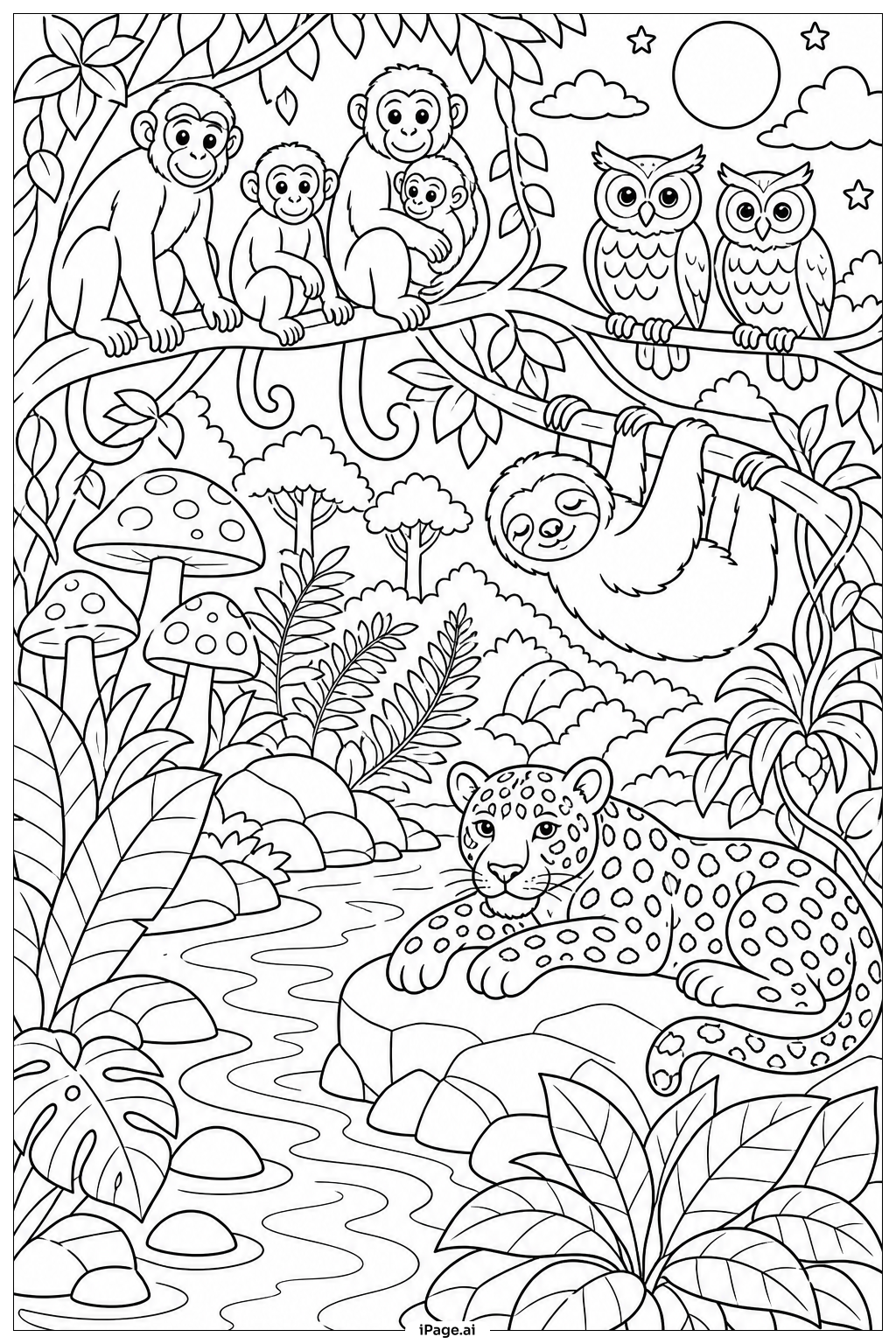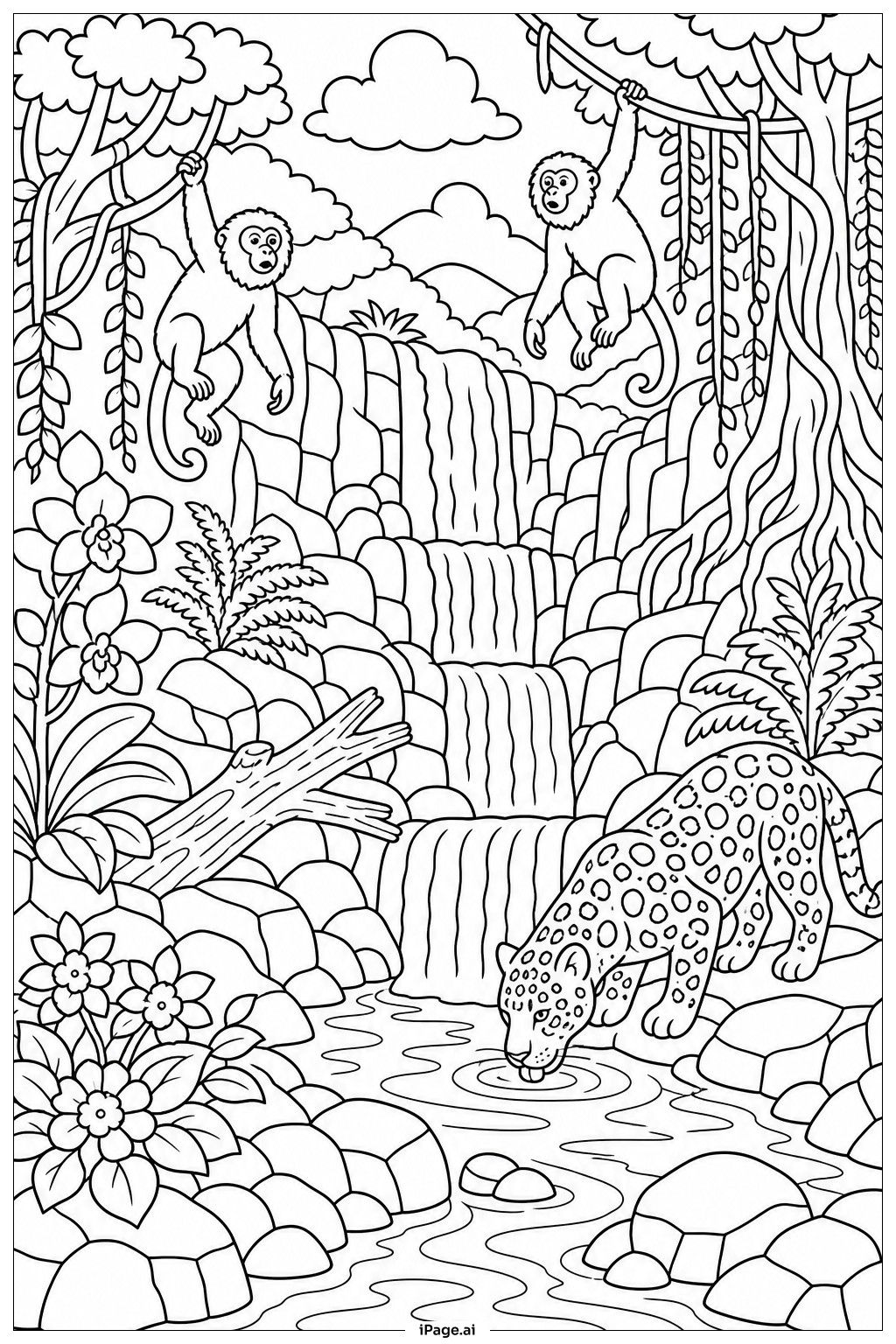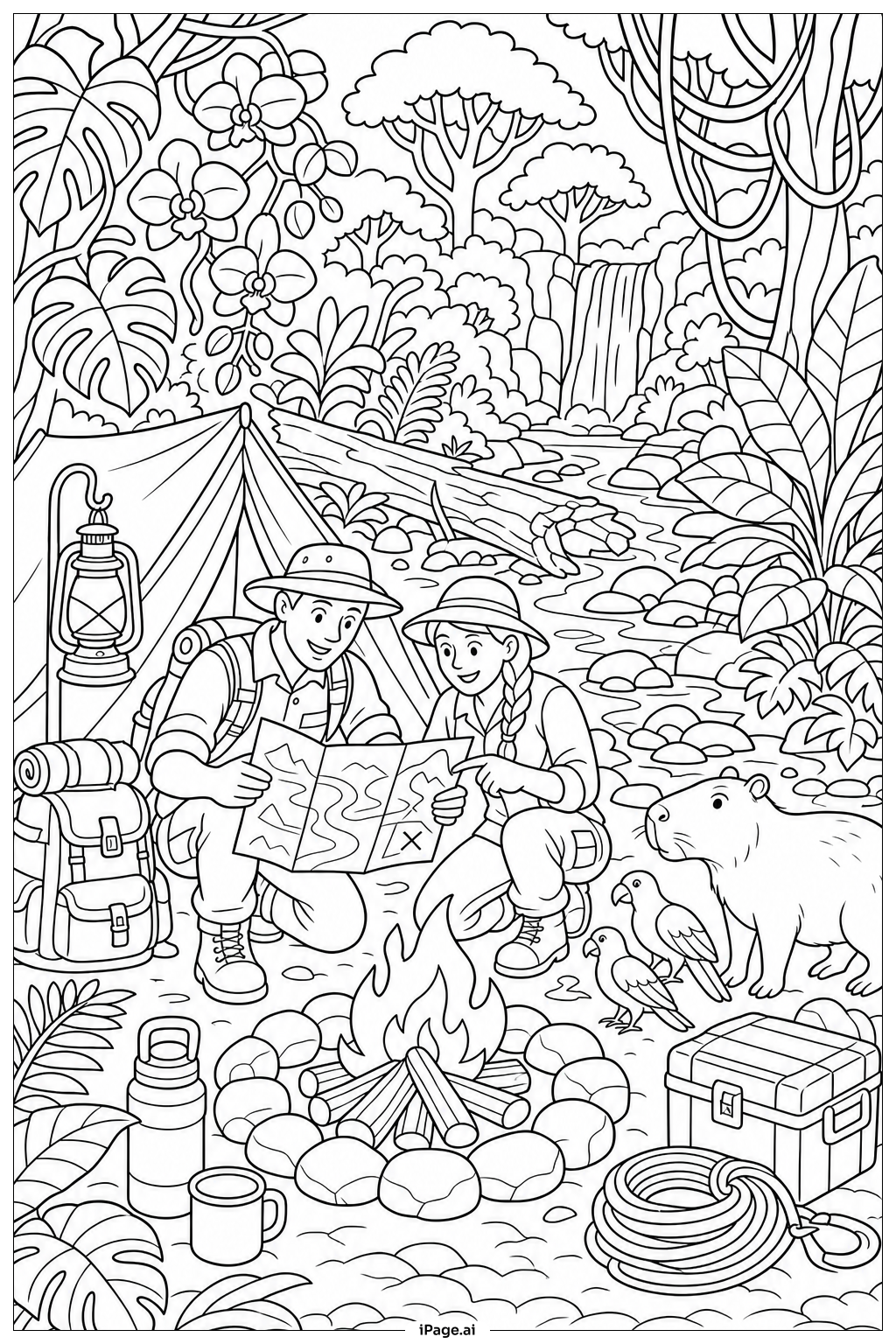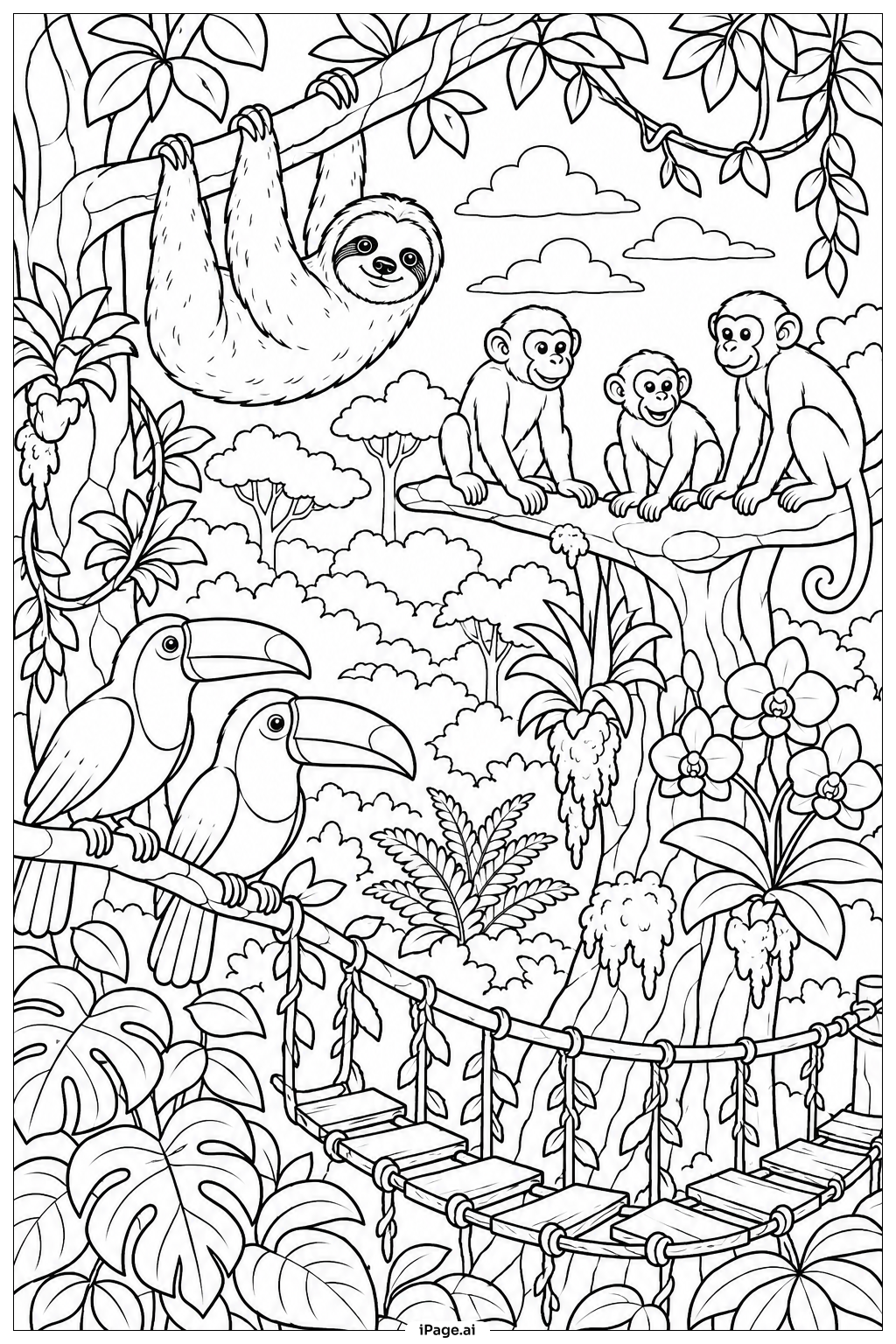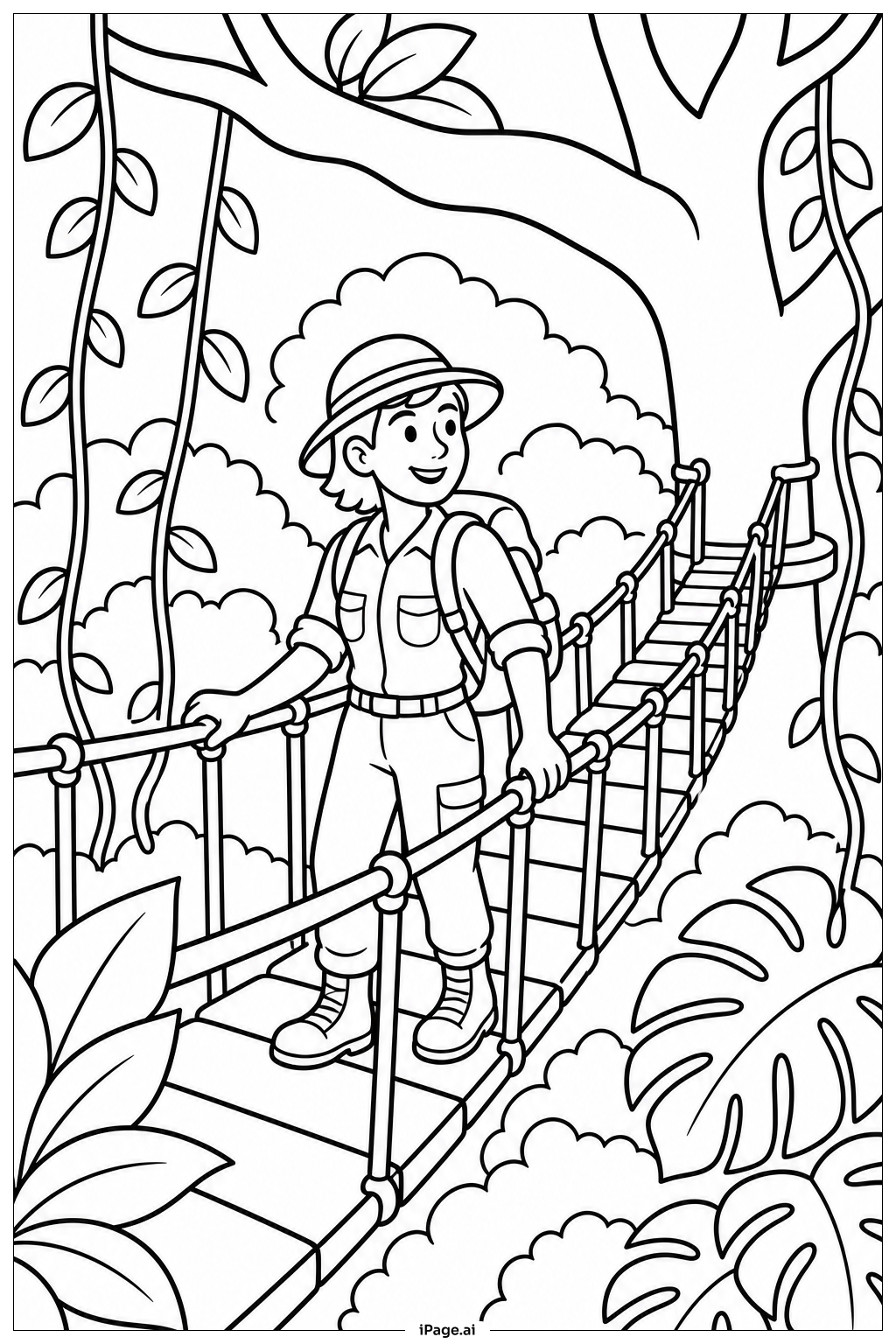
Coloring tips: How to color Rainforest Canopy Bridge coloring page well?
Start with the bridge itself. Use warm browns and tans for the wooden planks, and medium or dark gray for the thick ropes. For the tropical trees, use many shades of green — light green for sunlit leaves and deep green for shaded areas. Add pops of bright color with tropical flowers in red, orange, yellow, and pink. Color the birds with vivid blues, greens, and reds to make them stand out. Use soft purples and blues for the misty ravine below, and add hints of golden yellow where sunlight breaks through the canopy. Keep the background slightly lighter to create a sense of depth. Younger children can stick to a few bold colors, while older kids can try blending and shading to bring the rainforest to life.
Coloring challenges: Which parts are difficult to color and need attention for Rainforest Canopy Bridge coloring page?
• Bridge Rope and Plank Details: The canopy bridge has many ropes, knots, and wooden planks running closely together. Staying within each small section without smudging neighboring areas requires a fine-tipped tool and a steady hand. Rushing through this area can make the bridge look messy, so take your time with each plank and rope line.
• Layered Leaf Textures: The rainforest canopy is packed with overlapping leaves of different shapes and sizes. Deciding which leaves should be light and which should be dark takes careful planning. Using at least three shades of green helps separate the layers and gives the scene a realistic, three-dimensional look.
• Depth and Shadow in the Background: Creating a sense of distance between the bridge in the foreground and the deep forest behind it is tricky. The background trees and mist need softer, cooler colors, while the foreground elements should be brighter and more detailed. Without this contrast, the image may look flat.
• Small Wildlife and Flower Details: Birds, butterflies, and tropical flowers appear throughout the scene. These small elements have fine details that are easy to overlook. Using sharp colored pencils or thin markers helps you color these tiny areas neatly and make each creature and bloom look distinct.
• Consistent Light Direction: Sunlight filtering through the canopy creates bright spots and shadows across the whole image. Keeping the light source consistent — coming from above — means lighter colors on top-facing surfaces and darker shades underneath leaves, planks, and branches. Ignoring this can make the scene feel uneven.
Benefits of coloring books: Advantages of drawing Rainforest Canopy Bridge coloring page
Coloring this Rainforest Canopy Bridge scene offers a wide range of benefits for children and young artists of all ages.
For younger children, filling in the large leafy shapes and bold bridge sections helps build hand-eye coordination and pencil control. Choosing colors for trees, birds, and flowers encourages creative thinking and imagination.
For older kids and teens, the detailed ropes, layered canopy, and tiny wildlife provide a real challenge. Working through these details builds patience, focus, and the ability to plan ahead. Practicing light and shadow techniques develops early art skills that carry over into many creative projects.
Spending time with a nature-themed scene like this also has a calming effect. The repetitive motion of coloring helps reduce stress and supports mindfulness, making it a great quiet-time activity after a busy day.
Learning about the rainforest through coloring sparks curiosity about wildlife, plants, and ecosystems. Kids naturally start asking questions about the animals and plants they are coloring, which can inspire reading and further exploration.
Whether coloring solo or together with friends and family, this page encourages creativity, connection with nature, and a sense of accomplishment when the finished page comes to life in full color.