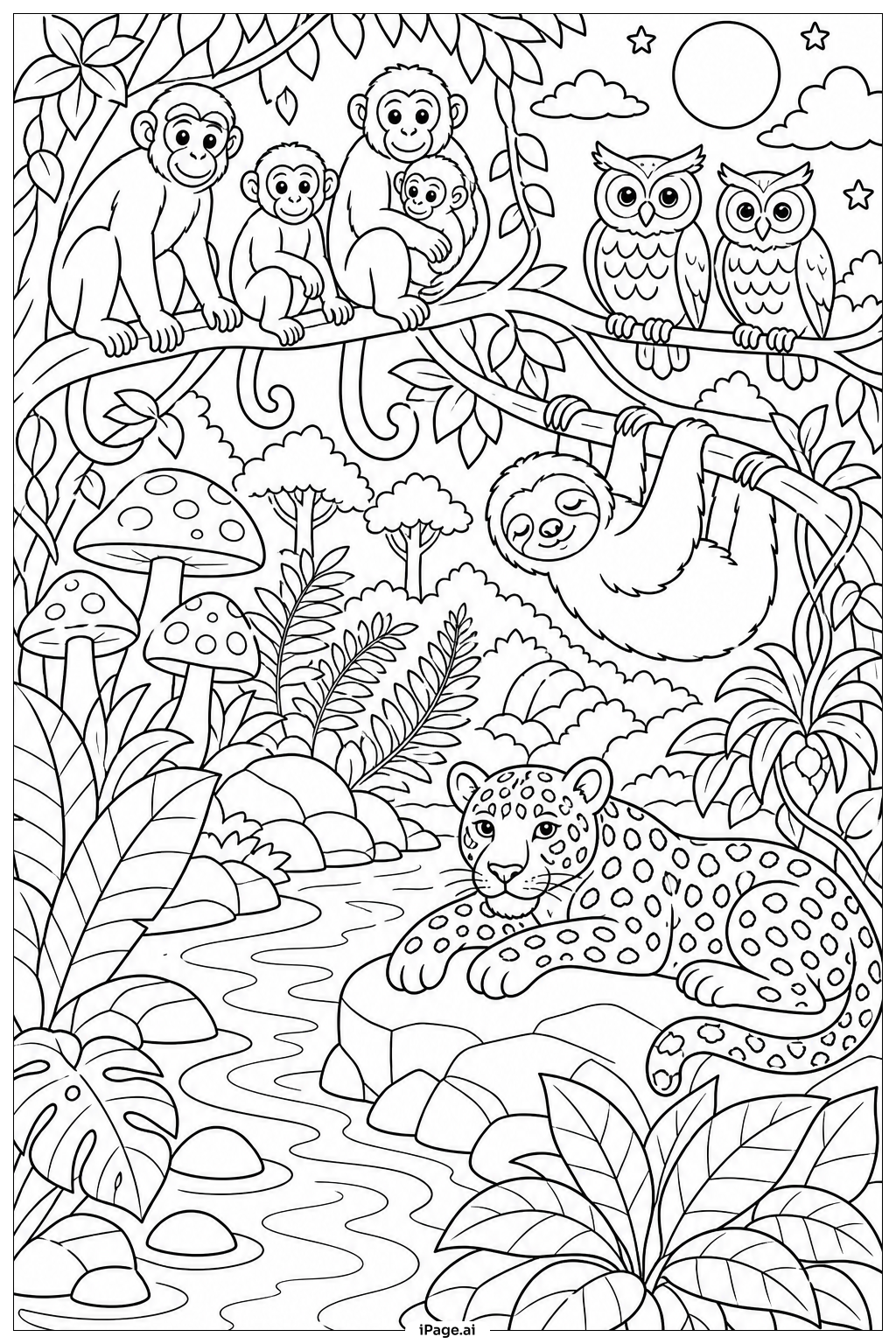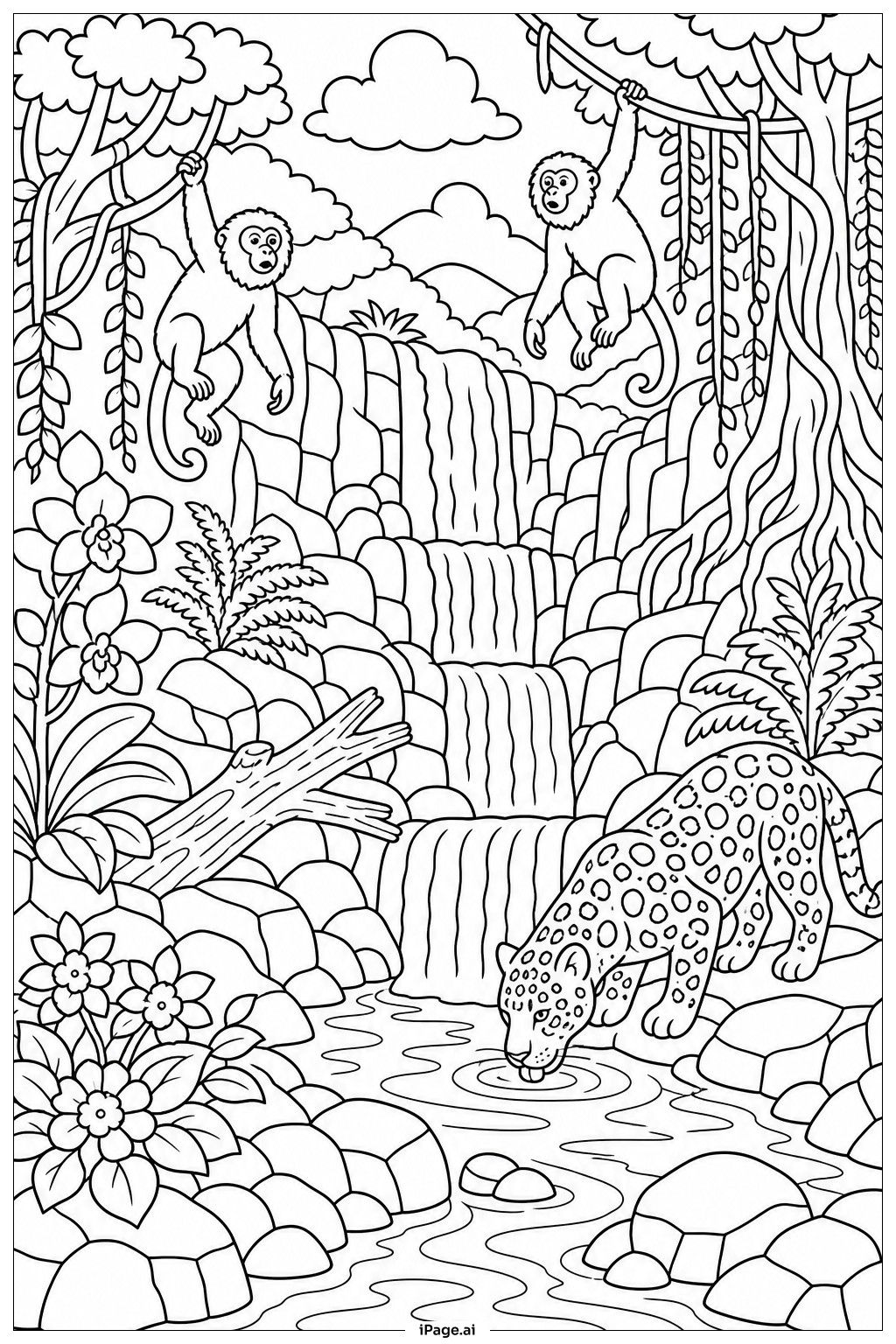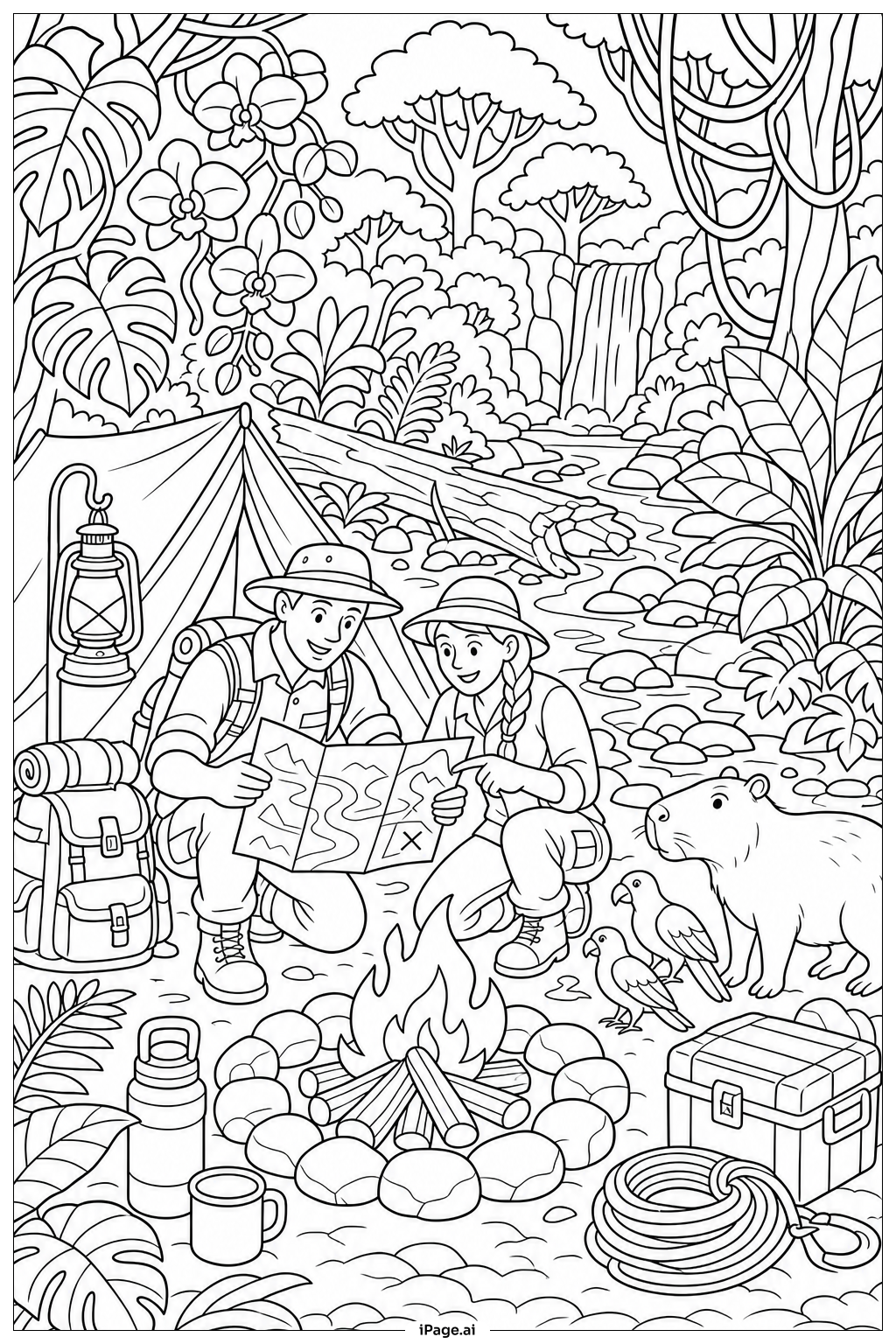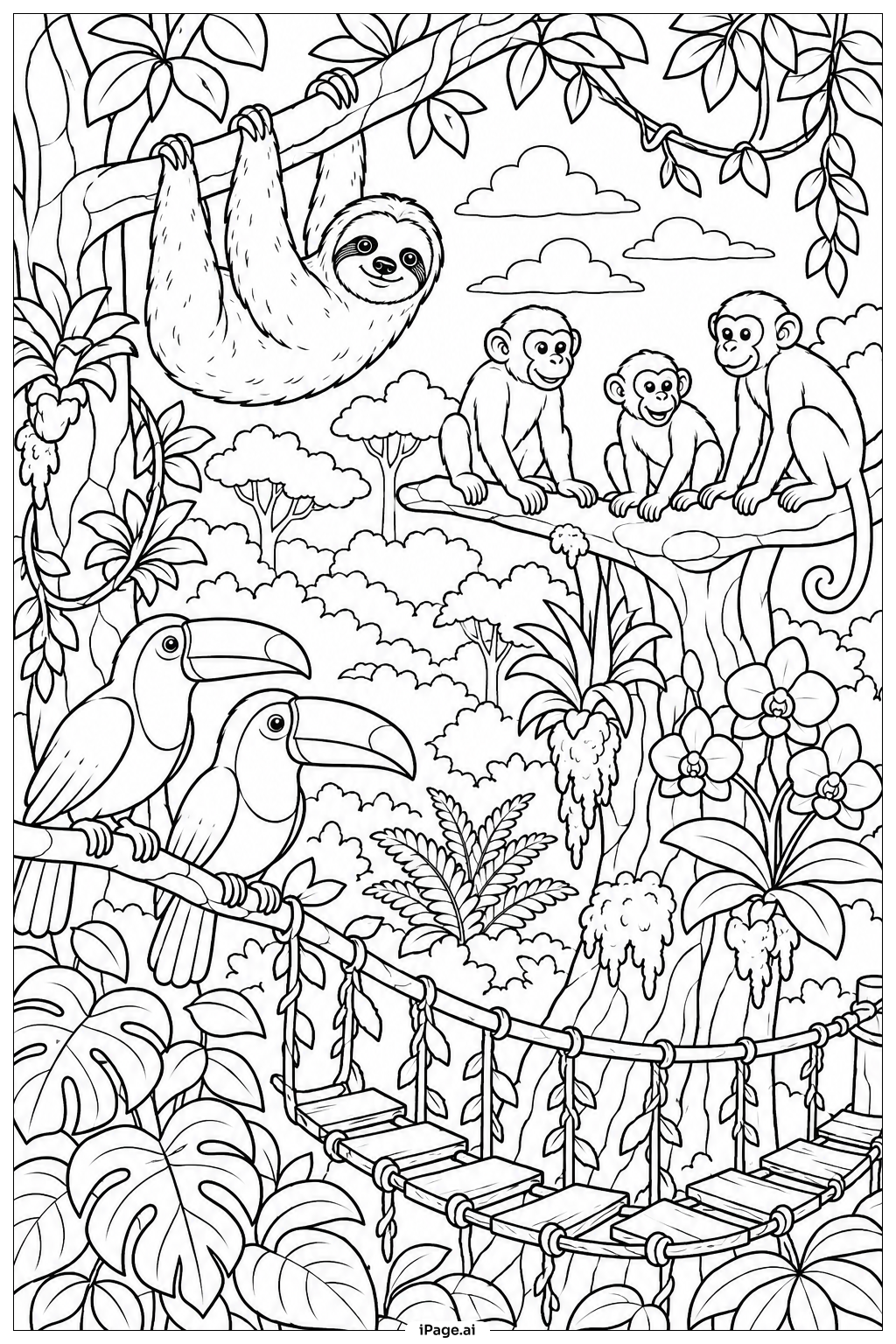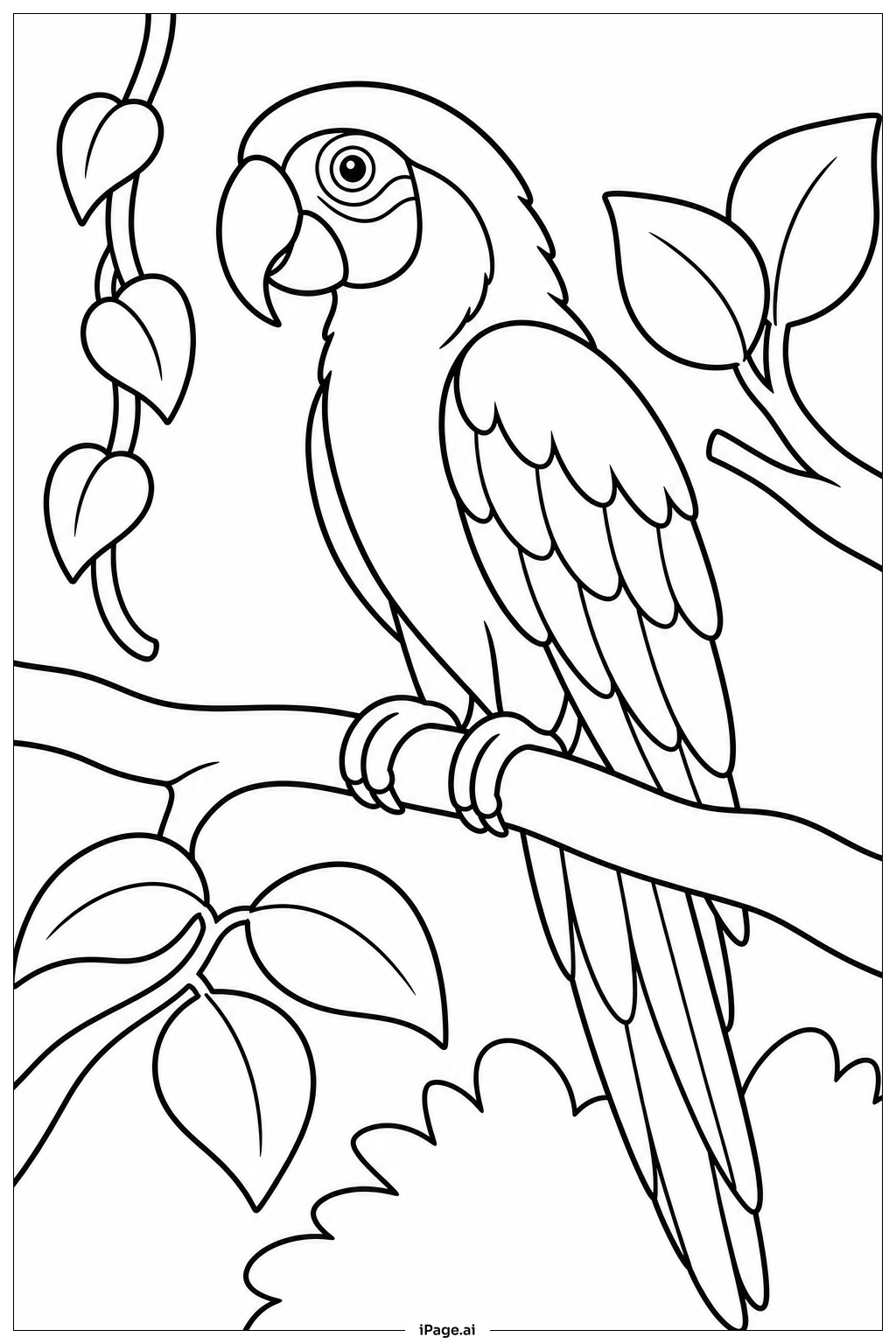
Coloring tips: How to color Rainforest Canopy Birds coloring page well?
Start by coloring the birds first, since they are the stars of the page. Parrots can be colored in bright greens, reds, blues, and yellows. Toucans look amazing with a black body and a bold orange, yellow, or red beak. Use deep greens and blue-greens for the large tropical leaves in the background. Try using lighter green in the center of leaves and darker green along the edges to add depth. For the branches, use brown and tan shades and add dark streaks for texture. Flowers can be colored in pink, orange, red, or purple to stand out against the green leaves. Hanging vines can be yellow-green or olive. Fruits can be orange, red, or yellow. Feel free to mix bright and dark colors to make the scene feel full and alive. There is no wrong way to color this page, so have fun and be creative!
Coloring challenges: Which parts are difficult to color and need attention for Rainforest Canopy Birds coloring page?
• Bird Feather Details: The birds in this image have many small, layered feathers that require careful coloring. Each feather has its own shape, and coloring them one by one takes patience. Using a sharp colored pencil or fine-tip marker will help you stay inside the tiny lines and create a smooth, realistic look.
• Overlapping Leaves and Branches: The background is packed with leaves and branches that overlap each other in many places. It can be tricky to tell where one leaf ends and another begins. Look closely at the outlines and try to color each leaf a slightly different shade of green to help them stand out from each other.
• Small Facial Features on Birds: The birds have tiny eyes, beaks, and facial markings that are easy to color outside of. These small areas need a very fine tool and a steady hand. Take your time with these spots, as they bring the birds to life and make a big difference in the final result.
• Balancing Colors Across the Scene: With so many birds, leaves, flowers, and fruits all in one image, it can be hard to choose colors that work well together without the page looking too busy or too dull. Try to spread bright colors evenly across the page so no single area feels too heavy or too empty.
• Texture on Bark and Vines: The tree branches and hanging vines have rough, textured surfaces that need more than one color to look realistic. Layering browns, tans, and grays together, and adding short strokes to show the grain of the wood, can make these areas look natural and detailed.
Benefits of coloring books: Advantages of drawing Rainforest Canopy Birds coloring page
Coloring this Rainforest Canopy Birds page offers many wonderful benefits for children and young artists. First, it helps improve fine motor skills. Carefully staying inside the detailed lines of feathers and leaves trains the hands and fingers to move with precision and control. This skill is useful in writing, drawing, and many daily activities.
Second, it encourages creativity. Choosing colors for tropical birds and exotic plants sparks imagination and helps children learn to express themselves through art. There are no strict rules, so every child can create their own unique version.
Third, it builds focus and patience. This image has many small details that require attention. Sitting down and coloring section by section helps children practice concentration and the ability to work through a task without rushing.
Fourth, it teaches children about nature. As they color parrots, toucans, and tropical plants, they naturally learn about the kinds of animals and plants that live in rainforests. This gentle introduction to wildlife can spark curiosity and a love of nature.
Finally, coloring is calming and relaxing. It gives children a quiet, screen-free activity that reduces stress and brings a sense of accomplishment when the page is complete. It is a fun and rewarding experience for all ages.