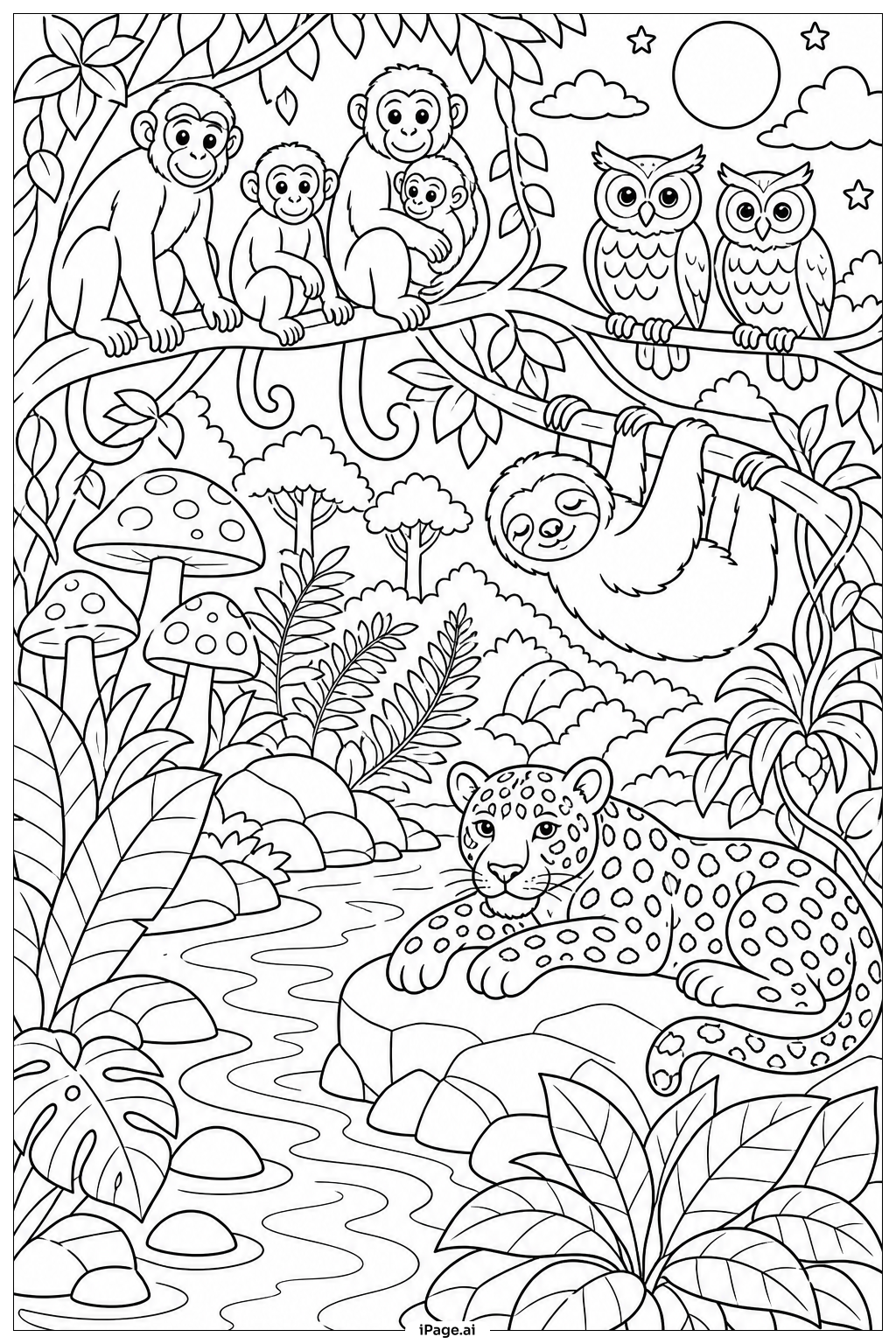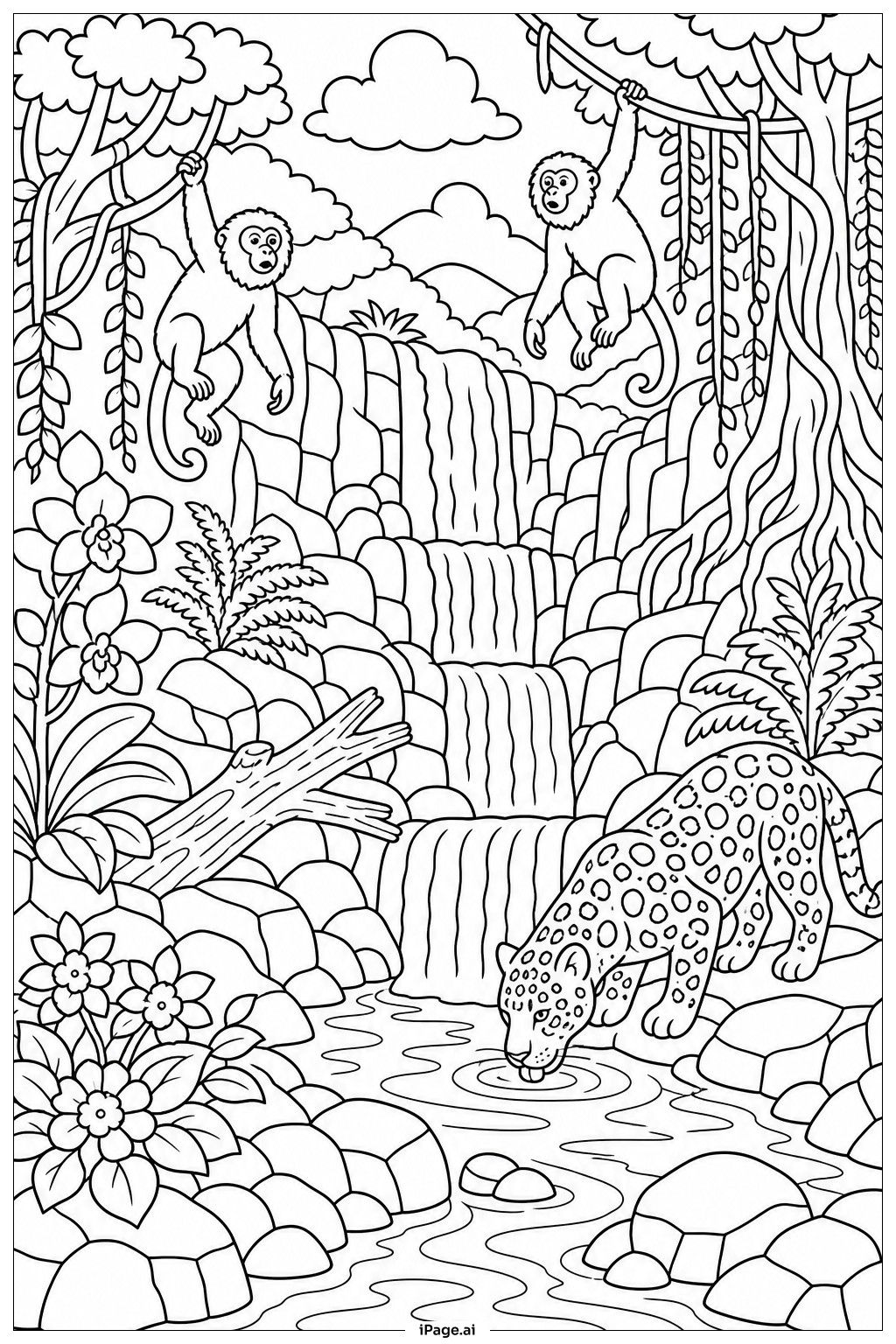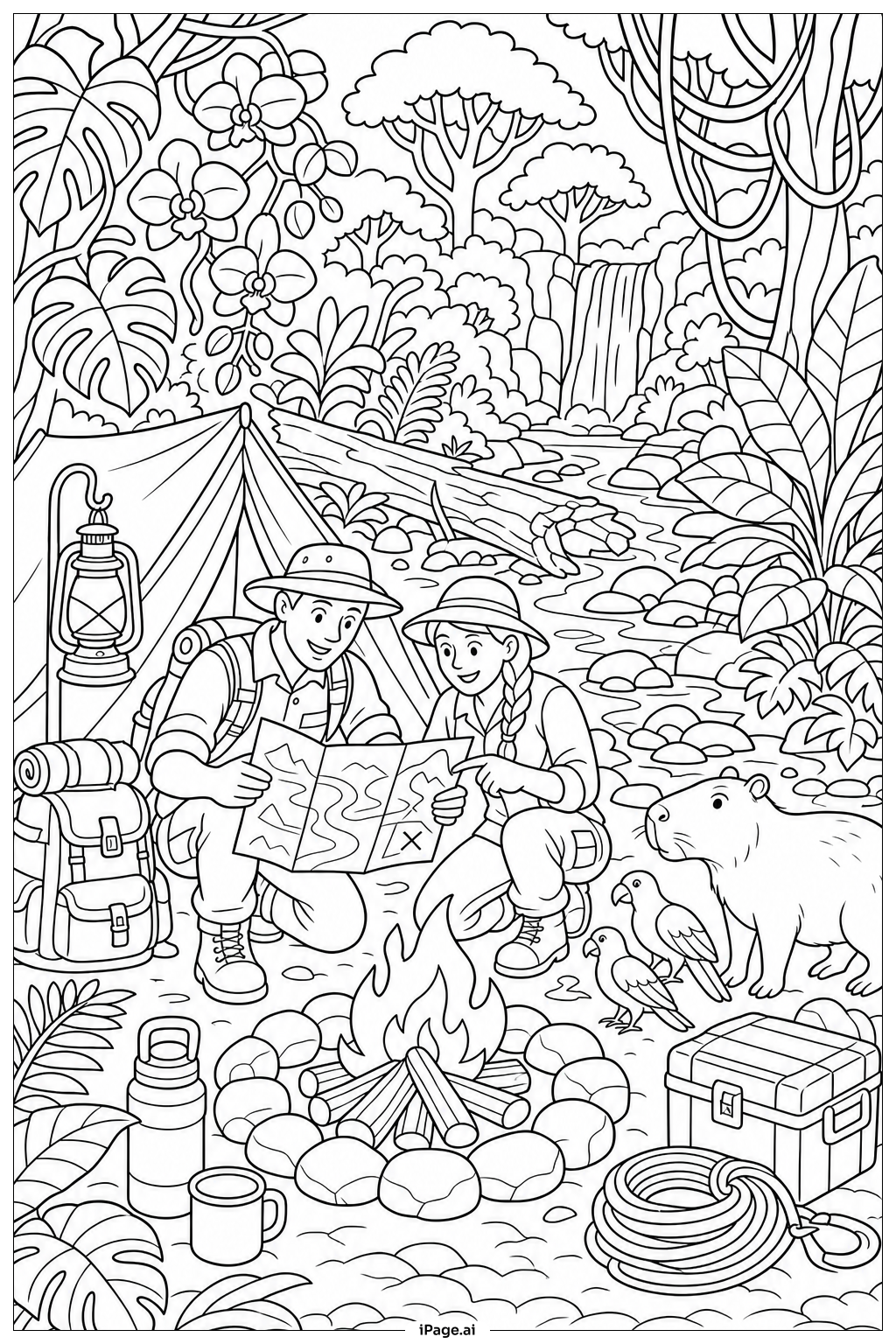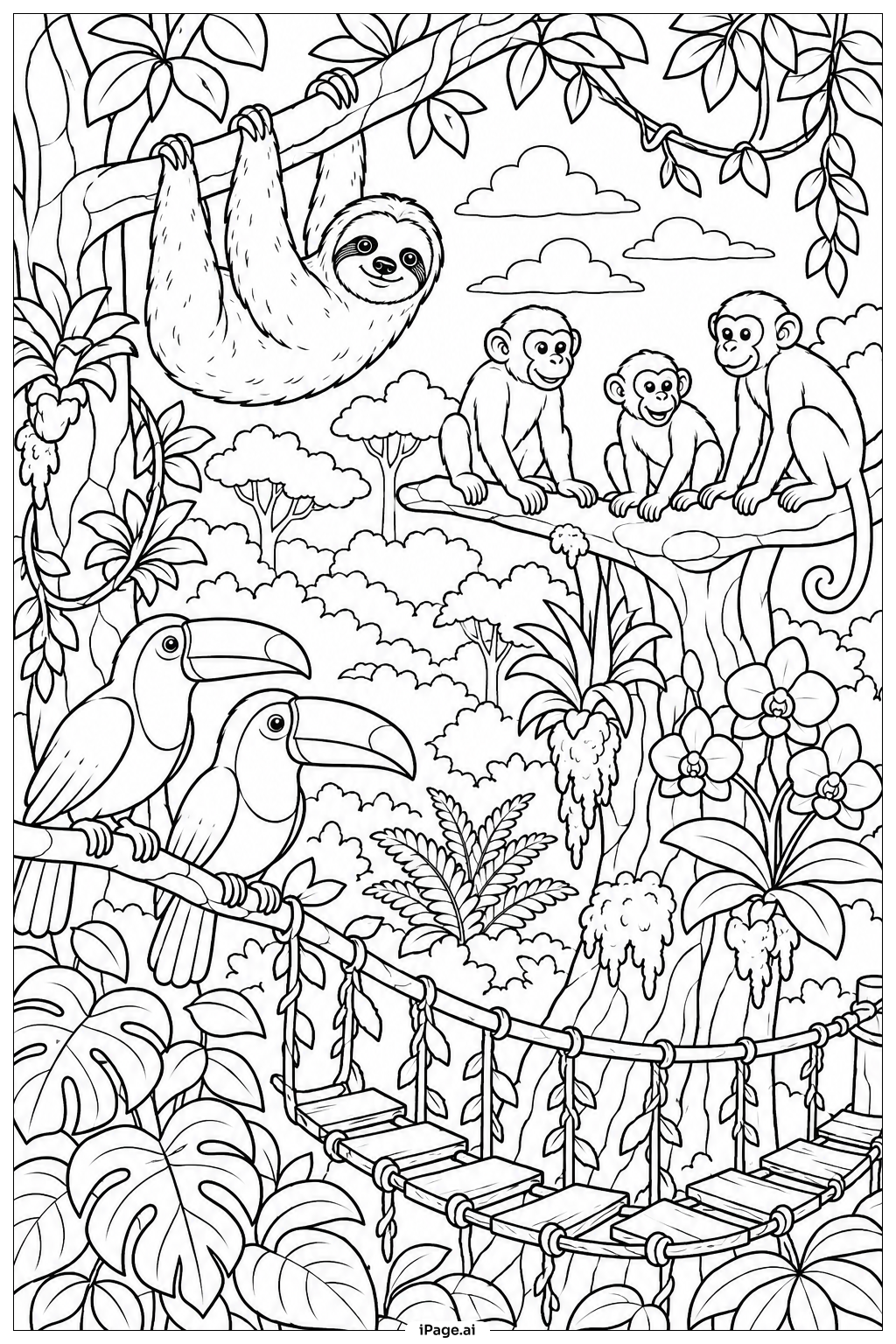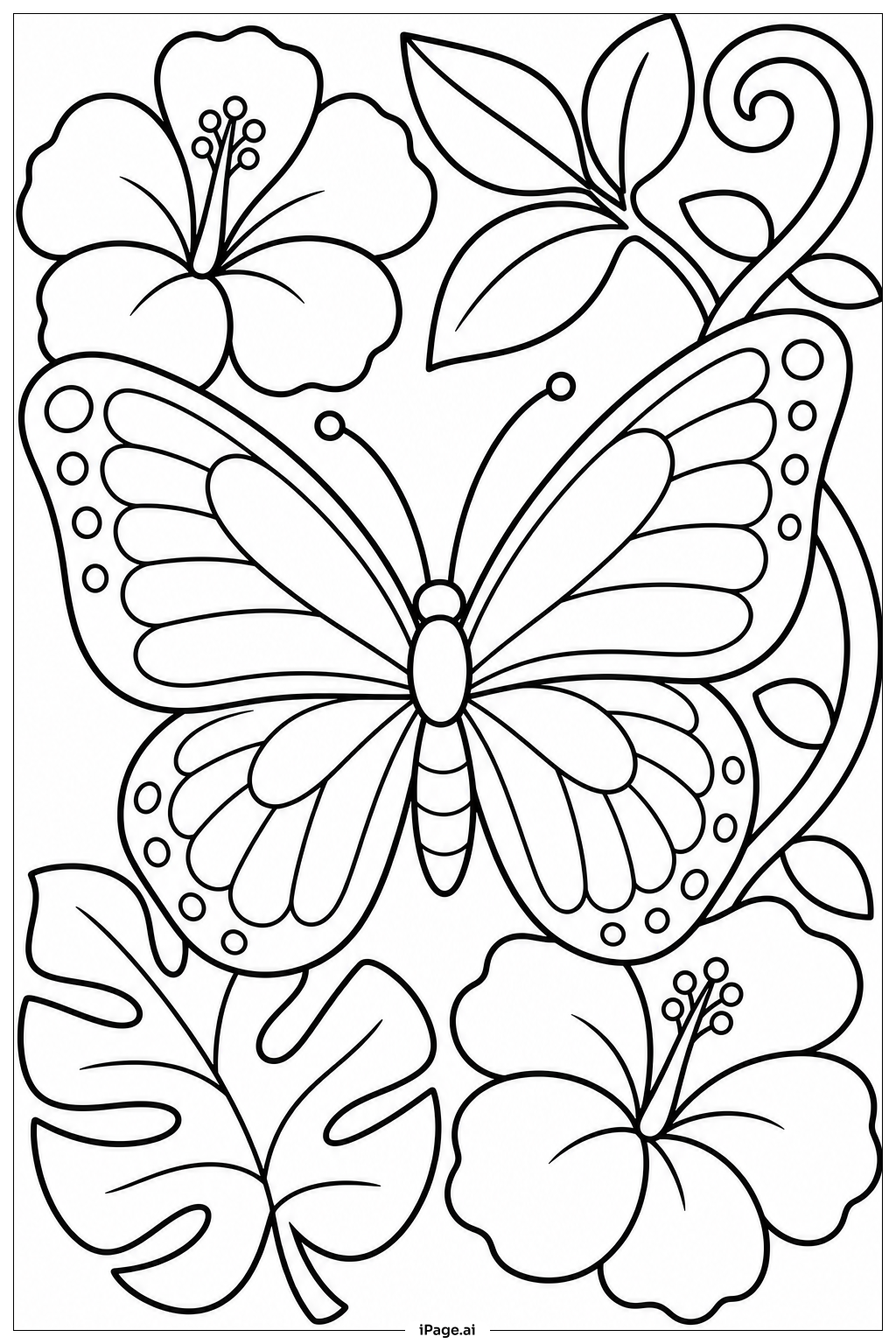
Coloring tips: How to color Rainforest Butterfly Garden coloring page well?
Start with the butterflies since they are the stars of this page. Use bright, bold colors like orange, yellow, blue, and purple for their wings. Try mixing two colors on each wing to make them look more realistic and beautiful. For the tropical flowers, use warm shades like red, pink, and coral. The leaves and ferns look great in many shades of green — try light green for smaller leaves and darker green for larger ones. Mushrooms can be colored red or brown with white spots. Use light brown or tan for tree bark and stems. Leave some white space inside flowers to show where light hits them. For the background, a soft yellow or pale blue gives the feeling of sunlight shining through the rainforest canopy. Take your time on the butterfly wings — adding small dots or lines in a second color makes the patterns really pop. Most importantly, have fun and use the colors that make you happiest!
Coloring challenges: Which parts are difficult to color and need attention for Rainforest Butterfly Garden coloring page?
• Butterfly Wing Patterns: The butterflies have detailed, symmetrical wing patterns with multiple sections and markings. Keeping both wings balanced and using matching colors on each side takes patience and steady hands. Small dots, lines, and curves within each wing are especially tricky to color without going outside the lines.
• Overlapping Elements: Many parts of this image overlap, such as wings resting on flowers or leaves layered behind butterflies. When two sections share a border, you need to choose contrasting colors so each part stands out clearly. This requires planning your color choices before you begin.
• Tiny Flower and Leaf Details: The flowers have many small petals, and the leaves are filled with fine veins and edge details. These small areas are difficult to color neatly, especially for younger children. A thin-tipped colored pencil or fine marker works best for these sections.
• Dense Background Foliage: The background is filled with overlapping ferns, vines, and large tropical leaves. Using too similar a shade of green throughout can make this area look flat. Try using at least three different shades of green, or add hints of yellow and brown, to create depth and make the background feel full and alive.
• Maintaining Overall Color Balance: With so many butterflies, flowers, and plants in one scene, it is easy for the image to feel too busy or too dark. Stepping back occasionally to look at the full picture helps you decide where to add lighter tones to keep the whole garden feeling bright, airy, and cheerful.
Benefits of coloring books: Advantages of drawing Rainforest Butterfly Garden coloring page
Coloring this Rainforest Butterfly Garden page offers wonderful benefits for children and adults alike. For kids, carefully filling in the intricate butterfly wings and tiny flower petals builds fine motor skills and improves hand-eye coordination. Choosing which colors to use for each butterfly or bloom encourages creative thinking and helps develop a natural sense of color harmony.
Spending time with this detailed scene also builds patience and focus. Kids learn to slow down, work section by section, and feel proud when they complete a challenging area. This kind of mindful activity can calm busy minds and reduce everyday stress.
Learning about butterflies and tropical plants through this image sparks curiosity about nature and the rainforest ecosystem. It opens up great conversations about wildlife, habitats, and why we should protect natural spaces.
For older children and adults, the complexity of overlapping leaves and detailed wing patterns makes this an excellent concentration exercise. It can serve as a relaxing, screen-free break that still keeps the mind engaged. Completing a full, colorful page also brings a real sense of achievement and boosts self-confidence. Whether you are 6 or 60, this garden scene is a joyful way to explore color, creativity, and the wonders of nature.