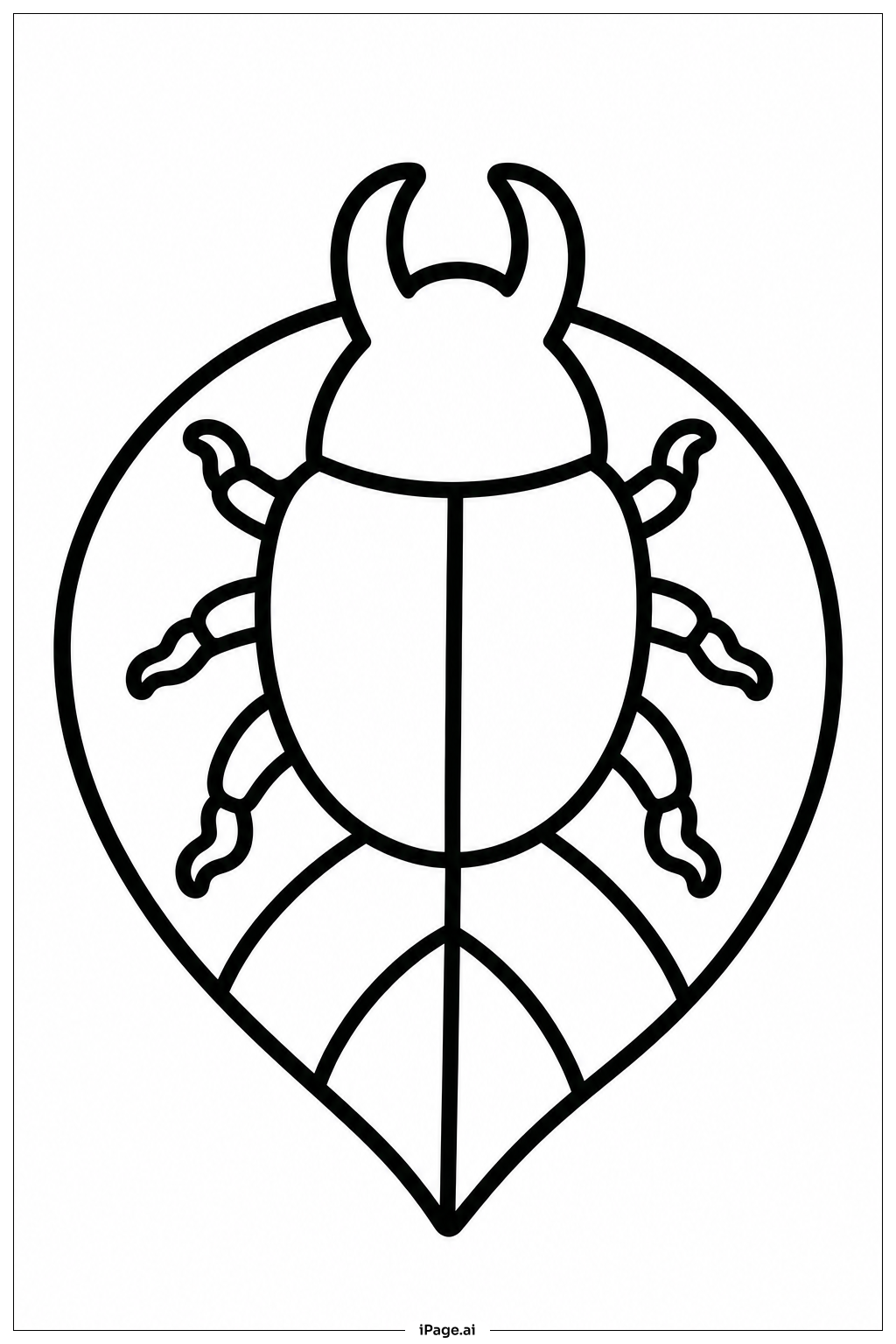
Coloring tips: How to color Rainforest Beetle coloring page well?
Start by coloring the beetle's shell with deep, bold colors. Many rainforest beetles are known for their brilliant shades, so try using emerald green, metallic blue, or deep purple for the main shell. You can add a shiny effect by leaving small white patches on the shell edges. Use a darker version of your main color to shade the divided sections. Color the legs and head in dark brown or black, and use gray for the joints to add depth. The mandibles and antennae can be done in brown or bronze. For the background leaves and vines, use different shades of green — light lime for younger leaves and deep forest green for larger ones. Adding yellow-green highlights on the leaf edges will make the foliage look alive. Do not be afraid to mix colors. Rainforest beetles are some of the most colorful insects on Earth, so feel free to be creative and bold with your choices.
Coloring challenges: Which parts are difficult to color and need attention for Rainforest Beetle coloring page?
• Shell Pattern Complexity: The beetle's shell is covered in detailed ridges, dots, and geometric sections. Staying within each tiny section while using multiple shades of color requires patience and a fine-tipped coloring tool. Rushing this part may cause colors to bleed into neighboring areas, making the pattern look unclear.
• Achieving a Metallic or Shiny Look: Real rainforest beetles have shells that appear to glow or shimmer. Recreating this effect on paper is tricky. You need to carefully blend a base color with a lighter highlight and a darker shadow, leaving small white spots to suggest reflected light. This blending technique can be difficult for younger colorists.
• Leg and Joint Detail: The beetle has six legs with multiple segments and small claws. Each leg segment is narrow, making it hard to apply color neatly without going outside the lines. Using a very sharp pencil or a fine marker is recommended to handle these thin areas accurately.
• Layered Foliage Background: The leaves and vines surrounding the beetle overlap each other in several layers. Deciding which leaf sits in front and which is behind requires careful observation. Using lighter greens for background leaves and darker greens for foreground ones will help create a sense of depth, but this level of planning can be challenging.
• Balancing the Overall Composition: The beetle is bold and detailed, and the background is equally rich. Making sure the beetle stands out without making the leaves look dull requires thoughtful color choices throughout the entire page.
Benefits of coloring books: Advantages of drawing Rainforest Beetle coloring page
Coloring this Rainforest Beetle page offers many wonderful benefits for children and young learners. First, it builds fine motor skills. Carefully coloring within the small, detailed sections of the beetle's shell and legs trains hand control and pencil grip, which supports handwriting development. Second, it sparks curiosity about nature. As children color, they naturally become curious about real rainforest beetles and the amazing ecosystems they live in. This can lead to questions, exploration, and a love of science and the natural world. Third, it encourages creativity. Choosing colors for the shell, legs, and background pushes children to think imaginatively and make their own artistic decisions. There is no single right answer, and that freedom builds confidence. Fourth, it promotes focus and patience. Completing a detailed image like this requires sitting still and concentrating, which helps develop attention span and perseverance. Finally, it is a calming and enjoyable activity. Coloring reduces stress and anxiety, providing a quiet, satisfying experience that children of all ages can enjoy independently or together with family.