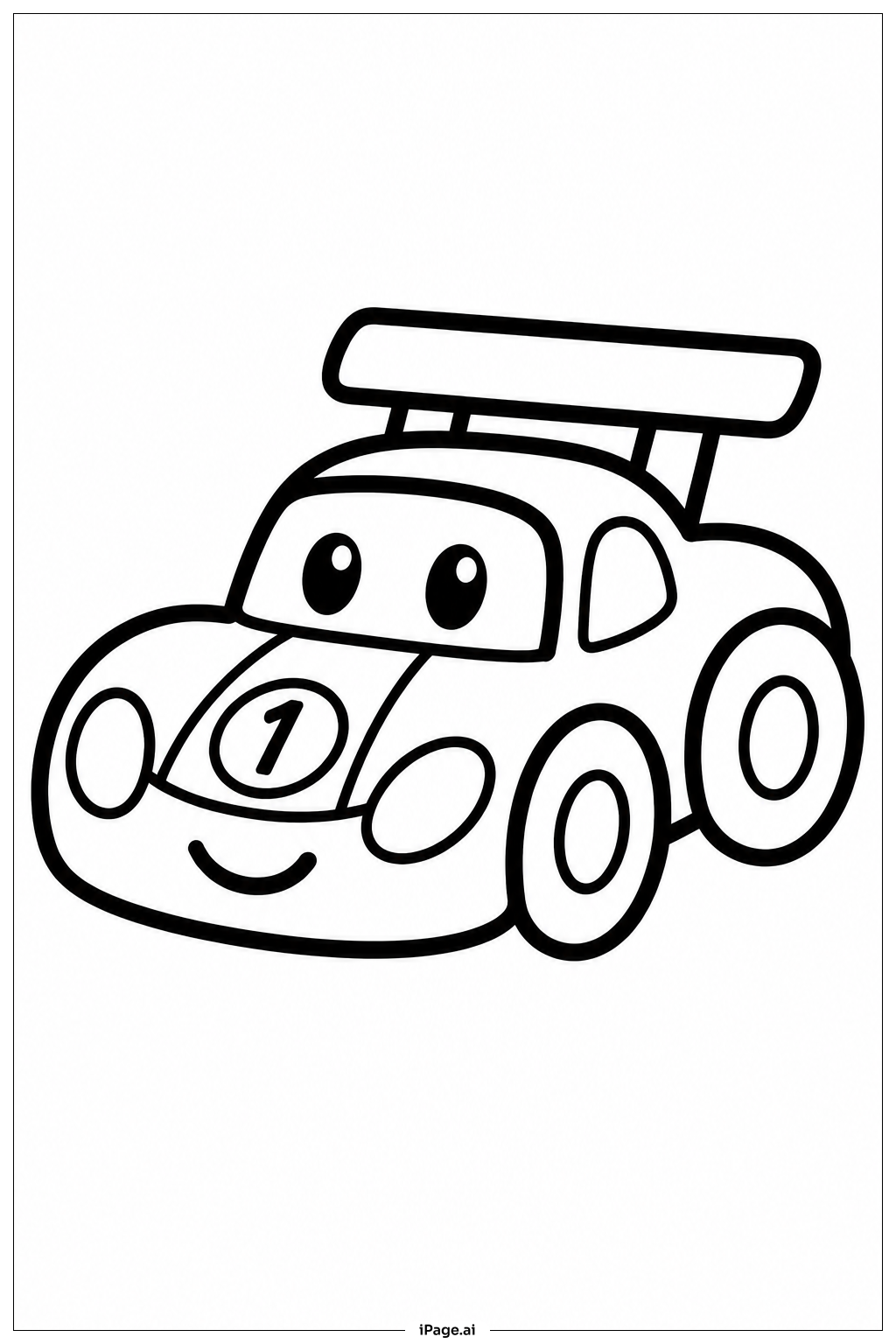
Coloring tips: How to color Race Car Tiny Racer coloring page well?
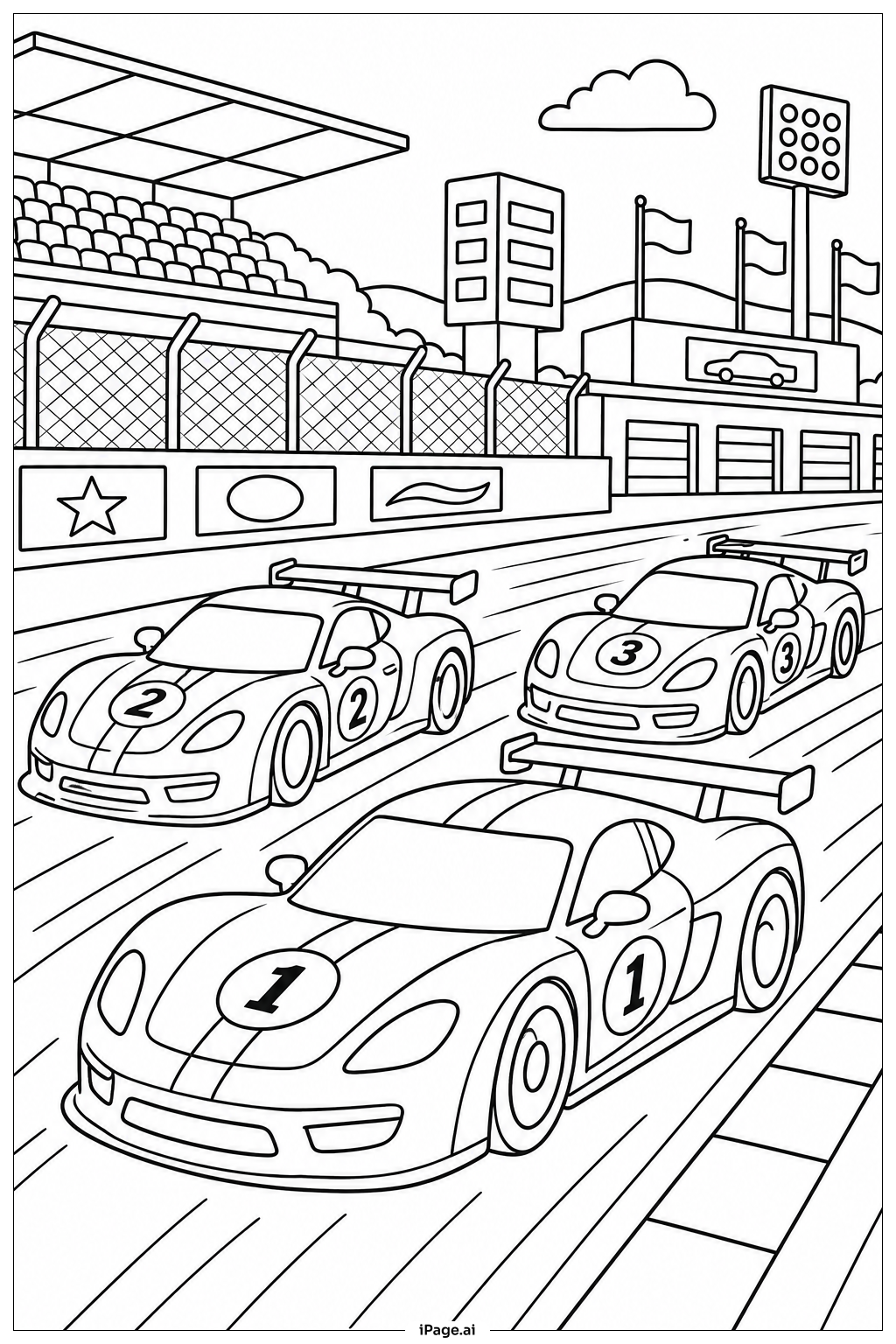
Start with the car body and pick a bold, exciting color like red, blue, or bright yellow — these classic racing colors really make the car pop. Use a darker shade of the same color along the lower edges and under the bumper to add depth and a 3D feel. Color the wheels and tires with dark gray or black, and add a silver or light gray highlight on the hubcaps to make them look shiny. The spoiler and side vents can be colored in a contrasting color like white, silver, or orange to make them stand out. For the racing number, try yellow or white with a dark outline so it is easy to read. Use bright orange or yellow for flame or speed stripe details to show off the car's fast energy. The windshield looks great in light blue with a small white streak to show a glass reflection. Exhaust pipes can be silver or metallic gray. Feel free to mix and match colors to create your very own custom racing champion!
Coloring challenges: Which parts are difficult to color and need attention for Race Car Tiny Racer coloring page?
• Tiny Body Details: The race car has many small design features packed into a compact shape, such as vents, bumpers, and exhaust pipes. Staying inside the lines on these small areas can be tricky, especially for younger colorists. Using a fine-tipped colored pencil or a thin marker will help keep each small section neat and clean.
• Wheel and Tire Sections: The wheels include multiple parts — the outer tire, the inner hubcap, and the rim. Each part benefits from a different color or shade to look realistic. Switching between dark gray for the tire, silver for the rim, and a lighter tone for the hubcap requires careful attention to avoid mixing up the areas.
• Adding Depth and Shadow: A flat, solid color can make the car look two-dimensional. To give the car a rounded, three-dimensional look, colorists need to apply lighter shades in the center of curved surfaces and darker shades near the edges. This blending technique can be challenging for beginners but is very rewarding when done well.
• Speed Stripes and Flames: Decorative flame or stripe details run along the side of the car. These narrow, curved shapes require steady hands and careful color selection. Using two or three related colors — like red, orange, and yellow — can make the flames look vivid and dynamic without blending into the main car body color.
• Racing Number Visibility: The number on the side of the car needs to stand out clearly from the background body color. Choosing a high-contrast color combination, such as white on red or black on yellow, ensures the number reads clearly and adds an authentic racing look to the finished page.
Benefits of coloring books: Advantages of drawing Race Car Tiny Racer coloring page
Coloring the Race Car Tiny Racer page offers a wide range of benefits for kids and young learners. First, it builds fine motor skills. Carefully filling in small sections like vents, wheels, and stripes trains the hands and fingers for better control and precision — skills that also help with writing and drawing. Second, it encourages creativity. Kids get to design their very own race car by choosing colors, patterns, and details. There is no wrong answer, so every child ends up with a unique creation they can be proud of. Third, it supports color recognition and mixing. Deciding which shades go well together — like pairing a deep red body with silver wheels — helps develop an early sense of color theory and visual harmony. Fourth, it improves focus and patience. Staying inside the lines and carefully switching between colors requires concentration, helping kids practice sitting still and working through a task from start to finish. Fifth, it is simply fun and engaging. Race cars are exciting, and bringing a speedy little racer to life with bright, bold colors gives kids a real sense of accomplishment and joy. It is a screen-free activity that sparks imagination and keeps young minds happily busy.