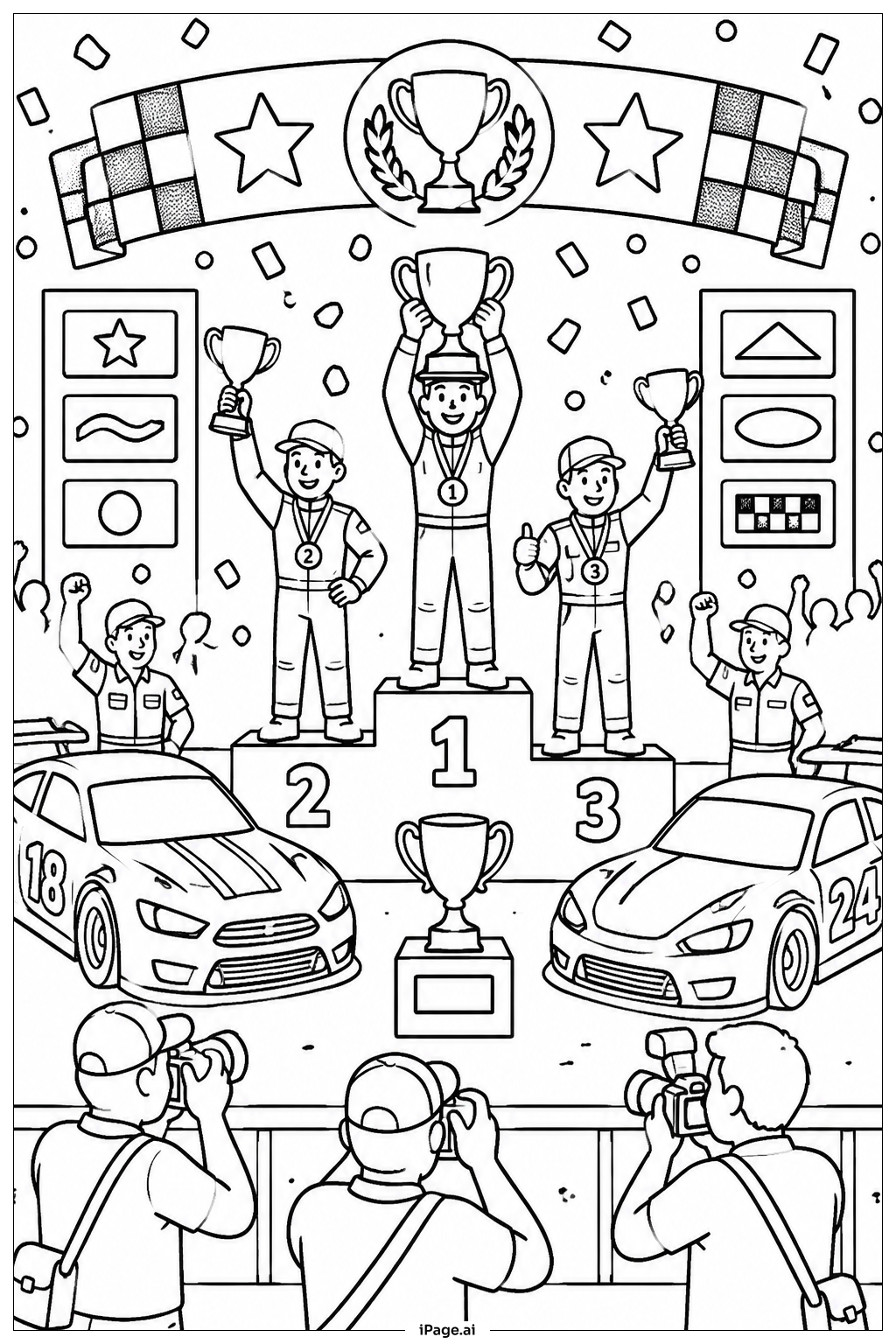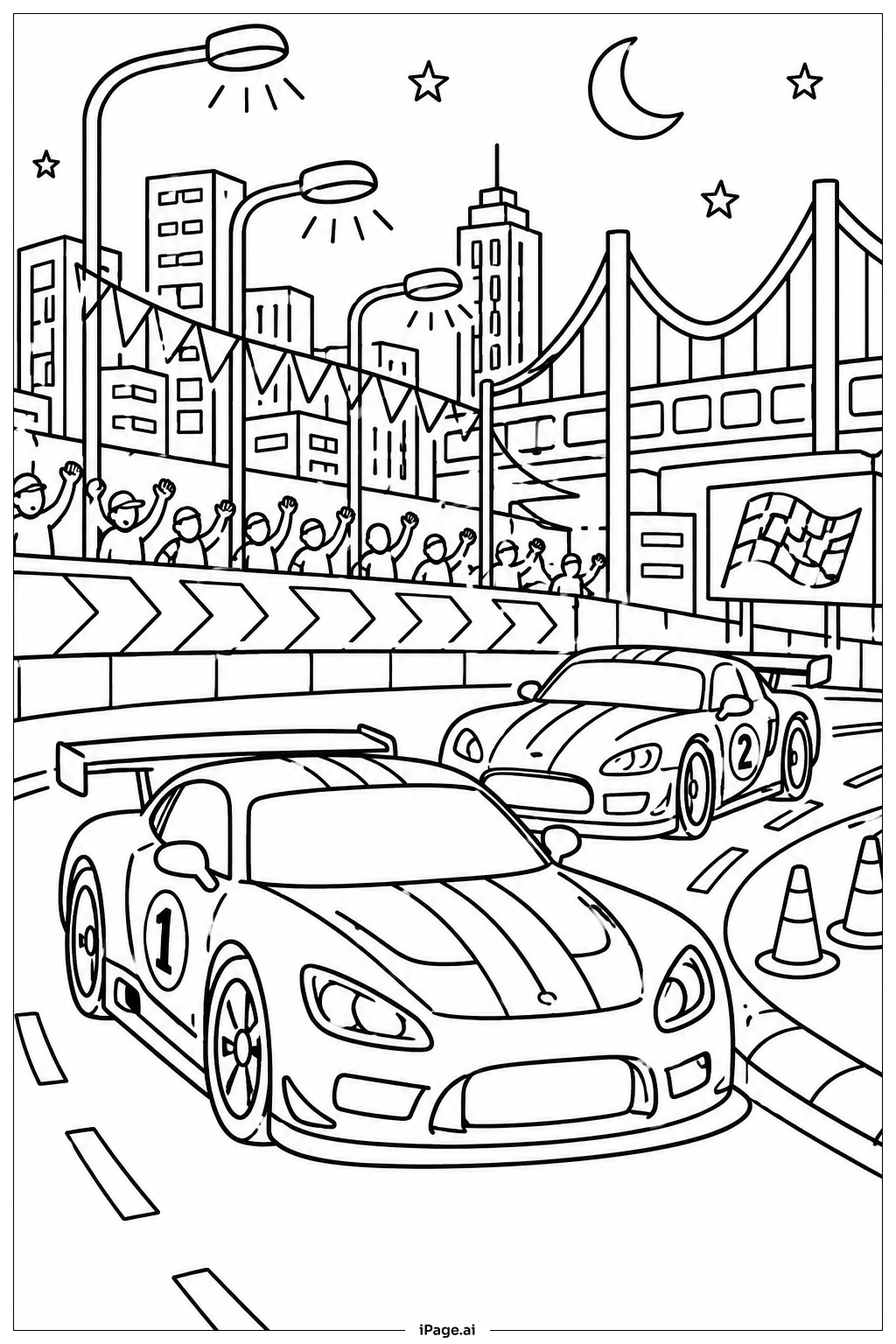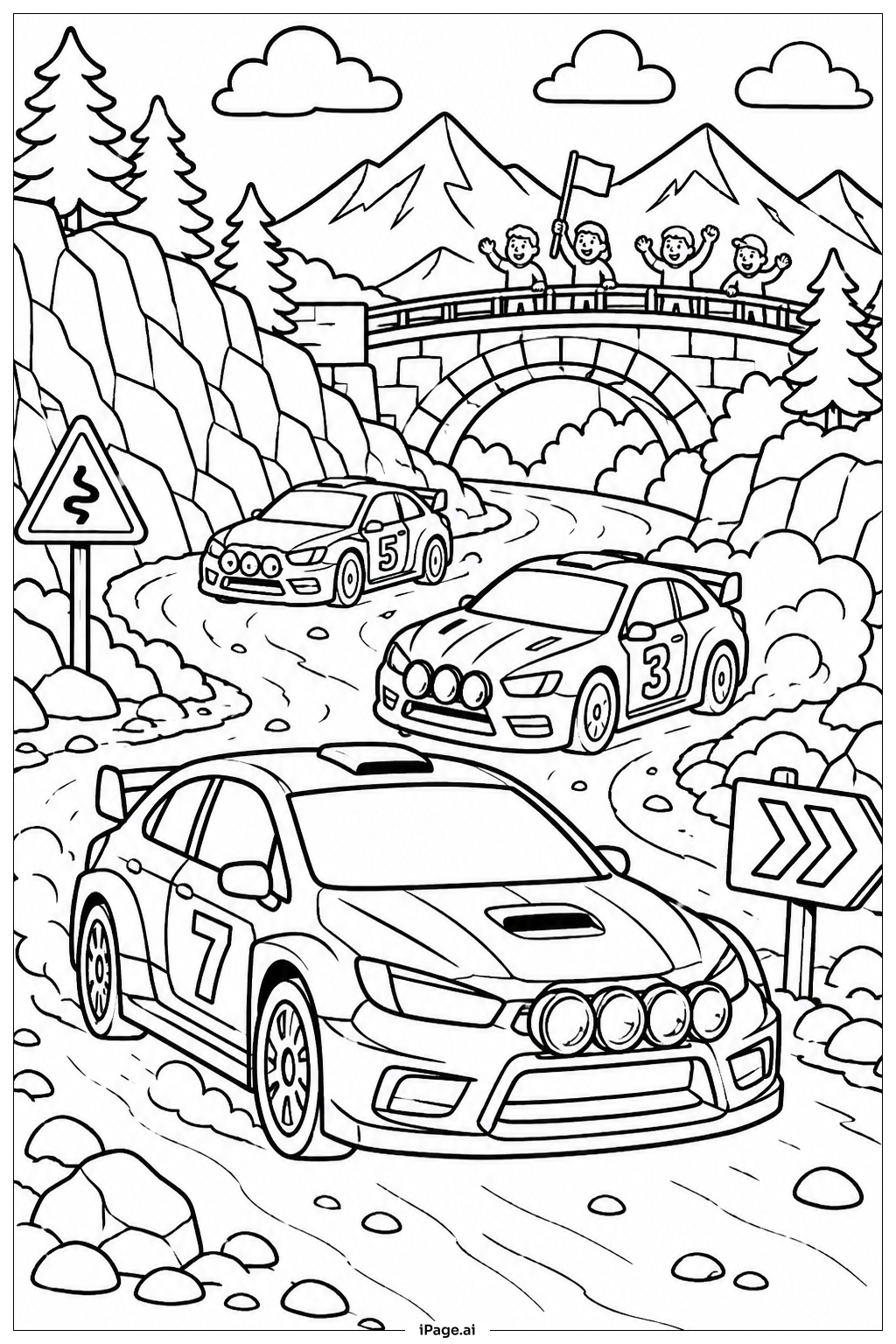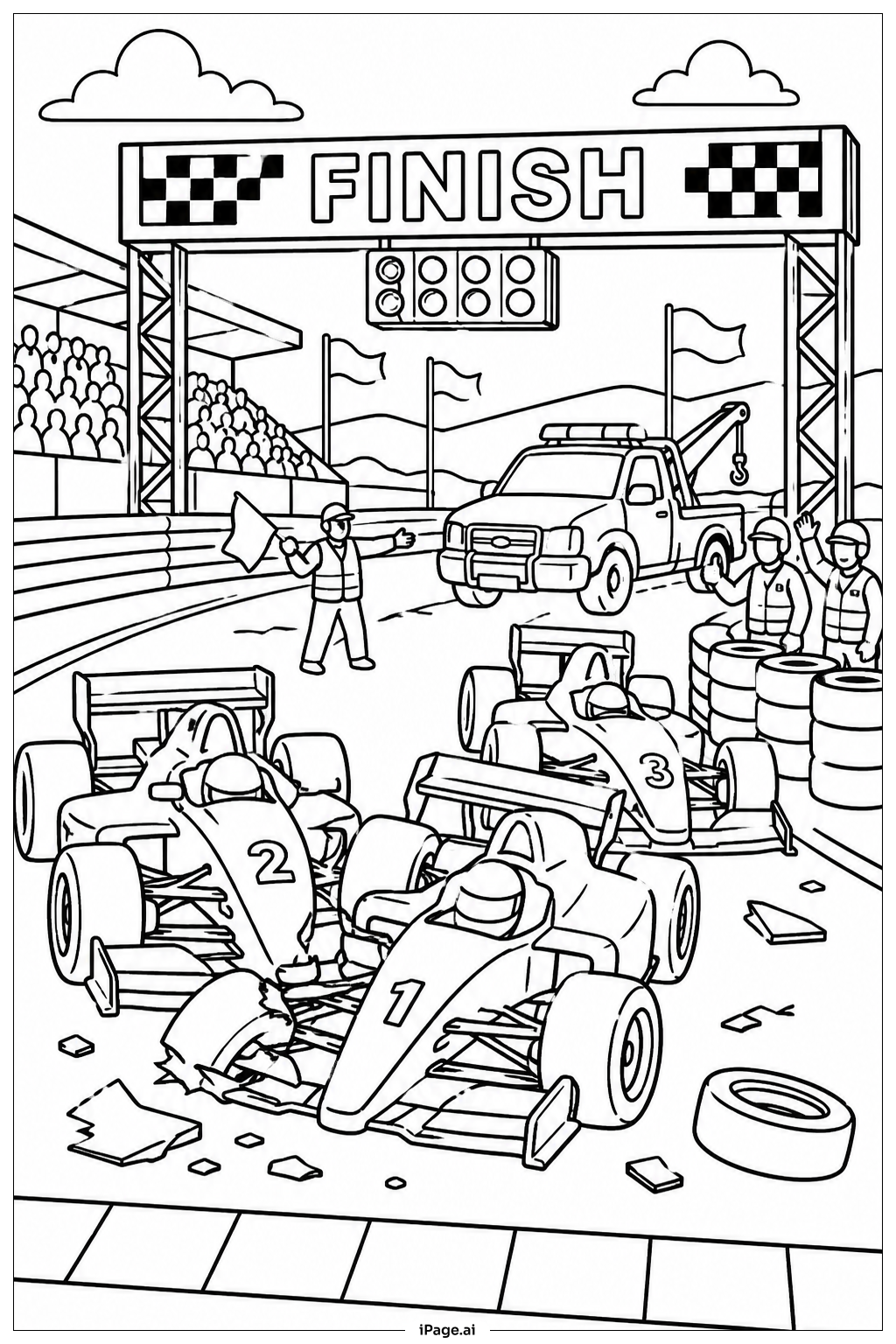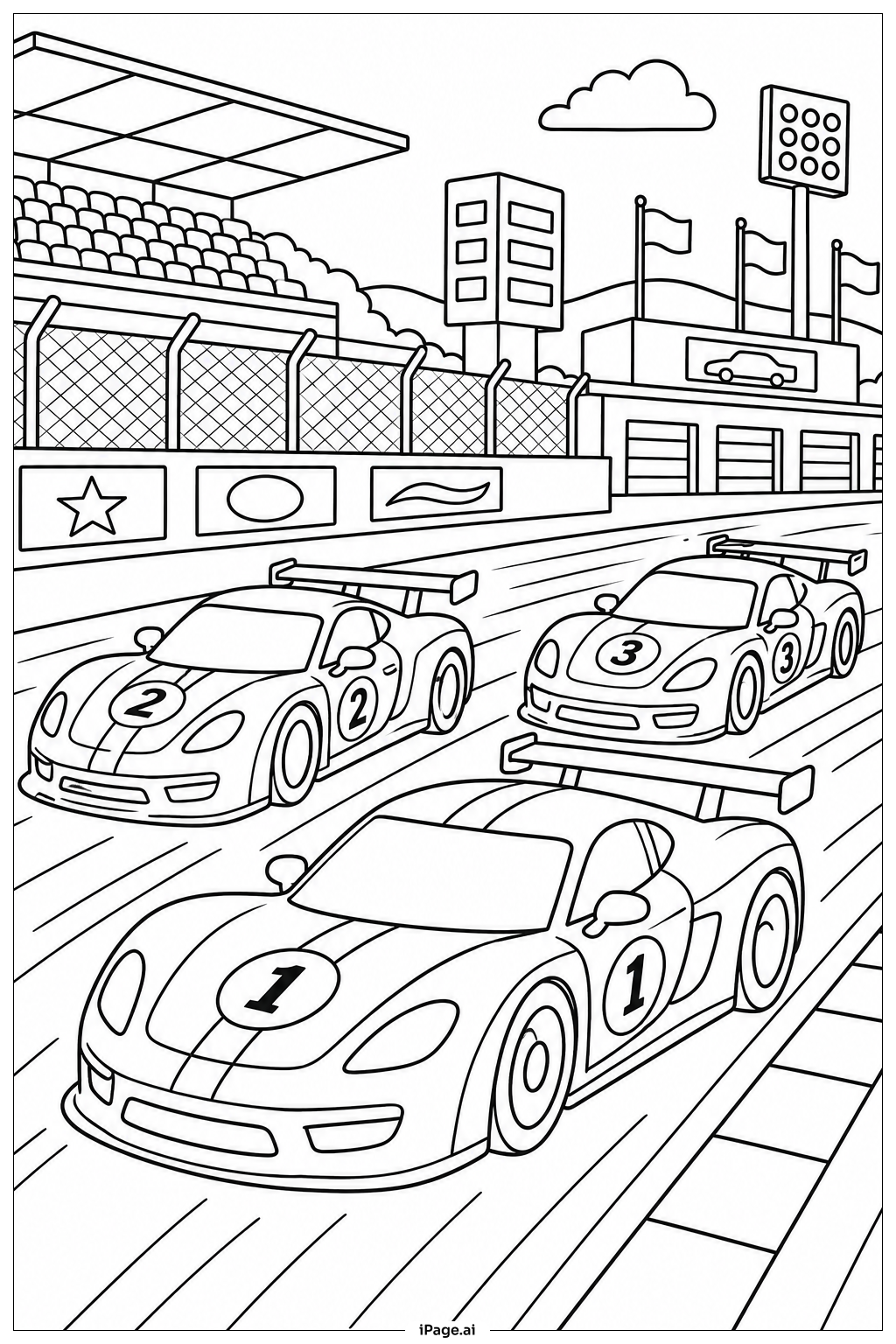
Coloring tips: How to color Race Car Multiple Lanes Race coloring page well?
Start by choosing a different bold color for each race car so they stand out from one another on the track. Classic racing colors like red, blue, yellow, and green work great. Use bright, vivid shades to make the cars look fast and exciting. For the car bodies, color in smooth, even strokes to keep the look clean and polished. Add contrasting colors to the spoilers, wheels, and vents to make the details pop. Use dark gray or black for the tires and silver for the rims. Color the track in light gray or asphalt tones. The lane markings can be bright white or yellow. For the background, light blues and greens for the grandstands and scenery will help the cars stand out. If you want to get creative, add racing stripes or sponsor logo shapes to each car using markers or colored pencils for extra detail.
Coloring challenges: Which parts are difficult to color and need attention for Race Car Multiple Lanes Race coloring page?
• Multiple Cars with Similar Shapes: With several race cars on the page, it can be tricky to keep each one looking distinct. You need to plan your color choices carefully before you start so that no two cars end up looking the same. Take a moment to decide which color goes on which car before picking up your pencils or markers.
• Small Mechanical Details: Race cars are packed with fine details like vents, spoilers, side mirrors, and wheel arches. These small areas require a steady hand and thin-tipped tools to fill in neatly without going over the lines. Young colorists may find these sections especially challenging and may need to slow down and focus.
• Wheels and Tires: The rounded wheels and detailed rims are some of the hardest parts to color evenly. The circular shapes can be difficult to fill smoothly, and the small gaps between the tire and the rim need careful attention to look clean and realistic.
• Lane Markings and Track Surface: The race track includes lane lines, curb markings, and surface textures that require patience to color accurately. Using the right shading techniques to suggest a flat road surface while keeping the markings crisp takes practice.
• Background Elements: The grandstands, barriers, and scenery in the background sit very close to the detailed car outlines. Coloring these areas without accidentally overlapping onto the cars requires a careful and controlled approach, especially along the edges where the background meets the vehicle bodies.
Benefits of coloring books: Advantages of drawing Race Car Multiple Lanes Race coloring page
Coloring this race car scene offers a fantastic range of benefits for kids and young artists. Working through the many details of multiple cars on a busy track builds fine motor skills and helps develop a steady, controlled hand — skills that carry over into writing and other everyday tasks. Planning which colors to use for each car encourages creative thinking and decision-making. Kids learn to think ahead and make choices, which builds confidence in their own artistic ideas. The exciting racing theme naturally keeps children engaged for longer stretches of time, supporting focus and concentration. Staying within the lines on complex shapes like wheels, spoilers, and vents also trains patience and attention to detail. For older kids and teens, experimenting with color combinations and racing livery designs can spark a genuine interest in graphic design and illustration. The social side matters too — this page is great for coloring with friends, where each person can claim a car and create their own unique design. Overall, this image turns a love of racing into a rewarding, skill-building creative experience that is both fun and educational.