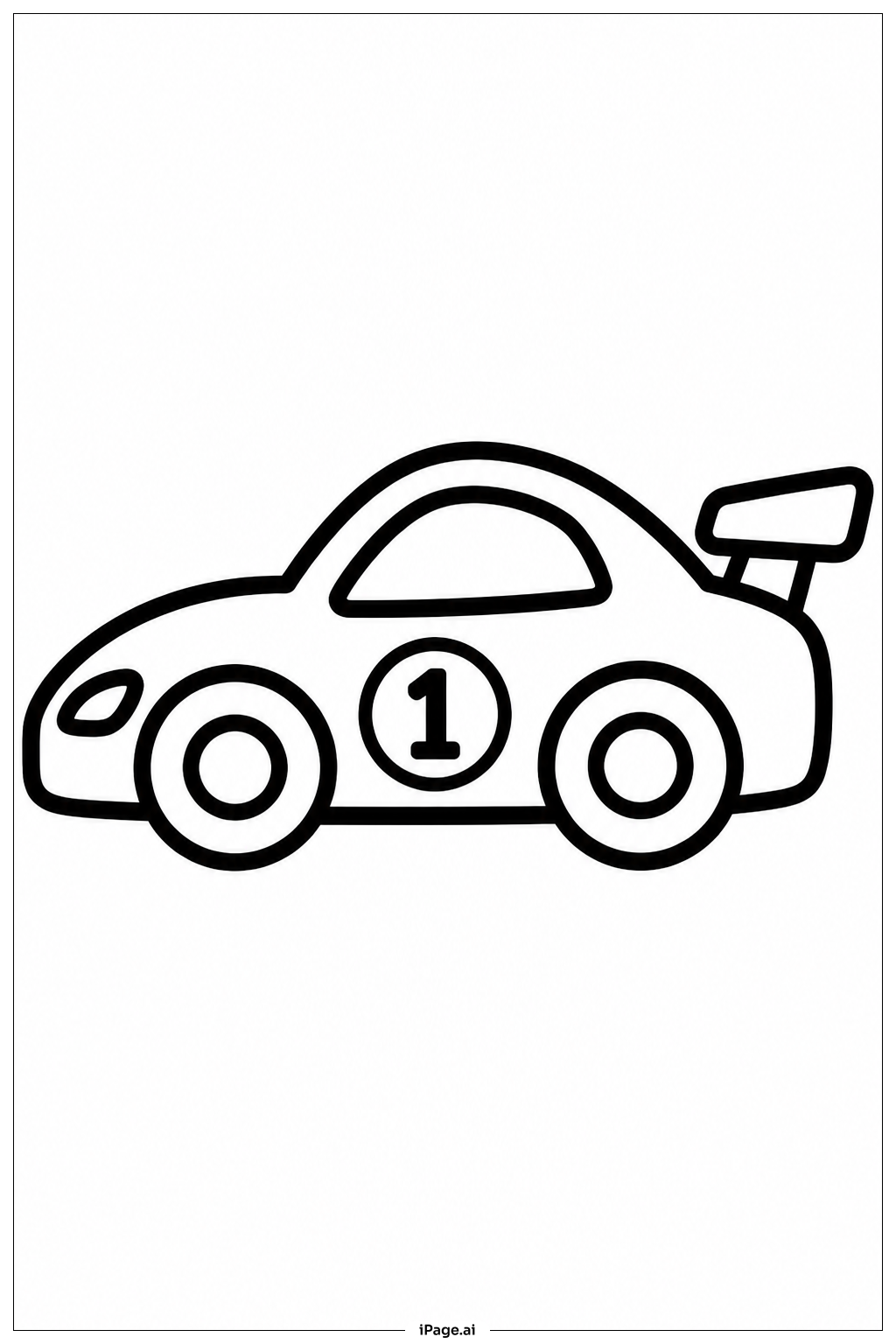
Coloring tips: How to color Race Car Simple Silhouette coloring page well?
Start with the car body and pick a bold, exciting color like red, blue, or yellow — classic race car shades that really pop. Use a darker version of the same color along the lower edge and under the spoiler to show shadow and depth. Color the wheels dark gray or black, then add a lighter gray or silver ring to show the shiny wheel rims. The cockpit can be filled with a dark tint like navy blue or dark gray to look like a protective visor. If you want to make your race car stand out even more, add racing stripes in white or a contrasting color along the side of the body. Use smooth, even strokes to fill large flat areas, and slow down when you get close to the outlines to keep things neat. Coloring from light to dark helps build a great finish.
Coloring challenges: Which parts are difficult to color and need attention for Race Car Simple Silhouette coloring page?
• Staying Inside Curved Outlines: The race car body features many smooth, flowing curves along the hood, roof, and tail. These rounded edges can be tricky to follow precisely, especially for younger colorists. Moving slowly along curved lines and using a sharpened pencil or fine-tipped marker helps keep color neatly inside the boundary.
• Coloring the Small Cockpit Area: The cockpit opening is a compact, enclosed shape nestled between larger body panels. Its limited size makes it difficult to fill without accidentally going over the edges. Using a thin-tipped tool and working in small, careful strokes is the best approach for this section.
• Differentiating the Wheels from the Body: The wheels and tires overlap or sit close to the car body, making it easy to blend colors between two separate parts. Planning your color choices in advance — such as black for tires and silver for rims — and working on each section one at a time helps keep the contrast clean and clear.
• Shading the Spoiler and Nose Cone: The rear spoiler and pointed nose cone are narrow, angular shapes that can be hard to shade evenly. Uneven pressure while coloring these sections may leave streaks or patchy fills. Using gentle, consistent pressure and short strokes in one direction gives a smooth, polished result.
• Creating a Sense of Speed and Depth: A flat silhouette can look one-dimensional without some creative shading. Adding highlights on the top of the body and darker tones along the bottom edge gives the car a three-dimensional appearance and makes it look like it is truly moving at full speed.
Benefits of coloring books: Advantages of drawing Race Car Simple Silhouette coloring page
Coloring this Race Car Simple Silhouette page offers a wide range of benefits for kids and young artists. The bold, clear outlines make it a great starting point for beginners, helping them practice basic coloring skills like staying inside the lines and applying even color. As children work through the different sections — the body, wheels, cockpit, and spoiler — they build focus and patience in a fun, low-pressure way. Choosing colors and planning a color scheme encourages creative thinking and personal expression. Kids get to decide if their race car is a champion red Ferrari, a cool blue speedster, or something totally unique. This kind of imaginative decision-making builds confidence. The simple silhouette design also helps children recognize basic shapes and how they come together to form a complex machine, supporting early spatial awareness. For older kids, adding shading and racing stripes introduces more advanced techniques that develop fine motor control and an eye for detail. Overall, this page turns a love of fast cars into a meaningful, screen-free creative activity that sharpens the mind and sparks the imagination.