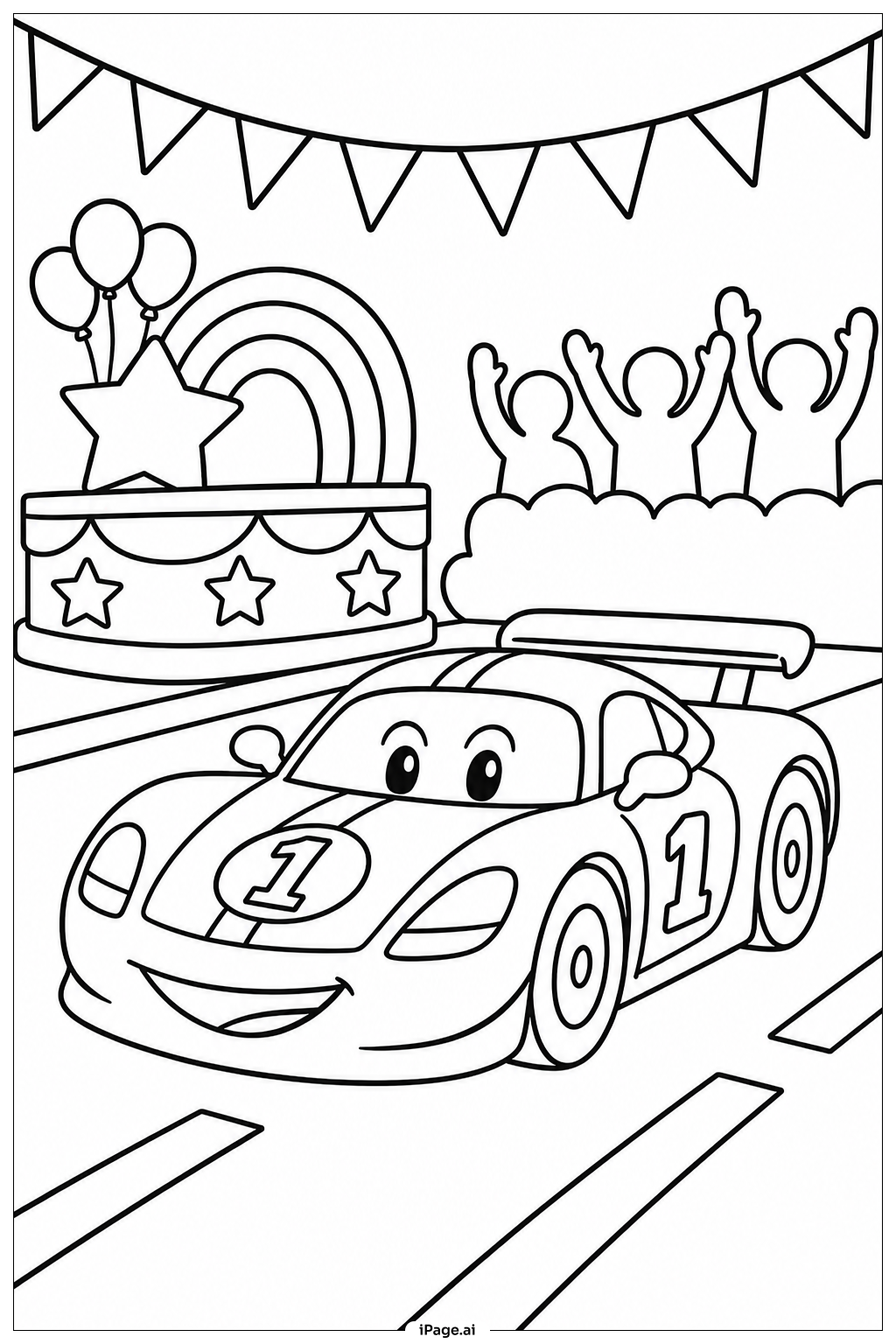
Coloring tips: How to color Race Car Parade Scene coloring page well?
Start with the race cars themselves. Give each car its own unique color scheme so they stand out from one another. Bold, bright colors work great — try red, blue, yellow, orange, or green for the car bodies. Use a darker shade of the same color for shadows along the sides and under the spoilers to add depth. Color the tires dark gray or black, and use silver or light gray for the rims and exhaust pipes. The racing numbers on the doors can be outlined in white and filled with a contrasting color. For the background, use light blue for the sky and add hints of green for any grass areas. The crowd in the stands can be colored with a wide mix of skin tones and bright clothing to bring the scene to life. Checkered flag patterns look best in classic black and white. Banners and flags can be any color you like — this is your chance to get creative. Take your time with smaller details like headlights, air vents, and sponsor logos. Colored pencils work well for fine areas, while markers or crayons are great for filling in larger sections quickly.
Coloring challenges: Which parts are difficult to color and need attention for Race Car Parade Scene coloring page?
• Multiple Car Bodies: Each race car has a large, curved body with smooth panels. Keeping colors neat within the curved edges without smudging into neighboring areas can be tricky, especially where two cars appear close together. Using a fine-tipped tool to outline each car first before filling in can help keep things tidy.
• Spoilers and Aerodynamic Parts: Race cars come with wings, spoilers, and air vents that are small and closely spaced. These parts require a steady hand and a sharp pencil or thin marker to color accurately. Rushing through these sections may lead to colors bleeding outside the lines.
• Racing Numbers and Sponsor Details: The numbers on car doors and any logo-style details are typically small and surrounded by other design elements. Coloring inside these tiny shapes without covering the outlines takes patience and precision. A fine-point colored pencil is strongly recommended for this area.
• Crowd and Background: The spectators in the stands include many small figures packed closely together. Coloring individual people with varied skin tones and clothing without the colors merging together is a real challenge. Working slowly from one figure to the next and letting each section dry before moving on helps prevent unwanted blending.
• Checkered Flag Patterns: The classic black-and-white checkered pattern found on flags or barriers requires careful attention to the alternating squares. Skipping a square or coloring two adjacent squares the same color breaks the pattern. Lightly penciling in the squares before inking can prevent mistakes.
Benefits of coloring books: Advantages of drawing Race Car Parade Scene coloring page
Coloring this Race Car Parade Scene offers a wide range of benefits for kids and young fans of motorsport. First, it builds focus and concentration. Staying inside the detailed lines of race cars, spoilers, and crowd figures trains the brain to pay close attention to small areas. This skill carries over into reading, writing, and other school tasks. Second, it strengthens fine motor skills. Gripping coloring tools and carefully filling in narrow shapes like racing numbers and air vents develops the hand muscles children use every day. Third, it sparks creativity. Choosing color combinations for each car encourages kids to think like designers. There are no wrong choices — every color scheme is valid and unique. Fourth, it teaches patience. A detailed scene like this cannot be finished in a rush. Completing it step by step builds a healthy habit of slowing down and working carefully toward a goal. Fifth, it introduces kids to the world of motorsport in a fun, hands-on way. Learning about race cars, parades, pit lanes, and checkered flags through coloring makes the subject feel exciting and real. Finally, finishing the page gives a real sense of pride and accomplishment, boosting confidence and encouraging kids to take on new creative challenges.