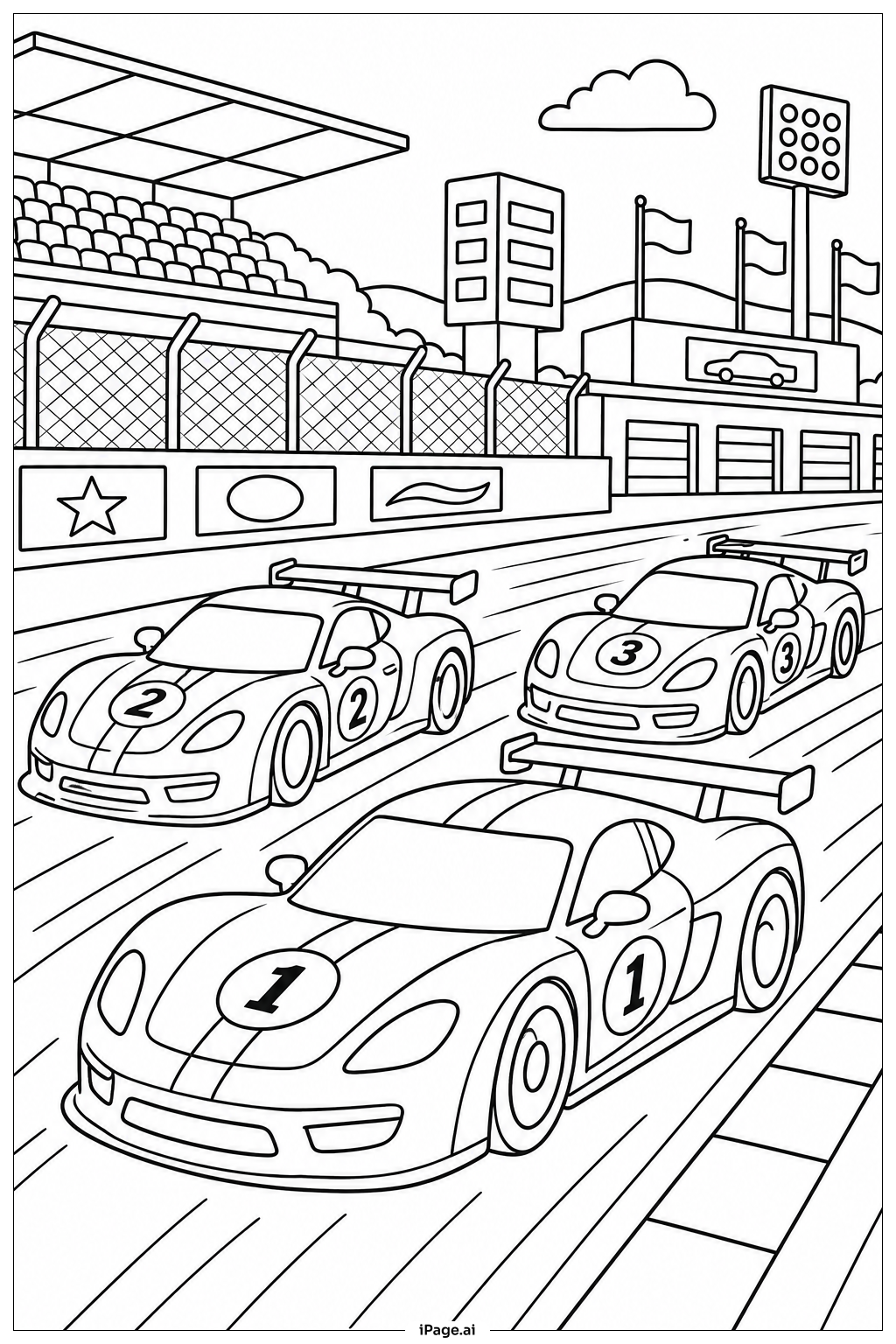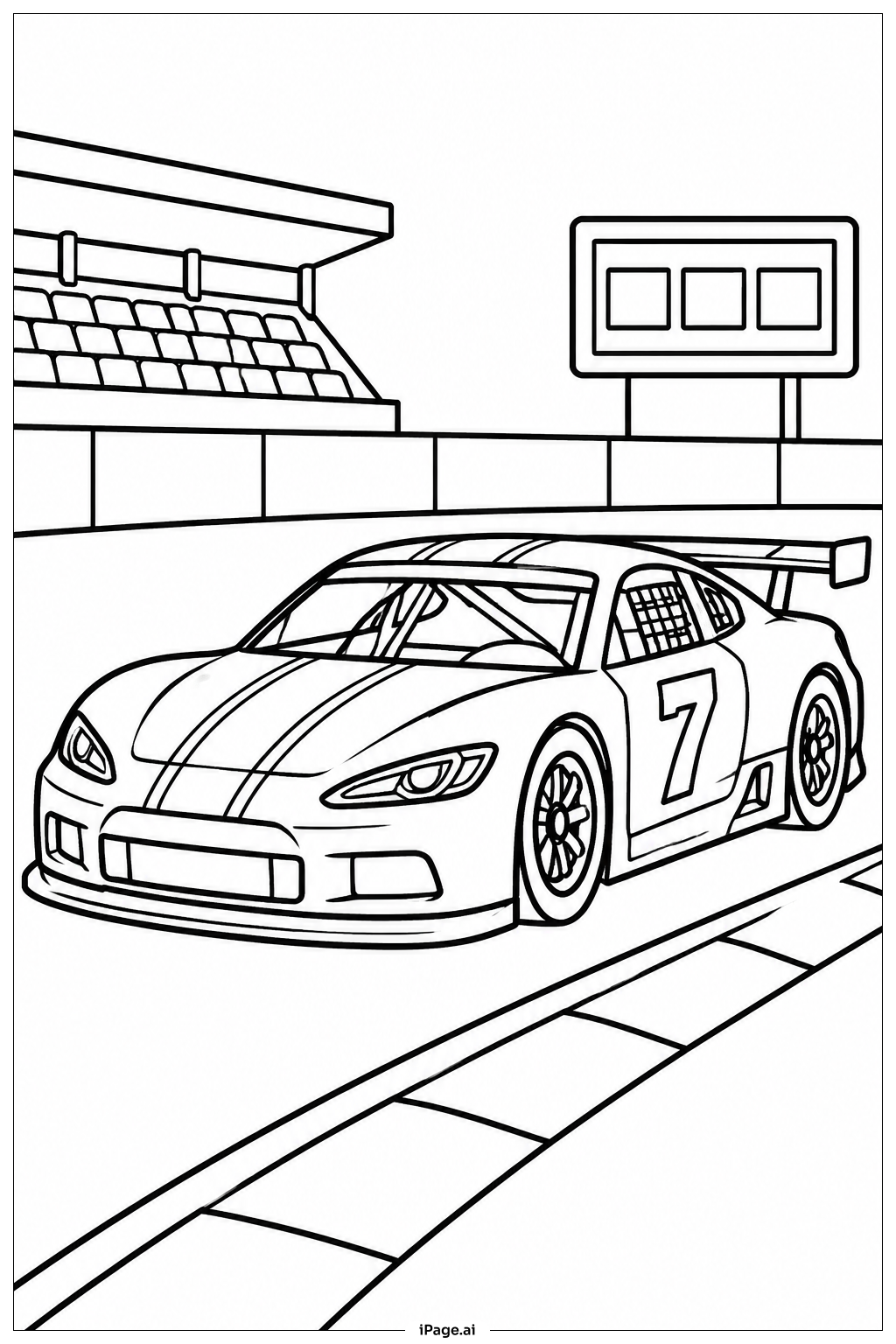
Coloring tips: How to color Race Car On Track coloring page well?
Start with the race car body and pick a bold, eye-catching color like red, yellow, or electric blue. These colors look great on fast cars and really pop on the page. Use a darker shade of the same color along the sides and under the spoiler to add depth and shadow. Color the tires dark gray or black, and use silver or light gray for the rims to make the wheels look shiny and realistic. The cockpit can be tinted dark blue or dark gray to look like a window. For racing stripes or sponsor panels, try white, orange, or contrasting neon colors. The track can be colored in smooth asphalt gray, with white or yellow markings for the road lines. The barriers along the track edges look great in red and white alternating stripes. Add a bright sky blue or golden yellow in the background to suggest speed and outdoor atmosphere. Use colored pencils or fine-tip markers for small details like vents and rims.
Coloring challenges: Which parts are difficult to color and need attention for Race Car On Track coloring page?
• Aerodynamic Body Curves: The race car has a smooth, curved body with complex contours. Staying within these curved lines requires careful control of your coloring tool. Using fine-tip markers or sharp colored pencils will help you follow the shape without going outside the edges.
• Small Mechanical Details: Parts like the wheel rims, air vents, and cockpit are very small and close together. These tight spaces are tricky to fill neatly. A thin coloring tool works best here. Take your time and work slowly to avoid smudging neighboring areas.
• Adding Depth and Shadow: The car looks flat without shading. To make it look three-dimensional and realistic, you need to apply darker tones along the lower edges and under the spoiler. Blending two shades of the same color takes practice, especially for younger colorists.
• Track and Road Markings: The race track has curved lines, lane markers, and barrier patterns. Keeping these elements neatly colored while staying consistent across the whole track can be challenging. It helps to color the road surface first, then go back and carefully add the white or yellow line details on top.
• Background Balance: The background around the car and track should not overpower the main subject. Choosing colors that are lighter or softer than the car helps the race car stand out. Getting this balance right takes some planning before you start coloring.
Benefits of coloring books: Advantages of drawing Race Car On Track coloring page
Coloring this Race Car On Track image offers a wide range of benefits for children and young artists. First, it builds fine motor skills. Carefully coloring within the curved lines of the car body and tiny mechanical parts trains hand muscles and improves pencil control, which also helps with handwriting. Second, it encourages creativity and personal expression. Kids get to choose their own color combinations for the car, track, and background, making every finished page unique and their own. Third, it develops focus and patience. Detailed sections like the wheel rims, vents, and road markings require steady attention, helping children practice concentration for longer periods. Fourth, it introduces basic concepts of color theory. Experimenting with shading, contrast, and complementary colors on the car and track gives young colorists an informal but meaningful introduction to visual art principles. Fifth, it sparks an interest in STEM and design. The shapes and parts of a race car naturally invite curiosity about how vehicles work, how they are designed for speed, and how engineers think about aerodynamics. Finally, completing the page gives children a real sense of accomplishment, boosting confidence and encouraging them to take on more creative challenges.