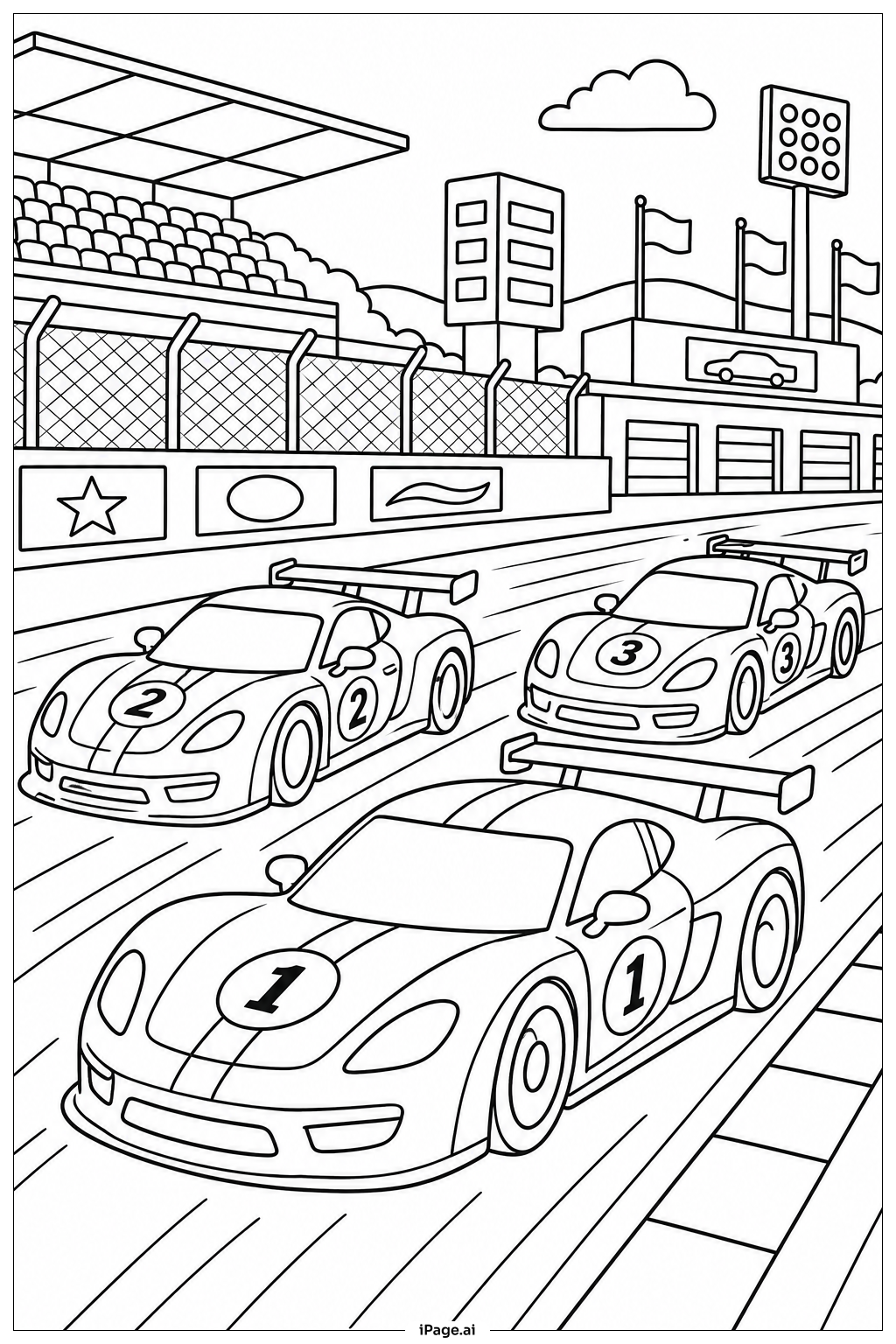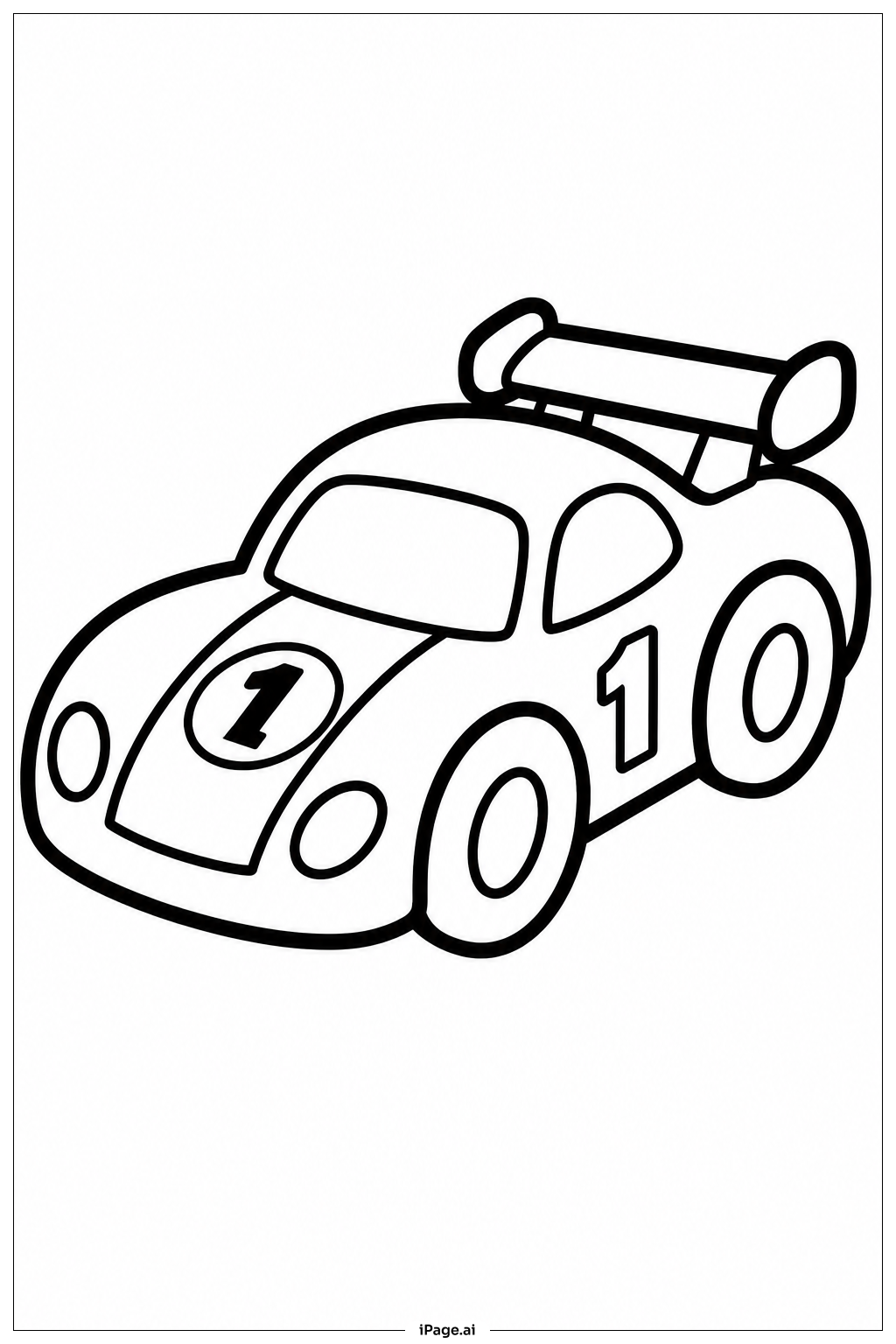
Coloring tips: How to color Race Car Large Body coloring page well?
Start with the car body using bold, exciting colors. Red, yellow, electric blue, or neon orange are great choices for a race car. Use a single main color for the large body panels so the car looks clean and unified. Add a contrasting color for the racing stripes, such as white, black, or silver. Color the tires dark gray or solid black, and use a lighter gray or metallic silver for the wheels and rims. The spoiler wing can match the body or stand out in a different color. The windshield looks great in light blue or pale gray. Use a darker shade of your main color along the edges of body panels to add depth and a three-dimensional feel. For the vents and air intakes, try dark tones like charcoal or deep navy. Keep the background simple with a racetrack gray or a bright crowd scene to make the car pop. Have fun mixing team colors like classic red and white or bold black and gold.
Coloring challenges: Which parts are difficult to color and need attention for Race Car Large Body coloring page?
• Large Body Panels: The wide, expansive body surfaces of this race car are the biggest challenge. Keeping the color smooth and even across such large areas without streaks or patches takes patience. Using colored pencils in slow, circular strokes or broad marker sweeps can help achieve a clean, consistent finish.
• Curved Contours and Shading: The car body is full of curves and contoured edges. To make it look three-dimensional and realistic, you need to add shadows along the lower edges and highlights near the top or center of each panel. Getting the gradient gradual and natural requires careful blending, especially for younger colorists.
• Tiny Details on Vents and Intakes: The side vents, air intakes, and grille areas contain small, tightly spaced lines and shapes. Staying inside these narrow sections without going over the lines is tricky. Fine-tipped colored pencils or thin markers work best here to keep each vent slot neat and distinct.
• Wheels and Tires: The large, rounded tires and detailed rims require two or three different shades to look right. The rubber tread area needs dark tones while the inner rim calls for lighter metallic colors. The round shape also demands steady, controlled hand movement to avoid uneven coloring.
• Racing Stripes Alignment: The racing stripes run across a large portion of the body. Keeping them straight, consistent in width, and properly aligned with the body curves is challenging. Any small wobble or color overlap can break the sharp, professional look that race car stripes are known for.
Benefits of coloring books: Advantages of drawing Race Car Large Body coloring page
Coloring this race car page offers a wide range of benefits for kids and young artists. First, it builds fine motor skills. Carefully staying within the lines of the curved panels, tiny vents, and detailed wheels trains hand control and coordination. These skills carry over into writing, drawing, and other hands-on activities.
Second, it encourages creativity. Choosing colors, designing racing stripes, and picking a team color scheme lets kids express their own ideas and personal style. There is no single right answer, which boosts confidence and imaginative thinking.
Third, it introduces concepts like symmetry, shading, and color contrast in a fun, low-pressure way. Kids naturally start to notice how dark and light tones make a flat drawing look three-dimensional.
Fourth, the focused activity of coloring promotes concentration and patience. Completing a detailed image like a race car teaches kids to slow down, work section by section, and feel proud of a finished result.
Finally, race cars are exciting and motivating subjects. Kids who love vehicles, speed, and action are more engaged when the subject connects to their interests. This makes the coloring session enjoyable and keeps them coming back to practice more.