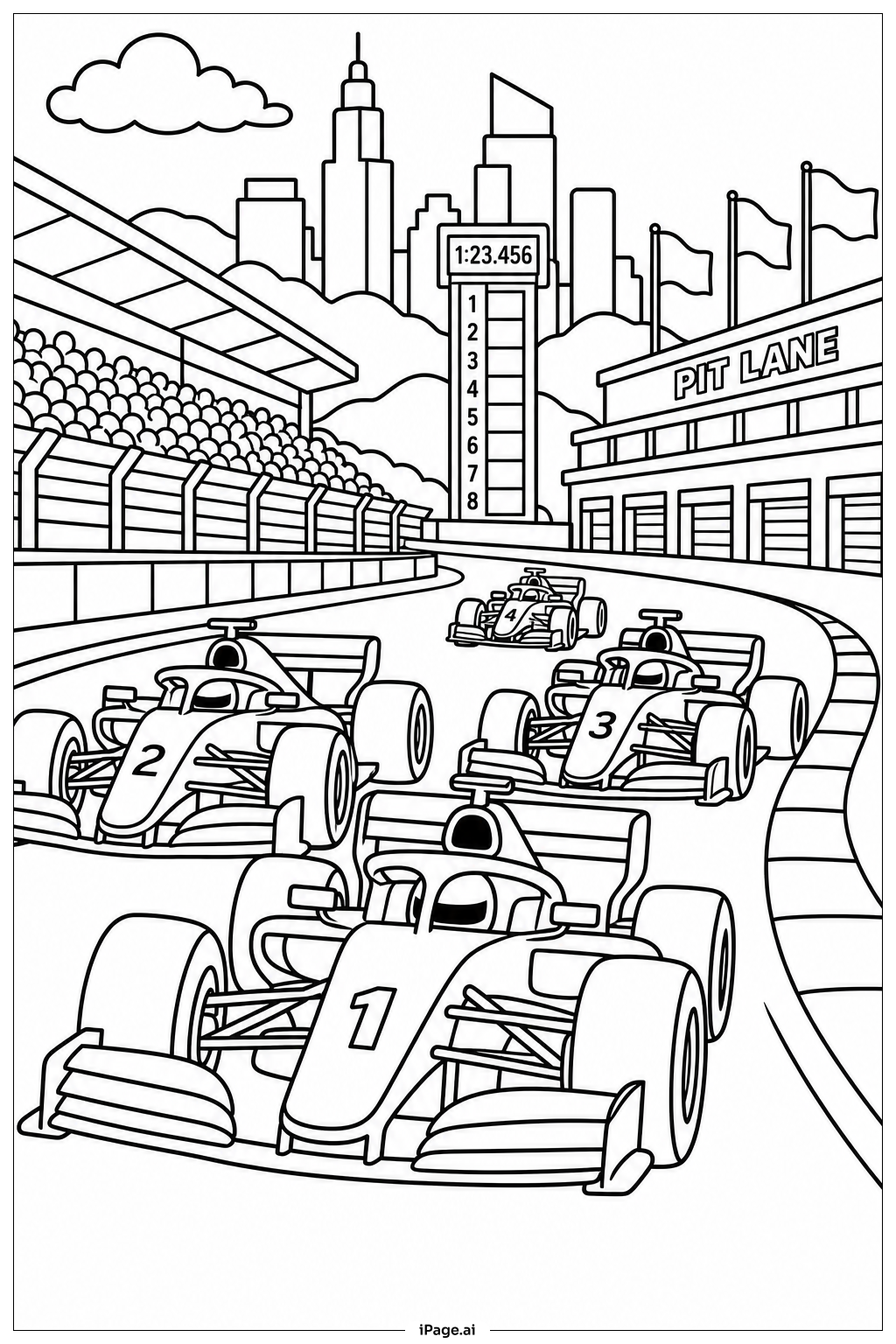
Coloring tips: How to color Race Car Grand Prix Battle coloring page well?
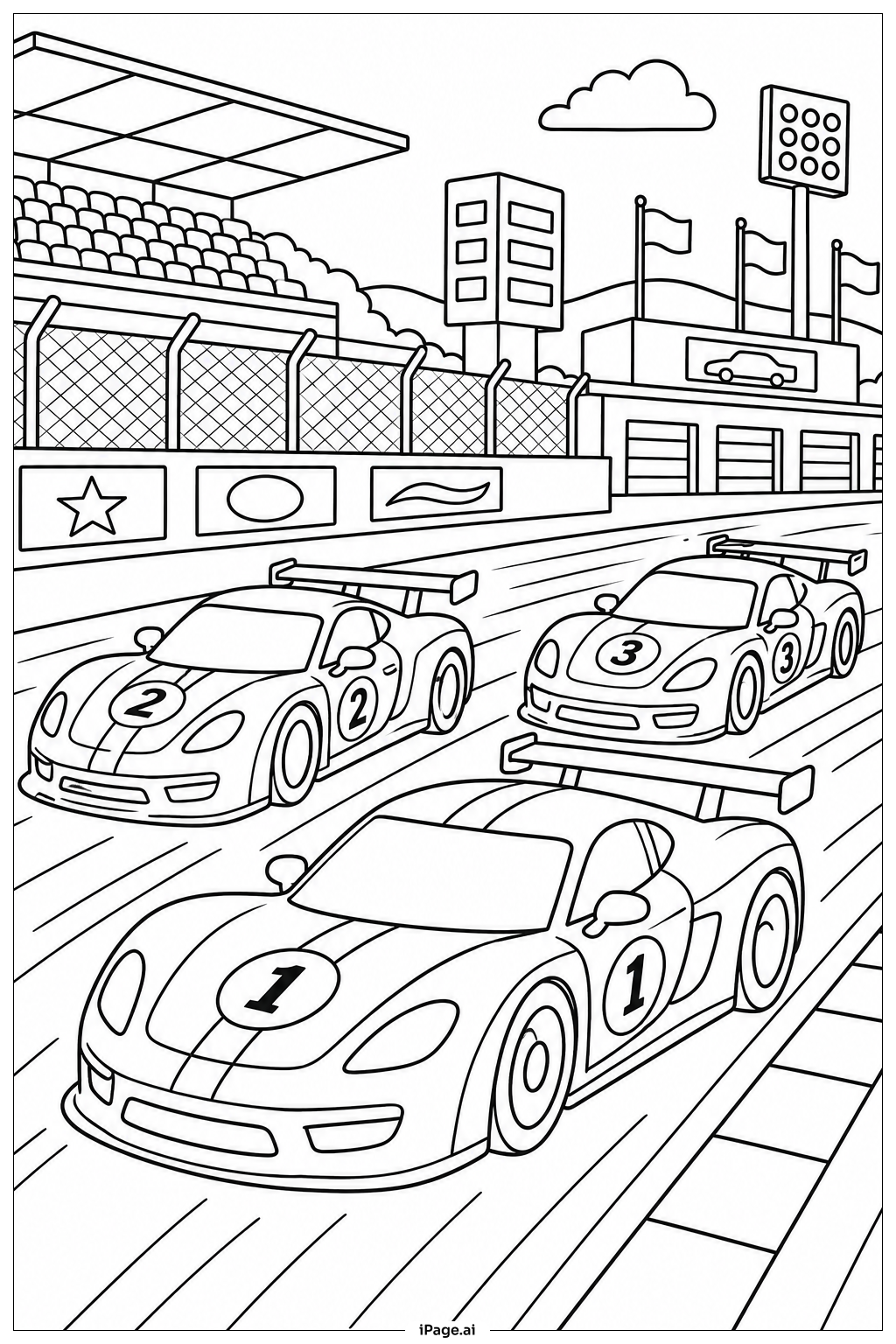
Start with the car bodies using bold, contrasting colors to make each racer stand out. Classic race car colors like red, yellow, blue, or orange work great. Use a darker shade of the same color to add shadows along the sides and under the spoilers, giving the cars a 3D look. Color the tires dark gray or black, and add a thin silver or white line to show the rim highlights. For the cockpit, use dark tinted colors like deep blue or smoky gray. Fill the speed lines in the background with light shades of yellow or white to keep the sense of motion. The track can be colored gray or dark asphalt tones. Add bright colors to the sponsor logos and race numbers to make them pop. Use a light blue or pale yellow for the sky in the background to keep it from competing with the cars. Take your time on the small details like air vents and wing edges — they really bring the image to life.
Coloring challenges: Which parts are difficult to color and need attention for Race Car Grand Prix Battle coloring page?
• Car Body Curves and Panels: The aerodynamic shapes of the race cars have many curved panels and contoured surfaces. Staying inside these curved lines while keeping colors smooth requires a steady hand, especially around the nose cone and sidepods. Younger colorists may find these curved edges tricky to follow cleanly.
• Small Mechanical Details: Both cars feature tiny vents, grilles, suspension parts, and wing elements. These small areas are difficult to color neatly without accidentally going over the lines. Using a fine-tip coloring pencil or a thin marker is strongly recommended for these sections.
• Speed Lines and Background Motion Effects: The motion lines streaking across the background are closely spaced and repeat many times. Coloring them consistently without smudging or skipping lines takes patience and focus. Choosing a color that contrasts well with the cars without making the background too busy is also a challenge.
• Maintaining Visual Separation Between the Two Cars: Since the two race cars are positioned very close together on the track, it is important to choose clearly different color schemes for each one. Using similar colors for both can make the scene look confusing. Planning your color choices before you start will help keep each car distinct and easy to identify.
• Sponsor Logos and Race Numbers: The small rectangular sponsor panels and number plates on the car bodies have tight borders. Coloring inside them neatly and making the numbers or text legible requires careful control, especially for younger children who are still developing fine motor skills.
Benefits of coloring books: Advantages of drawing Race Car Grand Prix Battle coloring page
Coloring this Race Car Grand Prix Battle page offers a wide range of benefits for children and young enthusiasts. Working through the detailed car bodies and mechanical elements helps develop fine motor skills and hand-eye coordination, as staying inside tight curves and small shapes requires careful, controlled movements. Choosing colors for each race car encourages creative thinking and decision-making, helping kids build confidence in their own artistic choices. The complexity of the image — with its speed lines, track details, and sponsor panels — supports longer focus sessions, which strengthens concentration and patience over time. For children who love cars and racing, this page turns a favorite interest into a productive, calming activity that feels both fun and rewarding. Completing a detailed image like this also gives a strong sense of accomplishment, which boosts self-esteem and motivates kids to take on bigger creative challenges. Coloring together with friends or family can also spark conversations about racing, teamwork, and competition, making it a great social activity. Overall, this page blends artistic practice with imaginative play in a way that is engaging and genuinely enjoyable for a wide age range.