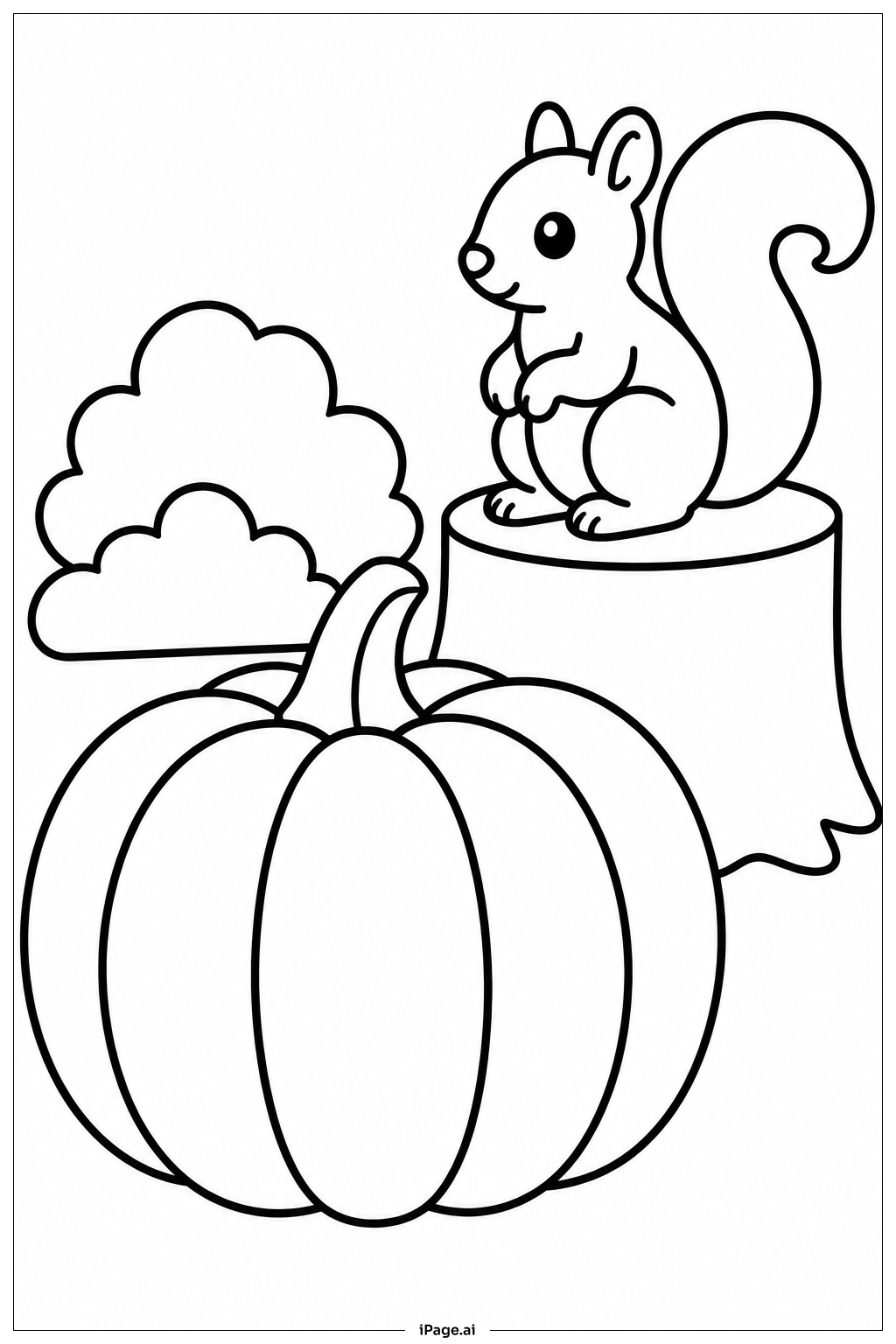
Coloring tips: How to color Pumpkin And Squirrel coloring page well?
For the pumpkin, try using different shades of orange to create a natural look. You can add yellow highlights to show where the light hits the pumpkin and deeper reds or browns in the creases for shadows. The pumpkin’s stem can be colored with a brown or green tone. For the squirrel, use rich brown colors for the fur, with lighter beige or gray on its belly and face. Its eyes can be shaded dark brown or black with a small white spot to show shine. The acorn can be colored with a dark brown top and a lighter brown base. Don’t forget to color the fallen leaves with warm autumn colors like red, orange, yellow, and brown to make the scene vibrant and cozy.
Coloring challenges: Which parts are difficult to color and need attention for Pumpkin And Squirrel coloring page?
• Small Details: Coloring the squirrel’s face and the acorn requires careful attention to avoid going outside the lines. Its eyes, whiskers, and tiny paws are delicate features that need steady coloring. • Texture Variation: Capturing the different textures of the pumpkin’s bumpy skin, the smooth acorn, and the fluffy tail of the squirrel can be challenging. Using varied shading techniques can help but may be tricky for younger colorers. • Light and Shadow: Adding light sources and shadows to make the pumpkin look round and the squirrel three-dimensional involves blending colors smoothly, which can be difficult for beginners. • Leaf Colors: The fallen leaves have irregular shapes and require blending multiple warm hues to look natural, which takes patience and skill. • Balancing Colors: Choosing colors that stand out but still harmonize across the pumpkin, squirrel, and autumn details without overpowering the page can be challenging for children learning color coordination.
Benefits of coloring books: Advantages of drawing Pumpkin And Squirrel coloring page
Coloring this Pumpkin And Squirrel page helps develop fine motor skills by requiring kids to carefully color small and detailed parts like the squirrel’s face and acorn. It also encourages creativity as children can experiment with different shades of orange, brown, and yellow to create dynamic light and shadow effects. Engaging with an autumn-themed picture promotes awareness and appreciation of seasonal changes in nature. The image provides a calming and focused activity that supports concentration and patience, especially with the varied textures involved. Overall, it’s a fun way for children to practice color blending while enjoying a cozy fall scene.