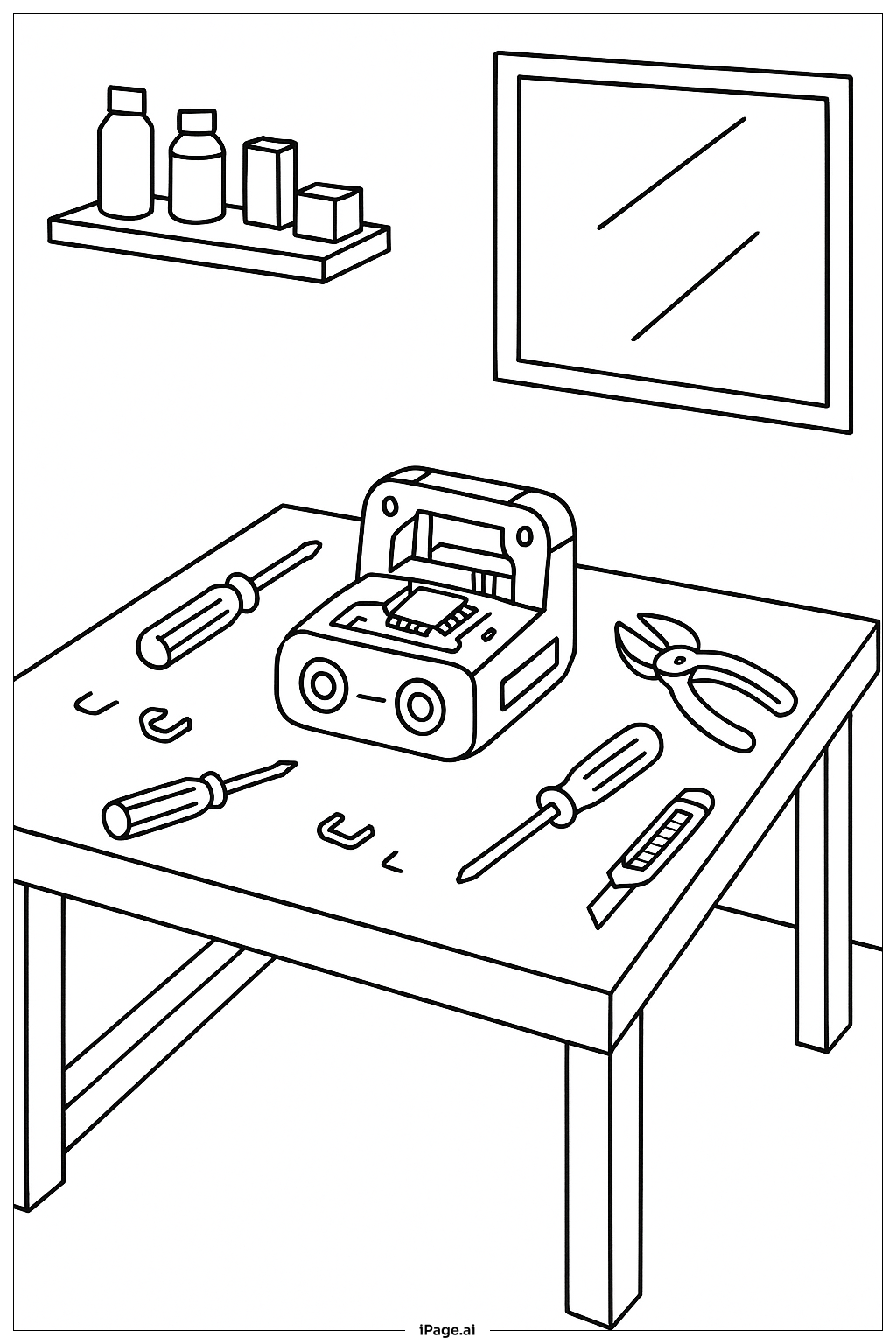
Coloring tips: How to color Prototype Workshop Table coloring page well?
Start with the wooden table surface using warm browns and tans, adding grain texture with darker shading. Color the metal tools in silver, gray, or steel blue tones. Use bright yellow or white for the lamp to create a glowing effect. The blueprint papers can be colored in classic blue and white, or try cream and sepia for a vintage technical drawing look. Make the storage drawers in contrasting wood tones or painted colors like forest green or navy blue. Add pops of color to the various tools—red handles for screwdrivers, orange for measuring tape, and multicolored pencils. Use shadows beneath objects with darker shades to create depth and dimension. Consider a neutral background to keep focus on the busy workspace details.
Coloring challenges: Which parts are difficult to color and need attention for Prototype Workshop Table coloring page?
• Intricate Tool Details: The variety of small workshop tools presents a challenge with their detailed shapes and overlapping placement. Each instrument requires careful attention to stay within fine lines, especially when coloring handles, blades, and measurement markings that have tiny components and precise boundaries.
• Blueprint and Paper Textures: The technical drawings and papers scattered on the table require subtle coloring techniques to show dimension without overwhelming the line work. Creating the appearance of paper edges, folds, and the contrast between blank spaces and drawn areas needs delicate shading and color transitions.
• Wood Grain and Surface Texture: Rendering realistic wood grain on the table surface and drawers demands skill in creating directional lines and varied toning. Achieving natural wood appearance requires blending multiple brown shades while maintaining the structural lines that define the table's panels and edges.
• Lighting and Shadow Balance: The overhead lamp creates a light source that affects the entire scene. Colorists must consider where highlights should be brightest and where shadows fall, requiring planning before applying colors to maintain consistent lighting direction throughout the complex workspace.
• Storage Compartment Depth: The drawers and compartments need dimensional coloring to appear recessed or protruding from the table structure. Creating this three-dimensional effect through color choices and shading intensity, particularly around handles and panel edges, challenges spatial awareness skills.
Benefits of coloring books: Advantages of drawing Prototype Workshop Table coloring page
Coloring this Prototype Workshop Table page develops fine motor skills through the precise work required for small tool details and intricate components. Children practice hand-eye coordination while staying within detailed boundaries. The technical nature of the workspace introduces young artists to concepts of organization, design thinking, and how inventors create new things. It encourages problem-solving as they decide which colors work best together and how to show depth and dimension. This page promotes patience and focus, as the complex scene rewards careful, sustained attention. It also inspires curiosity about engineering, craftsmanship, and the creative process behind making prototypes. Kids learn about different tools and their purposes while exercising color theory and spatial reasoning. The satisfying completion of such a detailed image builds confidence and pride in accomplishment.