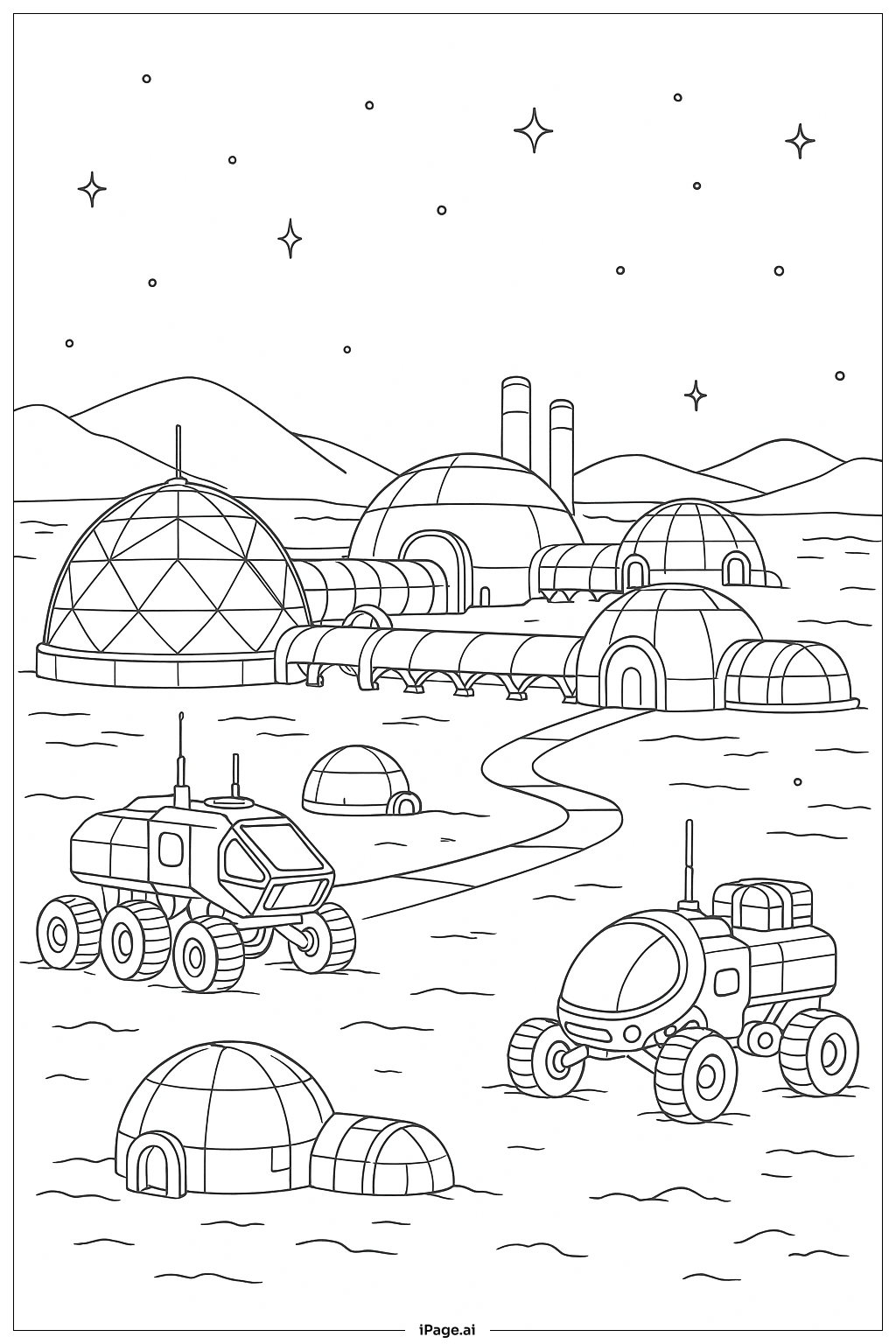
Coloring tips: How to color Prototype Space Colony coloring page well?
Start with a dark blue or deep purple background for outer space, then add lighter blues and whites for distant stars. Color the space colony's main structure with metallic shades like silver, gray, and steel blue to give it a futuristic feel. Use bright colors for the solar panels such as deep blue or bronze to show energy collection. Add warm orange or yellow lights to windows and docking areas to suggest life inside. The planets in the background can be vibrant with reds, oranges, and blues. Consider using colored pencils for fine details on the technical components and markers for larger areas like space. Add white or yellow highlights to stars for a twinkling effect.
Coloring challenges: Which parts are difficult to color and need attention for Prototype Space Colony coloring page?
• Intricate Mechanical Details: The space colony features numerous small technical components including solar panels, docking ports, and structural frameworks that require careful coloring within tight spaces. Children may find it challenging to stay within the lines of these tiny geometric shapes and mechanical parts. Using fine-tipped markers or sharp colored pencils can help achieve precision in these detailed areas.
• Multiple Overlapping Elements: The composition includes various modules, cylindrical structures, and architectural features that overlap and intersect. Distinguishing between foreground and background elements requires careful color planning to create depth. Younger colorists might struggle with deciding which parts should be darker or lighter to show proper dimension and spatial relationships.
• Creating Metallic Effects: Achieving realistic metallic surfaces on the space station requires blending techniques and understanding of highlights and shadows. The curved cylindrical modules need gradual color transitions to appear three-dimensional rather than flat. This advanced shading technique may be difficult for beginners who are still developing their blending skills.
• Background Complexity: The starfield and planetary elements scattered throughout space need to be colored without overwhelming the main subject. Balancing the darkness of space with visible stars and celestial bodies requires thoughtful color choices. Too light and the space looks washed out, too dark and the details disappear completely.
Benefits of coloring books: Advantages of drawing Prototype Space Colony coloring page
Coloring this Prototype Space Colony page encourages imagination about future technology and space exploration. Children develop fine motor skills as they carefully color the intricate mechanical details and small geometric shapes. The technical nature of the image introduces STEM concepts and sparks curiosity about engineering and astronomy. Working with metallic colors and creating depth teaches advanced color theory and shading techniques. The detailed background with stars and planets helps practice patience and focus during extended coloring sessions. This page offers opportunities for creative decision-making about color schemes for futuristic technology. Completing such a complex image builds confidence and provides a strong sense of accomplishment for young artists.